Comment: Is the Supreme Court guided by principle or party?
Published 1:30 am Sunday, October 2, 2022



By Morgan Marietta / For The Conversation
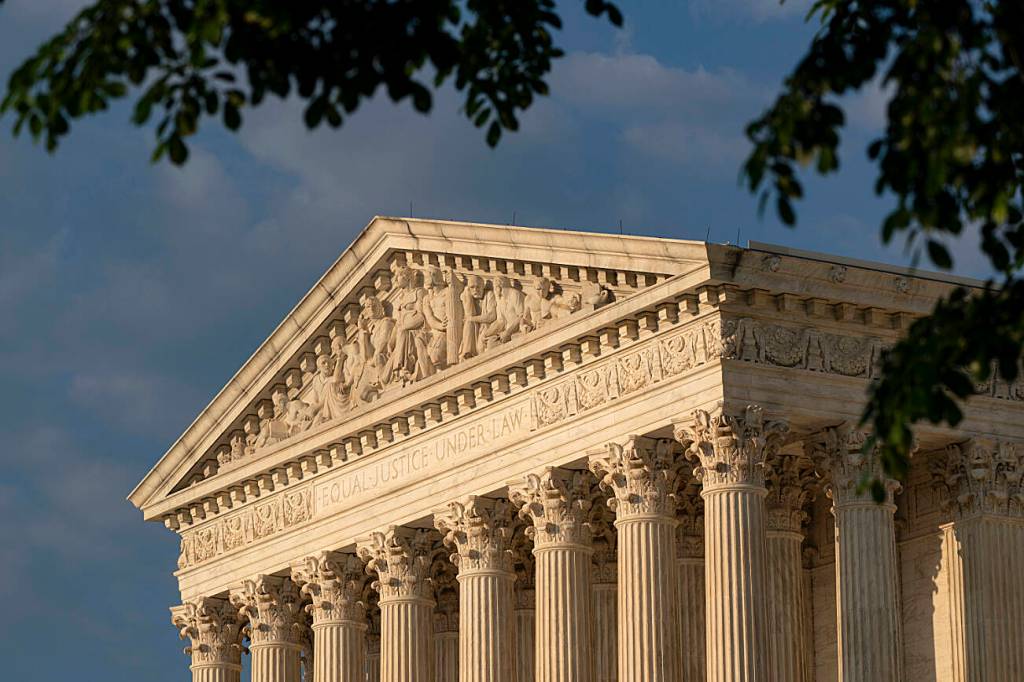
In the summer of 2022, the U.S. witnessed a dramatic change in how the majority of Supreme Court justices understand the Constitution.
At the end of a single term, the court rejected the long-standing constitutional right to abortion, expanded gun rights and ruled that religion can have a bigger role in public institutions.
These outcomes reflect a seismic shift in U.S. law and policy, but scholars of the court dispute what kind of change it was, exactly: a principled or partisan one. As a close observer of constitutional politics, I believe this is an important debate with deep consequences for the perceived legitimacy of the court.
Some Supreme Court scholars see the court’s evolution as the rise of “a profound and principled constitutional theory,” while others see it as “conservative policy choices in pretentious garb.”
The public’s confidence in the court, meanwhile, has fallen after the Dobbs v. Jackson Women’s Health Organization abortion ruling to the lowest level since records began in the 1970s.
Public perceptions of the the court and its legitimacy may depend on whether citizens see the recent rulings as the victory of one side in a long-standing contest of ideas, or instead simply the triumph of partisan politics.
Origins of the current court: Supreme Court Justice Sonia Sotomayor, arguably the most liberal of the current justices, characterized the court’s controversial rulings in 2021 as the result of “a restless and newly constituted court.”
Observers of the new court mostly agree on how it changed, but disagree on what the justices are restless about.
The change has been building over several years, driven by the long-standing beliefs of the older conservative justices — like Clarence Thomas and Samuel J. Alito — plus the addition of three new conservative justices — Neil Gorsuch, Brett Kavanaugh and Amy Coney Barrett — all three nominated by former president Donald Trump within an unusually brief period of time.
Presidents George W. Bush and Barack Obama, for example, each had two nominations over their eight-year presidencies, while Trump helped place three new members on the court within a single four-year term.
These back-to-back appointments created a new supermajority of six conservatives on the court. This altered not only the rulings of the court, which resumes its work Monday, but also the selection of cases the court would hear.
The court chooses the few cases it will hear from the thousands of applications for review. If there were only five conservative-leaning justices, they could not guarantee they would hold the majority necessary for a final vote.
Often, Chief Justice John Roberts, generally considered an institutionalist determined to safeguard the public perception of the court, or Gorsuch, widely seen as a libertarian-leaning protector of the rights of criminal defendants, immigrants and Native Americans, joined the liberals to flip a ruling.
A supermajority of six conservative justices gives them the confidence to take on major cases. Five makes a majority on the Supreme Court, but six can make a movement.
It is a change in constitutional theory: One view of the dramatic change at the court is that it reflects a long-running debate between two constitutional theories, or competing ways of reading the document.
The new court upholds originalism, which has replaced its rival, living constitutionalism.
The theory of originalism argues that the core purpose of a written Constitution is to protect against the government’s inevitable bad behavior. The best way to defend individual rights and ensure a stable government is to enforce the Constitution’s exact language and the meaning it expressed to the Americans who ratified it.
From an originalist view, allowing clever lawyers to see the Constitution as evolving without the endorsement of the people simply defeats its purpose. So this constitutional theory holds that the document can only be changed by amendment, but not by courts.
The theory of living constitutionalism, meanwhile, is rooted in the idea that the Constitution should adapt to the American people’s evolving values, as well as the needs of contemporary society. This allows the Supreme Court to reinterpret the meaning of the language and expand the rights protected by the Constitution.
One side of the debate believes that upholding the true meaning of a written Constitution requires stable principles, while the second believes it requires evolving ones.
The two ways of reading the Constitution are not reconcilable.
It is partisan politics: The second view of what happened during the court’s last term is that the shift was not about honest constitutional debate, but instead about partisan politics. In this view, the justices are politicians in robes who pursue the policy goals of their party. This means that when the Republican appointees gained the majority in the court, GOP preferences followed.
Partisans know which school of thought is more likely to give them the outcomes they want.
Over the last few decades, partisanship has become a stronger force in shaping the nomination process. President Richard Nixon, for example, was a Republican who nominated Supreme Court Justice Harry Blackmun, who went on to write the liberal majority opinion for Roe v. Wade in 1973.
But today, justices nominated by Republican or Democratic presidents are chosen with much more care, with the aid of outside groups like the conservative Federalist Society.
The partisan view encourages people to see constitutional questions as they often view politics; simply ways of dodging principles while pushing ideological agendas. It characterizes the justices as pawns and constitutional debates as smokescreens.
That perception may actually be accurate about some of the justices, some of the time. But it is also surely not true about most of the justices, most of the time.
Perhaps the worst result of the partisan view is that interpreting the Constitution becomes about merely group identity, with Democrats and Republicans cynically stuck in permanent camps. This makes crucial public deliberations about the constitutional foundations of a free society nearly impossible.
The focus on constitutional theory argues that when debate is not about principle, it ought to be, while the partisan view argues that even when it seems to be, it is not.
Constitutional debate goes back and forth as the control of the court shifts. Over time, it will likely shift again, while the partisan view in the long term degrades the legitimacy of a correct, as well as incorrect, court.
Morgan Marietta is an associate professor of political science at University of Massachusetts-Lowell. This article is republished from The Conversation under a Creative Commons license.