Editorial: Delay for Everett light rail disappointing reality
Published 1:30 am Sunday, July 11, 2021


By The Herald Editorial Board
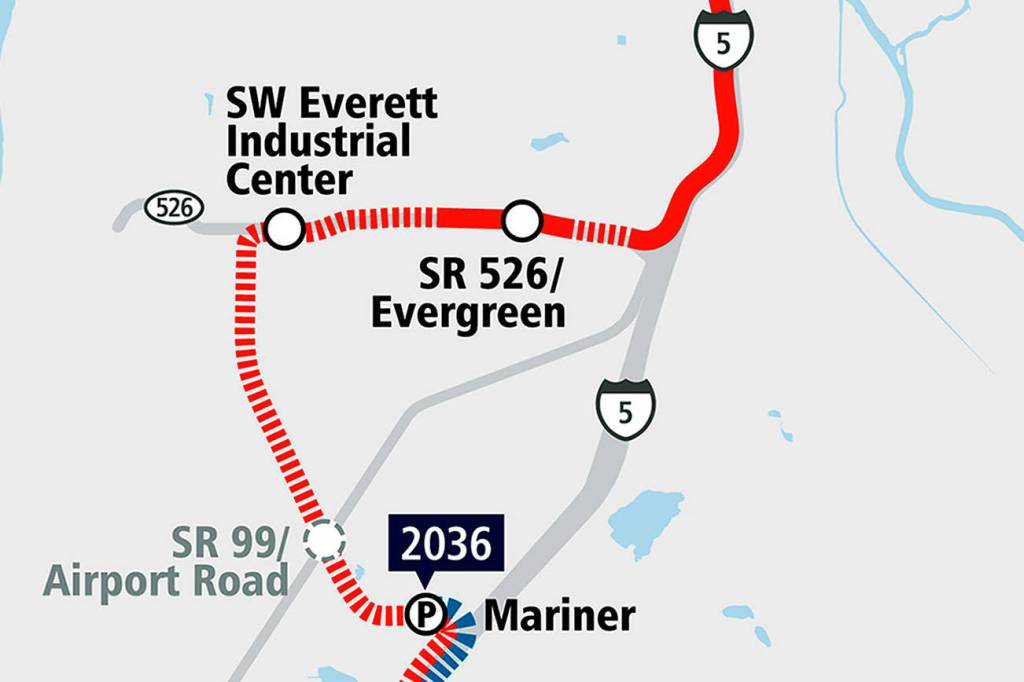
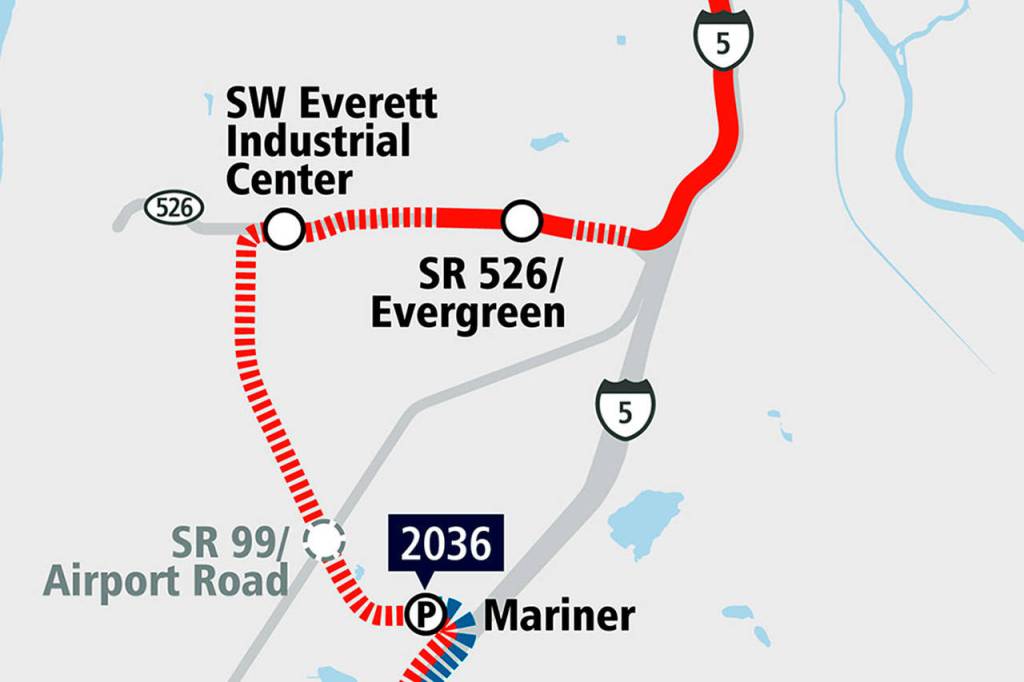
If there were a sign regarding the expected 2036 arrival of Sound Transit’s Link light rail system at Everett Station, this might have to be pasted over that date: “Please lower your expectations.”
How low? Now, light rail might not arrive in southwest Everett before 2038 and not at Everett Station before 2042.
What’s behind a potential two-decade wait? The bad news announced earlier this year was that a combination of reduced revenue and increases in cost projections meant that system-wide delays were likely for the full schedule of Sound Transit expansion projects — supported largely by voter-approved tax increases passed in 2016 — for light rail, bus rapid transit and commuter rail services in Snohomish, King and Pierce counties.
With the initial prediction of an $11.5 billion gap in funding, communities were told to keep in mind at least a five-year delay for projects beyond the current schedule.
Sound Transit’s 18-member board of public officials from the three counties now is looking to better focus those potential delays through a potential realignment of the ST3 project schedule, in particular for expansion of its Link light rail system, pushing out completion of the system to Everett, Tacoma, Ballard, West Seattle, Kent, Issaquah and elsewhere.
As those decisions are being made, there is some good news; the initial $11.5 billion shortfall announced in January has softened by a few billion. As the pandemic and its economic fallout has begun to ease, both fare revenue and sales tax receipts have improved, reducing a projected revenue loss to $1.5 billion. Yet ST3’s expansion still is projecting cost increases for property acquisition, construction and labor that could mount by $6.4 billion, adding a total $7.9 billion to ST3’s original $54 billion price tag.
Some on the Sound Transit board, in particular Seattle Mayor Jenny Durkan, have argued against settling on a realignment of the system’s project schedule, instead encouraging a campaign to seek more funding from local, state and federal sources and counting on continued economic growth to further ease the shortfall.
Sorry, Ms. Mayor; that train has left the station. Even an improved economy won’t make up for the region’s ever-increasing real-estate market and other costs.
As much as they might want to keep to the previous schedule and light rail’s 2036 arrival in Everett, the board’s three Snohomish County members — County Executive Dave Somers, Lynnwood Mayor Nicola Smith and Everett City Councilmember Paul Roberts — instead are backing the best option among worst-case scenarios to fit projects within anticipated revenue. The Sound Transit Board’s chairman, Kent Keel, a University Place city councilmember, has offered a realignment plan with four tiers of delays: two years or less, six years or less, nine years or less and 10 or more years. Keel’s plan outlines up to two years of delay for light rail to arrive in southwest Everett; and up to six years for its arrival at Everett Station.
They all hope for sooner, Somers, Smith and Roberts acknowledged Thursday during a teleconference, but the transit agency and its board have to move ahead with a plan based in reality and one that offers accountability to the public and Sound Transit district taxpayers.
“We have to be clear with the public and taxpayers that this package is something we think we can do,” Somers said.
That doesn’t mean the three easily accepted the delays and won’t push for completion as soon as financially possible. Earlier in the realignment process, the trio, in a letter to the rest of the board, sold completion of the Everett extension as best fitting the board’s own original policy for ST3 that projects be prioritized on five core principals, namely competition of light rail’s “spine” between Everett and Tacoma, connecting job and residential centers, ridership potential, socio-economic equity and logical expansion beyond the spine.
Significantly, Roberts has noted, those principles also serve the paramount importance of light rail and transit in addressing climate change and reducing the transportation sector’s greenhouse gas emissions by serving as many riders as possible and reducing vehicle miles driven by getting commuters and others out of their single-occupancy vehicles. Everett, Roberts said, warrants its Tier 1 rating, for those reasons.
Assuming Keel’s realignment proposal is accepted, the Snohomish County members want to keep pushing to get light rail’s terminus in southwest Everett as far north as possible. An operations and management facility for the system’s trains would be built in Everett, and as many as eighteen sites are being considered along or near Airport Road, between a planned station at Mariner High School and the manufacturing jobs center and airport at Paine Field.
Importantly, Smith noted, the board also is considering a requirement for a regular program review to better anticipate shifts in revenue, costs and debt capacity that could allow adjustments to the projects’ schedules, and perhaps, earlier completion of some projects.
Many will find the additional delay in light rail’s arrival in Everett difficult to accept, especially when commuters bound to and from Everett view the tantalizing progress shown as work continues to connect Link light rail with Lynnwood by 2024. Its arrival in Everett by 2036 seemed far enough away already.
Yet hoping to wish away reality — especially for the costs in property acquisition — won’t keep the trains running on time. The agency’s board, during a special meeting scheduled for Aug. 5, should back Keel’s realignment proposal and keep a closer tab on revenue and costs moving forward so that adjustments to the schedule can be made.
Doing so will honor the duty owed to taxpayers in the Sound Transit district and to current and future transit users.