Editorial: Get shovels ready for Biden’s transportation plans
Published 1:30 am Wednesday, May 12, 2021


By The Herald Editorial Board
So, what’s in it for us?
Specifically, what can Snohomish County’s communities and the rest of the state expect — assuming eventual passage in Congress — in President Biden’s $2.25 trillion infrastructure package?
The short answer: Quite a bit for a broad range of needs here and throughout the state, but not nearly enough that state and regional transportation leaders can let their own responsibilities coast on hopes for federal spending.
It’s time to get shovels ready.
Narrowing the issue to what Biden’s plan would spend on traditional transportation infrastructure — $621 billion, more than a quarter of the total package — work has already started in Congress to start listing priorities, outlining requests and beginning negotiations, said U.S. Rep. Rick Larsen, who represents Washington’s 2nd Congressional District and is a senior member of the House Transportation and Infrastructure Committee.
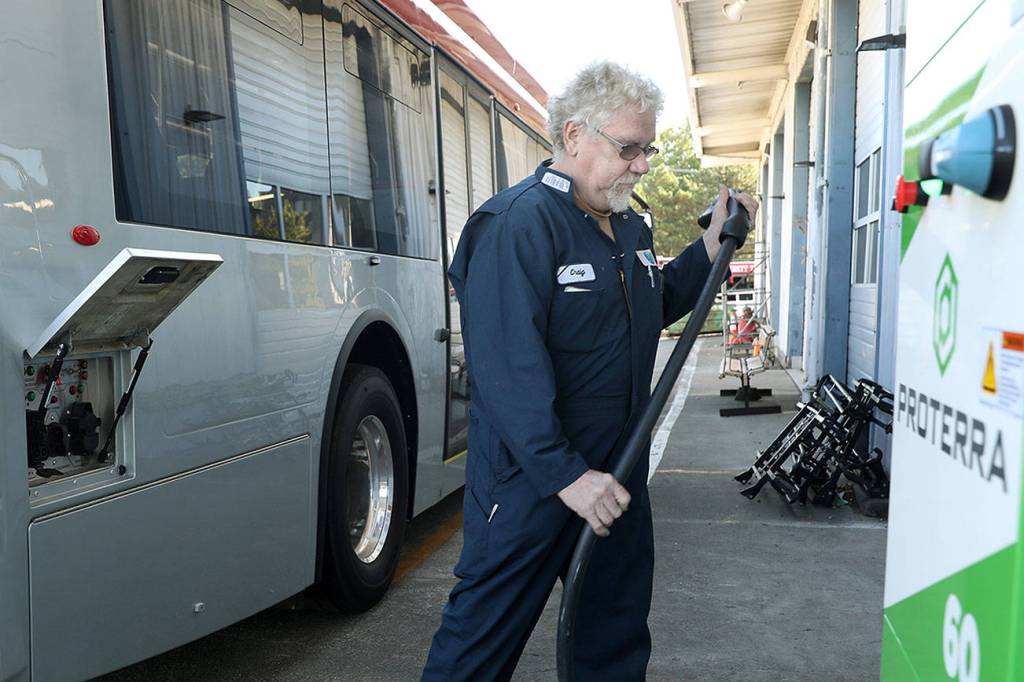
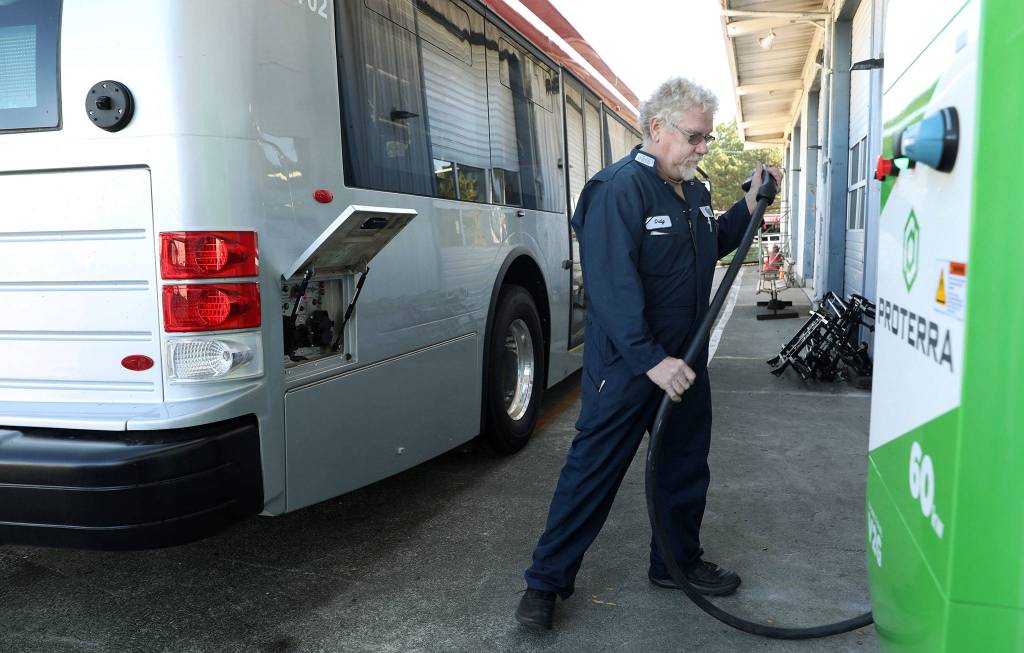
Actually, that work — at least in the House — started last year, even before Biden won the election, with passage in the House of the Moving Forward Act. While that $1.5 trillion infrastructure package did not advance in the Senate last year, Larsen, during an interview last week, said it is being used as a starting point for what specific projects could be funded in Biden’s American Jobs Act, including at least $7 billion for Washington state needs for roads, bridges and highways; $8 billion for bus transit, including grants for electric buses; $6 billion for airport and air traffic control improvement and alternative and low-emission fuels; and $245 million for passenger ferries, including electric and low-emission vessels.
More recently Larsen has made requests to the Transportation and Infrastructure Committee for projects in his district, including:
$3.9 million for 169th Street and its connection from the job magnet Cascade Industrial Center to Smokey Point Boulevard and I-5;
$4.96 million for shore-side electrification at Washington State Ferries’ Clinton terminal, part of the ferry system’s effort to provide charging for hybrid ferries; and
$840,000 for the up-to-$2 billion project to replace the westbound lanes of the U.S. 2 trestle connecting Lake Stevens and Everett.
In pursuing specific projects, Larsen said he’s making two priorities part of the broader discussion: “clean and green” transportation systems and advocating for projects in small- and mid-sized communities that in the past have had difficulty competing for grants when going up against projects serving larger cities.
Larsen, like Biden, sees the potential for transportation spending to provide jobs but also to address climate change by investing in transportation options, such as electric buses, ferries, vehicles and charging infrastructure and even bike and pedestrian improvements that can reduce carbon emissions from transportation, which accounts for more than 40 percent of the state’s greenhouse gas emissions.
As far-reaching as the federal infrastructure package could be, Larsen said it was concerning that the state Legislature wasn’t able to adopt a major transportation spending package in its regular session this year, as if some lawmakers were waiting to see what the president and Congress might provide.
“Congress can’t be seen as the predominate (funding source) for some of these projects; it hasn’t been in the past,” Larsen said, adding that federal support for transportation and infrastructure, while important has to be considered as supplemental.
A look at federal and state gas taxes — absent other transportation funding sources — provides some context for the split between the long-understood responsibilities of the two; the state’s current tax on gasoline is nearly 55 cents a gallon; the federal gas tax, which hasn’t been increased since 1993, is 18.4 cents a gallon.
That split should also be clear in the fraction of federal funding being considered for the U.S. 2 trestle against its total cost.
State lawmakers considered significant transportation proposals up until the session’s last days, including a $17.8 billion package in the state Senate that would have included $1.8 billion for the U.S. 2 trestle and other projects in the county. As productive as the session was, the lack of a transportation deal was a missed opportunity to have projects ready to take their place near the front of the line for federal assistance.
Nor should Sound Transit count heavily on Congress bridging the estimated $11.5 billion budget gap it’s now facing to complete projects for Sound Transit 3’s Link light rail system, shortfalls caused by soaring property and construction costs and ridership revenue losses from the pandemic.
The public transportation agency, spanning Snohomish, King and Pierce counties, now is working through a process to review projects, timelines and funding options that could address the shortfall for ST3. And while federal grants have been part of Sound Transit’s light rail and other projects from the start, agency officials and its board of local officials will need to have a plan for moving forward, Larsen said.
“The Sound Transit board needs to make a decision on what it’s going to do, then look for opportunities for money,” Larsen said. Congress, he said, “needs to know there’s a plan.”
And much could depend on the importance that plan places on finishing Sound Transit’s original vision of a light rail system that extended out from the Seattle area, south to Tacoma and north to Everett, often referred to as the system’s spine.
“I think building that spine for Sound Transit needs to be a priority,” Larsen said, a sentiment shared with Snohomish County’s representatives on the Sound Transit board: County Executive Dave Somers, Everett City Council member Paul Roberts and Lynnwood Mayor Nicola Smith.
No doubt, $621 billion is a substantial chunk of change, and could do a lot of good in Washington state and the rest of the nation. But the Biden administration has a nationwide to-do list, fixing 173,000 miles of bad road and 45,000 bridges in poor condition, addressing public transit and school bus repair and replacement backlogs and making investments in marine ports and airports and passenger and freight rail systems. It all adds up quickly.
The state and Sound Transit have to be ready to make their pitches as Congress begins weighing decisions about what project-and-priority boxcars it will couple to a federal funding train. Sound Transit needs to complete its project and funding review, and the governor and lawmakers should consider a special session soon to take up a transportation package.
That’s a train neither can afford to miss.