Teaching democracy: the public purpose of our schools
Published 12:01 am Sunday, November 1, 2009
When we think about how well our schools are performing, it is helpful to remember that they serve both public and private purposes.
The private purposes of our schools are as varied as the students and families who use them. Each member of a school community walks in the door with their own
unique hopes, dreams, goals, cultural heritage and personal history. We honor these private purposes by providing a rich variety of programs and opportunities for students to access according to their own particular agendas.
But schools also serve public purposes, and we don’t always see eye to eye on what those purposes should be. Some say we should focus on strengthening our nation’s ability to compete in the global economy. Others say we need to be leveling the economic playing field between advantaged and disadvantaged segments of our population. Still others emphasize teaching the skills necessary for students to obtain decent, living-wage jobs. Either way, much of the conversation about the public purpose of our schools centers on economic goals. And, of course, schooling does have a direct impact on our economy and on an individual’s readiness to effectively participate in it.
However, isn’t there a more fundamental public purpose of our schools — one that incorporates, but transcends, economic issues? One that has a more formative and lasting impact on the quality of our lives as individuals and as communities? One that is more closely aligned with the core values that we as a nation profess?
During the course of my 20 years in public education, I have come to believe that the primary and non-negotiable public purpose of our schools is simply this: to teach democracy. What could be more relevant to everything we as a country hold near and dear to our hearts?
Democracy is a rich, multi-layered, inspiring ideal that is much more than a political system. Democracy is a way of living and working together based on the values of freedom, justice, equality and respect. These values can be applied to any situation in which one person has to live or work with another — our world, our country, our community, our organizations and institutions, and even our families and personal relationships.
And how do we teach democracy? Well, that’s what we have to figure out. For starters, we teach democracy not just by memorizing definitions or reading the Constitution or explaining how a bill becomes a law, but by actually experiencing democratic values and processes in the real context of our lives together. Our schools play a vital role in making this happen.
We teach the arts of democracy by teaching students how to think deeply and critically, how to engage in thoughtful and respectful dialogue, and how to value diversity and the unique gifts we each bring to our common table.
We teach the arts of democracy by teaching students how to listen actively, how to communicate persuasively, and how to know when to compromise and when to stand firm.
We teach the arts of democracy when we teach students how to plan together, how to decide together, and how to solve problems together.
Finally, we teach the arts of democracy by teaching students how to balance their own personal goals with the need to connect, identify with, and relate to the rest of humanity.
Unfortunately, these goals are not as easily measured as are math, reading and writing skills. Does that make them any less important? Of course not. It just presents us with the challenge of developing mechanisms and indicators that will help us to know whether we are doing our job. These measures will not be as black and white as a standardized test, but they will generate essential public dialogue and keep us moving in the right direction. And I hope you can agree with me that democracy is the right direction.
Will you take responsibility for making sure this conversation is going on in your community? In your school? Will you make sure these questions are being actively and inclusively discussed?
1) How do we teach democracy?
2) How do we know when we are being successful?
There are no shortcuts or easy substitutes for this ongoing dialogue. The work will be messy and contentious at times, but the future of our democracy depends on it. I’ll meet you at the table.
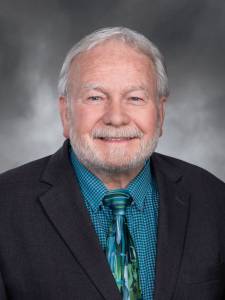
Jim Strickland of Everett is an educator in the Marysville School District.