Putting waste to good use
Published 9:36 pm Sunday, June 24, 2007
MONROE – Cow manure, meet human waste.
Local dairy farmers trying to stay competitive want to turn cow dung into an asset.
Typically dealing with the waste, which is more plentiful than the milk the cows produce, is one of the most expensive parts of running a dairy.
At the old Monroe Honor Farm, manure from three Tualco Valley dairies will be cooked in a device called a bio-digester, say supporters of the plan.
As soon as early next year, the methane given off as the manure decomposes will be burned to generate electricity that can be sold to Snohomish County PUD.
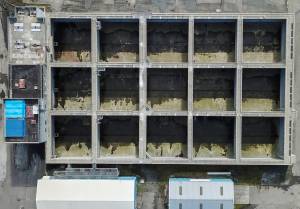
Nearby, Monroe is running out of room to convert the sludge left over from its wastewater treatment process into compost.
So, instead of hauling the sludge to a remote site at a huge expense, the city has proposed trucking it two miles to the honor farm site.
There, the city wants to use some of the methane to fuel a dryer that would cook the sludge, condensing it into a commercial-grade fertilizer.
In turn, the farmers aim to use the fertilizer to grow corn to feed their dairy cows, generating more manure, and of course, milk.
“There’s a self-sustainability to this plan,” said John Lande, the city’s wastewater treatment plant manager. He also called it “environmentally friendly” because it keeps methane, a greenhouse gas, out of the atmosphere.
The city last week agreed in principle to buy methane from the farmers for use in the sludge dryer. But that agreement won’t be made official until a feasibility study is conducted. The city hired a consultant to figure out how to make the project work.
Lande said he expects the partnership with the farmers to be at least five times cheaper than shipping the sludge out of the city for treatment.
The farmers are calling it a win, too.
“The kicker here is, when they’re done drying their product, it’ll be a Class A material that can be used anywhere on anything, including on vegetables,” said Dale Reiner, one of the farmers involved in the project. “We’ll use that as fertilizer on our farmland. We won’t need as much commercial fertilizers.”
The farmers also could make more money selling methane directly to Monroe than they would using it as fuel to create electricity for sale to the Snohomish County Public Utility District.
The savings come because 62 percent of the energy potential is lost when methane is burned to create electricity, Reiner said. Only 10 percent of that energy potential is lost when methane is used to dry sludge.
The farmers don’t know how much methane to expect from the waste of up to 2,500 cows, but they expect it will be more than Monroe can use.
Their group, called Qualco Energy, plans to sign a contract with the PUD once it knows how much electricity its generator will produce, Reiner said.
Qualco Energy is a partnership between the farmers, the Tulalip Tribes and a local environmental group.
The group has contracted with a company to build a bio-digester and generator at the honor farm site, Reiner said. It has all the permits it needs, has loans and grants to get the project started and expects to start construction by the end of the year.
The group is simply waiting for Monroe to finish with its feasibility study, Reiner said. If the dryer option doesn’t work for the city, then Qualco Energy will use the methane for generating electricity.
The utility is supportive of Qualco Energy.
“We value the fact that it is local,” said Steve Klein, the PUD’s general manager.
The PUD, currently considering a large investment in tidal energy, is looking for locally produced sources of renewable energy, Klein said. It’s doing it to support the county’s fast-paced growth and because a new state law requires it do so.
Reporter Lukas Velush: 425-339-3449 or lvelush@heraldnet.com.