Old dump stands in way of Everett’s dreams
Published 10:53 pm Wednesday, August 1, 2007
EVERETT – Behind the razor-wire fence sits Everett’s dream of a vibrant riverfront district.
On this vacant land southeast of downtown, city leaders envision a mix of hundreds of condos, a movie theater, restaurants and a park with a kayak launch onto the Snohomish River.
For now, though, much of land remains closed to the public.
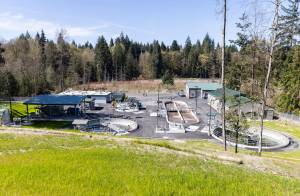
That’s because it sits on a former landfill that is still producing a potentially explosive mixture of methane and carbon dioxide.
The fence around the 70-acre closed dump, city leaders say, is just a precaution.
Still, the city was required in 2003 to spend $1.5 million on a gas collection system on two sides of the site because methane gas was seeping through the ground to other land beyond the landfill’s boundary.
Even more work is needed to bring the property up to development standards. Initial estimates say that will cost anywhere from $3 million to $6 million.
Methane is produced through chemical reactions and as waste from bacteria that eat and decompose over the decades.
Methane is explosive at high concentrations. The state Department of Ecology requires that the gas collection system and other monitoring equipment be in place before the movie theater or condos are built or any other development occurs.
The gas collection system would include a grid of underground pipes and a vacuum to siphon gas out of the ground at the same rate it is produced. The gas also would be vented away from buildings and people.
Without this system in place, officials fear the gas could collect in enclosed spaces and create a danger of accidental explosions or fires.
There is a chance still that things won’t work out. But the potential of the new district is worth every cent to the city, said City Councilman Mark Olson.
“It would be a mistake just to walk away from a significant facelift for the city just because of the technical challenges of the system,” he said.
Olson, who serves on the council’s riverfront committee, joined other city leaders on visits to communities near San Francisco and Chicago, where landfills were successfully redeveloped.
Charlie Hickcox, development director of the Everett riverfront project for San Diego developer OliverMcMillan, shares Olson’s optimism for the public-private effort.
The privately held development firm, which agreed earlier this year to buy the land from Everett for $8 million, also agreed to work with the city to design, build and maintain a gas collection system.
“It’s something that we take very seriously,” he said.
John Keeling, an environmental engineer with the state Department of Ecology, said this would be a first-of-its-kind project in the state.
So-called brownfield developments are more common in built-out urban areas near Los Angeles and San Francisco, where developers can compensate for the added challenges.
“Our land values have only become comparable to California’s in the last few years,” Keeling said.
Every building constructed in this riverfront district must be equipped with monitors that detect gas levels and alarms that would sound well before reaching dangerous levels.
Overall, the riverfront project is about 225 acres, including the old dump and the shuttered pulp mill.
Since then, Everett has spent nearly $50 million preparing the site for development.
Reporter David Chircop: 425-339-3429 or dchircop@heraldnet.com.