Conferrence helps farmers sow ideas for the future
Published 9:06 pm Wednesday, November 19, 2008
Farmers have to do it all in order to survive in a modern world.
No matter the weather and its effects on their plants and animals, they must eke out a profit. They must stay on top of food trends, transportation issues and even the latest marketing techniques. They’re also required, sometimes by law, to serve as environmental stewards of the land.
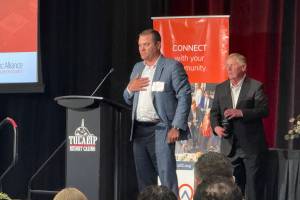
Today the region’s ever- challenged farmers will be at the center of attention at Focus on Farming V: Breaking New Ground at the Lynnwood Convention Center.
It’s the county’s annual agriculture conference, featuring keynote speakers, numerous breakout seminars and a lunch of food from area producers and cooked by area chefs. Expected to draw about 600 people, the conference is open to farmers, ag-oriented business people, government officials and local residents for $35 advance admission.
Though many of the seminars will focus on marketing savvy, farmers will find a variety of other trendy topics, including how to grow strawberries using hydroponic stacking systems, how to distill various crops to make brandy, whiskey and liqueurs, and how to properly raise grass-fed beef.
Grape experts, meanwhile, will lead a talk on how to successfully ripen red and white wine grapes in the Puget Sound region. At the end of the conference, attendees will have a chance to sample some of the wines already grown and bottled in Puget Sound paired with locally made cheeses.
Though the program is a project of the county’s Office of Economic Development, local farmers had a hand in shaping the conference, said Laura McLeod, who is organizing outreach for the event.
“They’re either farmers or work in agriculture,” McLeod said of the committee that helps plan the conference. “Ideally, they all consult with farmers and growers to find out what they most need to know to be successful now and in the future.”
Profitability is a key concept of the conference break-out sessions.
One covers how SPIN (Small Plot INtensive) farming techniques can bring in $100,000 per acre. Another session on “polyculture” details how growing fruit and vegetables together can bring in about $90,000 per acre.
Two keynote speakers will address the entire conference, including Bob Gore with the Washington state Department of Agriculture, who will talk in the morning about the future of farming in the state, and David Montgomery, a University of Washington geology professor who will speak during lunch.
In his talk, Montgomery will explain why the Romans were forced to conquer new lands and what it was about the American southeast’s agricultural practices that helped push the country into the Civil War: erosion. Montgomery, who published “Dirt: The Erosion of Civilizations” in 2007, may seem an unlikely candidate to lecture farmers.
Aren’t they the experts on soil?
Montgomery’s perspective is different, however, and comparatively far-sighted.
“One of the things I show in the book is it takes 500 to 800 years for the slow loss of agricultural soils. We’re only 100 years into it,” Montgomery said of the history of Washington farming. “In thinking about caring for the land, we should think over fairly long time frames. A farmer’s greatest legacy is going to be turning over their land to future generations. What shape are they going to turn it over in?”
Montgomery will talk about options farmers can use to slow erosion on their property such as no-till methods, which can help combat global warming by putting more organic material, and therefore carbon, back into the soil.
Using no-till and other organic methods, Montgomery said, is becoming more important because synthetic fertilizers are energy-intensive to make and are becoming increasingly expensive.
Farmers may need to use alternative farming methods just to stay in business by the end of the century.
“We’re going to start running out of oil and people aren’t going to stop reproducing,” Montgomery said, adding that healthy farmland is the key to a healthy civilization. “We ought to be doing everything we can to help farmers stay farmers so there are farms close to the city in 50 years.”
“Fresh local food is the best food we can have,” he said. “If farmers can’t profitably take care of their land, then all of our great-grandkids will take it in the shorts.”
Reporter Sarah Jackson: 425-339-3037 or sjackson@heraldnet.com
Resources
Learn more about the conference at www.focusonfarming.org.