Court affirms Marysville withheld public records on Cedar Grove
Published 4:06 pm Sunday, July 12, 2015
MARYSVILLE — A state appeals court has upheld a lower court’s ruling that found the city of Marysville violated the state Public Records Act.
The city was sued by Cedar Grove Composting in 2012 over withholding emails between the city and a consulting company it had hired, Strategies 360.
A decision by Snohomish County Superior Court judge Richard T. Okrent said that those emails were not exempt from public disclosure under the attorney-client privilege.
The judge went even further in ruling that 173 documents and emails that concerned Marysville and Cedar Grove, but which were internal to Strategies 360, also were releasable, even if they had not been shared with the city.
That was because Strategies 360 was working as the functional equivalent of a government employee, Okrent ruled.
The Superior Court told the city to pay Cedar Grove $143,740 in fines.
The judge also awarded Cedar Grove $127,644 in costs and attorney fees, which was less than half of the $283,000 Cedar Grove had sought.
Last Monday, a panel of three Court of Appeals judges published an opinion that upheld the Superior Court’s decision on every count.
“We’re very disappointed, obviously, with the decision, but I don’t think there’s any kind of new observation that we have,” said Marysville Chief Administrative Officer Gloria Hirashima.
Hirashima said the city hadn’t decided whether to appeal the case yet.
“At this point we’re still reviewing the decision,” she said.
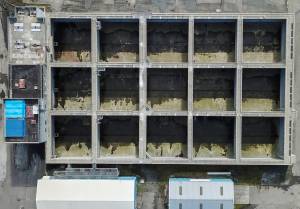
The city and the company for years have been at odds over the smell that sometimes emanates from Cedar Grove’s compost mounds on Smith Island in north Everett.
In 2011, the Puget Sound Clean Air Agency fined Cedar Grove $169,000 for violations going back several years.
The fine was later reduced to $119,000, in recognition of the company’s efforts to control odor, and that money went toward funding an odor control study.
Some residents also have sued Cedar Grove over the smell.
When the contested emails were released by the city as part of the most recent suit, they revealed that Marysville and Strategies 360 had jointly developed a campaign to help residents write letters to newspapers, apply for grants and undertake other activities in a campaign against Cedar Grove.
Some of the contested emails that were initially withheld showed that the city was using Strategies 360 in a deliberate attempt to circumvent the Public Records Act, especially regarding a mailer that was sent out disguised to look like it came from the Clean Air Agency.
“We are trying not to share the draft with Gloria and Marysville folks, primarily to give them ‘plausible deniability’ about the mailer and its contents,” read one exchange between an employee of Strategies 360 and an employee of the Tulalip Tribes.
In writing the opinion for the appeals court, presiding Judge J. Robert Leach said that Strategies 360, by acting clearly in the interest of Marysville and being paid to do so, was effectively working as an employee, and it was not necessary if those communications were shared with the city in order for them to be disclosable.
In fact, this was a deliberate attempt to conceal the city’s role in the campaign, Leach wrote.
“They accomplished this by directing and delegating activities to Strategies and then disavowing knowledge of those activities, with the express object of avoiding the reach of the PRA,” Leach wrote.
Chris Winters: 425-374-4165; cwinters@heraldnet.com. Twitter: @Chris_At_Herald.