How the Airbus-Bombardier alliance could squeeze Boeing
Published 1:30 am Tuesday, October 17, 2017

By Frederic Tomesco, Josh Wingrove and Richard Clough / Bloomberg News
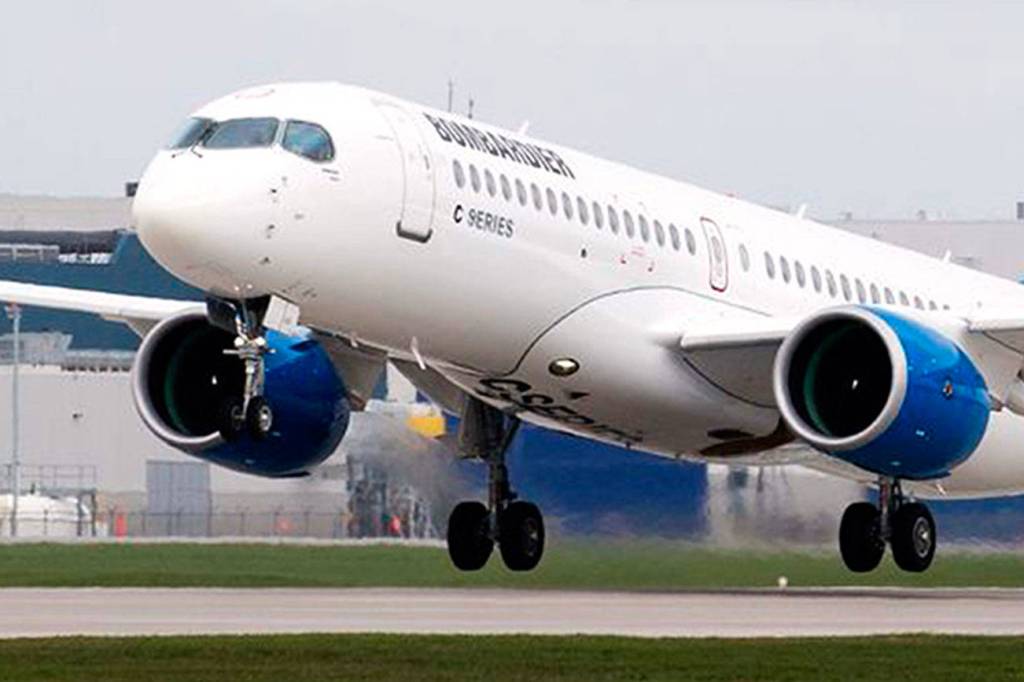
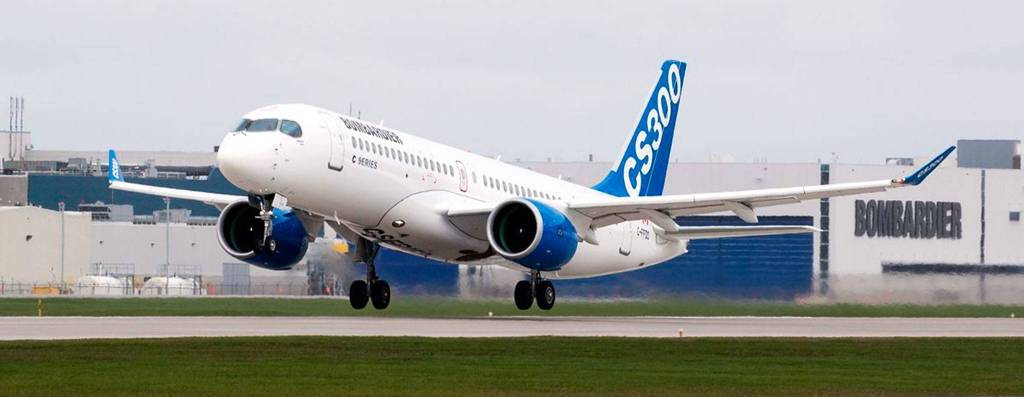
This week Airbus agreed to acquire a majority stake in Bombardier’s C Series family of small jetliners and said it plans to assemble the plane in the U.S. — vaulting a technologically advanced but slow-selling model onto the front lines of the battle with the Boeing Co.
Without putting up a dime, Airbus will have a controlling interest in the C Series program, and the European plane maker’s marketing muscle and production expertise likely will boost the viability of the all-new aircraft, which competes with some Boeing 737 variants. Canada-based Bombardier sunk more than $6 billion in developing the C Series, forcing it to rely on government assistance.
The deal also thrusts Airbus into the middle of a bitter trade spat between Bombardier and Boeing. Following a Boeing complaint that Bombardier sold 75 of its C Series jets to Delta Air Lines for “absurdly low prices,” the Trump administration recently slapped the aircraft with import duties of 300 percent — roiling U.S. relations with Canada and the United Kingdom, where Bombardier makes the plane’s wings.
In a potential effort to circumvent the tariffs, Airbus will add another final assembly line for the C Series at its factory in Mobile, Alabama, where the company builds A320s for North American customers. The facility will complement production at Bombardier in Canada.
By adding the C Series to its lineup of larger jetliners, Toulouse, France-based Airbus gains a new dimension for its portfolio while offering access to a fuel-efficient aircraft with advanced technology, large windows and oversized middle seats. The C Series is operated by carriers such as Lufthansa. But Bombardier hasn’t landed a major order for the plane, which typically seats 108 to 160 passengers, since the Delta deal 18 months ago.
The all-new Canadian jet is smaller than some models of the Renton-built Boeing 737 MAX, the upgraded version of an airframe that was designed 50 years ago. The same goes for most of Airbus’s A320 family of jets, which debuted in the late 1980s. Both the C Series and the A320neo, the newest version of Airbus’s single-aisle workhorse, are powered by the geared turbofan engine made by Pratt & Whitney, a division of United Technologies Corp.
“Airbus is now willing to accept that certain markets require a smaller aircraft,” Torbjorn Karlsson, a partner in the civil aviation practice at Korn Ferry International in Singapore, said in an interview. “There are a lot of unserved markets in the U.S. but my guess is the biggest new market potential is in Asia. Boeing will not have a response, and that’s going to make it tougher for them to compete. This sharpens the battle lines.”
“This is a program that has been waiting for a deus ex machina, and wow, it really got one,” Richard Aboulafia, an aerospace analyst at Teal Group, said in an interview. The deal casts Airbus as a global player while Boeing comes off as “a bit shortsighted and protectionist. It makes Boeing look like they’ve been playing tic tac toe against a chess master.”
“The main risk would appear to be only that Airbus gets distracted,” Sandy Morris, a London-based analyst with Jefferies, said in a note.
It’s too soon to say if the new Alabama production line would enable the C Series to avoid U.S. tariffs. The duties were applied to C Series planes “regardless of whether they enter the United States fully or partially assembled,” according to a U.S. government fact sheet on the matter. Boeing said Airbus and Bombardier were just trying to get around the restrictions.
“This looks like a questionable deal between two heavily state-subsidized competitors to skirt the recent findings of the U.S. government,” Boeing said in an emailed statement. “Our position remains that everyone should play by the same rules for free and fair trade to work.”
Discussions with Bombardier started in August, said Airbus Chief Executive Officer Tom Enders. The Canadian company had also been in touch with a small group of Chinese state-owned enterprises about a C Series stake, said two people familiar with the talks.
Bombardier’s talks with China included Commercial Aircraft Corporation of China, or Comac, said one of the people, who asked not to be named because discussions were private. Comac declined to comment on the Airbus deal, and its media relations department said it wasn’t aware of any talks with Bombardier. The Canadian company declined to comment.
The Bombardier deal marks a reversal for Airbus CEO Enders, who personally vetoed a similar accord just two years ago, when the future of the C Series was in doubt and Airbus was grappling with the ramp-up of its bigger A350 model. Airbus isn’t interested in any other Bombardier assets, he said.
“Airbus gives the program security,” he said of the C Series in a telephone interview. Whereas some customers may have wavered previously because they couldn’t be sure of long-term customer support from the manufacturer, Airbus’s industrial heft changes the equation, he said.
Trump and Canadian Prime Minister Justin Trudeau discussed the deal Monday evening in a phone call, according to a statement from Trudeau’s office that provided no details of the conversation.
Bombardier values the C Series at about $2 billion and expects the joint venture to double the value of the program, CEO Alain Bellemare told reporters at a press conference late Monday in Montreal.
The company has agreed to provide $350 million in funding for the C Series in the first 12 months after the close of the deal, and as much as $350 million more, if required, over the two subsequent years, said Chief Financial Officer John Di Bert.
After the transaction, which is expected to be completed next year, Airbus will own 50.01 percent of the C Series partnership. Bombardier will hold about 31 percent and the province of Quebec, which invested $1 billion in the C Series after the cost overruns and delays, will have approximately 19 percent. Quebec will remain an investor in the C Series until at least 2023, said the province’s economy minister, Dominique Anglade.
Canadian Innovation Minister Navdeep Bains said the deal is subject to review under the Investment Canada Act.
“In my review, I’ll be looking to see how this deal will benefit Canadians, support our aerospace sector and create good jobs,” he said in a statement. “On the surface, Bombardier’s new proposed partnership with Airbus on this aircraft would help position the C Series for success.”
A Canadian government official said the deal is expected to be approved after its required review. The official, who asked not to be named because the discussions are private, characterized the deal as a company-to-company agreement that nonetheless had the support of France, Germany and Canada — the latter in part because it would preserve Bombardier jobs in the company’s home country.
Bloomberg’s Dong Lyu, Angus Whitley and Julie Johnsson contributed.