Snohomish County PUD plans for potential large-load customers
Published 1:30 am Saturday, May 16, 2026




EVERETT — Data centers, built to power artificial intelligence, aren’t in Snohomish County yet.
Before that happens, Snohomish Public Utility District officials want to be ready.
“Our current work is focused on planning and readiness so we remain capable of serving larger loads in the future, should projects materialize,” Snohomish PUD spokesperson Erica Keene said in an email.
Whenever an AI engine provides an output, computers need to run hundreds or thousands of equations to find and display the correct information, and sometimes incorrect information (known as hallucinations). A 1 million square foot data center will hold close to 3 million computers, known as servers.
These servers need a constant supply of power to operate and water to stay cool. A large data center can consume up to 5 million gallons of water per day, equivalent to what a town with 10,000-50,000 people would use.
Snohomish PUD considers a customer requesting anything over 2.5 megawatts a large load. Data centers often need hundreds of megawatts.
Over the last five years, PUD received an average of four large-load customer inquiries per year, with requests ranging from 3.5 to 150 megawatts, senior manager Angela Johnston said during an April 21 board meeting. In 2025, PUD received 8 large-load inquiries, she said.
A total of nine customers, ranging from 3.5 to 20 megawatts, are or will be receiving energy, she said. None were data centers.
AI-focused data centers can exceed $20 million per megawatt in construction costs, meaning a 100-megawatt facility could cost around $2 billion.
Last year, data centers accounted for 37% of electricity used in Grant County, utility officials told The Seattle Times. Most of the county’s data centers are located in Quincy, where residents are fighting the Grant Public Utility District.
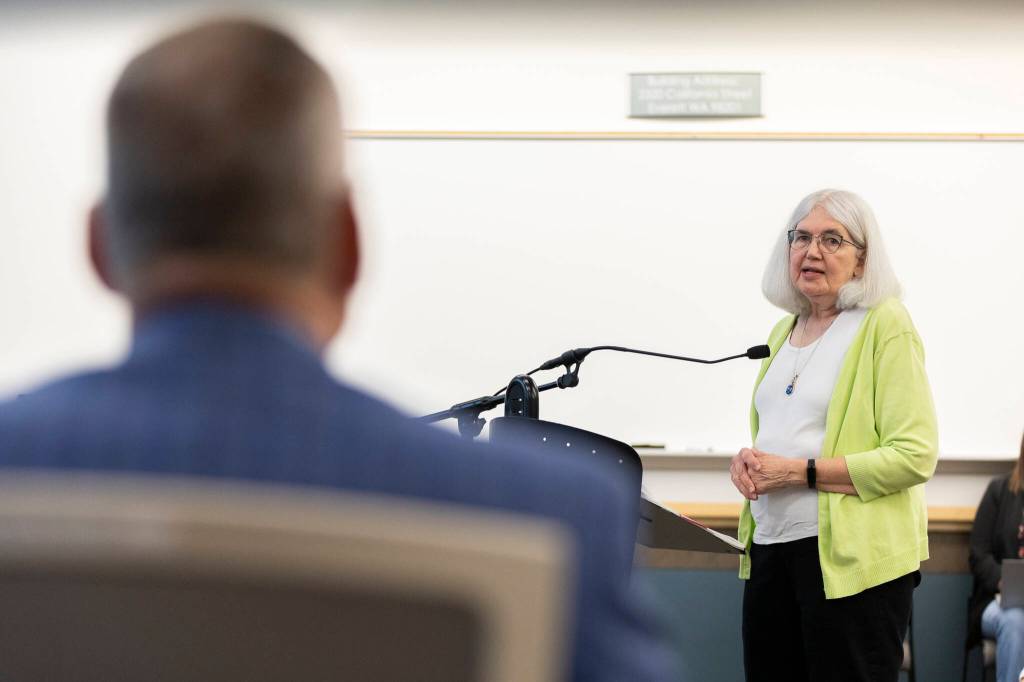
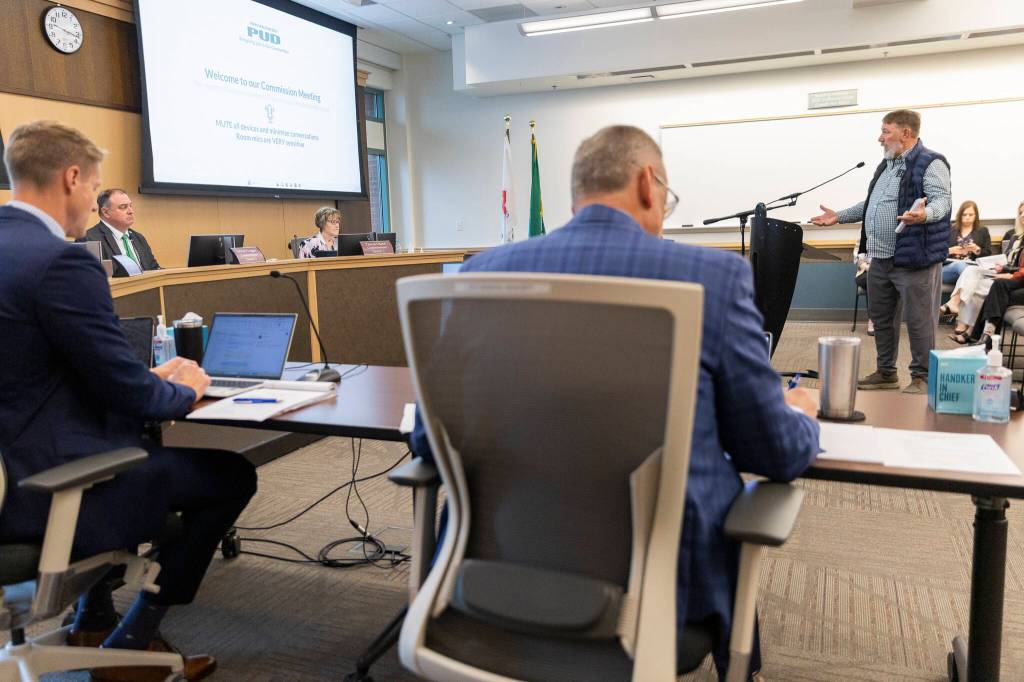
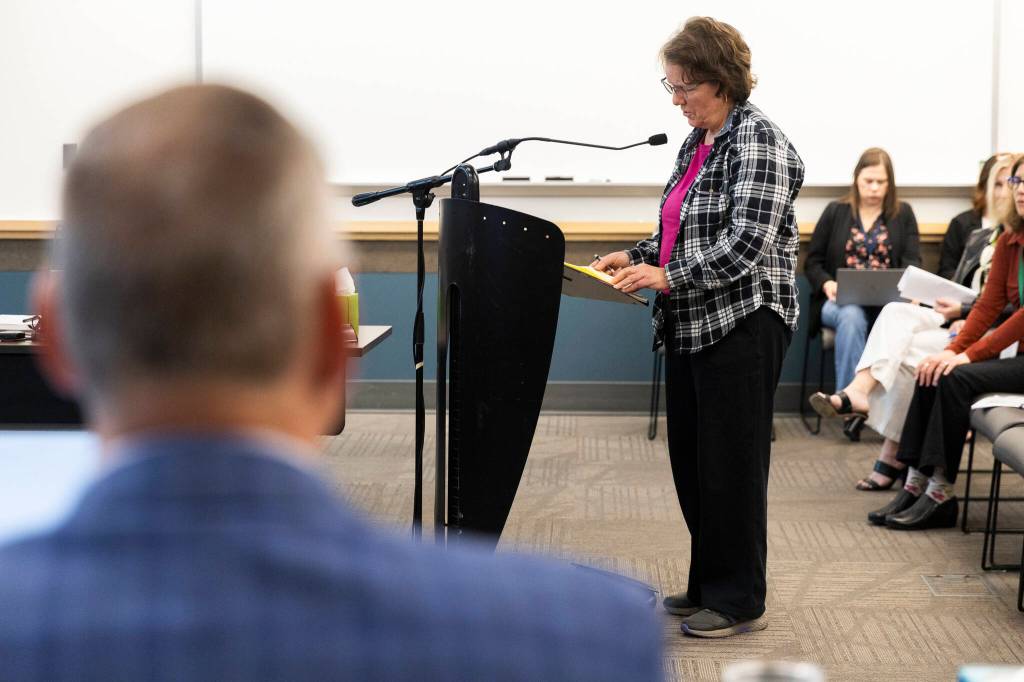
At a Snohomish County PUD Board meeting on May 5, Arlington resident Julie Winchell expressed her concern for the amount of water data centers use.
“Approving contracts to supply enormous amounts of water to any business seems risky at the least, and at the worst really foolhardy in today’s environment, given climate change, with water becoming scarcer,” she said. “This is not the time to inflict any more stress on the area’s lakes, rivers and aquifers.”
Camano Island resident Mary O’Farrell said that data centers are “not the economic vitality our communities want or need.”
“Hyperscale data centers will destabilize scarce water, power, land and other well know impacts, while employing few people after construction,” she said.
Arlington resident Terry Anvik spoke about how little information is available about these projects.
“I really came here to become educated,” he said. “Power is more and more important every day. Basically it keeps us alive and so that really focuses our attention.”
No matter the size, requests for power are all treated the same, Johnston said during April 21 meeting.
“When new load requests come in, we assess feasibility, the timing, the system impacts and the cost responsibilities together,” she said.
The “cost responsibility is critical,” Johnston said, saying that developers would pay for all infrastructure required to facilitate a large load project, including impact studies, new transmission lines and substations, if needed. In other words, “growth pays for growth,” she said.
“We’re constantly balancing reliability, financial exposure and affordability so that supporting growth doesn’t come at the expense of our existing customers,” Johnston said. “Affordability and economic vitality move in parallel.”
There are systemic reasons Snohomish County may not be an ideal location for a data center, according to Snohomish PUD Chief Customer Officer John Hoffman.
“We generate a very small portion of the power that our customers use,” he said in an interview after the May 5 meeting.
Snohomish County PUD generates about 6% of the power its customers use, Hoffman said. The rest is purchased from Bonneville Power Administration, the agency that provides about one-third of the electricity generated in the Pacific Northwest, primarily from hydroelectric projects.
“The great part about being a BPA customer is that we do have incredibly clean power. We have not had a resource adequacy issue,” Hoffman said. “One of the disadvantages to being a BPA customer is if you have a very large load request come in, we just can’t say yes. We have to figure out if we could supply the power.”
Also, potential large-load customers choose to build outside of Snohomish County because of PUD’s growth-pays-for-growth model, Hoffman said.
“We’re going to identify down to the wire, the substation, the transformer, the transmission line, how much it’s going to cost to add to our infrastructure to serve that customer, and then we require them to pay it up front,” he said.
Grant County has been attractive to potential data centers because of its low rates, Grant PUD spokesperson Chuck Allen said in an email.
Grant PUD’s electric service rates have traditionally been about half of the state average and about one-third of the national average, a reflection of the county’s hydropower assets, Allen said.
“However, we now have to bring more expensive power generation into our county to serve growth primarily coming from our large industrial sector, which includes data centers,” he said. “These large power-using customers will cover this additional expense with their rates.”
This April, large power-using customers, including data centers, received an average rate increase of 9.5%, Allen said. Residential, agricultural and small business/general service customers received an average rate increase of 3.5%, with a similar rate increase predicted to happen over the next decade, he said.
Taylor Scott Richmond: 425-339-3046; taylor.richmond@heraldnet.com; X: @BTayOkay —