Want to plant a tree? These cities will give you one for free.
Published 1:30 am Saturday, May 16, 2026


EVERETT — Residents in certain neighborhoods of Everett, Marysville and Tulalip can get free trees thanks to a grant-funded program that hopes to increase the amount of vegetation in neighborhoods that lack tree cover.
The Urban and Community Forest Program launched in 2024 after grant funding from the U.S. Forest Service paid for the Snohomish Conservation District to run the urban forestry program. The Snohomish Conservation District, founded in 1941, is funded by the state and county to provide services that help encourage a healthier environment.
The tree program is targeted toward neighborhoods that currently lack significant amounts of tree cover, including parts of the Delta neighborhood in northeast Everett, sections of the Port Gardner and Riverside neighborhoods near Everett Station, and significant parts of south Everett around Highway 99 and West Casino Road. The entirety of the Tulalip Reservation is also included, as well as parts of downtown Marysville.
It’s part of a push toward a more equitable distribution of trees, as research has continued to point out the benefits of urban tree planting, including removing pollution, preventing runoff, sequestering carbon, decreasing buffer noise from roads and cooling streets.
But, oftentimes, areas with lower incomes don’t have the same access to tree cover as wealthier neighborhoods. Research has shown that across the country, census tracts with lower incomes typically have fewer trees than areas with higher incomes. One study from 2021 found that on average, lower-income census tracts had 15% less tree cover than higher-income ones — and averaged about 2.7 degrees Fahrenheit hotter.
The desire to try to close that gap led to the U.S. Forest Service’s grant program toward community forest projects, funded by $1.1 billion from the 2021 Inflation Reduction Act.
In Everett, the city and the Snohomish Conservation District hope to plant over 3,700 trees by the end of 2028, at which point the grant funding lapses. Alberto Vazquez, an outreach coordinator at the city of Everett’s parks department, said he hopes to spread the word about the opportunity the program provides.
“Residents can take advantage of something where you can have a nice, shady area, you can be a part of the change that Everett is making, help make it look beautiful,” Vazquez said. “We love to encourage that for residents, and be like, ‘Hey, you can be part of this change for Everett.’ You can help us keep it green, keep it environmentally safe, and perhaps get a couple apples.”
People who take part in the program can request a wide variety of tree species, mostly small or medium-sized, ranging from around 20 feet in height to 50 feet. The program also offers edible trees, including trees that grow apples, plums, figs, pawpaws, pears and cherries.
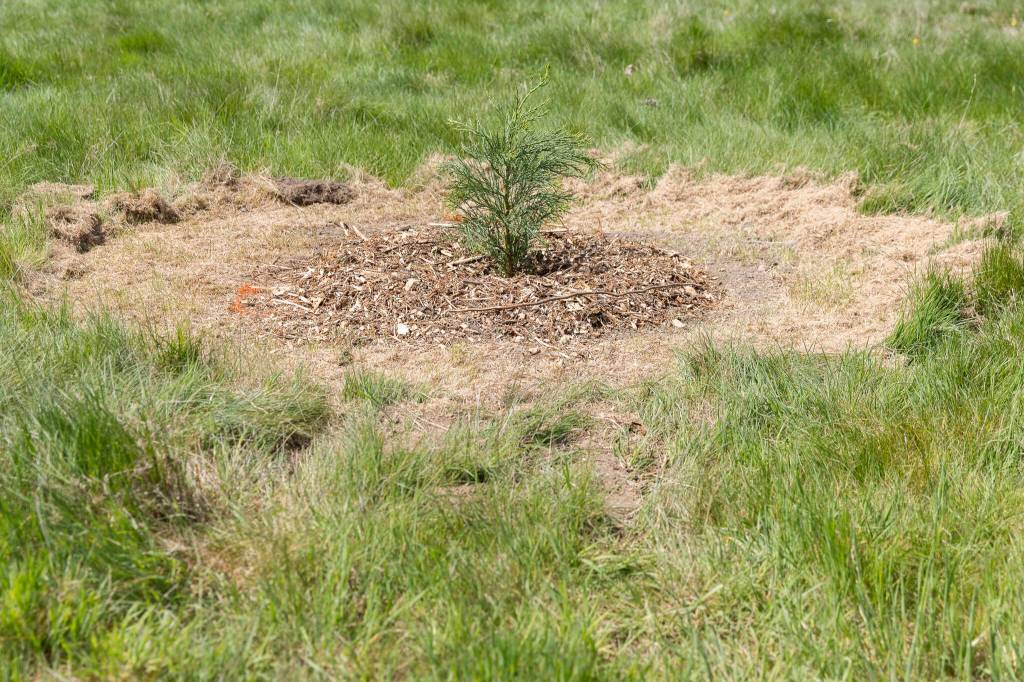
Ambitious participants can even request a Giant Sequoia, the world’s largest tree species, which can grow over 250 feet tall and live for as long as 3,400 years.
Haly Rylko, the project manager for the Urban and Community Forest Program at the Snohomish Conservation District, said the organization offers a mix of native and nonnative trees that do well in urban conditions. As climate change continues to warm the region, many of the species on offer are also drought-tolerant, she said.
“We try to offer different species every year,” Rylko said. “… This is a five-year program, and another component of a resilient urban forest is diversity.”
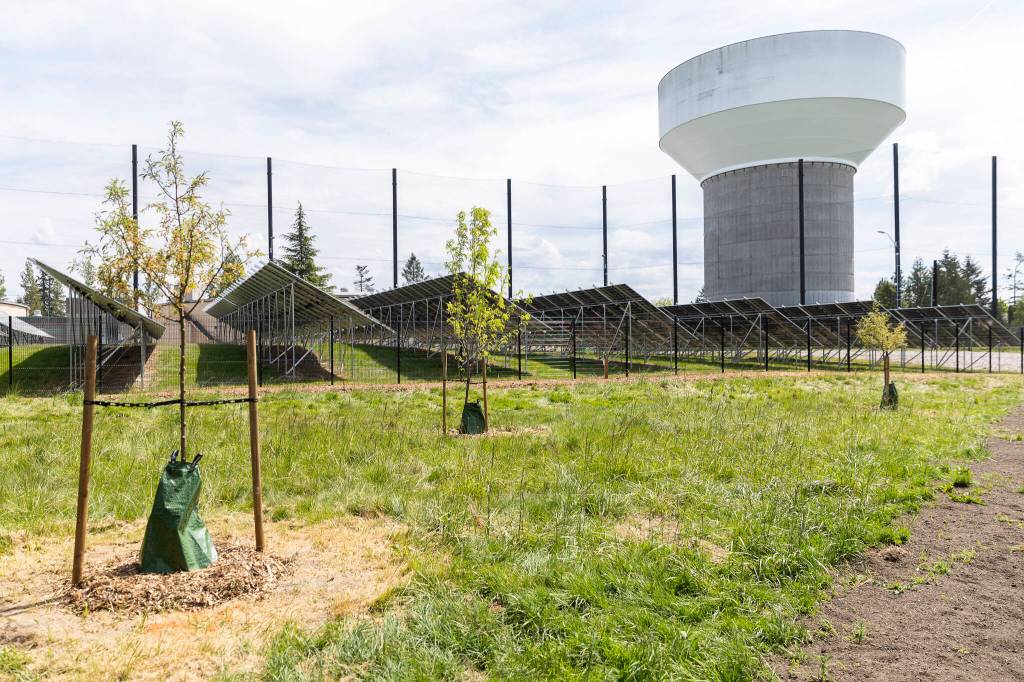
In addition to distributing trees to residential areas, the program also does work in public parks across the city, including planting trees along the interurban trail and creating a public orchard in Henry M. Jackson Park, Rylko said. In a couple of years, she said, people may be able to go pick their own fruits from the newly grown trees on public property.
It’s not just limited to property owners, either. Long-term tenants living with little outdoor space can still take part in the program by requesting small trees that can fit in pots. The program offers apple trees that are small enough to fit on a balcony, Rylko said.
Staff from the Snohomish Conservation District also offer ongoing support to people who take part in the free tree program. Vazquez said that participants have a choice whether or not to plant the tree themselves, and will receive guidance on how to properly care for their new tree.
“There are just so many reasons to invest in tree planting, both for the people who use these spaces but also for the habitat and ecological services they provide,” said Rylko. “… Hopefully, people 30 years down the road are going to be happy that we planted 3,000 trees in Everett these last few years.”
For those who want a free tree, applications for the Urban and Community Forest Program are available online: everettwa.gov/3271/Urban-Community-Forest-Program. To see if your neighborhood is included as one of the areas serviced by the program, an online map is available at tinyurl.com/2ubdxnzm.
Will Geschke: 425-339-3443; william.geschke@heraldnet.com; X: @willgeschke.