Boeing marks the start of 777X production at Paine Field
Published 1:30 am Monday, October 23, 2017
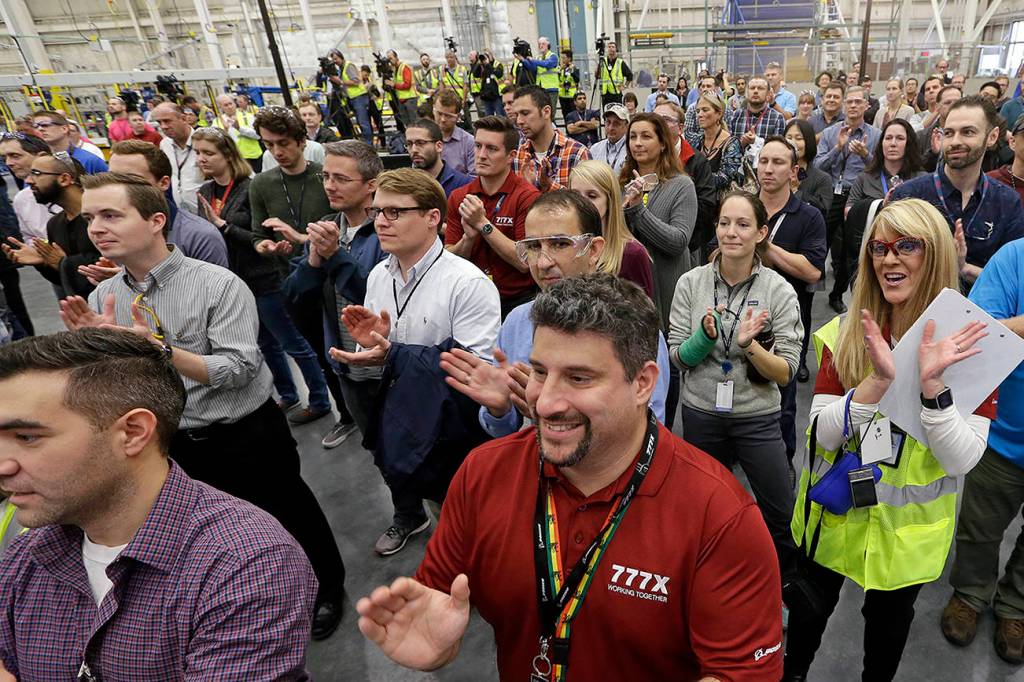
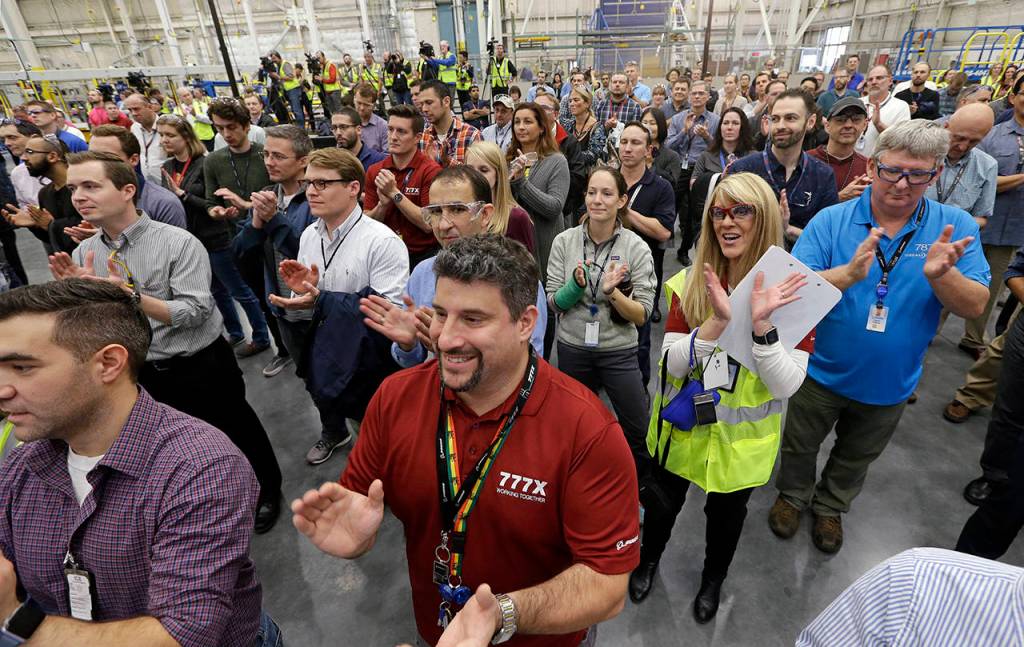
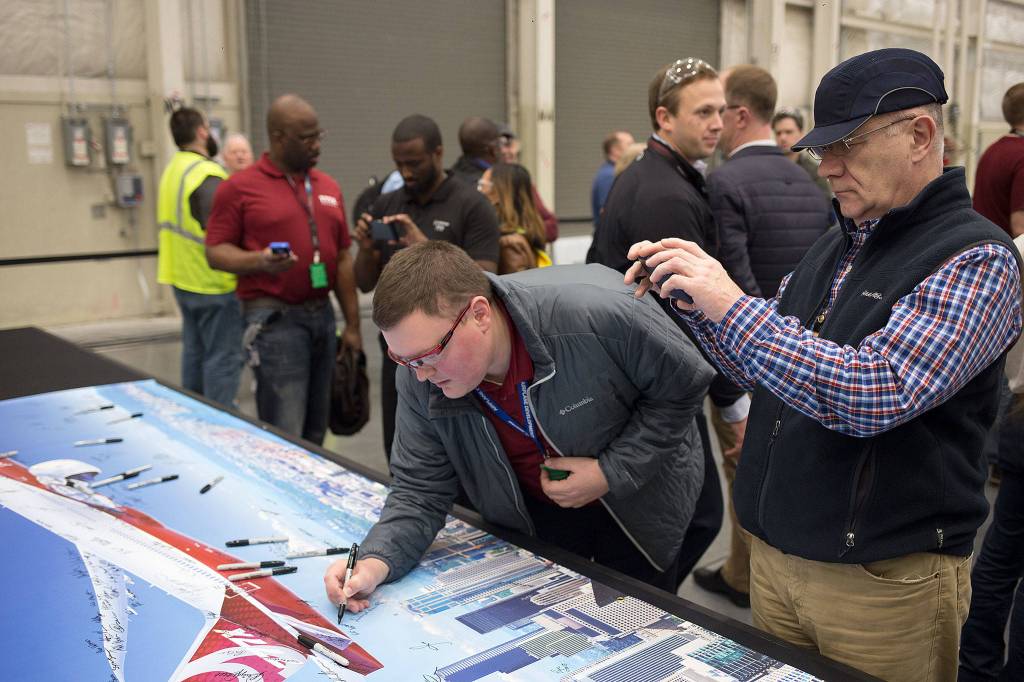





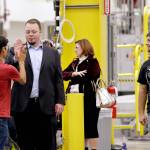


EVERETT — The Boeing Co. started assembly of its new wide-bodied jet, the 777X, on Monday afternoon with lofty rhetoric and a showcase of state-of-the art equipment.
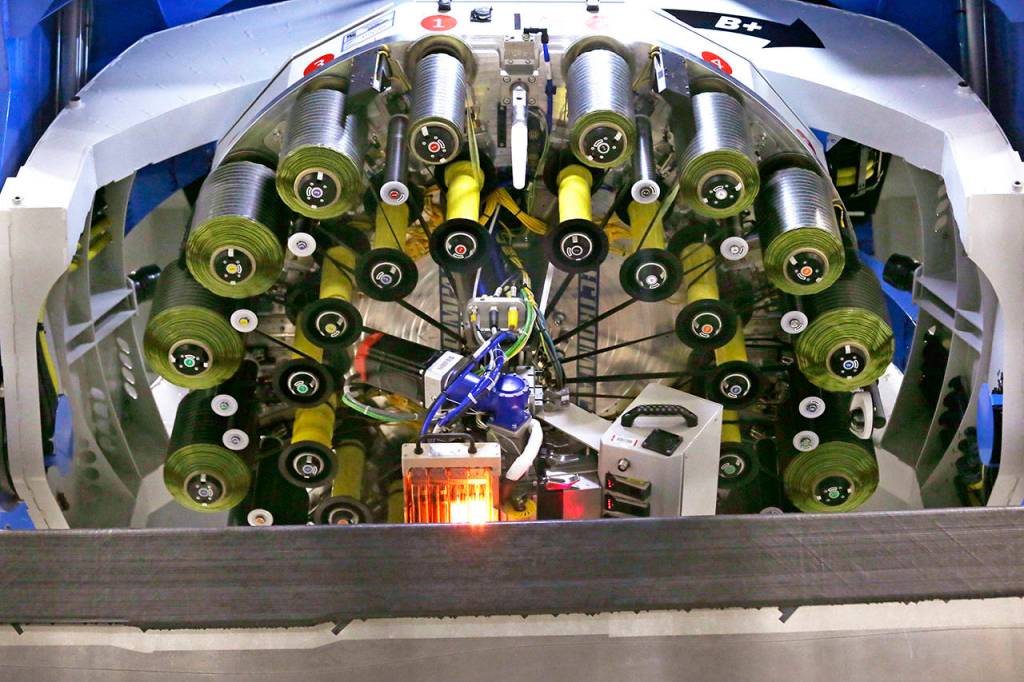
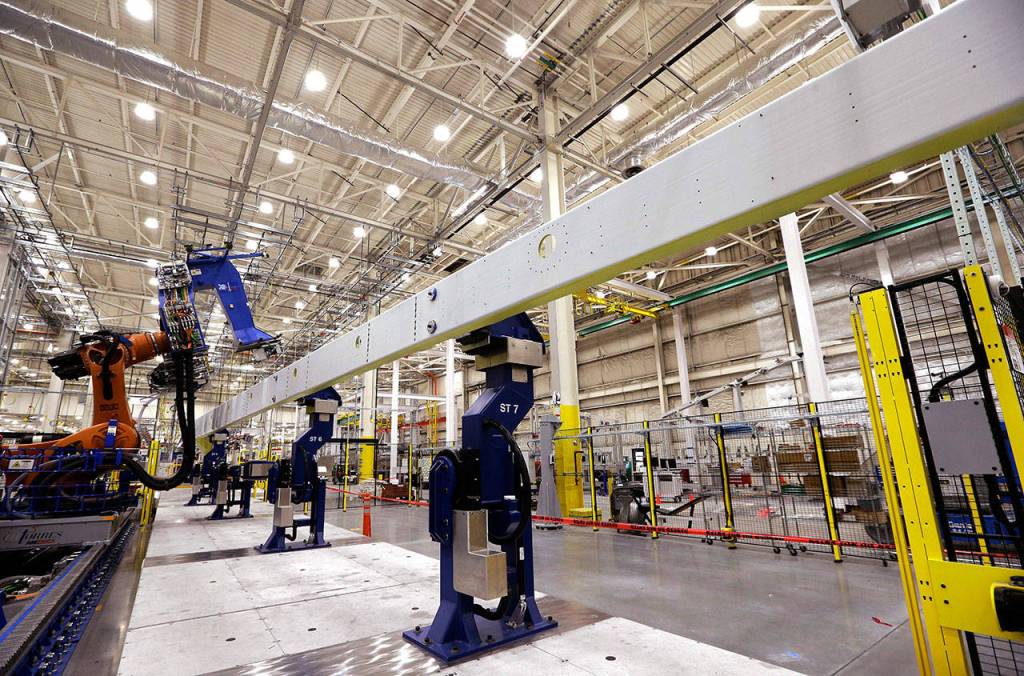
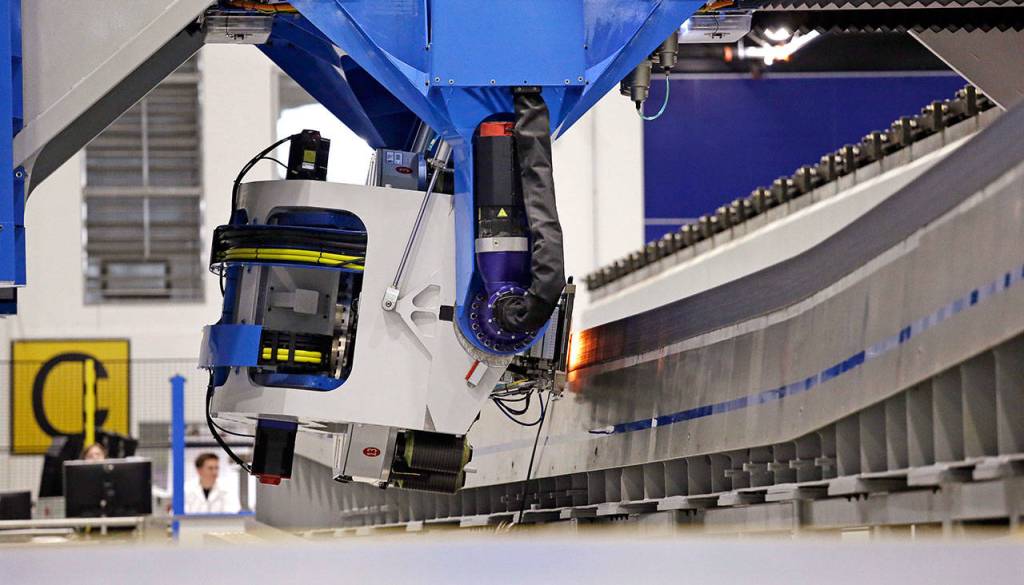
It began shortly after 1 p.m. as a machine drilled the first hole in one of the spars — beams that make up the front and rear edges of the wings — for the first jet of its kind. In a separate building on the periphery of Paine Field, a machine built by Mukilteo-based Electroimpact created a spar for another wing with strips of carbon fiber.
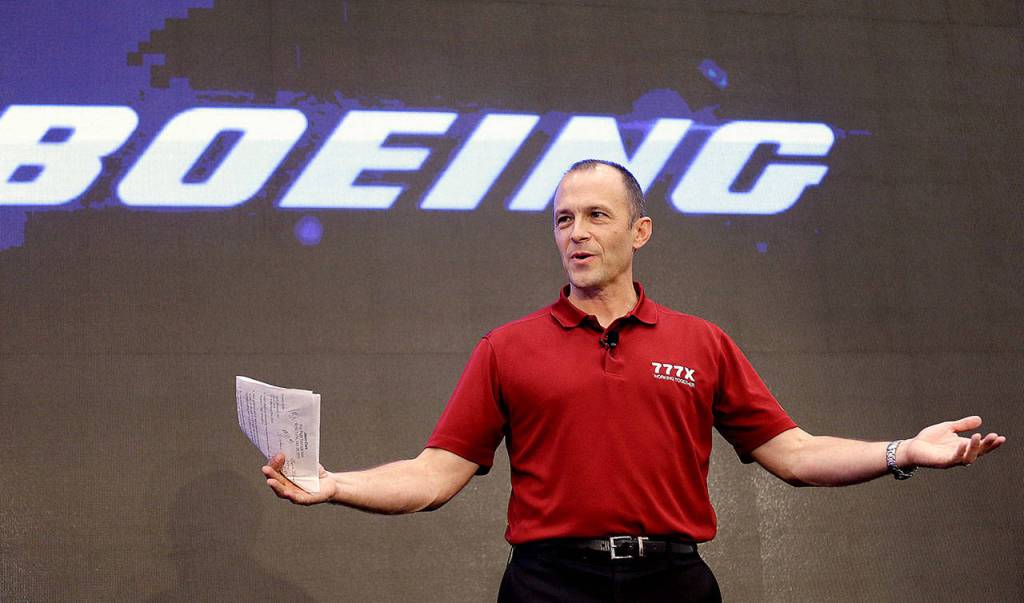
“It’s going to set a new bar for commercial travel,” Jason Clark, vice president of 777/777X operations, told a couple of hundred employees and journalists gathered on the factory floor.
“We’re pushing the boundaries to where they’ve never been before.”
Aluminum fuselage sections are under construction in Japan. By sometime next year, the first 777X should come together in Everett.
Test flights are expected in 2019, with delivery to commercial airlines in 2020.
So far, 340 orders have been placed for the plane. On Monday, Singapore Airlines signed a previously announced deal that includes 20 of the new jets.
The program is on track to meet its timelines, said Terry Beezhold, 777X chief project engineer.
The 777X will play off the original 777 program that started in 1990 and continues today. It also builds on some innovations from the 787 models that first flew in late 2009.
“Our goal was to take the best of the 777 and the best of the 787 and then bring in some new technology,” Beezhold said.
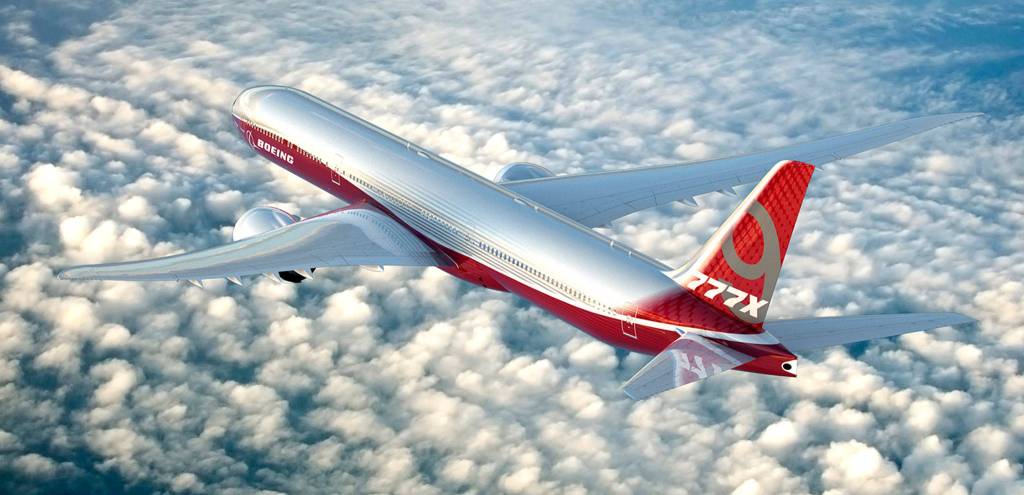
Boeing bills the 777X as “the largest and most efficient twin-engine jet in the world.” The aircraft will have the longest composite wings of any plane in the skies.
The wingspan is 235.5 feet. That’s more than 20 feet wider than current-production, “classic” 777s. The wingtips on the new jet will fold up so the plane can more easily maneuver at airports.
Like the 787, the wings are made of composite material.
“The wing you see is really a scaled-up version of the 787 wing,” Beezhold said.
Unlike the 787’s composite fuselage, the new 777’s body, like the present 777, will be aluminum.
Various 777X models will seat from about 350 to more than 400 passengers, with many interior design cues from the 787.
The aircraft will be powered by supersize turbofan engines developed by GE.
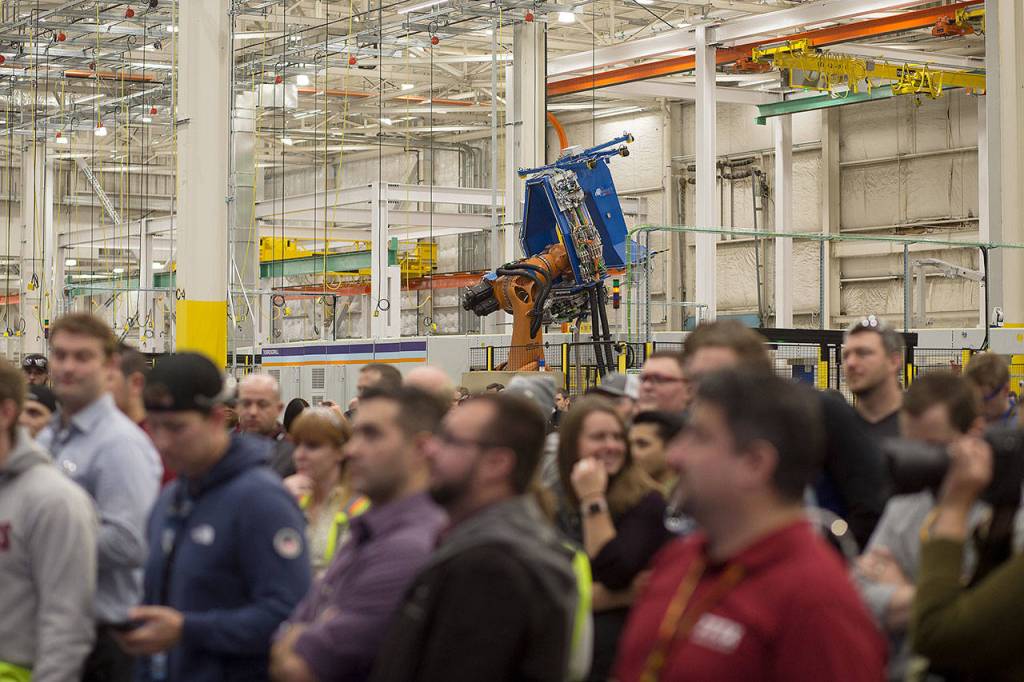
Boeing executives on Monday acknowledged increased use of automated production techniques for the 777x. They said robots are a move toward better safety and smarter ergonomics, rather than a way to shed human labor.
“We’ve used robots in areas where there is personal safety risk or repetitive motion risk,” Beezhold said.
Boeing agreed to build the 777X in Everett after securing concessions from union machinists and state tax breaks that are expected to save the company an estimated $8.7 billion over several years.
Documents that Boeing sent to various states in 2013, while the company was deciding where to build the 777X, said about 3,250 employees were expected to work on the program in 2018. That number was projected to rise to 8,500 in 2024, then decline slightly.
Boeing employed more than 66,000 people in Washington as of September, with a global workforce of more 140,000.
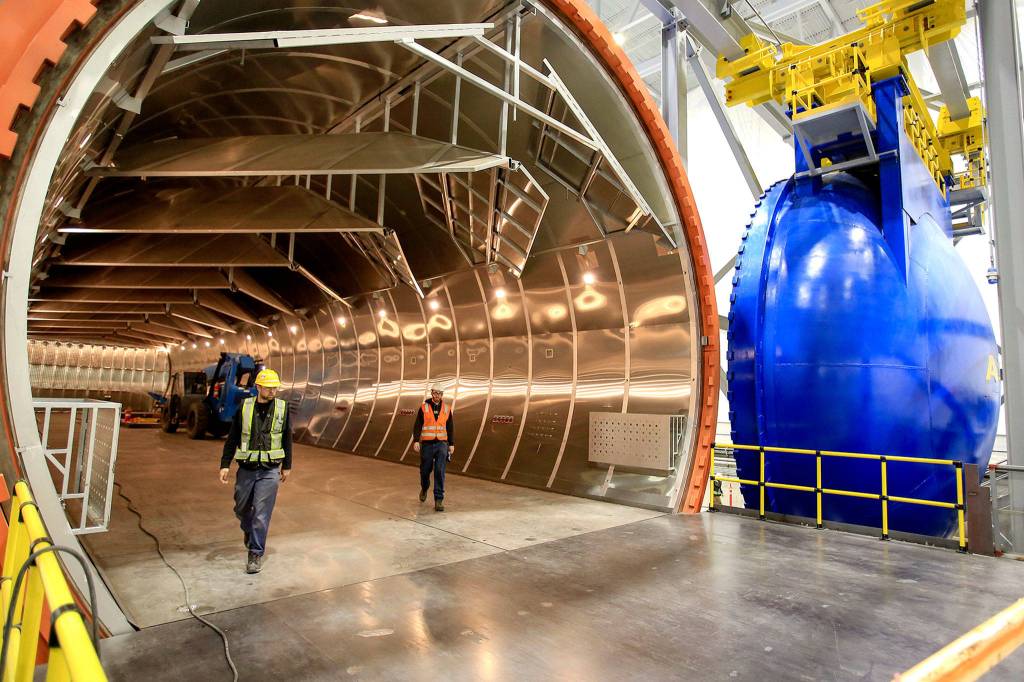
The company broke ground on the composite wing center in October 2014, after tearing down several office buildings from the 1960s. The billion-dollar wing building houses one autoclave, which works like a giant pressure oven to cook and harden carbon-fiber. There is space to add two more.
The plant promises to make the Everett area a leader in composite-materials manufacturing. Composites are increasingly used in cars and jets because of their high strength-to-weight ratio. They don’t corrode like metal.
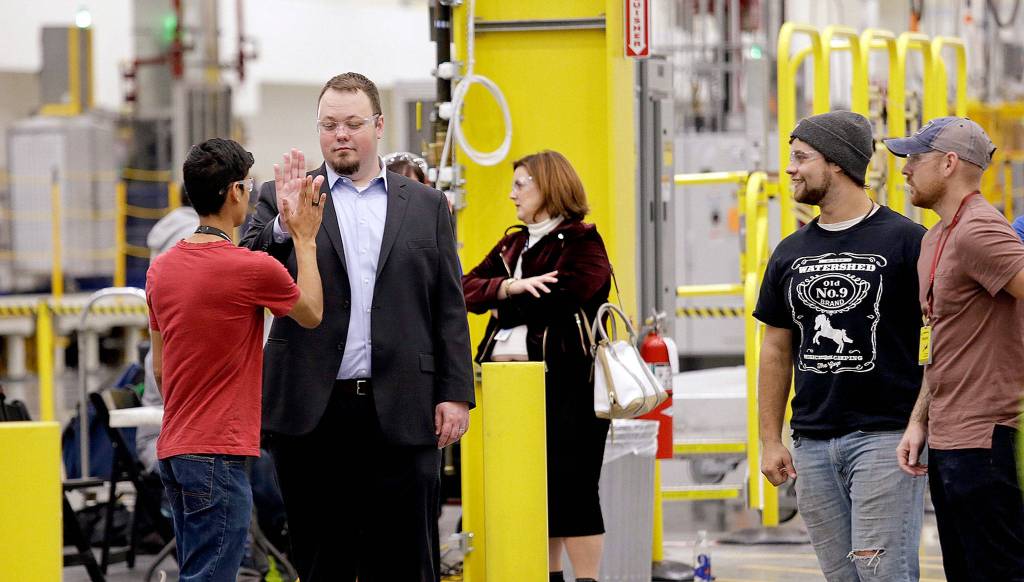
Wing assembly starts in an older building nearby. That’s where Monday’s main celebration occurred with throngs of employees, many wearing machinists union T-shirts.
“Coming to work right now feels more like working for a startup than a 100-year company,” said Paul Clark, a manufacturing representative for the 777x program, who is not related to the Boeing vice president with the same last name. The company marked its centenary last year.
He called the project “an incredible opportunity” to keep jet production in Everett and Washington state.
Rear spar mechanic Nick Just joined the 777X program about a year ago as one of many volunteers for the line.
“I just wanted to be able to be a part of something that will help Boeing continue on for the next century,” Just said.
The company engaged with the mechanics such as Just early in the process to design work stations for the line — asking for ideas initially and then bringing them into a room with 3-D images to get more feedback.
Just, who lives in Lake Stevens and has been with Boeing for six years, said he’s excited about the plane that he and his fellow workers are building.
“The people I work with are the best in the world,” Just said. “There’s no other team I’d rather work with than the one we have right now.”
Jim Davis contributed to this report.
Noah Haglund: 425-339-3465; nhaglund@heraldnet.com. Twitter: @NWhaglund.