Granite Falls celebrates new $34 million wastewater plant
Published 1:35 pm Friday, April 10, 2026
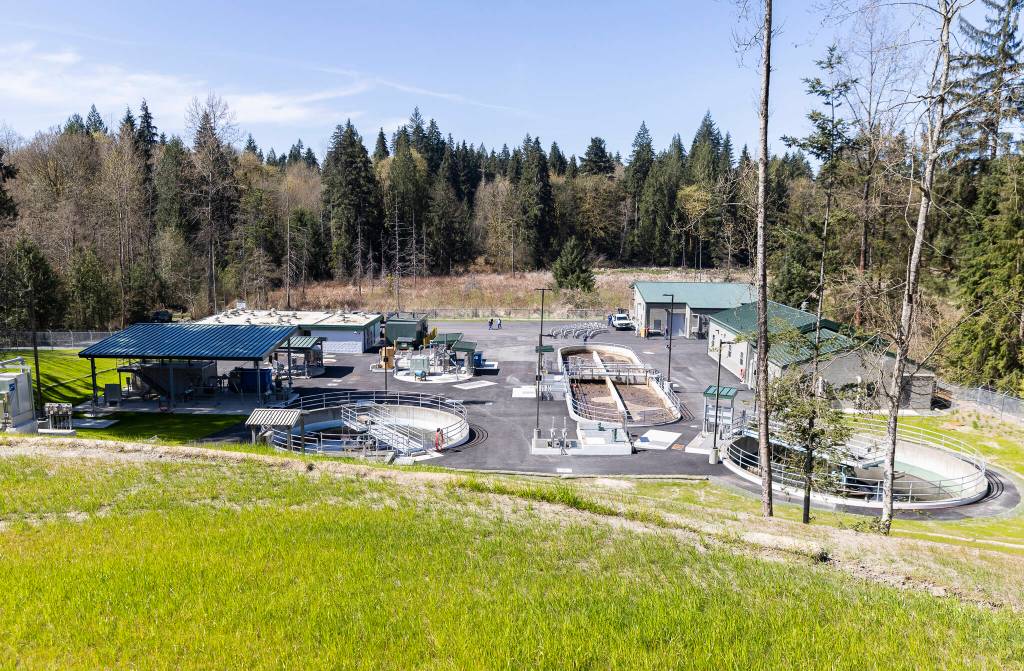
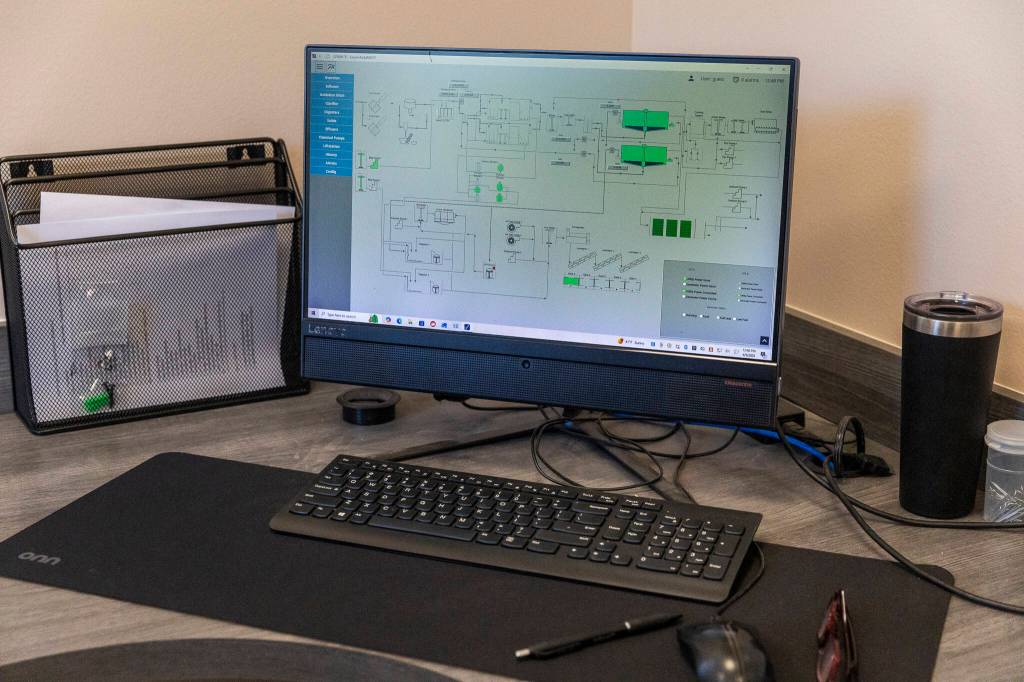
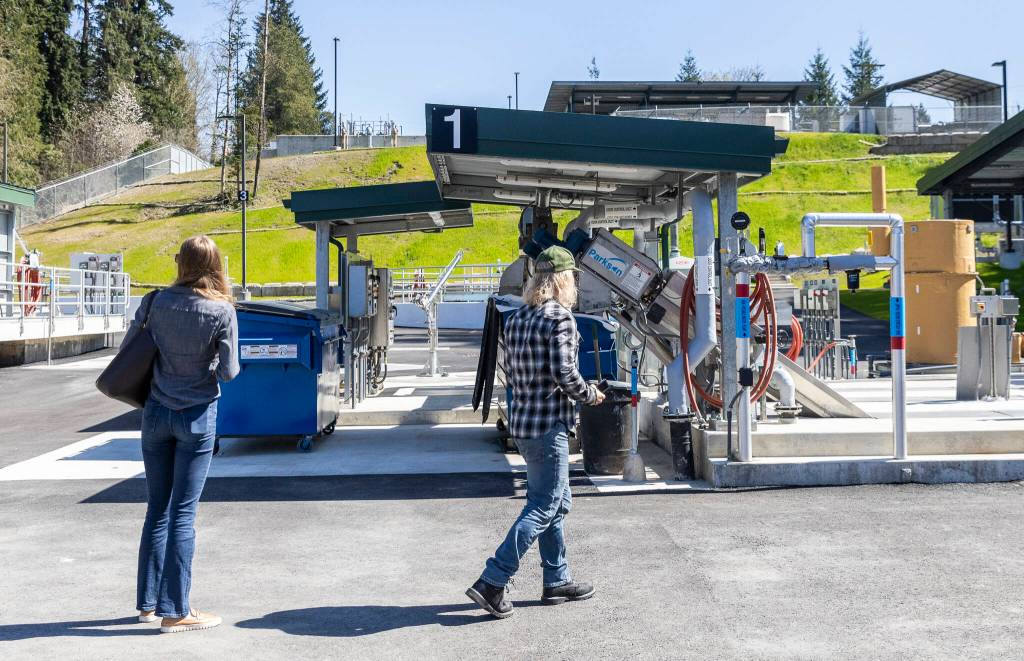
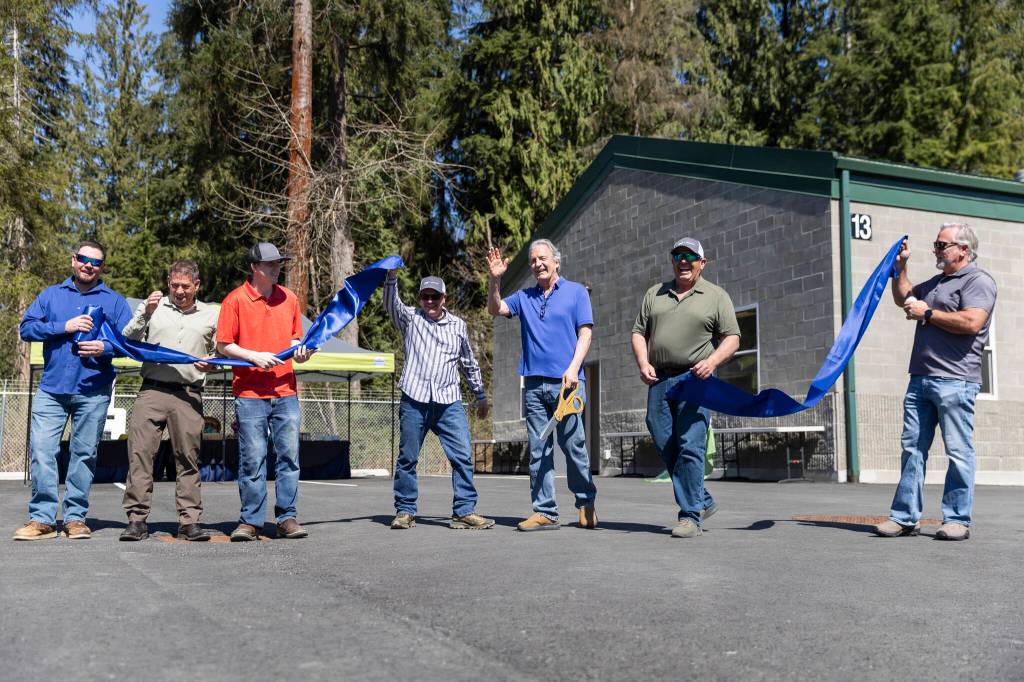


GRANITE FALLS — Granite Falls celebrated a new $34 million wastewater treatment plant Thursday with a ribbon-cutting ceremony and tours of the new facility.
Construction began in late 2023 and lasted more than two years. The city received a $1 million federal grant to help pay for the project, but most of the cost was covered by a loan from the Washington State Department of Ecology, City Manager Jeff Balentine said Thursday.
The city has a 30-year payment plan to pay off the loan, which relies primarily on raised fees developers will pay when they connect new homes to the sewer system, Balentine said.
“Growth pays for growth,” he said.
In 2018, the city’s sewer system was nearing capacity, so it stopped most new connections and halted development. Granite Falls lifted the moratorium on sewer connections in February, and developers immediately submitted applications, Deputy City Manager Brent Kirk said during the ceremony.
“Our Growth Management Act mandates our 2040 population, which is about 7,500. We’re at about 4,900 right now,” he said during public remarks. “This plant will accommodate up to about 8,800 in population total.”
Granite Falls population growing more than that probably won’t happen, Kirk said. The treatment plant is capped by the Pilchuck River, essentially a “large stream,” he said.
“If there was ever another expansion, it would have to be something going into the Stillaguamish River, which would probably be financially unfeasible for the city,” Kirk said. “So I guess the good news is you’re not going to see our little town grow much more than 8,000.”
The new facility includes upgrades to equipment, working spaces and, perhaps most important, odor control.
“It stunk,” lead operator Darin Jackson said in an interview. “Now everything’s covered.”
Much of the new equipment is now below the surface, including the starting point — perhaps the smelliest point — where foreign objects and debris are caught before moving through the rest of the system.
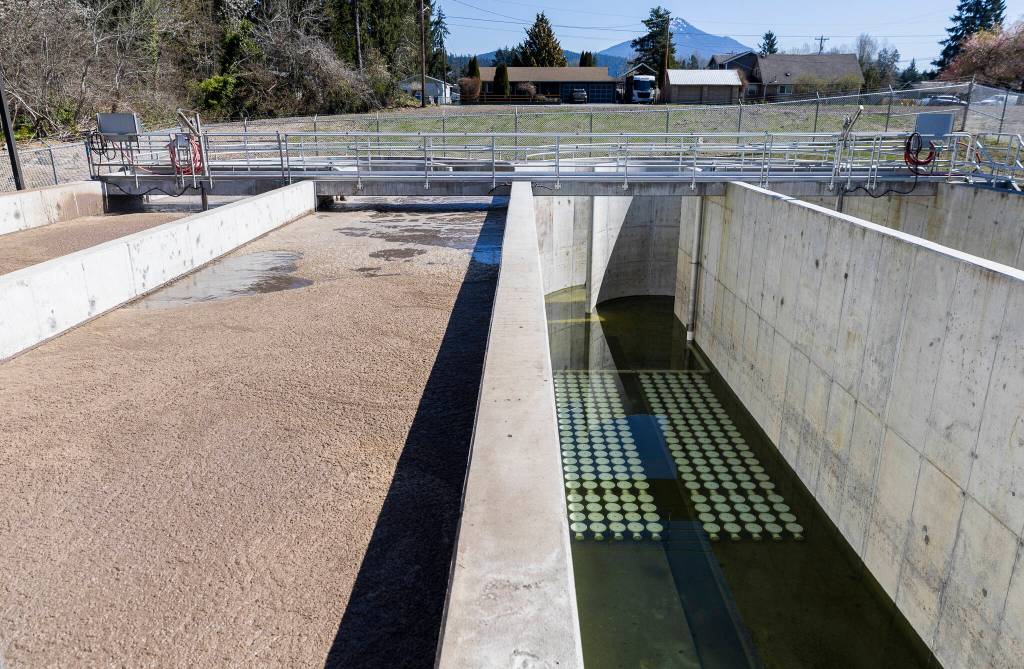
Oxidation ditches, which used to be right in the middle of the plant, are now up on a hill, away from the main working area. Now employees don’t have to smell the ditches as they circulate the water, which allows microorganisms to break down solids, remove nitrogen and add oxygen.
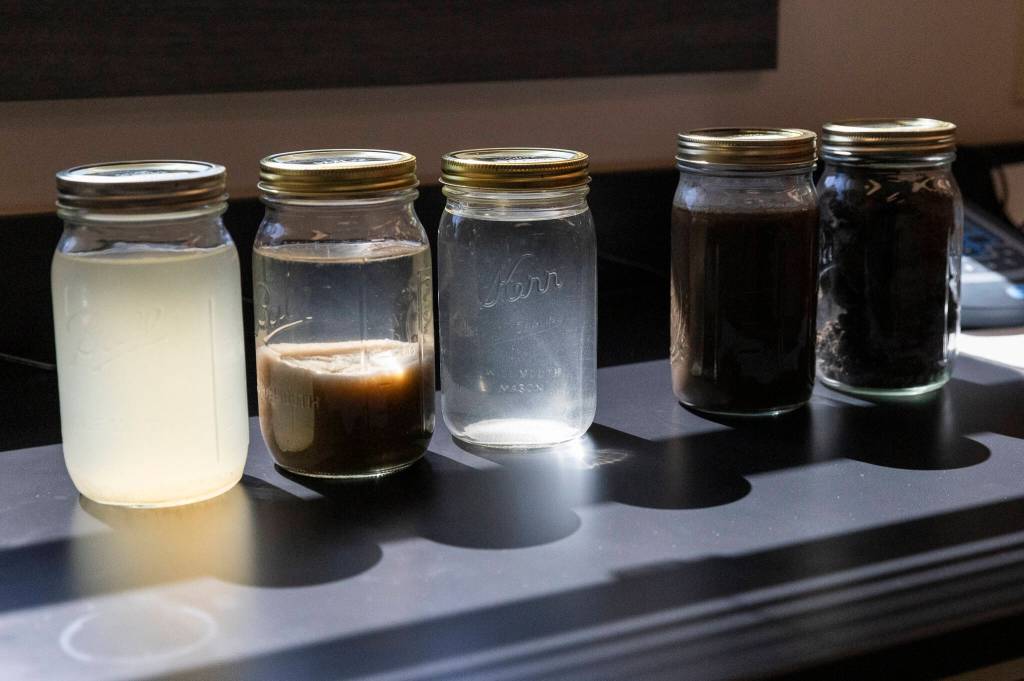
Eventually, most of the water is removed from the solids. The new treatment plant turns the solids into fertilizer that is trucked to Eastern Washington farmers.
“We used to compost here,” Jackson said. “Sunflower plants, 14-15 feet tall. I’d have to haul them in a horse trailer to get them to the fair because of the nitrogen that’s in the sludge.”
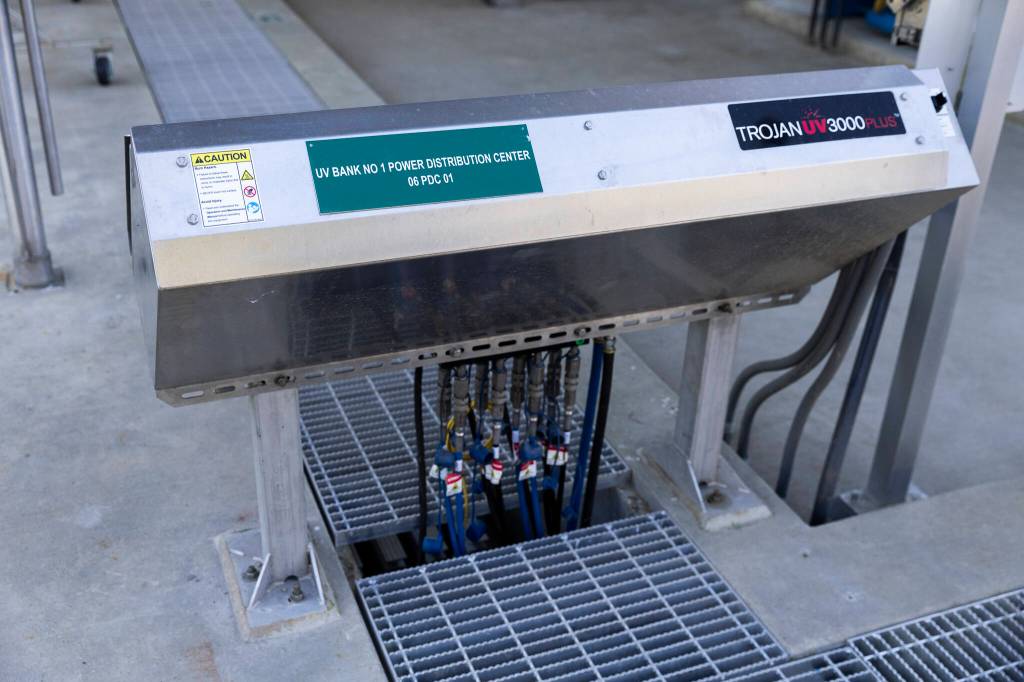
At the end of the process are new ultraviolet light banks that sterilize the water. At a minimum, the process must remove 85% of all solids and contaminants, including metals and bacteria.
The new plant gets up to a 95% removal rate, lab operator Nathan Stoneking said.
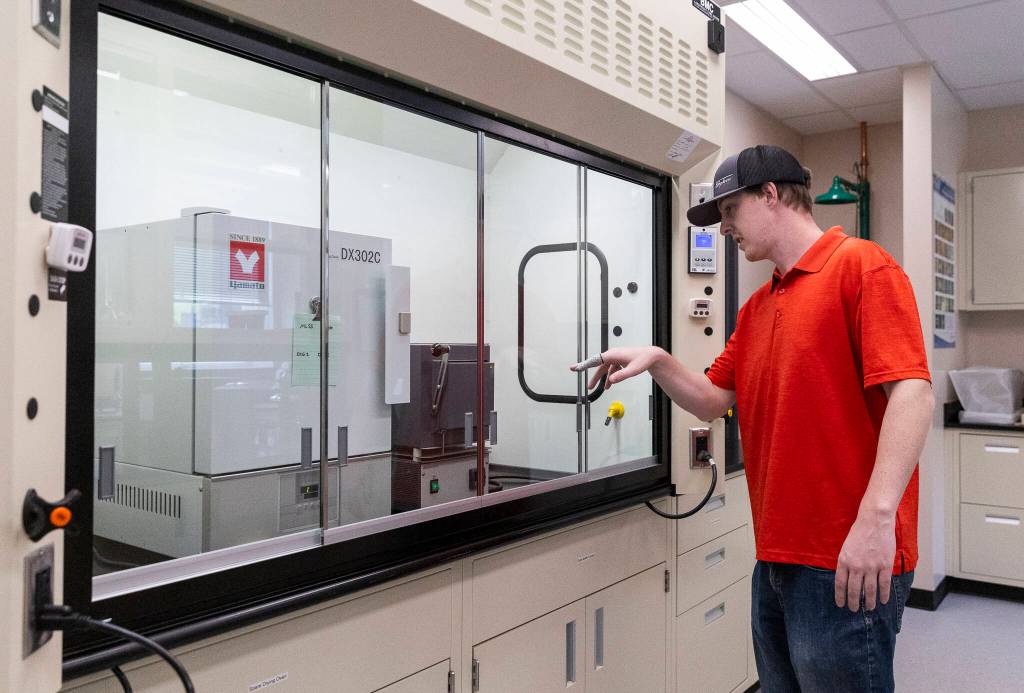
The new facility includes a new lab, which opens the doors to new testing possibilities, Stoneking said.
“It’s the new machines to do different tests. It’s having more space in here just to store things,” he said. “We’ll eventually find out what new tests we have to do. If we got to start testing metals eventually. If we got to start doing E coli or any of those, like, forever chemicals. That could come down the road. This lab helps give us that — more leeway — more room to do that.”
Jackson has been a Granite Falls employee for 25 years. He donated time to build a skateboard park in town, he said. Afterward, they offered him a job.
“I was building bridges and high rises and thought, ‘Well, I’m a single dad. Be nice to be closer to home,’” Jackson said.
He never saw himself working at a wastewater treatment plant, he said. He learned on the job and is now lead operator.
For Public Works Director Charles White, the new facility is exciting but also bittersweet, he said.
“The old plant was, it was familiar to us. It was, you know, had a lot of character,” White said. However, the old facility was laborsome and “antiquated at best,” he said.
“The public works guys really deserve a new facility,” White said. “The treatment techniques that this facility offers are going to be great for the Pilchuck River.”
Taylor Scott Richmond: 425-339-3046; taylor.richmond@heraldnet.com; X: @BTayOkay