Edmonds College students release salmon into Lake Ballinger
Published 9:18 am Tuesday, April 14, 2026
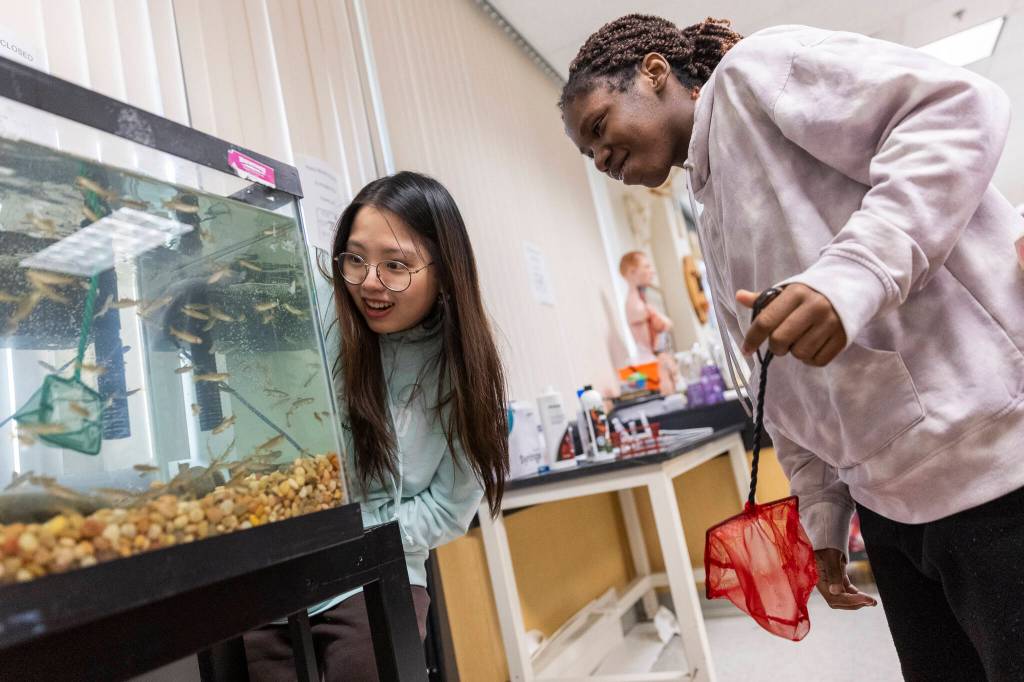
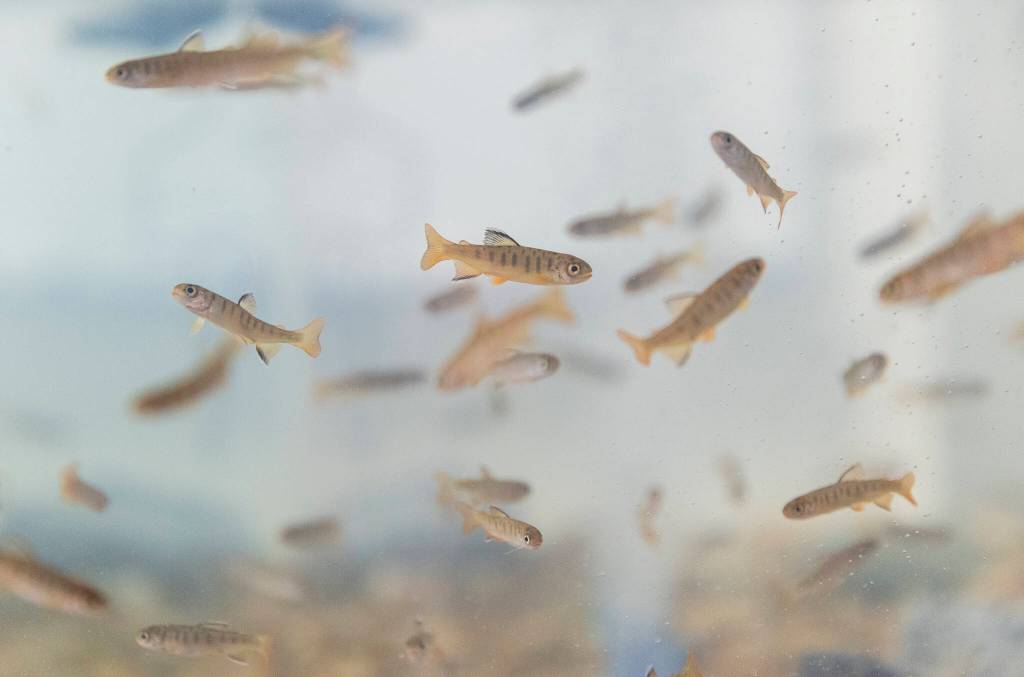
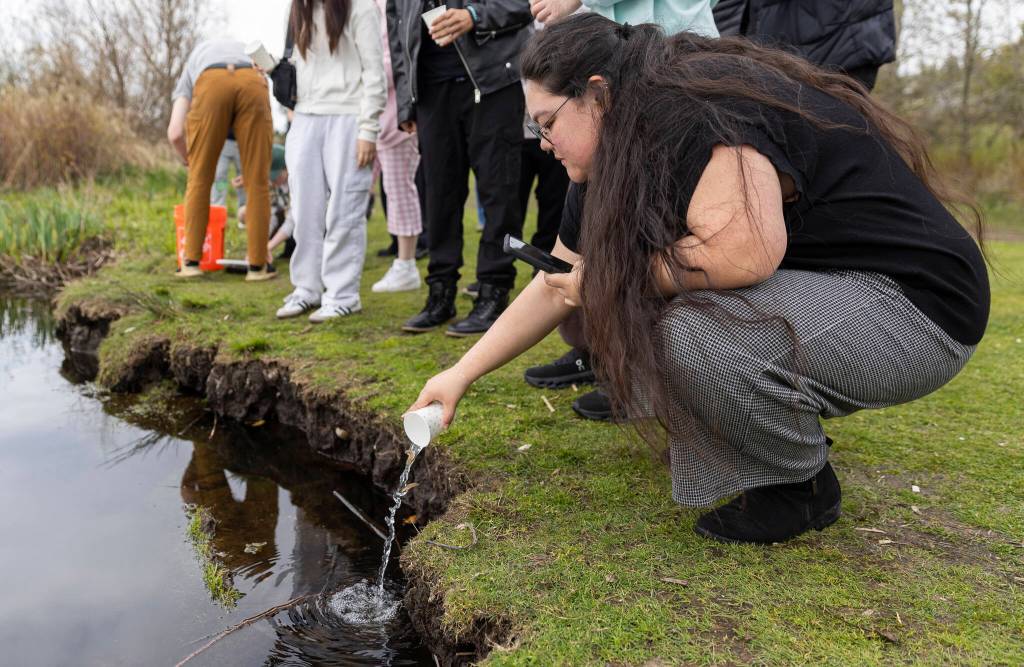
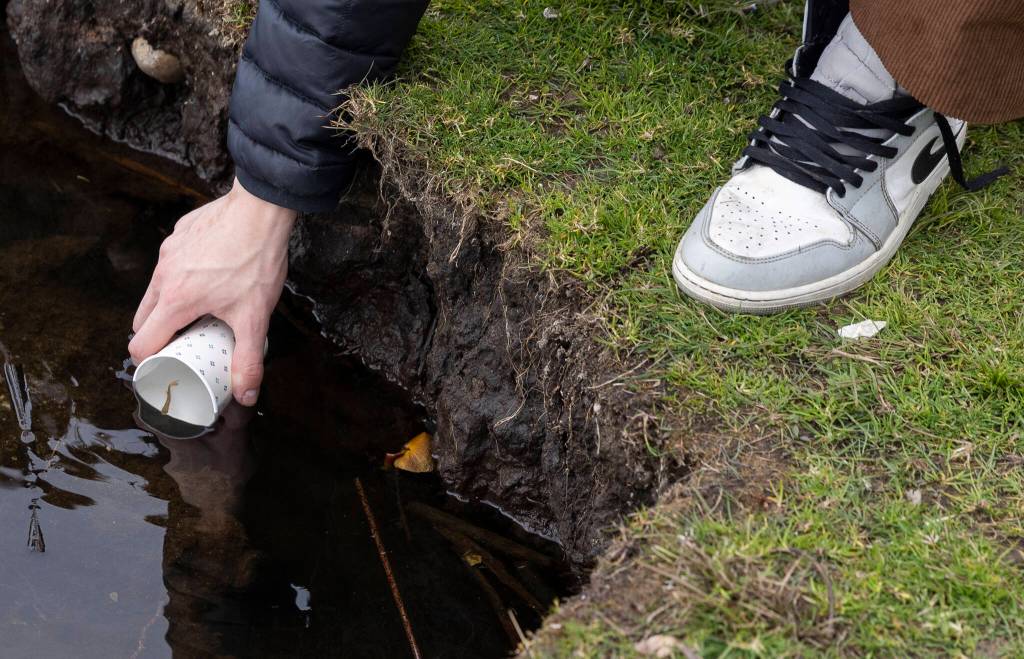


MOUNTLAKE TERRACE — About 80 coho salmon began their journey to the Pacific Ocean on Friday thanks to an Edmonds College class.
The salmon will swim across Lake Ballinger, through the McAleer Creek Watershed, into Lake Washington and eventually out into the Pacific Ocean. The process takes about a year-and-a-half for coho salmon, said Denise Shafer, who teaches an ecology class at Edmonds College. Salmon that survive the journey will make their way back to fresh water to spawn after a few years.
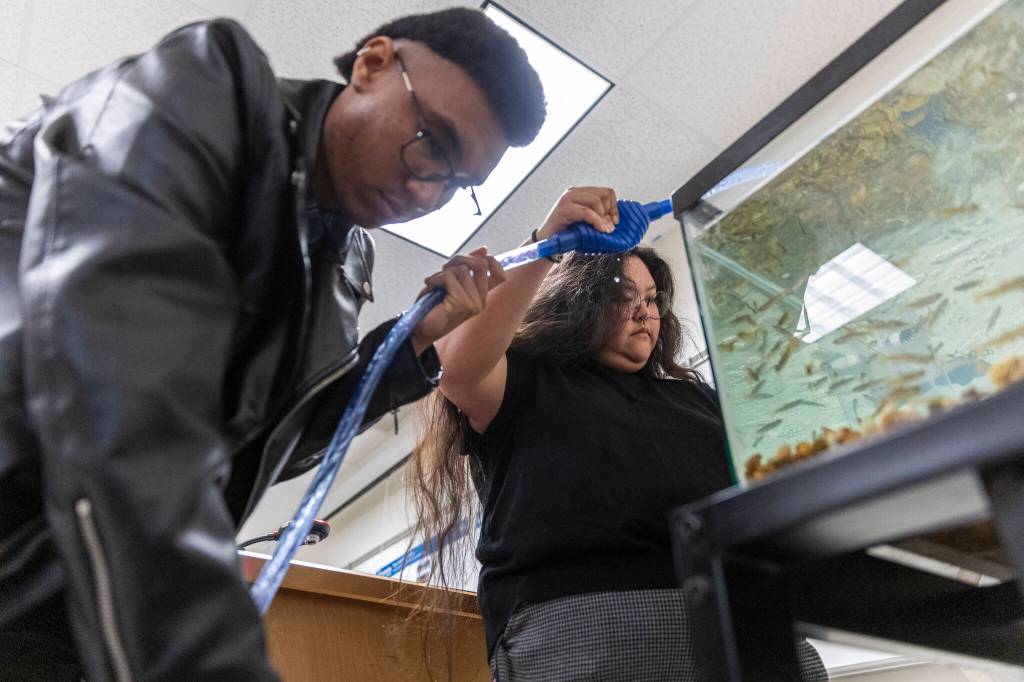
Shafer started teaching ecology at Edmonds College this year at the School of Academic Foundations. She knew she wanted to have a salmon tank in her classroom as a hands-on learning experience for her students. The city of Lynnwood’s environmental team donated a tank, and in January, Shafer’s class received 150 eggs from a hatchery in Issaquah.
The students in Shafer’s class are part of the EdCAP and High School+ programs, which allow students ages 16 and older to receive a high school diploma while taking college classes.
“A lot of them are really interested in going on into environmental fields, I’ve got someone that wants to do marine biology, someone that wants to go into veterinarian science, people that really want to do environmental-type things and things that are dealing with animals,” Shafer said. “So it really helps them get connected, and they’re loving the hands-on perspective.”
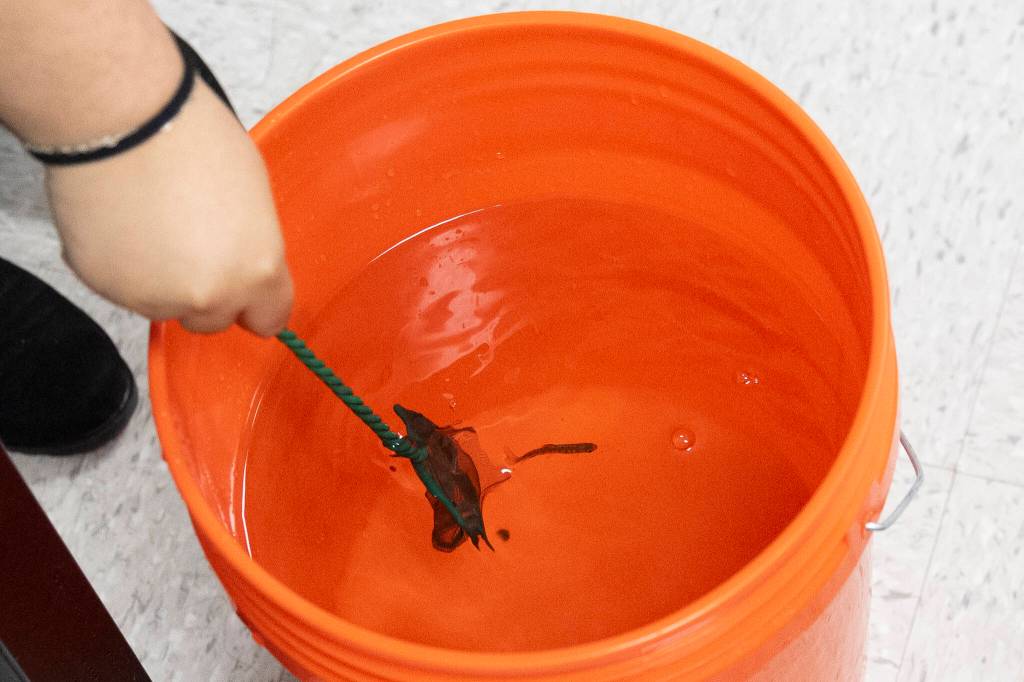
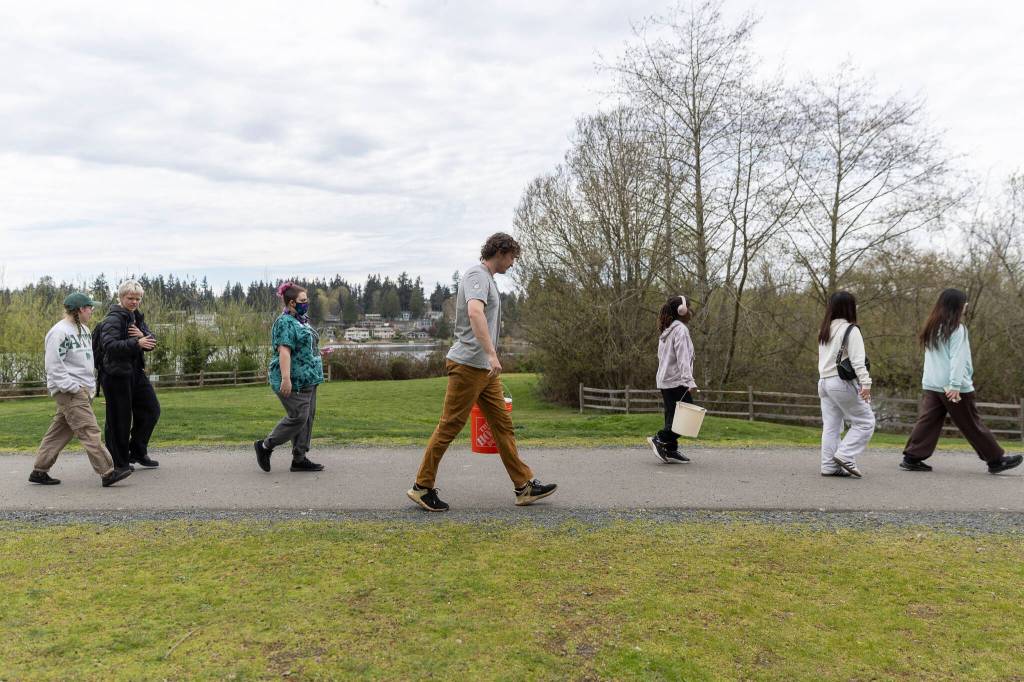
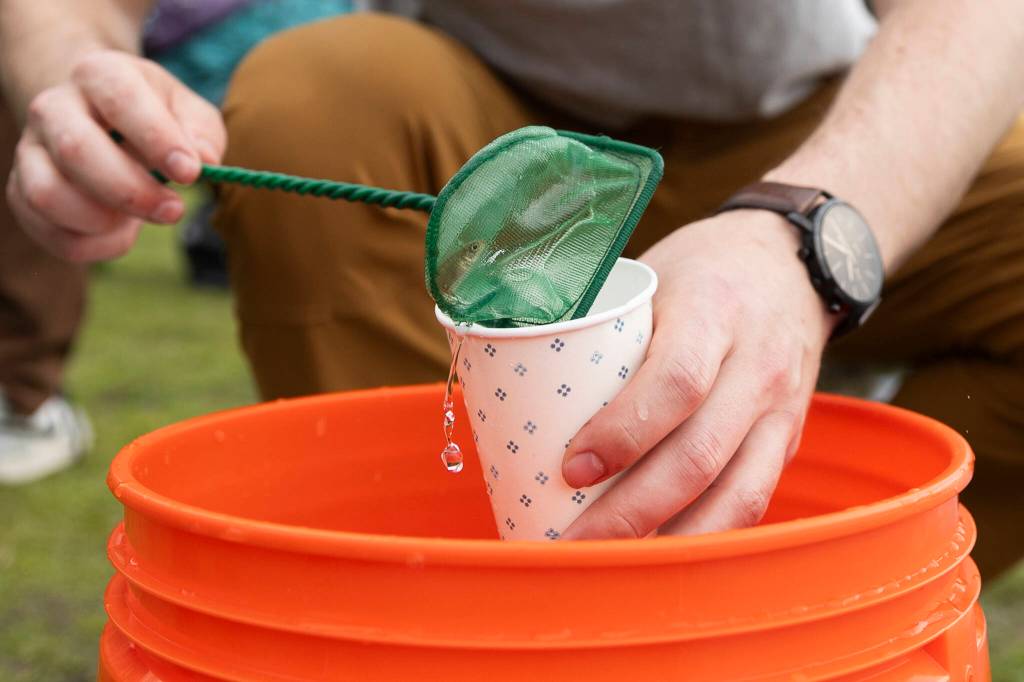
On Friday, students scooped about half of the fish from the tank, placed them in a bucket and transported them to Lake Ballinger in Mountlake Terrace. Then, students placed the fish into smaller cups and released them into the lake, starting their years-long journey.
Most of the salmon aren’t likely to make it to the ocean, Shafer said, because salmon that aren’t raised in the wild have a lower survival rate.
“They’re prey for all these birds we see out here,” she said. “These guys are pretty little, so who knows, maybe they’ll get smart quick. But I think what’s really important is the education of this for the students.”
Bryce Nevitt, an environmental service learning specialist with AmeriCorps, has been helping the class with field trips. In addition to Friday’s release, the class has visited Lake Ballinger to test the water quality.
“We’re living in a sort of disconnected time, and I think when you’re able to actually go out into the field and not only connect with nature, but with your fellow students, I think that’s really valuable in a lot of ways,” Nevitt said.
Nevitt is also part of the Edmonds Stream Team, a volunteer organization focused on improving the quality of local creeks and wetlands. The team conducts annual salmon surveys, and last year’s showed declining numbers in salmon returns. One reason for the decline, Nevitt said, is a toxic chemical that comes from tires known as 6PPD.
“Probably like five grains of rice worth of it is enough to kill all the fish in (Lake Ballinger),” he said. “It’s very, very potent, and we’re trying to do more research about that. One of the things we’re doing with the stream team is getting students involved and teaching them about the salmon life cycle and also these issues.”
Friday’s release is just one piece of the college’s larger effort to help the salmon population in local watersheds. In addition to salmon releases with multiple classes, students have helped restore Olaf Strad Creek in Arlington. The college is looking into helping restoration efforts at Shell Creek in Edmonds.
“We care about our environment, we care about our region, and we care about making sure the environment is safe and good, and that everyone within the environment is well taken care of,” said Edmonds College President Amit Singh, who visited the class Friday. “This is very much part of the big picture for the sustainability of the Earth,”
Tari Oguara, a 25-year-old student in the High School+ program, wants to pursue ornithology, or the study of birds. He said the class has made him excited for the broader field of conservation.
“I really have come to enjoy and I really appreciate doing general ecological management stuff,” Oguara said. “I look forward to be able to be doing this kind of work, like keeping track of data and maintaining habitats, so this class has given me this opportunity.”
Hannah Veal, 26, is also a High School+ student and said the experience of raising the salmon from egg to release has helped her figure out what she wants to do as a career.
“I always knew that I wanted to work with animals, but this has definitely shown me that I want to be more active with nature reserves and helping species that are potentially threatened, so it’s been a really cool experience,” she said.
Jenna Peterson: 425-339-3486; jenna.peterson@heraldnet.com; X: @jennarpetersonn.