Everett approves stricter regulations for massage parlors
Published 5:31 pm Thursday, June 4, 2026
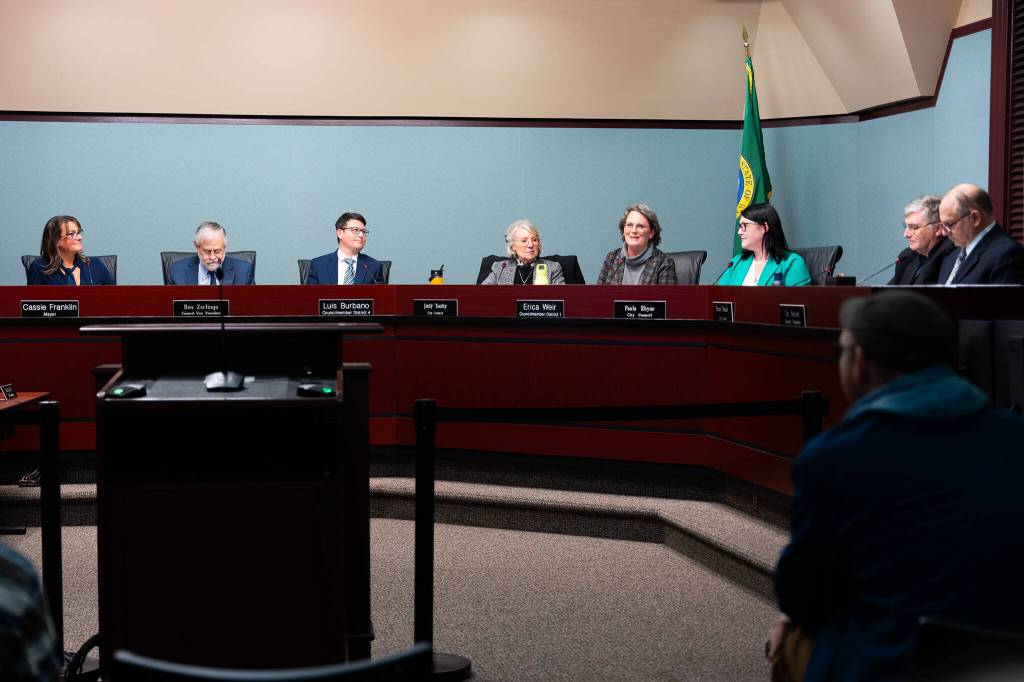
EVERETT — The Everett City Council approved a new law Wednesday adding new criminal penalties and giving city officials more power to enforce state regulations regarding massage businesses across the city.
City officials and police said in the ordinance that certain massage businesses in the city may be violating state law. Lacey Offutt, an attorney for the city, said during a May 20 council meeting that there are “numerous illicit massage businesses” in the city and regionally, with the number growing at a steady pace, she said.
The newly approved ordinance codifies civil penalties for violations of state regulations regarding massage businesses, while adding some new regulations regarding the hours the businesses can operate and allowing the city to make unannounced inspections. Its goal is to “regulate and enforce the lawful operation of massage businesses as businesses, not to regulate the clinical practice of massage therapy and reflexology,” the ordinance reads.
Advocates who spoke against the ordinance on Wednesday said it would unfairly target immigrant workers who face barriers to obtaining massage licenses.
The new law adds misdemeanor penalties for massage workers who operate without a license. It also adds misdemeanor penalties for operators or employees of massage businesses that engage in sexual misconduct, trafficking or prostitution. Those who direct others to engage in prostitution would face more severe punishment and be guilty of a gross misdemeanor. It would also be grounds for suspension or revocation of the business’s license.
“Specifically, we’re wanting to target any person who is making employees offer sex acts in exchange for money, or something to that effect,” Offutt said May 20. “We want to penalize that appropriately.”
She said Wednesday that the ordinance’s primary focus is on those who direct massage workers to engage in illegal activity.
“Our emphasis on enforcement will be on the folks who are more in charge or are putting people in compromising positions for their own economic gain,” Offutt said Wednesday. “… The bigger fish are the ones we really see as driving these businesses in the city and in the region, and to the extent we can enforce at that higher level, I think there’s definitely a desire to do that.”
In addition, the new ordinance prohibits massage businesses from operating between 10 p.m. and 6 a.m., though that would not affect solo practitioners working from home.
The inspections of massage businsses allowed under the new law must be done during business hours, the ordinance reads. Solo massage practitioners working out of their homes are exempt from the inspections, the ordinance reads, and city officials will not be able to enter into private areas of the businesses without consent or a warrant.
Numerous people spoke out against the ordinance on Wednesday. The Massage Parlor Organizing Project, a Seattle-based advocacy group, argued that the law unfairly targets Asian immigrant massage workers who face barriers to state licensing, because the process to get a license is time-consuming, expensive and lacks language accommodations beyond English and Spanish.
City resources should instead be put toward improving pathways to licensing, rather than increasing barriers and further criminalizing unlicensed massage businesses, the group argued.
“Unlicensed Asian massage workers exist not because they do not know how to do their work, but because of the systemic barriers they face as low-income immigrants with limited English proficiency,” Erica Wang told the council during public comment. “Criminalization means marginalization, and under this era, it can also lead to deportation for workers.”
Massage workers also told the council Wednesday that the ordinance would harm to their ability to work and would endanger them more than help them. They asked to delay the vote to allow for outreach that incorporated input from affected workers.
“Our request is please table this ordinance and come back with a process that actually includes the people it affects,” said Dian Dian.
The council approved the ordinance unanimously Wednesday after amending it to include a financial penalty for landlords that knowingly lease space to businesses that violate the ordinance.
Everett staff said they plan to undertake outreach efforts in multiple languages through social workers to explain the new law regarding massage businesses before enforcing it, deputy mayor Mike Fong said Wednesday. He added that the city will look for ways to work with the Legislature on ways to improve language access and remove barriers to the licensing process, for both massage workers and other work that requires state permitting.
“You have my commitment, you have the administration’s commitment, the mayor’s commitment, that we will continue to be proactive and forward-facing with protecting and engaging our immigrant and refugee communities around this issue and other issues that may impact them,” Fong said.
In a statement, Franklin wrote Thursday that massage “is an important health care option that we want to support, but unlicensed businesses may be engaged in conduct that violates state law,” she wrote. “We are updating our code to establish clear enforcement mechanisms for unlicensed operations in an effort to combat illegal behavior. Our goal is to support public health and eliminate businesses that exploit workers.”
Will Geschke: 425-339-3443; william.geschke@heraldnet.com; X: @willgeschke.