Fire chiefs warn of potentially deadly results from draft road code change
Published 1:56 pm Thursday, June 11, 2026
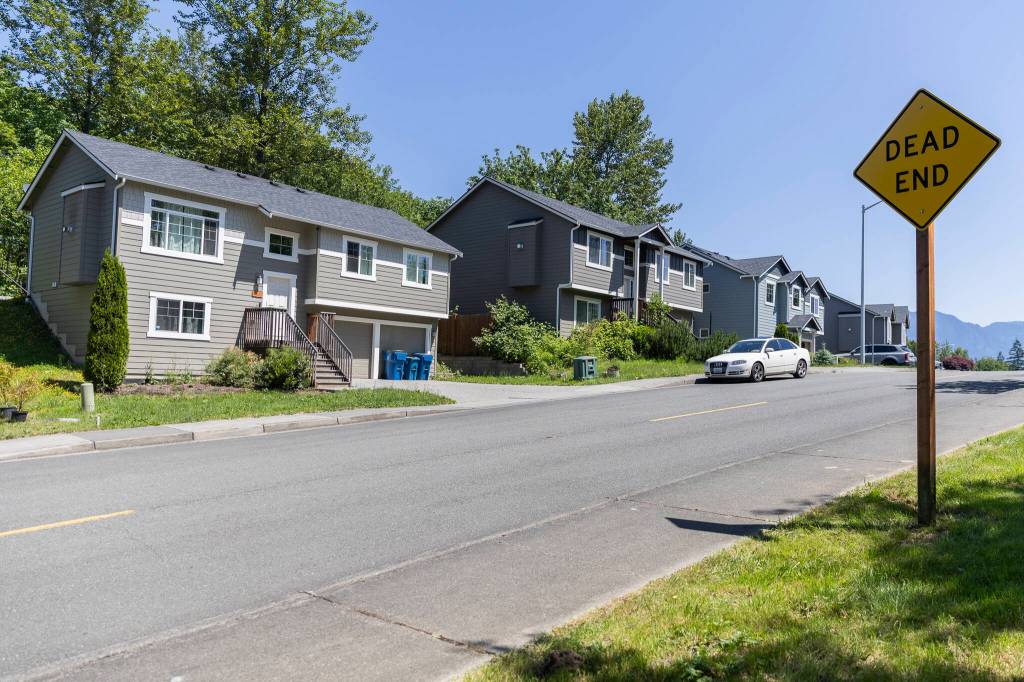


EVERETT — Fire chiefs and emergency management experts are raising alarms over a proposed Snohomish County code change they say could put lives and property at risk during wildfires.
If approved, the code change would allow developers to not construct new connecting roads when building certain housing developments, even if those projects are in areas at greater risk for fire.
The loosening of requirements would ultimately save local developers hundreds of thousands of dollars in building costs.
The Daily Herald reported in March that the draft rules were largely developed by the county’s Planning and Development Services department with direct input from the Master Builders Association of King and Snohomish Counties, an influential lobbying group representing 2,400 developers and contractors.
Multiple fire chiefs across the county said they weren’t consulted during the creation of the new proposed rules. They say a lack of roads serving sprawling housing developments would hamper fire crews and evacuations by eliminating critical alternative routes of movement during wildfires.
“Come talk to the people that have to deal with your codes and rules,” said Eric Andrews, the fire chief for Sky Valley Fire District 26 in Gold Bar. “Then explain to the homeowners or the people why their homes burnt, people died, because we couldn’t get in, they couldn’t get out.”
The county’s Planning Commission, a volunteer advisory group for the county council, approved sending the proposal forward to the county council in March. Multiple commissioners have ties with the Master Builder Association, raising conflict of interest concerns.
The language for the code change is still being hashed out and is expected to go through a legal review in late June, according to county spokesperson Kari Bray.
“Code amendments are developed through consideration of many factors, including internal technical expertise from departments, external stakeholder input, legal review and requirements of state law, related local or regional policy, operational considerations, and at times a balance of varied interests and priorities,” she told The Herald.
‘When homes burn down’
Since 2024, emails show Master Builder members corresponding with members of the county’s planning and public works departments with specific requests for changes they wanted to see made on SCC 30.24, the county’s Roads and Access code.
The code dictates when and how roads are required to connect and when pedestrian safety infrastructure, like sidewalks and road shoulders, is deemed necessary. The policy covers unincorporated areas of Snohomish County, both inside and outside urban growth areas.
County planning staff said in an email that it’s common practice to engage with stakeholders who are directly affected by regulations.
“The review process included consultation with agencies and organizations possessing expertise related to emergency response, transportation, development review, and implementation,” according to a written statement provided by the Department of Planning and Development Services. “Receiving input from a stakeholder does not mean the County adopts that stakeholder’s recommendations.”
Following the two years of back and forth with Master Builder members, the county gave the general public two weeks to provide comments on the proposal, according to a county staff report. Emails show that the county’s own Department of Emergency Management missed the brief period to give input.
One of the Master Builders’ proposed changes to SCC 30.24 — a proposal that was presented to the county’s Planning Commission in March — is that in rural areas on roads that see fewer than an average of 200 cars a day, developers would no longer be required to build connecting roads between new developments, unless a county engineer deems it necessary for “public safety.”
The change would allow developers to build up to roughly 22 houses on a dead-end street, based on recommendations from the international trade association, the Institute of Transportation Engineers. ITE estimates that a single-family home generates about nine daily car trips a day.
The current code sets the road connectivity threshold at an average of 90 daily car trips, or roughly 10 houses built on a dead-end road.
Snohomish County code does not have a singular definition of public safety. Instead, it is “a concept that appears throughout land use, transportation, environmental, building, fire, and emergency management regulations,” a planning department statement said.
Mike McCrary, who was the director of the county’s planning department until May 16, said the change to road construction requirements would hopefully lower housing costs. In late May, McCrary became the executive operations officer in the county’s Executive Office. He has also simultaneously held the county’s fire marshal position for almost two decades and still holds the marshal title with his new executive role.
“Putting in roads is very, very expensive. Putting in infrastructure is very, very expensive. That drives up the cost of housing,” McCrary said on April 30. “Somebody proposes something that’s going to reduce that, we’re going to look at it.”
Allison Butcher, a senior policy analyst for the Master Builders, said in an email that the goal of the association’s feedback has been creating “a more predictable and practical framework for housing and ensuring that transportation requirements support rather than unnecessarily constrain housing production.”
Kelly Pohl, the associate director for Headwaters Economics, a nonprofit land management research group, said she understands the pressures local governments are facing with housing shortages and affordability. But not considering the realities of building in areas with wildfire risks is short-sighted, she said.
“If we are building homes in ways that they are being put in harm’s way, that they’re vulnerable to wildfire, we are just exacerbating the affordability crisis in this country,” she said. “Because when homes burn down, it has decades-long costs to local governments and local communities.”
In addition to being avenues for daily transportation, road networks serve three critical purposes during wildfire evacuations, said fire chief Don Waller in a statement to The Herald. Waller leads Snohomish County Fire District 4, which covers the Snohomish area.
Roads act as pathways for residents to evacuate a location, for responders to get to a location and as a barrier that can slow fires down, he said. Without functional road networks providing adequate options for movement, deadly consequences can ensue, he added.
In 2020, during Labor Day Weekend, the Beachie Creek and Santiam fires exploded through the Santiam River Canyon in Oregon, killing five people and destroying more than 1,500 structures.
The rural communities of Gates, Mill City, Detroit and Lyons were served by a single corridor, Highway 22, with no other meaningful alternative routes to leave the river canyon, Waller explained.
Highway 22 became gridlocked as the fire tore down the canyon, burning on both sides of the road.
“Dozens of professional and volunteer firefighters were forced to abandon suppression efforts and flee the canyon, leaving communities without fire protection at the moment they needed it most,” Waller said.
He stressed in his statement that the Santiam Canyon shares geographic similarities with Snohomish County.
“Index, Skykomish, and Gold Bar are strung along a single highway through a steep river canyon with no alternate evacuation route,” he wrote.
And Index, Skykomish and Gold Bar aren’t the only rural communities facing wildfire exposure risks in the county.
According to the county’s first Community Wildfire Protection Plan, published in 2025, an estimated 15% of Snohomish County — 130,000 residents — live in wildland-urban interface (WUI) areas, transition zones between urbanized areas and undeveloped wild vegetation or forests.
The plan, one of hundreds tailored to counties and communities across the West, was developed with coordination from local, state and federal agencies with the goal of outlining how Snohomish County can prepare for wildfire response and mitigate potential future damage.
“Of the nearly 5,000 residential building permits issued by the County since 2020, one in every five has been for homes in these locations,” the report states. “That growth has been occurring at the same time that warmer, drier conditions are raising concerns about wildfire in Snohomish County forestlands.”
Crystal Raymond, the deputy director of policy for the Western Fire and Forest Resilience Collaborative, a research program that focuses on wildfire decision-making, said that a changing climate and expanding WUI zones are both factors for rising wildfire destruction. In 2025, the global economic damages from wildfires were the highest on record, according to a study in the Nature Reviews Earth & Environment journal.
“People are going to continue to live in the wildlands, and so we need to think about how homes are built, how evacuation is planned, how the response is able to protect people who live in these areas,” she said.
‘Fire seasons are going to be longer, summers are going to be hotter and drier’
In February, Amy Lucas, the manager for Snohomish County’s Department of Emergency Management Resilience and Mitigation program, attended a county climate action meeting where she learned about the proposed road code change from Tom Campbell, a former state legislative policy advisor and member of the Snohomish County Climate Advisory Committee and Planning Commission.
He asked her to look over the language in the code.
“I am concerned about policies and regulations that make it easier to build in the rural areas,” Campbell said in an email to The Herald on June 4.
“We need both sides of the county working together on climate change, fire and life safety, and protecting forest and agricultural lands,” he said as an explanation of why he wanted the Department of Emergency Management’s input on the planning code.
Lucas took Campbell’s concerns to her boss, Lucia Schmit, director of the county’s Department of Emergency Management.
In an interview with The Herald, Schmit said it was the first time she had heard of the proposal. It had been almost two years since the planning department started discussing it with Master Builders and roughly a week after the two-week public comment period had passed.
After the discussion with her boss, Lucas wrote an email to outline her department’s concerns to Michael Saponaro, a senior planner for the county’s planning department, who has been in charge of the proposal project. In her email, obtained by The Herald through a records request, she attached two articles discussing the August 2023 Lahaina wildfire in Maui, Hawaii.
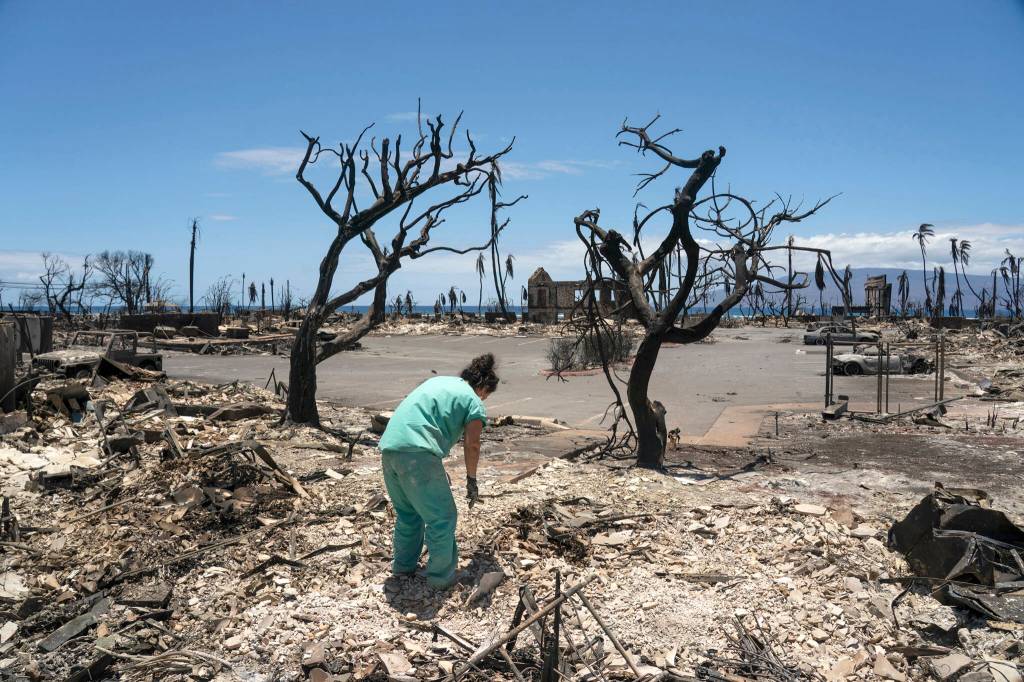
The fire, the deadliest wildfire in U.S. history in more than a century, killed 102 people. A third of the fire victims died on Kuhua Street — a dead-end street the length of roughly three and a half football fields, according to a Honolulu Civil Beat article.
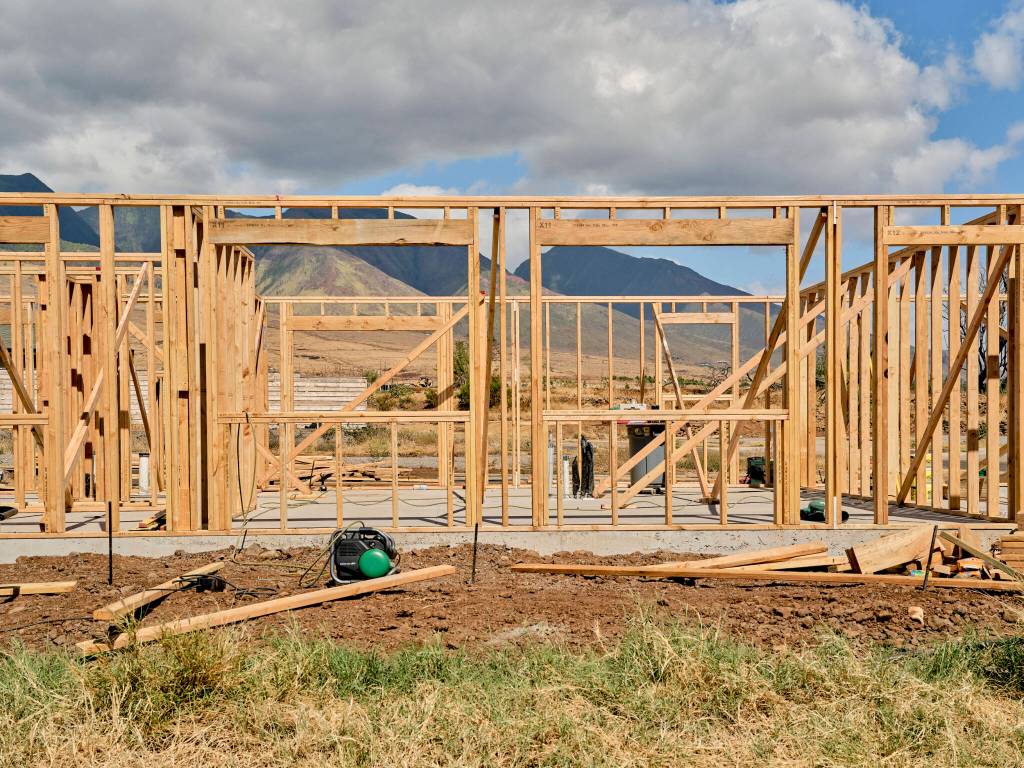
More than a decade before the fire, Maui County had proposed turning Kahua Street into a through street. But the county didn’t go through with it.
According to computer modeling done by the U.S. Army Corps of Engineers, the nearly three dozen people who died along the street might have survived if it hadn’t been a dead end. Maui County is now retroactively working to extend and connect the street.
Most people who died along that street died blocks, some just a few dozen yards, from their houses, the Civil Beat article stated.
“A lot of people think that in Western Washington, it hasn’t burned here, we’re safe here,” said Raymond, who is based in Seattle. “We can’t base our thinking on the likelihood of wildfire based only on what’s happened in the past. Fire seasons are going to be longer, summers are going to be hotter and drier.”
In her email to Saponaro, Lucas asked if the county fire marshal or any of the county’s fire district chiefs had given input on the proposed code changes.
Saponaro responded that the county fire marshal, McCrary, had reviewed the proposed changes and the public was allowed to offer input.
The county fire marshal’s office is housed within the county’s Planning and Development Services Department. In 2021, Snohomish County Executive Dave Somers appointed McCrary to the planning department’s executive director position, which he held until moving to the county’s Executive Office in May.
“There’s not really a conflict,” McCray told The Herald on April 13. “The fire marshal reports to the [planning] director anyway. It just happens to be that because of my expertise, I’ve been holding the fire marshal (role) since 2008.”
‘Do a little bit more due diligence’
On March 24, Saponaro presented a draft of the code to the county’s Planning Commission.
The Planning Commission is an 11-person advisory committee for the Snohomish County Council. It’s made up of volunteer citizens appointed by council members who are supposed to review projects and decide if they’re ready for the council’s eyes and votes.
During his presentation to the commission, Saponaro said the county’s Public Works department wanted to “do a little bit more due diligence” to make sure “the changes wouldn’t create any conflict with fire trucks responding,” but that the department wasn’t “necessarily opposed” to making the changes.
The Roads and Access code began as a smaller rule change proposal in 2023, with Public Works first becoming involved in 2024, according to county staff.
After hearing the Public Works department’s hesitancy, Commissioner Merle Ash told Saponaro that he was “not excited to hear that” because new development projects had already been in limbo while the proposed code was being developed.
“We’re a little bit more anxious because there are projects, middle housing projects, kind of hostage,” Ash said.
“I don’t know why we need too much investigation into drive aisles and fire lanes,” he added.
Ash owns Land Technologies, Inc., a development and land permit consulting business based in Arlington. The company is a registered Master Builders Association business. Ash was cc’d in multiple emails where the association and county planning department discussed revisions to SCC 30.24, meaning he was privy to both what his business association wanted from the code project and had the authority as a volunteer commissioner to approve the project moving forward to the county council.
“My interest is in trying to develop the best kind of communities we can,” Ash said on June 9 in response to questions about possible conflicts of interest. “It seems like to many, if you got a planning commission making recommendations only to the council, that you would want somebody that has some experience with actually what they’re talking about. I happen to be in a fortunate position here, where I’m deeply involved with it. A lot of people aren’t and don’t understand it.”
When The Herald told Ash that fire district chiefs had concerns with some of the proposed road access changes and how they could affect evacuations, he said: “I really think there needs to be some educational things going on here, because people are making comments on things that are not relevant.”
Ash isn’t the only planning commissioner with direct ties to the Master Builders Association.
Commissioner Brian Holtzclaw is the Master Builders’ general counsel and former board president of the association.
Commissioner Kimberly Busteed is an engineer for Master Builders member business Core Design and Commissioner Angie Sievers previously worked for the Master Builders Association covering Snohomish County external relations and governmental affairs.
After Saponaro’s presentation, the Planning Commission voted to move the Roads and Access code forward, pushing it closer to being considered by the county council for adoption.
Campbell, the commissioner who raised his concerns about the proposal with the county’s Department of Emergency Management, was not present at the meeting when the Planning Commission discussed and approved moving the road access proposal forward.
When the Herald interviewed him in June, he said he could not comment on how he would have voted, given he wasn’t there for the discussion of the proposal.
‘They put a lot of money into getting what they want’
In an email to The Herald, Snohomish County Executive Dave Somers said the county relies on planning staff to gather and review a “wealth of information and hear various viewpoints” while moving through code update proposals.
“Input from experts who understand disaster and emergency response is meaningful information for county planning,” he said.
While McCrary is included in email chains spanning two years in which planning staff solicited recommendations from a handful of developers, multiple fire chiefs told The Herald they weren’t looped in on the changes being made to the code.
“When it comes to the county codes, typically, if it is something that will impact fire code or fire response, they will send it to us. With this one in particular, we haven’t gotten anything from them,” said Mike Messer, an assistant chief and fire marshal for Snohomish Regional Fire and Rescue.
“You should have come and let us know you’re doing this,” he said of the county’s planning department staff.
“I had no communication with them on this ordinance,” said Andrews, the fire chief of Sky Valley Fire, whose department covers the Gold Bar area. “The problem in the county is the county fire marshal’s office is part of the county government, nothing to do with the fire districts. They don’t have any emergency response activities and responsibilities.”
The county said fire chiefs were notified about the project via an email stating that the code does not require a state environmental review.
Andrews said that while he does receive the review determination emails, he believes the code project should have been given better attention.
“This should have been presented at the county fire chiefs’ meeting with emphasis on the fire life safety issue,” he said in an email. “I find it odd that the county public works roads division came and gave the fire chiefs a special presentation on why they need road district tax but they (meaning the county) did not feel this would be of similar or more importance.”
Andrews, who is also a member of the state’s Fire Defense Committee, said figuring out how to protect tightly packed communities that continue to spread into wildland-urban interface areas is a big concern for disaster responders.
“All you need is one tree across the road, or one car to block it, and then the whole community is blocked,” he said.
The expansion of rural development, paired with longer, drier and hotter fire seasons, all adds fuel to Andrews’ worries.
“Those developers, they put a lot of money into getting what they want and electing people they want, and they have a lot of money,” he said.
Eliza Aronson: 425-339-3434; eliza.aronson@heraldnet.com
Eliza also uses the encrypted messaging platform, Signal: @elizaaronson.40
Eliza’s stories are supported by the Herald’s Investigative Reporting Fund.