Everett council OKs purchase of first properties at stadium site
Published 11:05 am Thursday, July 16, 2026
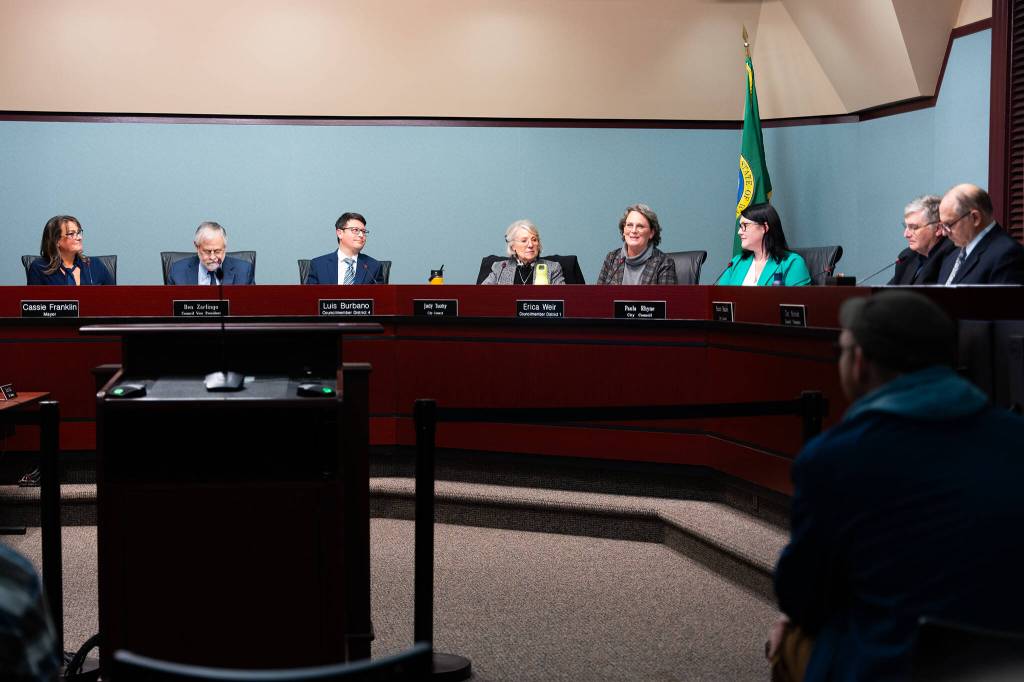
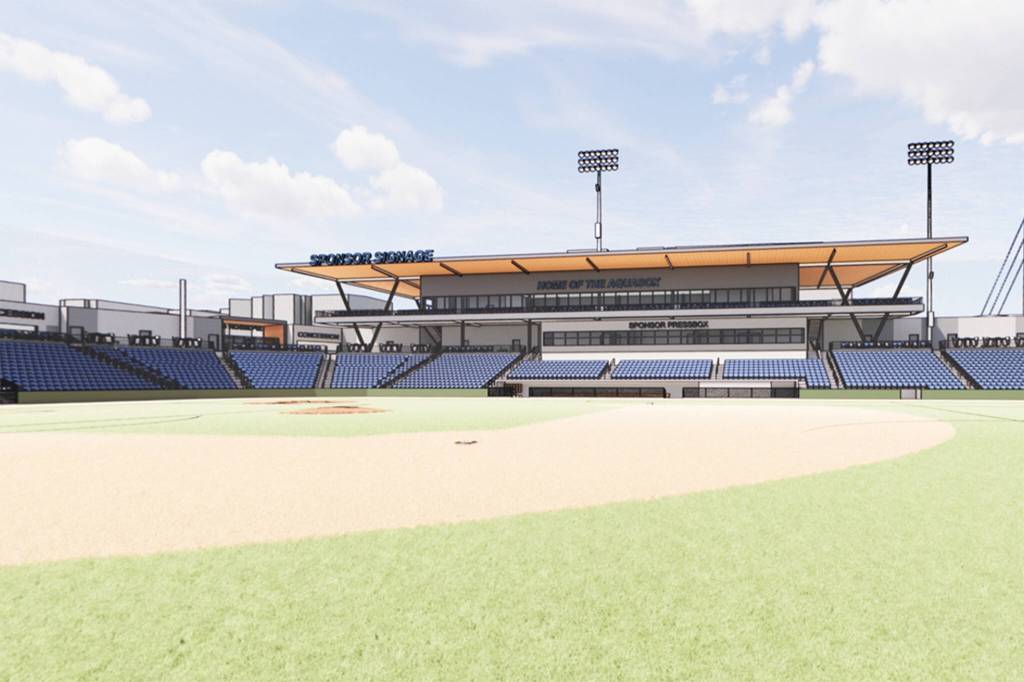

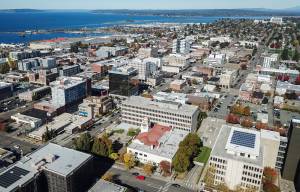
EVERETT — The Everett City Council unanimously approved agreements on Wednesday to purchase four parcels of land for a proposed stadium project in the city’s downtown, the first of many pieces of property that will need to be acquired if the project is eventually built.
Everett will pay a total of about $10.7 million for the four parcels, located near the center of the proposed stadium site at the intersection of what is now Wall Street and McDougall Avenue.
Funding for the purchases came partially from a $7.4 million state grant, as well as city dollars Everett had allocated to buy land earlier this year, according to a city council memo.
Everett decided to purchase these parcels now due to timelines within purchase and sale agreements it had already signed with many of the property owners on the stadium site, city project manager Scott Pattison said in a Wednesday interview. Those four parcels also give Everett what is known as “site control,” unlocking the city’s ability to use the $7.4 million in state grant dollars, he said.
Everett will pay more than the assessed valuations of the four properties to acquire them, according Snohomish County property records. It did so because the city’s independent appraisals came in higher than the county’s assessed values, Pattison said.
The council decided to purchase the land before it has a complete financial plan as to how it will fund construction of the entire project. That plan is expected to be put forward to council in early September, city project manager Pattison said.
The stadium, known as the Outdoor Event Center, is expected to cost $120 million, higher than an initial estimate of $82 million. To make up a funding gap of approximately $25 million, city officials and project consultants previously said they would seek additional investment from public-private partnerships.
On Wednesday, Pattison said that the city has made progress on closing the financial gap, but couldn’t share specifics, other than the fact that it is in discussions with potential private funders.
“We’re close to making an announcement on two partners that we plan to work with going forward,” Pattison said in an interview. During Wednesday’s meeting, he said that announcement would come within the next 30 days.
The purchase comes as the city has also begun condemnation proceedings against the owners of two parcels on the stadium site.
On Thursday, the city filed an eminent domain lawsuit in Snohomish County Superior Court against the owners of two parcels, both on the 3000 block of Broadway just south of Wall Street.
The city’s filing asks the court to allow condemnation of the property and to enter a ruling determining that the property is needed for public use. As of Wednesday, a hearing date in the case has not yet been scheduled, court records show.
Council members are also considering an additional $1.9 million interfund loan to pay for more property purchasing costs. That’s on top of the $10.6 million the city already loaned itself from its general fund in April to pay for property acquisition work and to complete the stadium’s design.
The council is expected to vote on whether to approve that extra $1.9 million interfund loan on July 29. It will be used to purchase another of the parcels on the site of the proposed stadium, Pattison said.
Wednesday’s vote means that Everett is purchasing land for the stadium before the city council has given final approval to build it, though the likelihood of the council turning back at this point is slim. If the council doesn’t approve the project, it would mean a multi-million-dollar hit to the city’s general fund because the city has loaned itself over $10 million from it. The city expects to repay that loan through a bond funded by revenues from the stadium.
In an email Wednesday, city spokesperson Jason Kelly wrote that the city is “confident the project is moving forward,” but if it goes in a different direction, staff would make a decision on how to use those properties at that time.
“The city could move forward with another economic development project on these parcels close to the future light rail station, or the city could surplus the property,” Kelly wrote.
He said construction could begin on the project as soon as this fall if it receives council approval.
Out of the 17 parcels the city needs to build the project, the city has signed 11 purchase agreements with property owners, Pattison said at Wednesday’s meeting. Another agreement is pending.
The city will ask the council whether to purchase the remainder of the properties in September, consultant Ben Franz said during Wednesday’s meeting. Everett purchased the four parcels first because it would unlock the $7.4 million in state grant funds allocated to the project, Franz said.
If built, the stadium will host the Everett AquaSox and professional men’s and women’s United Soccer League teams. The United Soccer League, or USL, team would compete in the USL League One, Pattison said Wednesday, the second division of the USL’s league pyramid. (It will be the third division after the USL launches its top-tier USL Premier League, likely in 2028). The women’s team will compete in the Gainbridge Super League, the USL’s only professional women’s league.
The soccer league still needs to find an owner or ownership group to purchase the teams, which can come with multi-million price tags in expansion fees.
In an email Thursday, the United Soccer League’s senior vice president of expansion, Chris Boyajian, wrote that “we have been active in the market and continue to have conversations with prospective owners and investors,” but didn’t have further details to share.
In total, Everett has allocated about $18 million to the project so far, including about $7.2 million in city capital funds. The money has gone toward site studies, design of the stadium, property acquisition work and consulting fees. Other sources of funding for the stadium are expected to include private investment from the sports teams, state and county funds, along with a bond, planned to be paid back by the stadium’s revenues. The city expects to earn receive about $100 million from the sports teams in lease payments over the 30-year agreements.
Everett began work on the stadium project in 2022, after Major League Baseball announced new regulations for minor league ballparks that Funko Field — the current home of the AquaSox — didn’t meet. Fearing the team would leave the city, officials studied the possibility of renovating the ballpark or building a new stadium. The council eventually chose to go forward with the latter option in 2024, because it would have room to include a soccer pitch, bringing in more potential revenue from the additional sports teams.
Design of the stadium is fully funded and is about 80% complete, Pattison said Wednesday. If built, it will include 5,000 seats, a clubhouse area and a walking path around the stadium. If the project goes forward, the city hopes to complete the stadium by the end of 2027.
Will Geschke: 425-339-3443; william.geschke@heraldnet.com; X: @willgeschke.