Everett adds new regulations for e-bikes, electric scooters
Published 1:30 am Thursday, July 23, 2026


EVERETT — The city of Everett approved new regulations for electric bicycles and scooters on Wednesday in an effort to address a recent rise in injuries.
The ordinance adds new definitions for electric scooters and bikes, depending on their top speed, and lays out rules about where they can be used. It requires young people to wear helmets when riding and also includes language to regulate other electric-powered personal vehicles that might not fit into the definition of an e-bike or scooter.
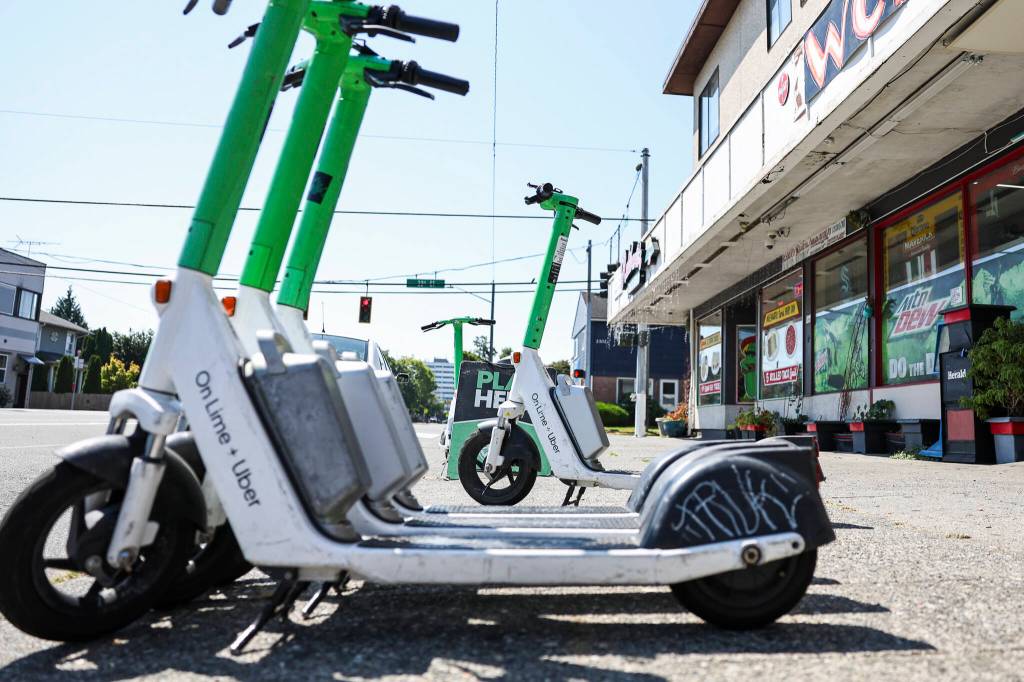
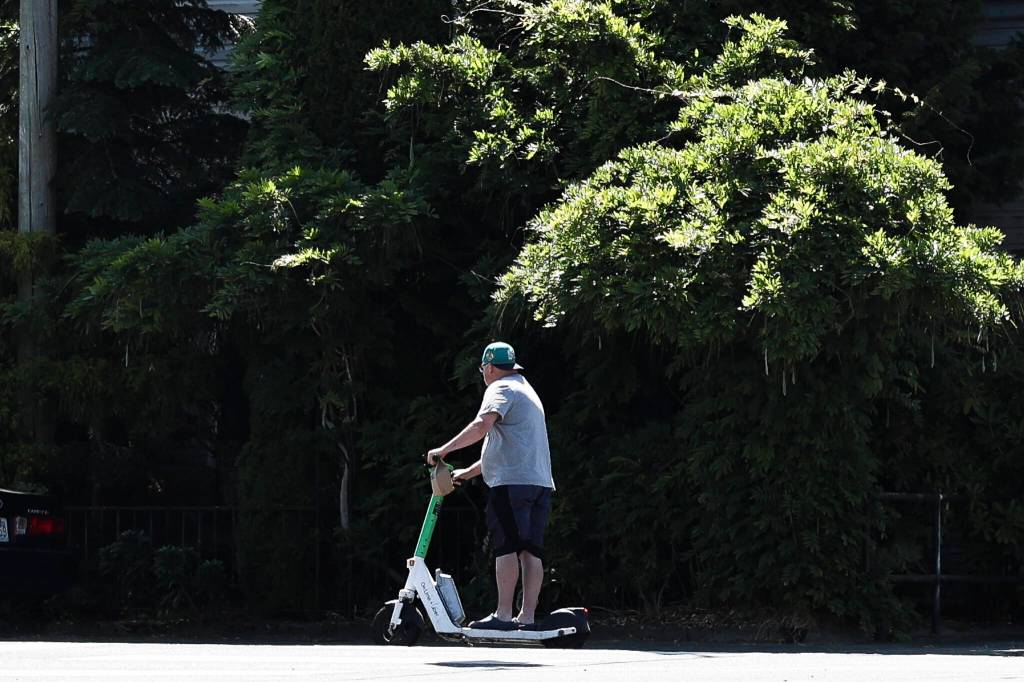
The usage of electric bikes and scooters in the region has risen significantly over the past few years, as they become more widely available both through ownership and rentals from companies like Lime. In 2025, Everett signed a two-year contract with Lime for the company to provide e-scooter services in the city after an initial pilot program in 2019.
The rise in usage has coincided with a rise in injuries from those riding e-bikes and scooters, said Hil Kaman, an assistant city attorney, during a July 1 council meeting. Citing data from the state department of health, Kaman said that both the number and severity of injuries from e-bikes and scooters have risen significantly since 2020.
According to a city council memo, Everett is the city with the fifth-highest rate of e-bike hospitalizations and the third-highest rate of electric scooter hospitalizations across Washington cities. In 2025, about 149 people were hospitalized due to e-bike injuries across Washington, according to the city.
The ordinance incorporates new classifications for e-bikes that the state Legislature approved as part of a bill earlier this year laying out new e-bike regulations. That state law also created a work group to study further regulations and bring back a legislative proposal in the fall of 2027.
E-bikes, under the new state law, fall under three categories. Class 1 applies to pedal-assist bikes that provide assistance when pedaling which cuts off when the bike hits 20 miles per hour. Class 2 e-bikes include bikes that can propel themselves using an electric motor without pedaling, with a maximum speed of 20 miles per hour. Class 3 e-bikes include pedal-assist bikes that can use a motor to provide assistance at speeds up to 28 miles per hour. Those Class 3 bikes cannot be used on sidewalks, or by young people under 16, per state law.
Everett’s regulations created two separate categories for other devices that could be used for motorized transport. The categories are separated based on the top speed of the vehicles; those that travel under 20 miles per hour on their own power are known as “micromobility devices,” those that travel over 20 miles per hour on their own power are known as “powered personal transporters.”
“The reason we did this is because we don’t know what devices are out there, what devices might come along,” Kaman said. “We wanted to make something that was easy for us to enforce and easy for the public to understand.”
Under the new rules created by the city, e-bikes, scooters or other devices that go under 20 miles per hour — that includes Class 1 and 2 e-bikes as well as “micromobility devices” — are allowed anywhere a bicycle can go, including bike lanes, roadways, certain parks and shared use paths. Class 3 e-bikes and “powered personal transporters” are only allowed on roadways, in parking lots or on private property.
Riders under 16 are only allowed on Class 1 and 2 e-bikes and “micromobility devices.” All riders under 16 must wear a helmet; those under 11 must wear a helmet and be under the direct supervision of an adult. For those 16 and older, helmets are only required for Class 3 e-bikes and devices that go over 20 miles per hour.
Other regulations included in the newly approved ordinance prohibit riding all powered bikes and scooters on the sidewalks of downtown streets east of Broadway, west of West Marine View Drive, south of Everett Avenue or north of Pacific Avenue. It also prohibits modifications to the devices that increase their speed, charging the devices on city properties and requires people stopped for violations to provide their names.
The city council made slight tweaks to the law’s language through an amendment on Wednesday. One change was to clarify that the ordinance’s rules surrounding electric scooters and other mobility devices only applied to those powered by a motor, not more traditional non-motorized scooters.
“Kids riding non-motorized scooters, we do not want to be regulating that,” Kaman said Wednesday.
A second change in the amendment relaxed a restriction in city law that had previously prohibited using motorized scooters on streets with speed limits above 30 miles per hour that didn’t have bicycle lanes.
The amendment, proposed by council member Luis Burbano, will allow users of motorized scooters to ride on faster streets without bike lanes if it was necessary due to a lack of sidewalks or other alternative routes.
Burbano said he proposed the amendment as he often commutes with his bicycle on streets like 100th Street Southwest, which has a speed limit of 35 miles per hour, but lacks bike lanes and sidewalks in some areas.
Although the restriction didn’t apply to bicycles, Burbano argued that some areas of the city were in such need of bicycle lanes that requiring users of motorized scooters to avoid busy streets without them would be unpractical for commuters.
“We need to have laws that defend and protect the users, everybody, not laws that make people’s lives more difficult,” Burbano said.
The amendment passed 6-1, though some council members had concerns over the safety of allowing the motorized scooters on faster roads without proper infrastructure.
“This came about because of increased head injuries we’re seeing in our hospitals. If we’re not having safe pedestrian walkways in the city, I’d like to see the infrastructure be provided before we funnel people toward known dangerous areas,” council member Paula Rhyne said.
People who violate the ordinance could face civil infractions and be fined $50, with fines rising to $150 for subsequent offenses. Those who recklessly endanger others with an electric bike or scooter could face a misdemeanor charge. Parents or guardians of youth under 16 could also be liable if they knowingly allow youth to violate the rules.
Kaman said, however, that the goal of the new law is to educate people, not punish them, and said police would be trying to spread the word through public outreach.
“They’re not going to be out doing proactive enforcement, but they will be trying to inform the community about the risk of these devices, whatever regulations there are, and then have the ability through this ordinance to enforce against egregious violators,” Kaman said at the July 1 meeting.
Will Geschke: 425-339-3443; william.geschke@heraldnet.com; X: @willgeschke.