For third day, grieving orca carries dead calf in water
Published 1:30 am Friday, July 27, 2018


By Lynda V. Mapes / The Seattle Times
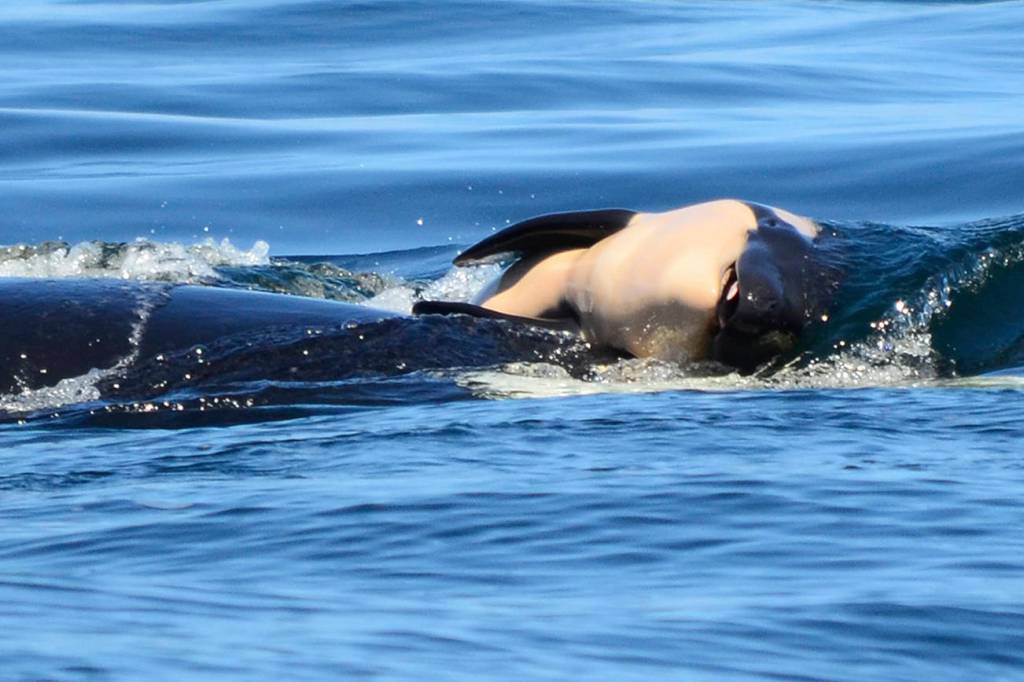
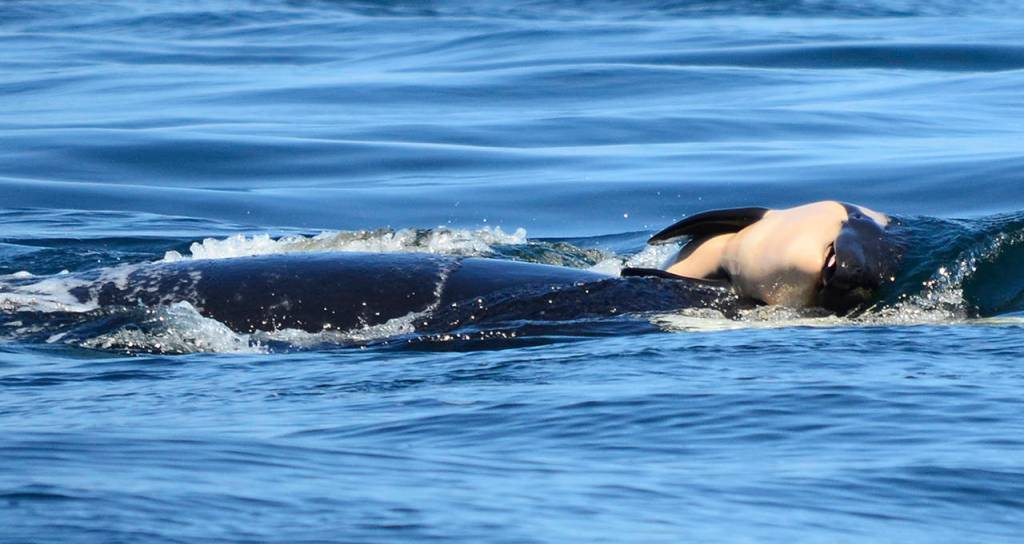
A grieving mother orca was seen still carrying her dead calf Thursday evening, laboring to push it through a 4-knot current, and making deep dives to retrieve it each time it slipped off her head and sank.
“It is just absolutely gut-wrenching to watch,” said Taylor Shedd, program coordinator of Soundwatch, who has followed the whale nearly continuously in daylight hours, keeping state and federal agencies updated and urging boaters to keep their distance.
Born Tuesday morning, J35’s calf lived for only about a half-hour. She has been refusing to let her calf go ever since, swimming with the calf balanced on her head. It’s an expression of grief biologists have documented in whales and dolphins all over the world.
At times the mother’s breathing has been very labored.
“We were worried about her health,” Shedd said. “She has 4 knots of current ripping at her, and she has to dive really deep to get the baby when it rolls off, to pick it up and keep pushing it in front of her.”
The killer whale is traveling with her pod, working hard to keep up. “She is the last whale,” Shedd said. “It’s been that way for a while.”
The Soundwatch boater-education program, run by the Whale Museum at Friday Harbor since 1993, puts educators on the water every day during whale-watch season to approach boaters as needed to remind them of the 200-meter distance required between boaters and marine mammals to minimize disturbance.
During J35’s grief, Soundwatch has been keeping vigil with the whale, explaining to curious boaters what is happening, and why they need to keep their distance.
Commercial whale-watch tours have been voluntarily staying clear to give the whale and her family privacy. “We are spreading out the fleet, keeping away, it is just so very sad,” said Jeff Friedman, president of the U.S. side of the Pacific Whale Watch Association.
San Juan Island resident Lodie Budwill, of the Center for Whale Research, reported that on Tuesday evening, before sunset around 8:30 p.m., she first noticed that a group of female orcas had gathered in a tight circle with J35 at the mouth of Eagle Cove on the west side of San Juan Island.
“It was beautiful to observe, yet very sad knowing what had taken place earlier in the day,” she wrote in an email to The Seattle Times. She said the whales remained encircled with J35 in the same location for at least two hours.
“The sun set, the moon rose and they remained centered in the moonbeam, continuing their circular surfacing. I perceived this to be a ceremony or ritual of some sort. It was no doubt a circle of family love and devotion. After observing for hours, it was hard to hold my binoculars up any longer.”
Shedd said the mother was still pushing the calf at 7:08 p.m. Thursday when he had to leave her for the night.