Why the Cavaliers traded former All-Star Darius Garland for James Harden
Published 10:30 am Wednesday, February 4, 2026
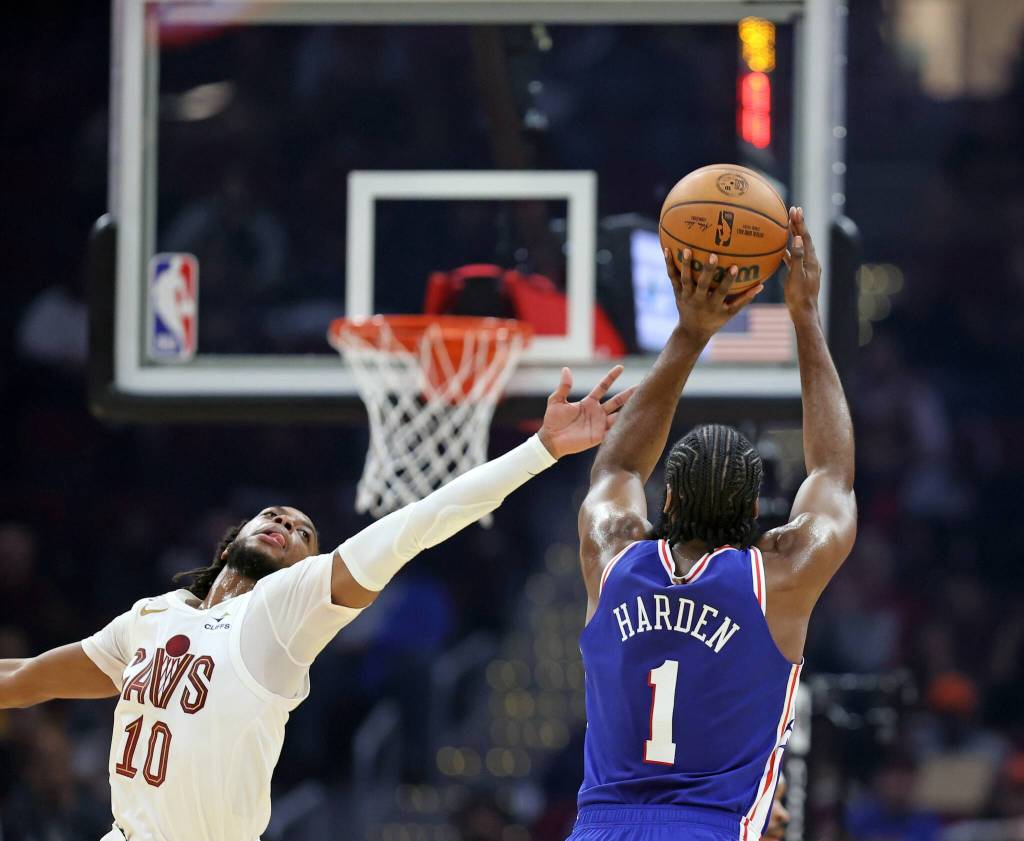


As the Cleveland Cavaliers were wrecked with injuries last month and hovering around .500, team president Koby Altman held a staff-wide Zoom call with his entire basketball operations team in the first week of January. Among the items discussed were two realizations: The Cavs had to stop blaming injuries for their problems, and they weren’t good enough as constructed to contend for a championship. Some on the call pushed further, demanding changes to save the season.
The Cavs began the year as the favorites to win the Eastern Conference, but the season has not gone according to plan. They were also feeling the pressure from their best player, Donovan Mitchell, to make changes ahead of Thursday’s trade deadline under the threat of a contract extension he may or may not sign in two summers.
So James Harden is heading to Cleveland, and Darius Garland is off to the LA Clippers in the most stunning move yet of this trade deadline.
Three league sources said Mitchell, who has one guaranteed season left on his three-year, $150 million deal and a player option for 2027-28, conveyed, either personally or through his representatives, that he did not think the organization should stand pat for the rest of this season and wait for potential moves in the summer.
A high-ranking Cavs official refuted that Mitchell applied such pressure and also denied that the Zoom call took place.
Regardless, the Cavs have already been among the most active teams in the league. They traded away their key acquisition from the 2025 trade deadline, De’Andre Hunter, to the Sacramento Kings, and now they’ve acquired the 36-year-old Harden, an 11-time All-Star, three-time NBA scoring champ and the 2018 MVP.
Garland, a two-time All-Star at 26, was one of the team’s coined “core four.” The Athletic reported two years ago that if Mitchell re-signed with the Cavaliers following their playoff loss to Boston, Garland’s representatives might try to force him out of Cleveland. Altman resisted any trade overtures at the time. Garland’s value has cratered over the last two years to the point that the Cavs had to attach a second-round pick to get the deal done Tuesday evening.
Two league sources also said Mitchell specifically wanted Harden, who is 6-foot-5, durable and comfortable as a pass-first point guard.
Garland, drafted fifth by Cleveland in 2019, had blossomed into an All-Star the winter before Mitchell’s arrival. But upon the team bringing Mitchell to Cleveland, suddenly the Cavs had two guards who were 6-3 or shorter. Only three teams in NBA history have won the title with two guards that small.
The Garland-Mitchell duo was sold as the league’s next version of Damian Lillard and CJ McCollum (who, it should be noted, ultimately never advanced past the Western Conference finals with the Portland Trail Blazers, either). And for most of their three-plus seasons together, Mitchell and Garland said everything they could publicly to insist they could play and win together.
But, league sources said, both were leery of the possibilities. Garland struggled to adapt his style to Mitchell; Mitchell recognized the challenge of playing defense in the playoffs with two smaller guards and questioned whether Garland was at a place in his career to win now. Garland, while comfortable in Cleveland generally, and his representatives blessed the trade to the Clippers ahead of the deal being consummated.
Garland has been hurt for most of this season, playing in just 26 games because of complications from a lingering toe injury that required surgery last offseason. He hasn’t played since Jan. 14 because of the toe, but multiple sources said he is expected to return to the court for the Clippers soon.
Garland was just one of many habitually injured players this season for the Cavs. Max Strus underwent foot surgery and has yet to play. Evan Mobley has dealt with two calf strains. Jarrett Allen missed time. Sam Merrill has played about half the games. The player on the roster who’s appeared in the most games this season? Mitchell.
Injuries were blamed for each of the Cavs’ previous two playoff exits. For better or worse, it’s become part of who they’ve been, which is why the team, on Altman’s staff call, declared it’s time to move past using those injuries as a crutch.
There was another complicating factor to address on the Altman staff call. The Cavs’ roster at the season’s outset was the most expensive in the league and the only one over the second apron at nearly $230 million — which theoretically makes it very difficult to substantially change the roster via trade. But on that call, the Cavs’ salary gurus suggested there were paths for the team to get cheaper this season while at minimum maintaining its current level of production, creating flexibility for the summer and, perhaps, making it possible to take a big swing before the trade deadline. The call ended without consensus or commitment to doing anything drastic. It was somewhere near this point in the calendar, early in January, when Mitchell made it known that he wanted action.
The Cavs started to catch fire shortly after Altman’s staff meeting. They went on a season-long, five-game winning streak from Jan. 21 through Jan. 28. At the time of the Harden-Garland trade, the team had risen to 30-21 and a tie (record-wise) for fourth in the East with the Toronto Raptors.
Trading Hunter to the Kings — in which the Cavs brought back Keon Ellis and Dennis Schröder — fits into the category of shedding salary, but not production. Hunter was in a massive shooting slump and had been leapfrogged in the rotation by second-year forward Jaylon Tyson. Trading Hunter saved the Cavs $50 million in salary and luxury tax penalties.
The Harden-for-Garland swap, as far as the Cavs’ payroll is concerned, was not all that complicated. They both make about $39 million this year, so Cleveland could make the trade without having to execute trickier deals ahead of time to get under the second apron. Harden held a trade kicker, which he waived at least a portion of to make the deal work. The best move for both sides is likely for Harden to decline his $43 million option for next season and re-up on a longer deal for lower money. That would help the Cavs manage the second apron next season and avoid a frozen draft pick, and leave cap flexibility open if they wanted to pursue another star in the summer.
The Cavs, clearly in win-now mode, may not be done. They still have Lonzo Ball’s contract (for $10 million) and Larry Nance Jr.’s contract ($2.2 million) to shed if they’re interested in reducing costs, and there are other blockbusters to explore. The Cavs could consider the Dallas Mavericks’ Anthony Davis, and a deal for Giannis Antetokounmpo is perhaps feasible if they are willing to part with Mobley.
Mobley is only 24, the reigning Defensive Player of the Year and is under team control for four more seasons (at an average annual salary of about $54 million). But there has been no indication given that Cleveland would part with Mobley for Antetokounmpo, who is 31 and has one year left on his contract.
The Cavs could hold onto Mobley, and even Allen (“even” because Allen has been a constant name dropped in trade rumors), and still add a big name to the roster this offseason.
LeBron James will be a free agent this summer, and if he chooses to play a 24th NBA season, sources close to him said Cleveland would be an obvious destination. His salary would not be close to the $52.6 million he’s earning now in Los Angeles, but at age 41 he is aware of the market realities facing him if he extends his career.
If James came back to Cleveland for a third and final stint, his farewell tour would be with a team expected to compete for a championship. He would join Harden, with whom he teamed for an Olympic gold medal at the 2012 Games for USA Basketball; Mitchell, who grew up idolizing James; and Mobley, who also views James fondly.
If so, this will have been a wildly productive January Zoom call.
— The Athletic’s John Hollinger contributed to this story.
This article originally appeared in The Athletic.