Snohomish County leaders talk US 2 trestle replacement
Published 1:30 am Wednesday, May 27, 2026
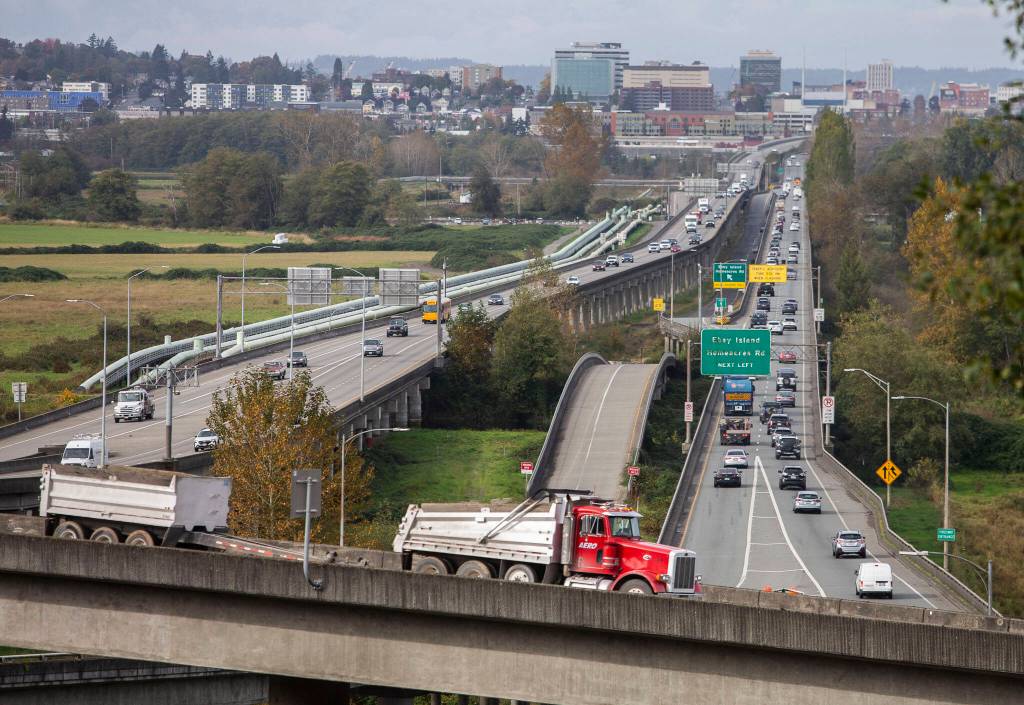
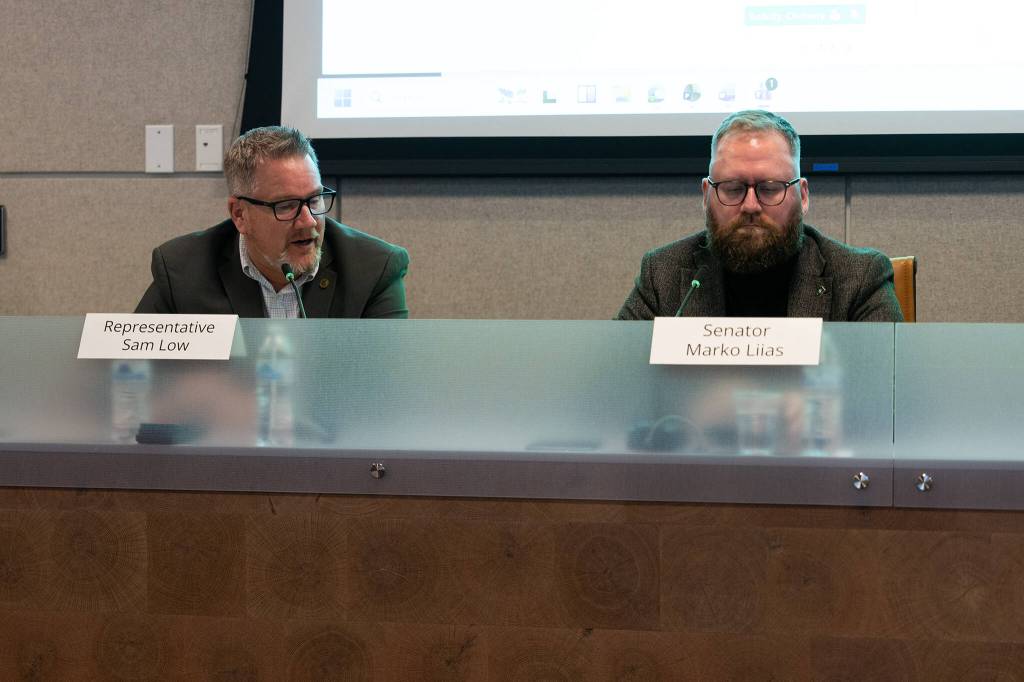
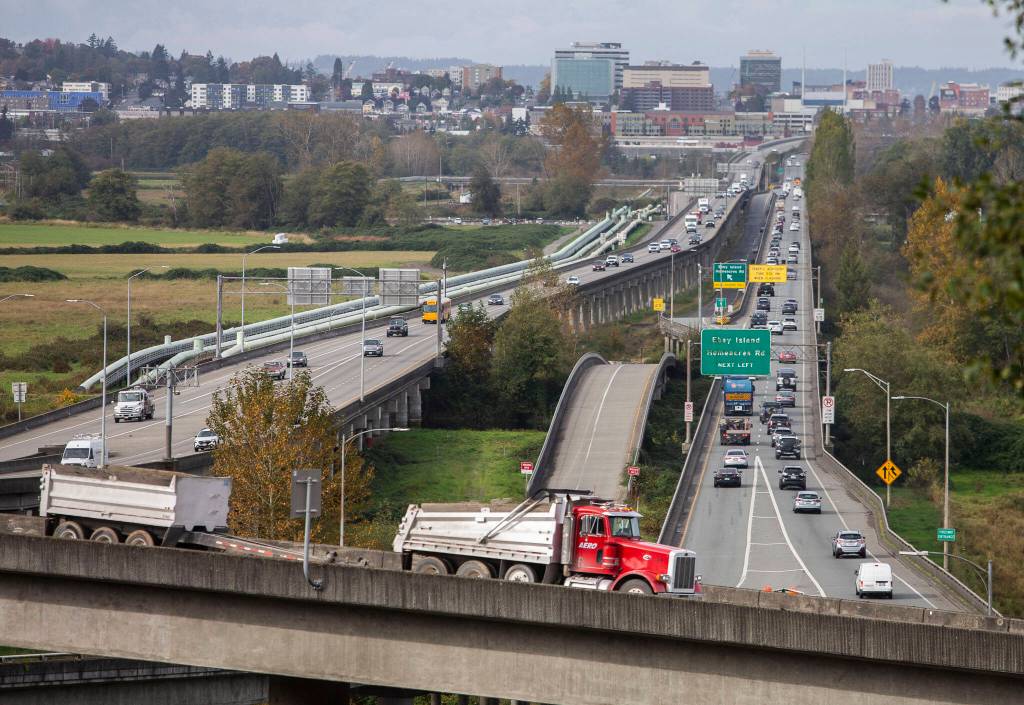



EVERETT — Leaders from across Snohomish County gathered on Tuesday to discuss the massive undertaking needed to replace the U.S. 2 trestle connecting Everett to east Snohomish County.
Officials have spent over a decade and millions of dollars to find ways to address the problems facing the vital east-west highway — brutal congestion, lack of multimodal access and risk of instability in a major earthquake — and are nearing the end of a three-year, $17 million study that will illuminate possible design options for the eventual trestle replacement.
The “trestle” is a term used to refer to the series of bridges and structures that connect Everett to east Snohomish County cities like Lake Stevens, Monroe and Snohomish. It began its life as a humble two-lane road built in the mid-1930s out of timber and concrete. In 1968, a westbound bridge was built, splitting the east and westbound traffic onto separate bridges. A concrete eastbound bridge replaced the old wooden structure in the 1990s.
There are very few ways to get from eastern Snohomish County to Everett — and further south to Seattle — without using the trestle, which facilitates about 81,000 trips per day, according to data from 2024. As the population of the region grows, more cars are expected to use it.
A new trestle could reduce travel times, would be more seismically sound, and would include a shared-use path for pedestrians and cyclists while featuring HOV lanes to improve travel times for carpoolers and transit users, according to a WSDOT report.
The effort to replace the trestle is still in the planning stages, as WSDOT is preparing a planning and environmental linkages study that will consider different design possibilities for the project.
The multiple possible options being studied for the roadway’s design all have a few things in common, said April Delchamps, a planning manager at WSDOT, during Tuesday’s roundtable. The alternative designs all include two general-purpose lanes and one HOV lane in each direction, with the westbound HOV lane beginning at Bickford Avenue in Snohomish. The trestle will also include at least one additional westbound ramp into downtown Everett, along with a shared-use path dedicated to pedestrians and cyclists.
The department is hoping to launch an online open house by mid- to late June to show the possible design alternatives of the trestle, Delchamps said.
Work on that study will continue through November when WSDOT is expected to release a draft report of its findings. A final report is expected in 2027. After that is released, more detailed planning will be needed, which could take between one to three years to complete, said Cameron Kukes, an assistant regional administrator at WSDOT.
Getting the money to build it will likely be the biggest hurdle to cross. The westbound trestle replacement — the more urgent project because the existing westbound bridge is significantly older than the eastbound one — is expected to cost over $1 billion. The cost of completing the trestle in both directions could be in the two to three billion dollar range, State Sen. Marko Liias said Tuesday.
The trestle is a vitally important transportation project, State Rep. Sam Low said Tuesday. But most of the legislature currently has its eyes primarily focused on the state’s number one highway megaproject: A new I-5 bridge connecting Washington and Oregon that’s expected to cost an eye-popping $14.4 billion. Cars could be driving across that bridge by 2035, the Washington State Standard reported in March, but the project has been hampered by delays and cost increases.
“I think, from my perspective, and I think Senator Liias’ too, that the number two issue is going to be the trestle, so we’re working closely on that,” Low said. “… We’ve been really pushing for this, and this is the right time to push forward on this project.”
One hot topic under consideration is whether or not to add a toll to the trestle as a way to help pay for the project, which will also likely require federal funding. When WSDOT polled the public in 2024 regarding potential tolls for the new trestle, about 75% of respondents were against the idea.
The department will continue studying the potential upsides and downsides of adding a toll for the new trestle, Kukes said Tuesday, but it will ultimately be up to the state Legislature to come up with a funding plan and decide on whether a toll will be included.
Low, who lives in Lake Stevens, said during Tuesday’s roundtable that the department and the legislature will need to work with community members to keep them engaged on possible funding options for the project.
“When you’re on my side of the trestle and you have to cross two, three, four times a day, you can see why there’s a lot of angst in my community on that,” Low said of the possibility of tolls. “As we proceed forward on the trestle, we need to have a solution that everybody can see.”
Liias said Tuesday that lawmakers will have to be “deliberative and inclusive” as they weigh the possibility of including a toll on the corridor while also considering the urgent need to build the massive project.
“This is a funding mechanism that the legislature has relied on to get big projects done,” he said. “The only thing worse than paying a toll would be to see this infrastructure damaged or destroyed in a seismic event and not have that connectivity. We’ve got to balance all of these needs together and do it in a way to make sure we get it done right.”
Later this year, WSDOT is also set to begin studying the potential of using a public-private partnership to help shore up funding for the project.
Once the studies and design are complete, and funding for the project is allocated, construction could then begin. Building the new trestle is expected to take years.
The conversations around the redesign and construction of the new trestle need to remain urgent, Everett Mayor Cassie Franklin said during Tuesday’s roundtable, as delays can add costs, more cars will make congestion worse over time and fear of damage from a major earthquake lingers in the background.
“This is one of those areas that I’m very fearful for our entire region if we do not care for the system,” Franklin said. “It’s important that we get ahead of it.”
Will Geschke: 425-339-3443; william.geschke@heraldnet.com; X: @willgeschke.