Just the facts about the confusing COVID-19 vaccine situation
Published 1:30 am Wednesday, September 9, 2020

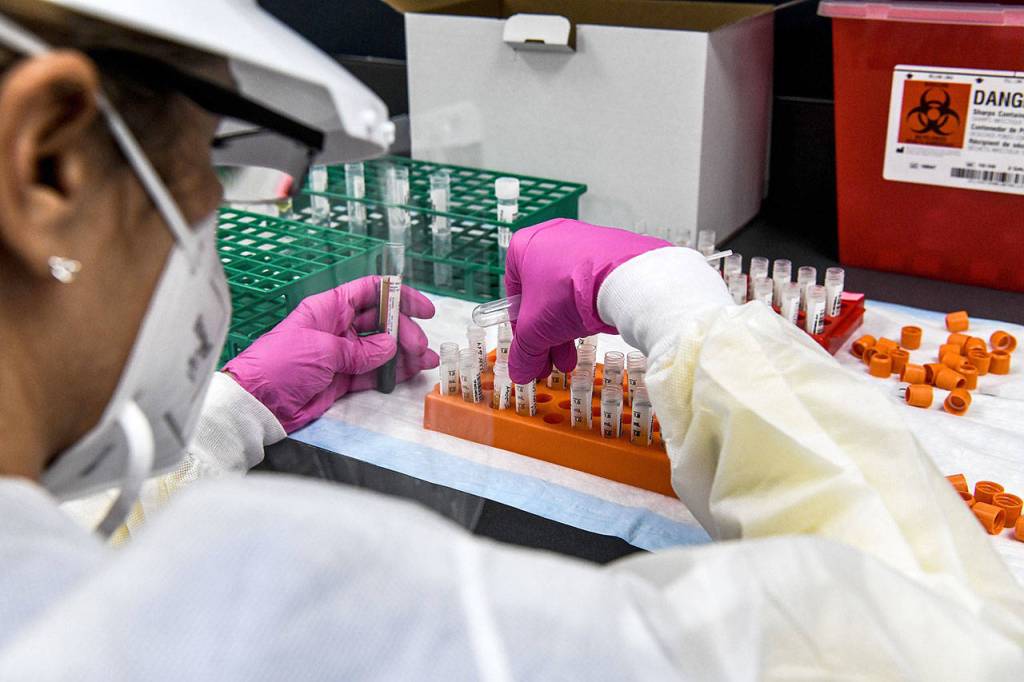


By Marie McCullough and Stacey Burling / The Philadelphia Inquirer
The federal government has told states to be ready to distribute doses of a coronavirus vaccine by Nov. 1 — two days before the election.
The move raises major questions we can’t answer yet. Is President Donald Trump exerting political pressure to make good on his promise of a vaccine “before the end of the year, or maybe even sooner”? Is it possible to bring vaccines to market that quickly without leaving doubts about safety and effectiveness that will discourage their use?
Here are some facts to help make sense of the situation.
Is there time for any vaccine to complete the standard three phases of clinical trials by Nov. 1?
That’s not clear. Partly it depends on whether the coronavirus is spreading rapidly in communities where vaccines are being tested against placebo.
The two vaccines that are farthest along are made by Pfizer and Moderna. Both require two doses, given three or four weeks apart. On Thursday, Pfizer said it is “on track” to seek regulatory review by late October. On July 27, Moderna announced it had started the pivotal phase 3 clinical trial, in which effectiveness is established in addition to safety.
What’s an Emergency Use Authorization?
The EUA program, established in 2004, gives the U.S. Food and Drug Administration the power to grant temporary, accelerated approval to a medical drug or device needed in a public health emergency. The EUA review process is less rigorous than a regular approval.
During the coronavirus pandemic, the FDA has granted EUAs to hundreds of tests — some so worthless that the FDA later ordered them off the market — and two treatments. But the only immunization ever approved for emergency use was against anthrax, in 2005.
The FDA has said the decision to grant an EUA to a COVID-19 vaccine before final testing is completed “would be made on a case-by-case basis” considering factors including “the totality of the available scientific evidence.”
Pennsylvania Health Commissioner Rachel Levine said Thursday that she would “feel better” if a new vaccine had completed testing before approval. Philadelphia Health Commissioner Thomas Farley said he likely would not recommend the vaccine for everyone without final data.
How good would a vaccine have to be to get full approval?
A COVID-19 vaccine would need to prevent or decrease the severity of the disease by 50% or more, according to FDA guidelines.
FDA Commissioner Stephen Hahn has repeatedly stressed that the agency won’t cut corners. “I want the American people to hear me when I say we will use the science and data from those trials, and will ensure that our high levels of standards for safety and efficacy are met,” he said during a U.S. Senate committee hearing.
Is this political?
The United States has had an estimated 6.1 million cases of COVID-19 and 186,000 deaths. The Trump administration, which has invested heavily in vaccine development, could use a preelection win.
Paul Offit, director of the vaccine education center at Children’s Hospital of Philadelphia, who serves on the FDA’s vaccine advisory board, worries that the FDA will cave to pressure. He pointed to two controversial EUAs of COVID-19 treatments — for the drug hydroxychloroquine and convalescent plasma — that FDA officials initially opposed because studies had not shown them to work.
“Those two EUAs were, to me, warning signs,” Offit said.
Why is vaccine hesitancy a concern?
In this country, vaccine “hesitancy” — skepticism about vaccines that have been huge public health successes — is a growing problem, so there is concern that rushing a COVID-19 vaccine will add to distrust, said Jose Romero, who chairs the CDC’s Advisory Committee on Immunization Practices (ACIP), a group that will help the government decide who gets priority access to new coronavirus vaccines.
In meetings between CDC staff and the Philadelphia Department of Public Health, public perceptions have come up. “If people don’t have faith in this vaccine, it is going to make our job impossible,” James Garrow, a department spokesman, told CDC employees.
Offit said that even if a vaccine now in development proves to be 75% effective — which public health officials would consider fantastic — many people would still be at risk of infection. That means people would still need to wear masks and comply with social distancing.
“That will be a hard sell,” he said.
Who gets the vaccine first?
Two groups, ACIP and a newly formed panel from the National Academies of Sciences, Engineering and Medicine, are working on how to prioritize vaccines, because doses are expected to be limited at first. The academies committee released its draft recommendations earlier this week and ACIP’s may come later this month. It is not clear who will make the final decision on who gets initial doses.
Both groups are suggesting prioritizing health-care workers because they are at high risk of exposure to the virus and of spreading it. The academies proposal includes nursing home employees, and first responders such as police and firefighters.
Both groups are likely to give special consideration to people at high risk of serious illness and death, including older people and those with chronic health conditions.
Can states start distributing vaccine in November?
Pennsylvania, New Jersey and Philadelphia officials say yes. Farley said it makes sense to prepare now even if a vaccine isn’t ready right away. “Sooner or later we’re going to have to distribute a vaccine,” he said.
Nate Wardle, a spokesman for the Pennsylvania Health Department, said the state has a team that is always preparing for big vaccination efforts. “Our current planning includes multiple pathways to provide vaccine to the public and high-risk groups, including working with doctors’ offices, pharmacies, and other locations where other vaccinations are readily available.
Philadelphia, along with four states, was asked in August to prepare a distribution plan that could be used as a model for other places by Oct. 1, Wardle said. Now, he said, it appears that the CDC has asked all states to come up with their own plans
One big challenge will be vaccine storage. The Pfizer vaccine must be stored at minus-70 degrees Celsius, requiring special freezers usually only found at large hospitals. Moderna’s vaccine needs minus-20 degrees. Another is making sure people get both doses, properly spaced.
Garrow, with the city health department, also cited the challenge of data. Both the Moderna and Pfizer vaccines require two doses, three or four weeks apart. The timing of each dose must be tracked, and patients must be reminded to get the second dose. A big remaining question is whether a person can get doses in different hospitals, cities, or states.