Special trailer shows the dangerous power of electricity
Published 1:30 am Friday, March 6, 2020


By Snohomish County PUD
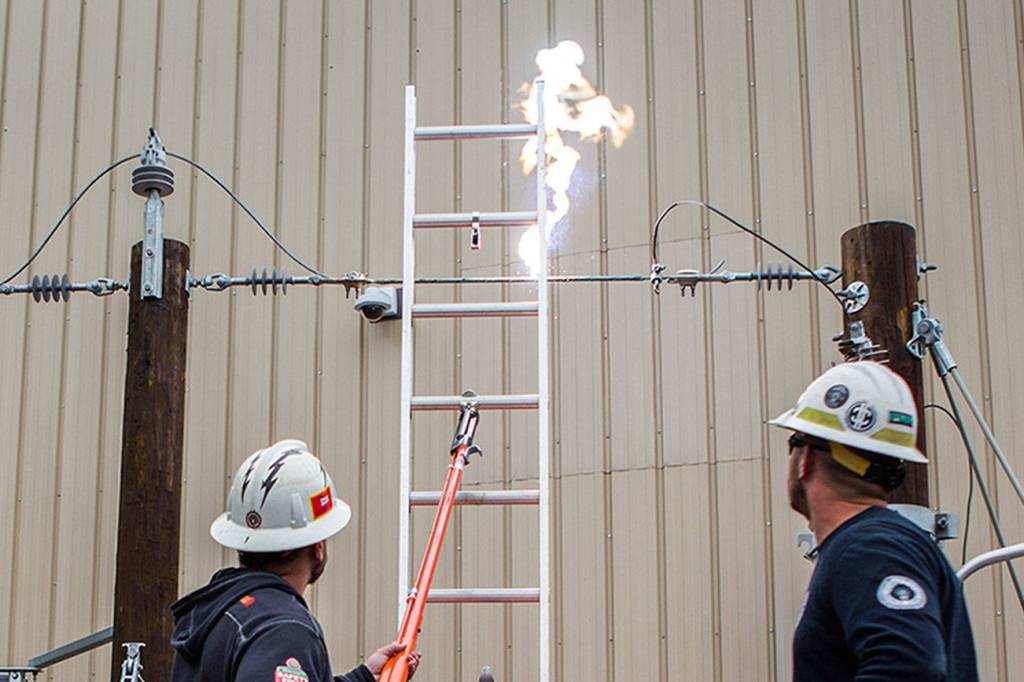
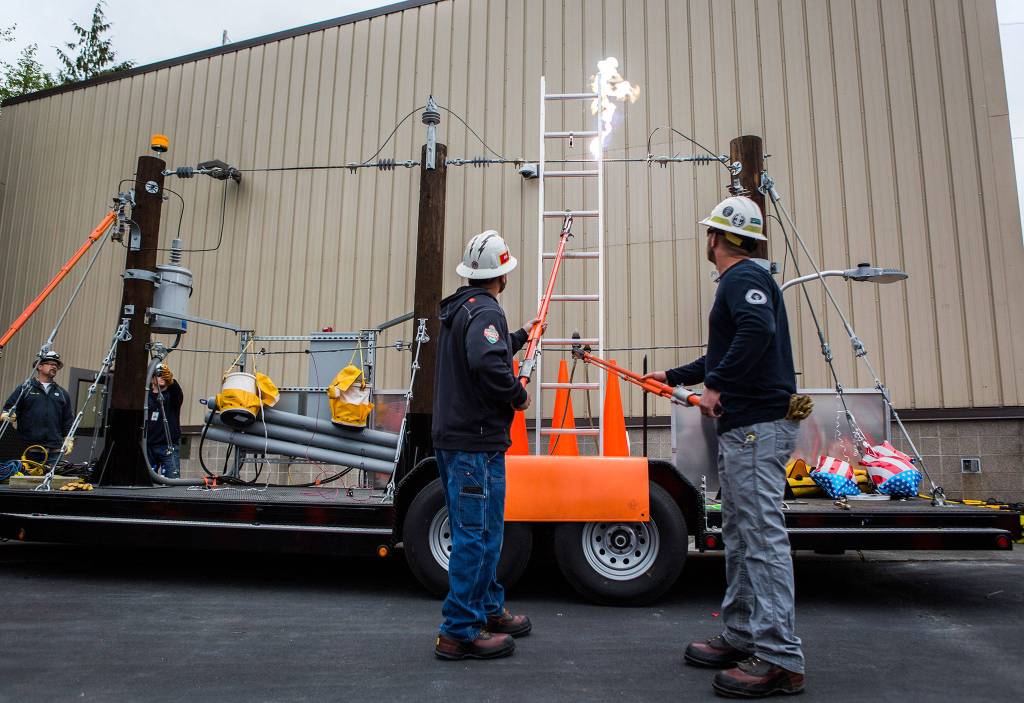
Between the zaps, buzzes and flashes of light coming off the PUD’s high-voltage demonstration trailer, it doesn’t take much convincing for Carlos Tostado to get his point across. His No. 1 message is crystal-clear: respect electricity.
As the PUD’s lineman training coordinator, Tostado regularly interacts with the community as the voice in front of the PUD’s impressive high-voltage demonstration trailer, or arc trailer, as it’s more commonly known. Made up of an interconnected series of poles, wires and fuses, the arc trailer becomes an energized microgrid when connected to a transformer.
Tostado and PUD linemen can then use the 7,200 volts coursing through the planned system to simulate the power electricity has when it comes in contact with hot dogs, mylar balloons, ladders and more. The bright flashes of orange and white light and loud zaps make it a powerful educational tool, and the arc trailer team regularly visits fairs, schools and fire stations to pass on their knowledge.
“When it comes to electricity, I’m clear with the audience: Don’t go near it!” said Tostado, who has worked closely with electricity since coming to the PUD as a lineman in 1993. “If you’re performing work on your home, don’t perform any work on electrical wiring until you’ve either flipped a breaker off or disconnected service.”
In the field, linemen advise anyone to stay at least 30 feet away from downed power lines. When it comes to working around the home, it’s important to remember to never work in proximity of power lines and to always call 8-1-1 before starting any project that involves digging.
Here are some other tips to remember to stay safe around electricity in the home:
Water and electricity never mix. Keep plugged-in devices like radios, hair dryers and curlers away from sinks or baths. Because water is a conductor for electricity, it can become energized if a plug-in device comes in contact with it. Kitchen and bathroom outlets should have ground-fault interrupters, or GFIs, to shut off power to any device that comes in contact with water, but when it comes to water and electricity, precautions should always be taken.
Fix faulty wiring. If your home is older and hasn’t had its electrical wiring updated, you may be in danger. Outdated and faulty wiring is a major fire hazard. Call an electrician to discuss whether your home’s wiring is up to date.
Lights flickering or dimming? If your lights are regularly dimming or flickering, it’s not an apparition from another dimension. It may means your circuits are overloaded. Call the PUD at 425-783-1001 for help in diagnosing the problem.
Other common household dangers. We all know never to stick our fingers in a socket or a fork in toaster, but there are other just as important maxims to heed for household safety. Never overload outlets with multiple plug-ins, don’t run extension cords under carpets and replace electrical cords with breaks in them.
For more information on electrical safety around the home, visit www.snopud.com/safety.