Artist Chuck Close returns to old friends and a show at The Schack
Published 5:38 pm Saturday, May 28, 2016
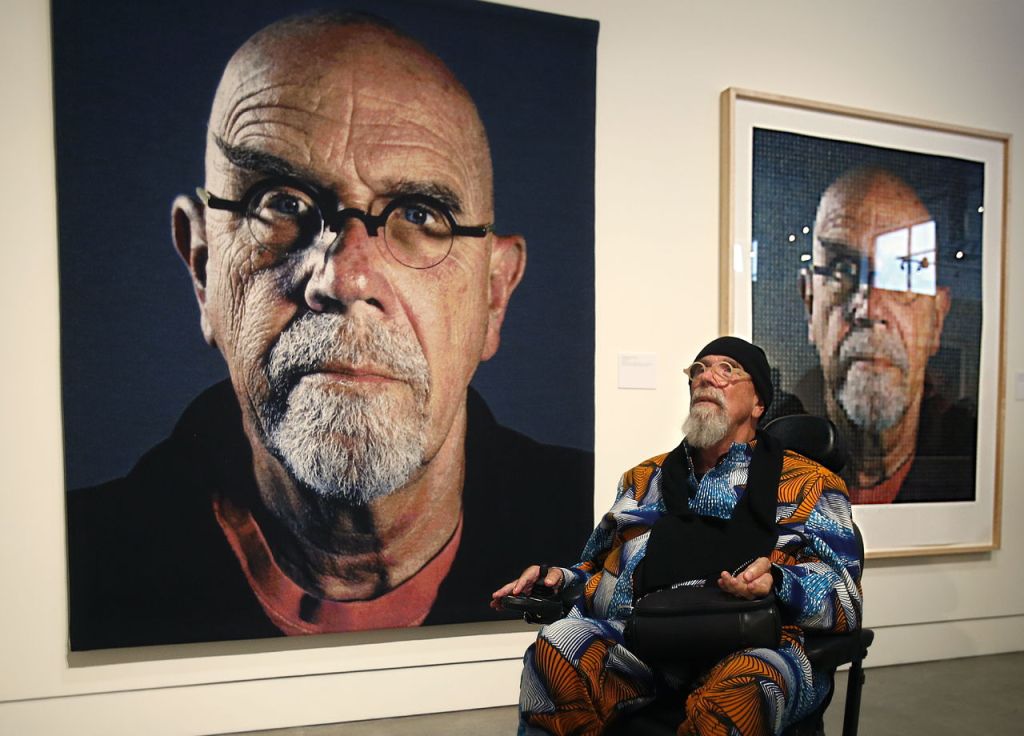
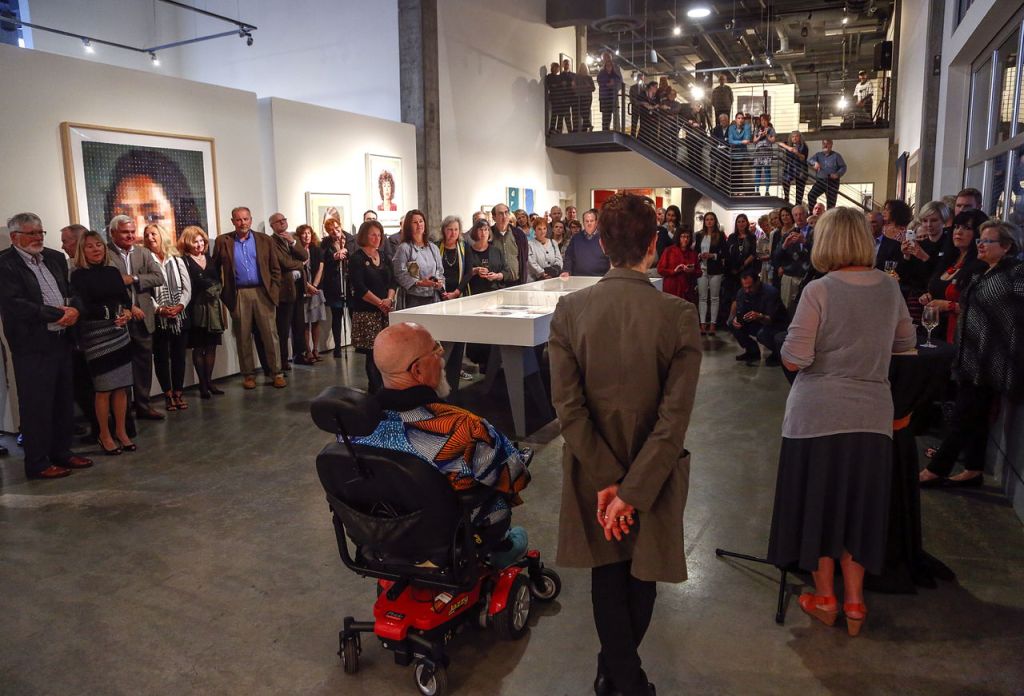


EVERETT — Chuck Close, wearing a colorful print suit, blue suede shoes and his trademark round-rim glasses, gazed out of the vehicle that brought him to an invitation-only reception at the Schack Art Center on Thursday evening.
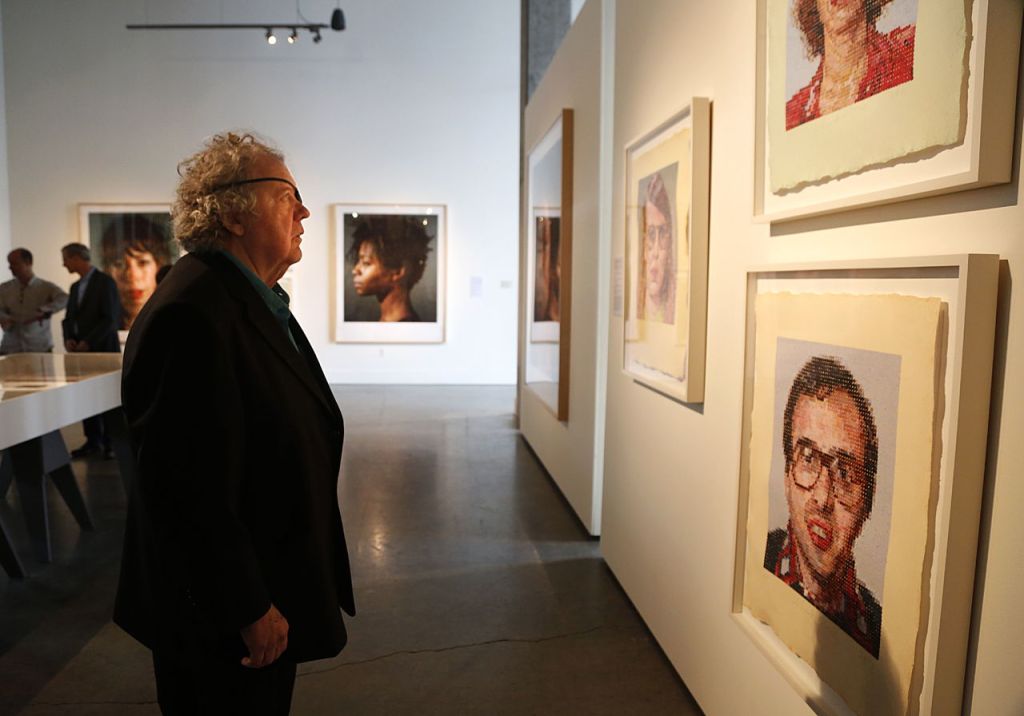
The internationally renowned artist is best known for his massive-scale photo-realist portraits painted on grids. The “Chuck Close Prints: Process and Collaboration” touring exhibition currently is showing at the Schack in Close’s home town of Everett.
In the parking lot next to the art center, Close saw some white-haired men.
“And I thought, well, I must have gone to school with some of them,” Close later told the crowd of about 250 people in the main gallery.
Indeed, his friends were in attendance.
“It’s crazy weird to be here,” said Close, who retains his Northwest accent despite having lived in New York most of his life. “I didn’t really recognize Everett.”
After the applause died down, Close continued.
“Except I’m not sure that’s a good thing. The bars on Hewitt are mostly gone.”
For those who don’t remember, about three dozen taverns used to dot Hewitt Avenue from bay side to river side. Young men turning 21, such as Close and his Everett crew back in the day, were known to do the “Hewitt Run,” drinking a short beer at each bar.
The crowd hooted its approval. It was an Everett night.
A night that many had dreamt about for years. A night, said Schack director Judy Tuohy, that needed to happen.
Born in Monroe
Charles Close was born July 5, 1940, in Monroe to Mildred Wagner Close and her husband, Leslie Durward Close, who died when Chuck was 11.
“After his death, Chuck and Millie were poor,” said Liz Sipprell Healy, Close’s stepsister. “But they were fearless, passionate and eternal optimists.”
Mildred knew how brilliant her handsome son was, and she never gave up encouraging his interest in art, even when faced with discouraging reports from teachers not yet knowledgable about his dyslexia, Healy said.
Mildred taught piano lessons at home, she was the organist at Memorial Baptist Church in south Everett and she later sold real estate. She drove clients around the Everett area in an Austin Healy convertible and had a house built near Lake Stevens in the early 1960s when Chuck was at the University of Washington. Chuck came home when he could to paint a mural in the kitchen and help build the house, Healy said.
In 1970, Healy’s widowed father, Art Sipprell, married Mildred Close.
When Liz moved into her first apartment, Mildred gave her a huge Close painting of a reclining nude, and the young teacher was forever a fan.
Christmas trees
Larry Showlund went to Madison Elementary, South Junior and Everett High with Close, whom he still refers to as Charles.
“Charles did things different than a lot of kids and sometimes they made fun of him,” he said.
Showlund treasures his memory of going with Close to cut down trees in the area now known as Eastmont. The boys hauled the trees back to their neighborhood near Peck’s Drive and sold them as Christmas trees at the corner of Berkshire and Evergreen Way. They gave the money to Memorial Baptist.
“After high school, I got married and we drifted apart,” Showlund said. “But I always considered Charles a good friend. I was always amazed by his talent and so happy for his success.”
Russell and Marjorie Day
In the late 1950s and early 1960s, a trifecta of hip educators worked in the art department at Everett Junior College: Larry Bakke, Don Tompkins and — especially important for Close — Russell Day.
“Those three teachers provided the finest art education, and for just $45 a quarter,” said artist Donn Trethewey, a longtime friend of Close who also went to Everett High with him. “Even now when I hear Russ speak, I close my eyes so I can pretend it’s 1960 and we’re in design class. It wasn’t just about design, but how to live and more.”
Day, for whom the EvCC art gallery is named, met Close when he was a kid. Day’s wife Marjorie, who taught English at the community college, also attended Memorial Baptist. Marjorie brought Close home one day to do some work around their View Ridge neighborhood house.
“He was wearing shorts, I remember that,” said Russell, now 103 and living in Lacey.
Because of his dyslexia and poor grades in math and science, Close had been discouraged at Everett High from pursuing further education.
“Marjorie told me, ‘go to the junior college, they’ll take you,’” said Close, who often praises the Days as the people who got him on the road to success. But Russell Day refuses to take credit.
“I knew he was a not a good student in high school, but at the college he became an aggressively good student,” said Day, who was at the reception Thursday. “He was very alert and a joy to have in class. Chuck spent a lot of time at our house. He helped us out and became a close friend.”
Trethewey remembers that “Chuck bought into the work ethic that Russ preached. It was just as easy to work hard. Chuck would have three easels going at once, while the rest of us had just one. He would stay at school until they turned off the lights.”
The old soft shoe
After transferring to the UW, where he studied with the Everett-born artist Alden Mason, Close moved into a house in the Ravenna neighborhood with six other art majors and one economics student.
“It was a mad house, well-known by students and the cops,” Trethewey said. “Among other things, there was a toilet in the living room that they used as a chair. That’s the kind of place it was.
“One time the guys organized a party and Chuck had them learn a dance, you know with hats and canes. When the police came, the guys performed. The cops laughed and left.”
After graduating from the UW, Close won a scholarship and went on to earn his master’s in fine arts at Yale University, where his classmates included the sculptor Richard Serra. Close also studied in Europe as a Fulbright scholar.
At Yale, he emulated the work of the abstract painter Willem de Kooning to develop technique, said Trethewey.
“Later when he met the artist, Close told de Kooning, ‘I may be the only person who has painted more de Koonings than you.’ That’s how Chuck operated,” Trethewey said. “He was very direct, but also polite and kind. I guess de Kooning just stood there and then he laughed.”
Painting Philip Glass
Close moved to New York City when the avant garde life in Soho, the East Village and Chelsea was cheap.
In the late 1960s, at a time when conceptual art was big, the imaginative and visionary Close emerged boldly to grab the attention of the art world with his huge realistic paintings of heads — heads, not faces, Close insists — based on photos he had taken of his friends, family and himself.
From the photos, he created a grid system and painted the individual squares on the grid. Up close, the squares are like little abstract paintings. Step back, and the piece is hyper realistic.
In a public radio “Radiolab” broadcast from 2010, Close said he probably was unconsciously drawn to making heads because of his condition known as face blindness, a brain disorder characterized by the inability to recognize faces.
“With his work, Close transformed traditional portraiture,” said Laura Hoptman, a Museum of Modern Art curator in the painting and sculpture department at the New York museum. “His work is both representational and conceptual. His art, including his masterful printmaking, straddles many different areas of modern or contemporary American art. And 50 years on, he continues to remain relevant with work that speaks to people. His subjects’ humanity and character are always there.”
Close has photographed movie stars and presidents, but one of his favorite subjects has been the American composer Philip Glass, who in the late 1960s was composing and performing music while making ends meet as a taxi driver and plumber in Lower Manhattan.
Close hired him to do some plumbing and a friendship developed.
“Phil used to say that he was to Chuck Close what haystacks were to Renoir,” Trethewey said.
Lusty Lady
Close’s stepsister, Liz Healy, was at the opening of a Close exhibit at the Seattle Art Museum in 1999.
Across First Avenue from the museum, the Lusty Lady strip club always had a provocative note on its marquee, and often it referred to SAM exhibits. On this particular day in mid-February the sign read “Chuck Clothes.”
Tickled, Close invited the ladies to join him and his family at the exhibit opening, Healy said. At the same time, Close’s buddies from his Everett days showed up to the reception. Among them was Donn Trethewey.
William Gates Sr. and his wife, Mary Gardner Gates, then the director of SAM, were supposed to sit at the head table with Close. (The Gateses are the parents of Microsoft co-founder Bill Gates.)
“But more of our old bunch began to show up,” Trethewey said. With the Lusty Lady crew there, too, the table was crowded. “Pretty soon the Gateses were four tables down and at least 20 feet from Chuck.”
The purpose
The Close print show at the Schack is curated by his friend Terrie Sultan, director of the Parrish Art Museum in Water Mill, New York.
“Though he is one of the most important and significant artists of the 20th and 21st centuries, Chuck Close doesn’t think about fame,” Sultan said. “He thinks about his work and the difference he can make in the world. He is part of President Obama’s education initiative and he is a mentor to schools.”
On Friday, Close met with Snohomish County students touring the exhibit at the Schack.
Healy, the artist’s stepsister and a longtime Everett teacher, said the details of Close’s life were important in her teaching.
“I talked about Chuck with my students, encouraging some who had dyslexia but were good in art. We discussed the obstacles he’s had to overcome,” she said.
In 1988, Close suffered a spinal artery collapse that left him partially paralyzed. He has used a wheelchair ever since.
Pam Hobert, who taught art at Cascadia Community College in Bothell, always included a section on Close.
“The students read about him, watched videos and were moved to experiment with art,” Hobert said. “The fact that Close grew up here and kept doing his art when others might have stopped was very inspirational to my students.”
At the reception Thursday, Close said he was grateful for the people in Everett who helped launch his transcendence from Everett. He laughed when a story was told about how Everett High School students are eager to see the exhibit by a former Seagull.
In a recent note to The Herald, Close said he is pleased with the exhibition at the Schack.
“It clearly shows the process that lies behind the making of these artworks, giving audiences access to the creative thinking and formal methodology involved.
“I am always interested in sharing what some call the ‘magic’ of art making… I am very pleased to have my work at the Schack in Everett, especially because of the art classes taught there and because I can communicate visually with people who are familiar with me personally, but who might not necessarily know who I am as an artist now.
“I hope that young people seeing the show will be excited to see how experimentation, an essential part of my artistic process, allows me to keep expanding and changing.
“My basic message: Anything is possible as long as you keep learning and growing.”
Gale Fiege: 425-339-3427; gfiege@heraldnet.com.
If you go
Chuck Close: Prints, Process and Collaboration, through Sept. 5, the Schack Art Center, 2921 Hoyt Ave., Everett. General admission is $10; Schack members, seniors, military and youth pay $5; children are free. Check the Schack website, www.schack.org, to find out about free-admission Mondays. Hours are 10 a.m. to 6 p.m. Mondays through Fridays, 10 a.m. to 5 p.m. Saturdays and noon to 5 p.m. Sundays, Memorial Day and Labor Day. Closed Independence Day. Extended hours to 8 p.m. on June 16, July 21 and Aug. 18. Books about Close are offered for sale.