Coronavirus adds to plight of Snohomish County’s homeless
Published 6:14 pm Friday, March 27, 2020


EVERETT — Even when Angelica Reinhold can find a wireless internet connection to browse the web on her smartphone, she can’t seem to find the guidance she needs.
Reinhold, who sleeps in a Chevy truck with her boyfriend, said she doesn’t know what to do as someone who’s living on the streets of Everett during a global pandemic. And when she visits government websites for help, instructions are vague and links are defunct.
“There’s no direction for the homeless, none in Snohomish County,” she said.
Despite assurances from local government officials who say they are taking steps to assist the unsheltered amid the coronavirus crisis, local homeless people say they are struggling to meet basic needs, from finding a safe place to sleep — given the crowding in shelters — to a private spot to use the bathroom, now that restaurants and public buildings have shuttered.
Snohomish County announced Thursday that a winter shelter in the historic Carnegie Building in downtown Everett will remain open for homeless people during the public health crisis. However, the number of beds will be reduced from 66 to 40 in accordance with social distancing guidelines, said county Human Services Director Mary Jane Brell Vujovic.
The county is providing nearly $140,000 to the Salvation Army to continue running the shelter, according to a Thursday news release. An additional $250,000 in county funds is being used to relocate homeless people staying at the shelter to 44 units in an Everett motel, reducing crowding at the Carnegie Resource Center, according to county officials.
So far, the Salvation Army has issued 37 motel vouchers to those who were staying at the shelter, Brell Vujovic said.
In a separate effort, the county Human Services Department has given another 22 motel vouchers to families and other homeless people who are considered especially vulnerable.
A local coronavirus response fund — started with a $20,000 grant from the Providence Institute for a Healthier Community and $80,000 from the county — has grown to roughly $350,000, or enough to get “well over a hundred” households off the street through the end of April, Brell Vujovic said. That fund was established to support parents with children, veterans and otherwise vulnerable people.
Altogether, the motel vouchers have been used to house 120 homeless people, Brell Vujovic said.
County emergency management officials are working to establish a separate quarantine and isolation facility for people who are homeless and experiencing symptoms, she said.
“At this point, I’m very proud of the work that has been done, and there is a great deal of work to be done,” she said.
The county is still hoping for infusions of cash from the state and federal government to provide more resources for the homeless during the pandemic, she said.
Marysville resident Kim Delbrouck, whose 39-year-old son is homeless, worries there still won’t be enough money to support all of those in need in the midst of the outbreak.
“There’s so many lists out there. There’s only so much available,” Delbrouck said. “And the amount of homeless people surpasses the amount of help that they can give, or the amount of help that they are giving.”
Delbrouck doesn’t let her son live with her because he uses heroin, and in the past he has struggled to get help for his addiction, she said.
Now, finding a place to sleep in Everett has become especially challenging for him. He feared staying in one shelter because it was crowded with sick people, and he was turned away from another, he told his mother.
“What other options do they have except to be on the street?” Delbrouck said.
Critics are concerned that Snohomish County has lagged King County in efforts to help the homeless during the coronavirus crisis.
“Compared to the response in King County, we got absolutely nothing,” said Tobie Orick, 46, who was staying at the Carnegie Resource Center shelter.
Reinhold echoed that sentiment.
“King County has a clear plan in place for their homeless — and facilities and funding,” she said.
King County has added nearly 1,900 beds during the crisis, including new spaces to alleviate overcrowding in shelters and separate areas where symptomatic patients can isolate themselves, according to a news release. The efforts to expand the system have unfolded over the past three weeks.
But as Brell Vujovic noted, King County’s homeless population is also significantly bigger than Snohomish County’s.
In 2019, about 11,200 homeless people were tallied during King County’s annual point-in-time survey, and roughly half of them were sheltered.
Snohomish County’s 2019 point-in-time count reported about 1,115 homeless people, about 500 of whom were in emergency shelters or transitional housing.
“I think our two counties are moving very much in tandem. Obviously they (King County) have more resources and more beds,” Brell Vujovic said. “We may be talking a matter of days in difference in how quickly certain things are being done.”
Seattle also announced plans on Friday to deploy more than a dozen public toilets and six hand-washing stations in parks and community centers across the city in an effort to give homeless folks a place to use the bathroom and wash up.
Snohomish County has established a few “sanitation stations,” Brell Vujovic said. Portable toilets, though, are in short supply on the market.
“We are working to determine access to a restroom,” Everett spokeswoman Kimberley Cline said in an email.
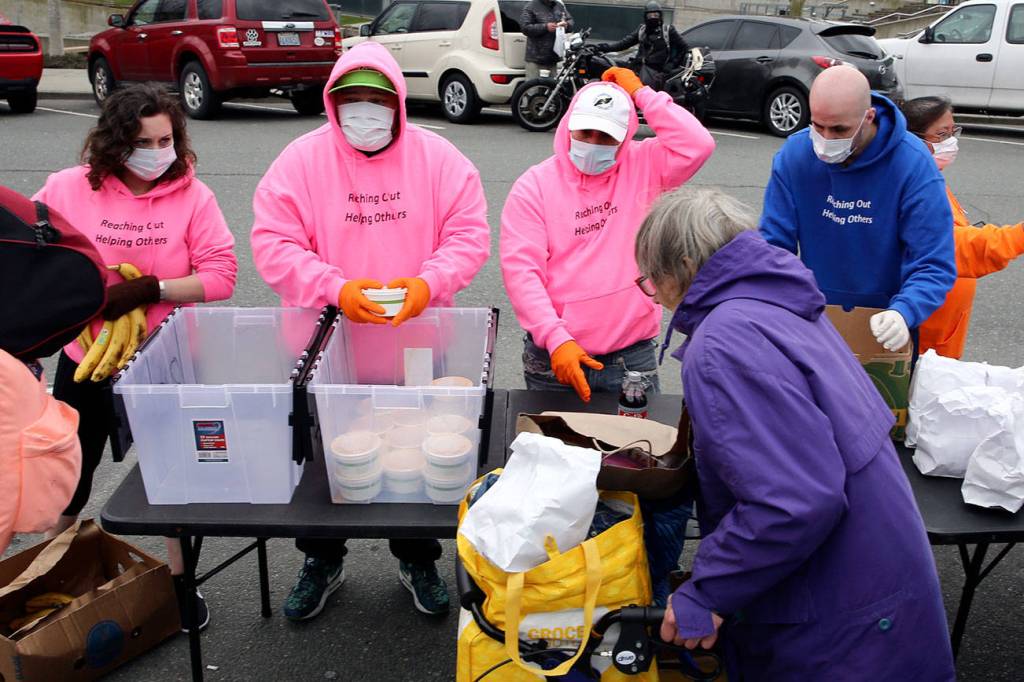
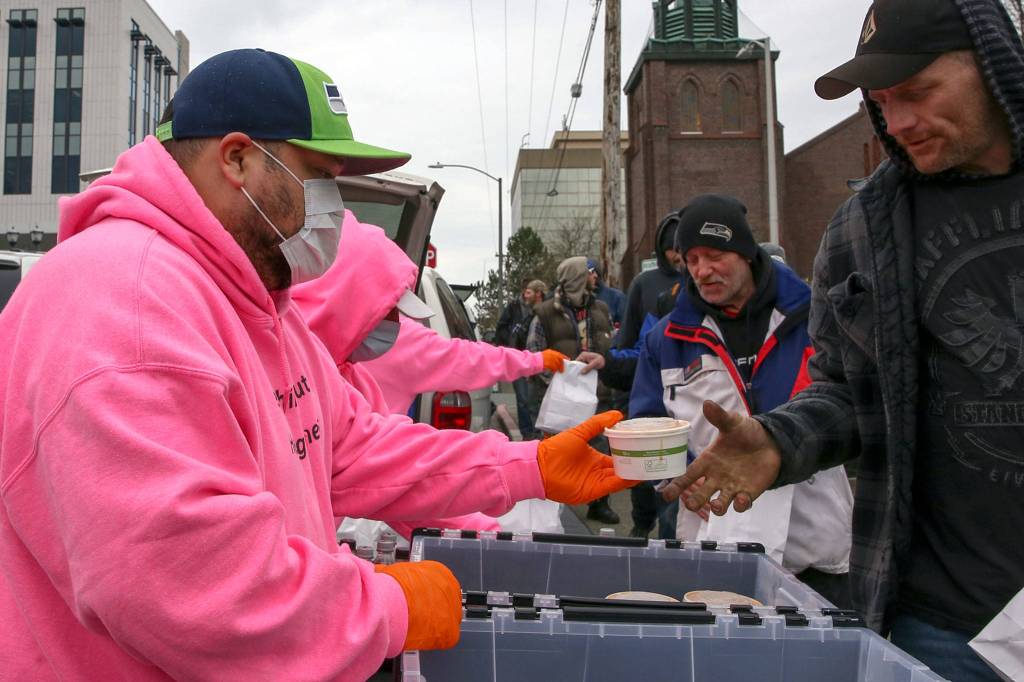
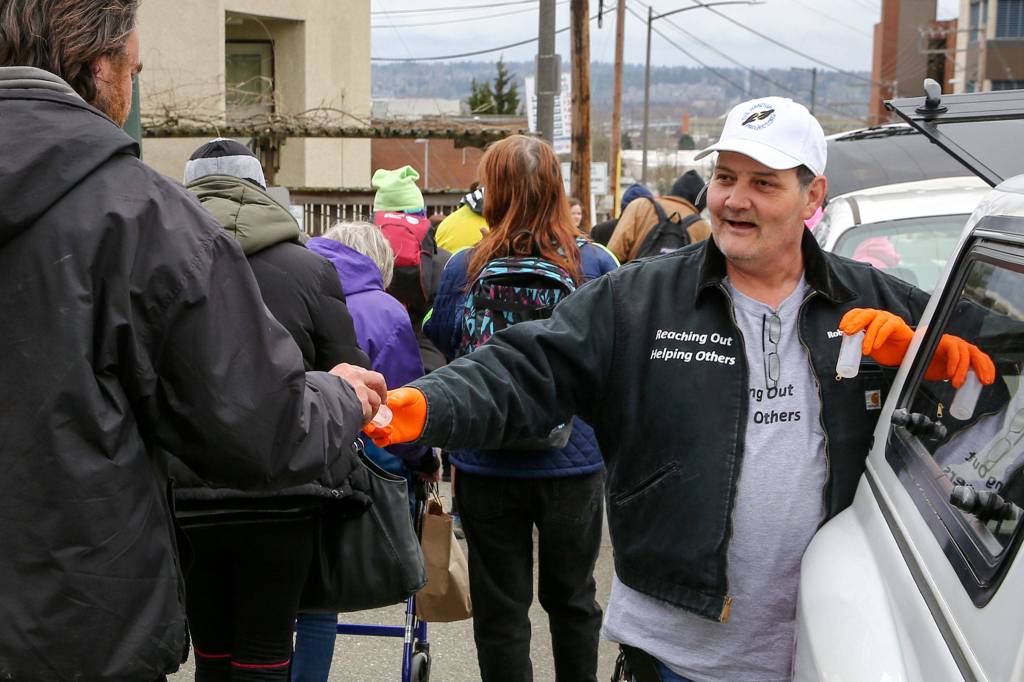
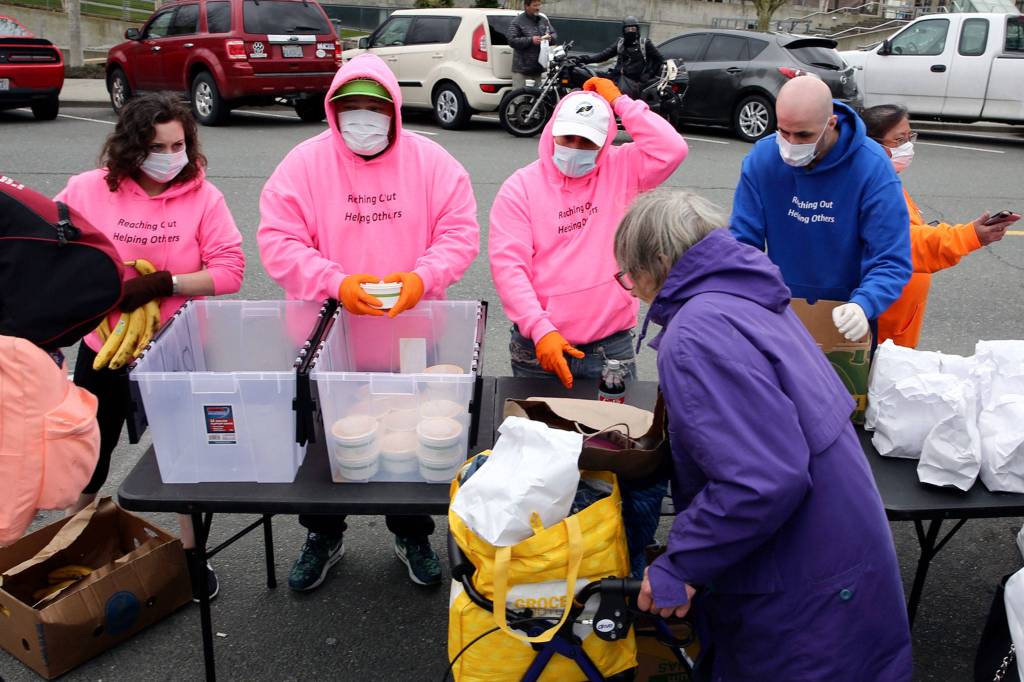
Everett Transit has gone fare-free during the crisis, Cline said. And organizations that have traditionally provided hot meals to homeless people are now distributing sack lunches at some locations, she said.
“The city is working closely with Snohomish County, the Snohomish Health District, our nonprofit and faith organizations, and other regional partners on ways to support our unsheltered population during this public health crisis,” Cline said.
Everett Mayor Cassie Franklin on March 20 directed residents and business owners to stay home, but the directive didn’t apply to homeless people, according to a city news release. The unsheltered were “strongly urged to find shelter,” though.
“Government agencies are urged to take steps needed to provide shelter for those individuals,” the news release said.
Three days later, Gov. Jay Inslee announced a similar stay-at-home order. Homeless people weren’t subject to that order, either, but they were again advised to find shelter. In the proclamation, Inslee encouraged “governments and other entities” to “make such shelter available as soon as possible and to the maximum extent practicable.”
A recent study by the National Alliance to End Homelessness estimated 40% of the nation’s homeless population could be infected at the peak of the COVID-19 crisis, leading to more than 21,200 hospitalizations and 3,400 deaths nationwide.
Sheltering all unsheltered people for months, making space for social distancing in existing shelters and creating areas for quarantining symptomatic homeless individuals is projected to cost more than $11 billion nationally — and upwards of $27 million in Snohomish County alone, according to the study. Just coming up with enough space to isolate and quarantine sick people in the county is expected to cost some $3.3 million, the researchers estimated.
Brell Vujovic acknowledged that bringing in all the county’s homeless off the streets would cost millions of dollars. The pandemic has heightened a homelessness crisis that has for years existed not only in Snohomish County but across the country, she added.
“It’s a national phenomenon,” she said.
The county advises people experiencing any form of homelessness to call 211 for help.
Rachel Riley: 425-339-3465; rriley@heraldnet.com. Twitter: @rachel_m_riley.