Goodbye, creosote: Cleanup underway at Elger Bay salt marsh
Published 1:30 am Wednesday, May 12, 2021
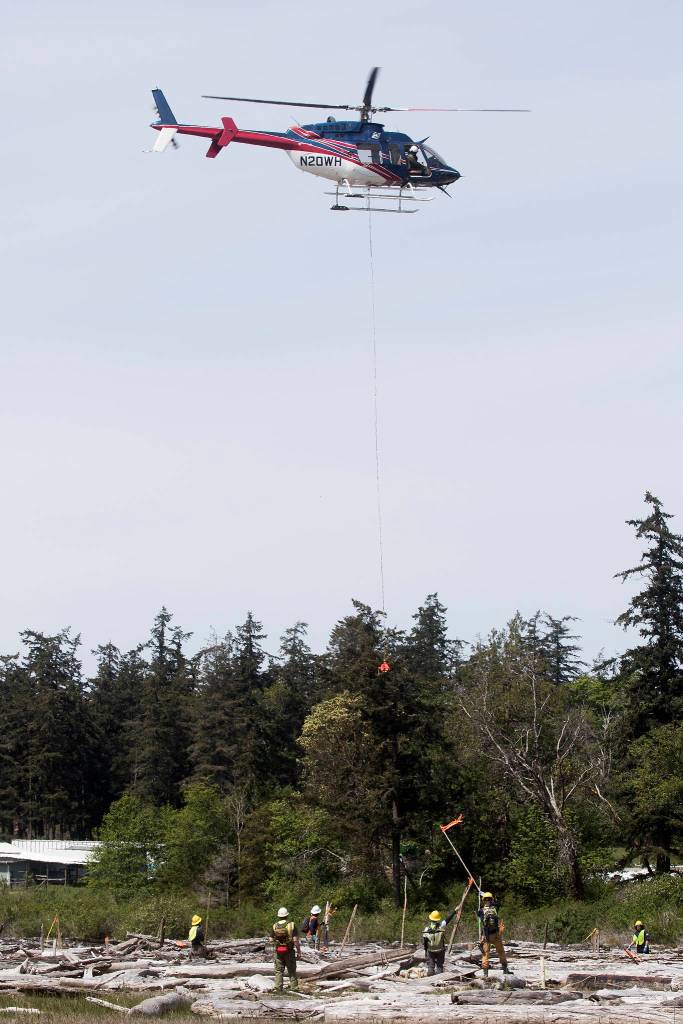


CAMANO ISLAND — The log being hoisted into the air was a 1,500-pounder.
A “big boy,” the pilot radioed.
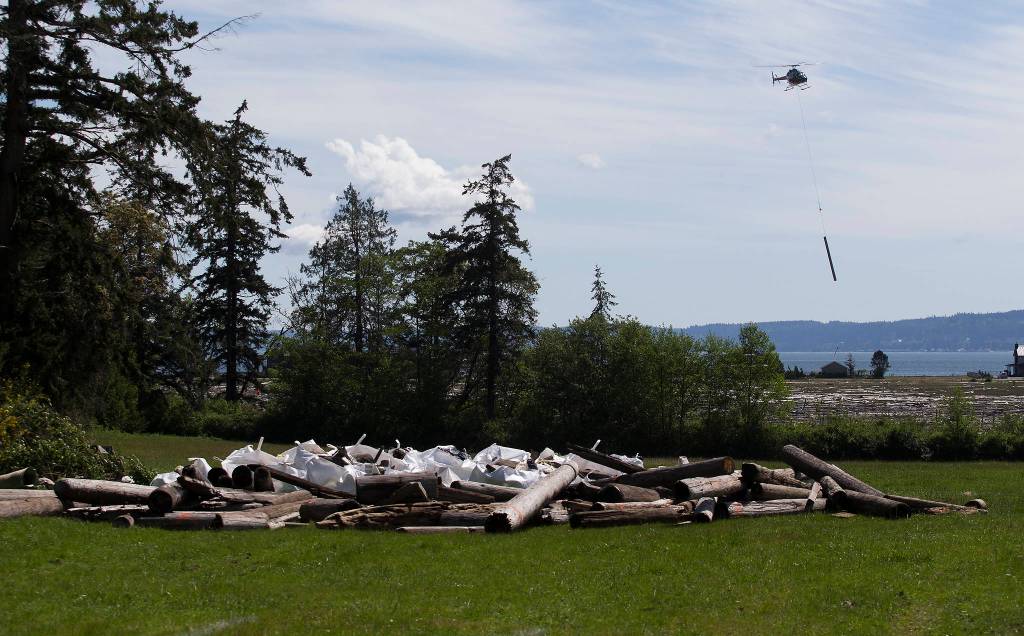
Dangling from a long rope, it swayed as the helicopter plucked it from the salt marsh along Camano Island’s Elger Bay and carried it to a nearby landing spot in a grassy field.
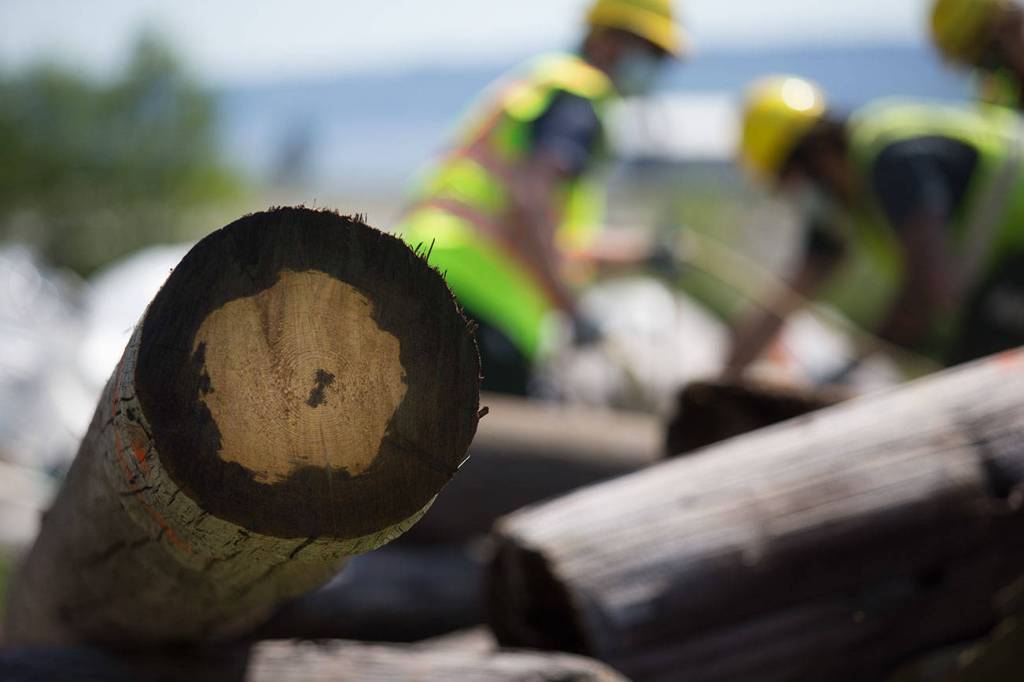
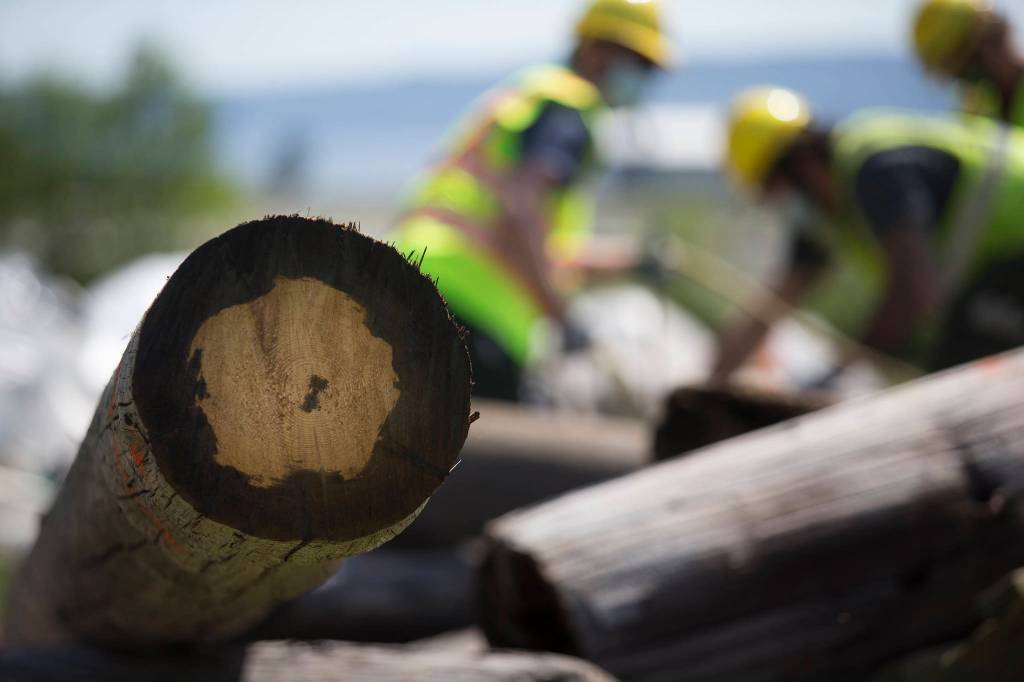
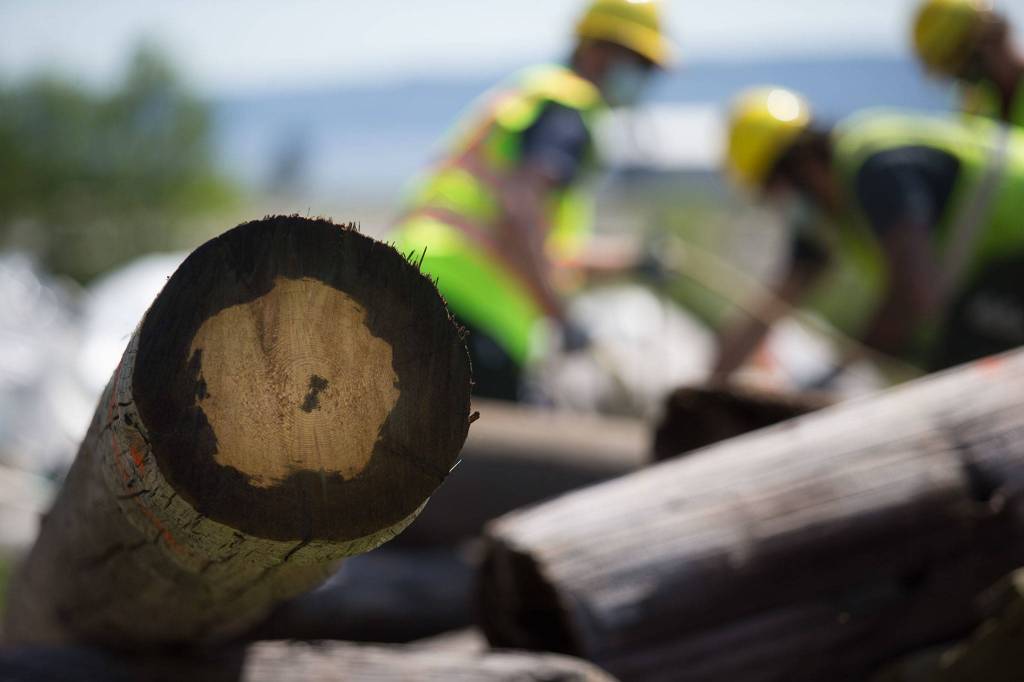
From there, it will be hauled off to a landfill. It wasn’t just any old log. It was soaked in creosote, an oily coal-based liquid used as a preservative that for a century was ubiquitous at Washington’s docks and piers. Until recently, locals could see it at work at the old Mukilteo ferry dock, held up by more than 200 creosote-stained wood pilings, before it was demolished and barged away.
Creosote has largely been phased out, as concrete and metal have become the favored building materials. And now scientists have found the liquid — a cocktail of more than 300 chemicals — to be dangerous to fish and humans alike. Each foot of log carries with it about a gallon of creosote.
Among the long list of chemicals are something particularly nasty called polycyclic aromatic hydrocarbons, a known carcinogen, said Chris Robertson, the aquatic restoration manager for the state’s Department of Natural Resources.
Over time, creosote-treated pilings can leach chemicals into the surrounding sediments, and people can be exposed to toxic vapors on a hot day or through direct contact, according to the state.
The toxin can be picked up by fish — such as the salmon using the Elger Bay salt marsh as rearing habitat — and spread through Puget Sound’s food web. Studies show it can kill or cause developmental abnormalities in aquatic life.
“It’s also really not great for the public,” Robertson said. As a phototoxin, it can burn someone who touches it.
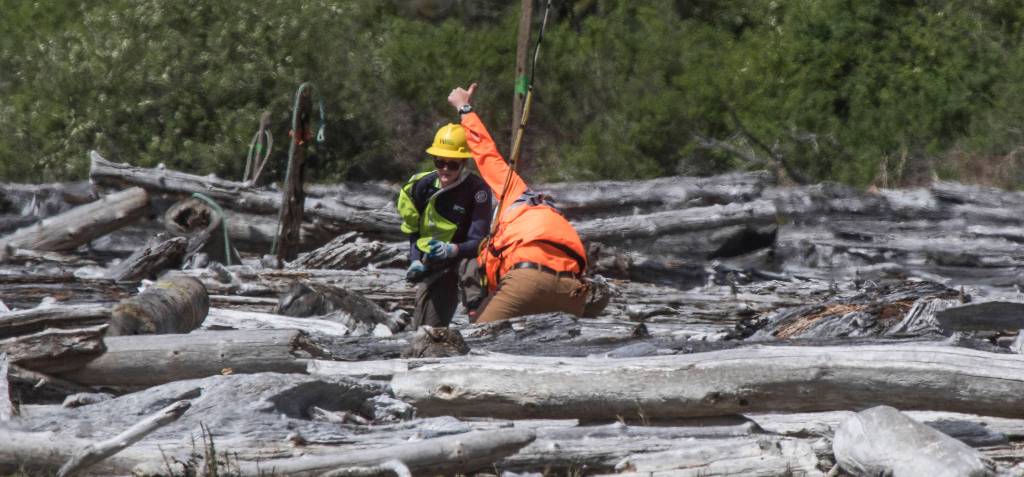
Crews with the Department of Natural Resources spent a couple weeks at the Elger Bay salt marsh prepping the creosote logs to be taken out. Then, on Monday and Tuesday, the crews flagged the helicopter down as it made trip after trip to the shoreline, taking with it one or a few pieces of wood at a time, pausing every so often to refuel.
By the time they were done, Robertson estimated about a hundred tons of creosote wood was taken out of the marsh.
That’s a lot, he confirmed.
The helicopter was flown by Hi Line Helicopters out of Darrington, a company that specializes in scenic tours and “technical external load operation.”
A large piece of the Elger Bay estuary was donated a few years ago to the Whidbey Camano Land Trust, allowing the state to manage cleanup and preserve it for the future. The trust bought another 20 acres in 2020.
As the tide rises, saltwater from Puget Sound rushes its way through narrow passageways, providing prime habitat for salmon spawning, as well as shorebirds.
The tide also brings in logs and wood remnants, some of it soaked in creosote.
The state’s creosote piling removal program has been around since 2004. So far, crews have hauled off more than 21,000 tons of wood debris covered in the stuff — enough to cover six football fields.
It can at times feel like a Sisyphean effort, as tides bring new debris to shores, and yet more creosote to clean up.
Robertson said the wood has no secondary use, so it’s taken to the dump.
“It just needs to get out of the aquatic environment,” he said.
Zachariah Bryan: 425-339-3431; zbryan@heraldnet.com. Twitter: @zachariahtb.