Hanford project glitches remain
Published 10:19 pm Monday, June 14, 2010
RICHLAND, Wash. — The company building a waste treatment plant at the nation’s most contaminated nuclear site has made good progress but is still working to resolve a technical problem with equipment that will mix the waste, an Energy Department official said Monday.
Deputy Energy Secretary Daniel Poneman visited south-central Washington’s Hanford nuclear reservation as part of the agency’s stepped-up oversight of the project and to review areas where federal stimulus dollars are being spent to speed cleanup of the site.
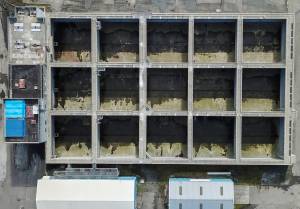
Poneman last toured Hanford in August 2009 and said photos taken between his two visits show the progress workers have made in building the $12.2 billion vitrification plant, which will convert highly radioactive waste into a glasslike form for permanent disposal.
Contractor Bechtel National has struggled with a problem involving the design of the equipment that will mix the waste, but Poneman said the agency expects to hear new ideas from the company within the next couple of weeks.
Recent steps by the Energy Department also should help ensure the project remains within budget and on schedule, he said.
The agency has implemented regular reviews of all its large construction projects, hired a new project director and established a review panel to gather technical expertise from all three former weapons sites where tank waste remains.
Besides Hanford, millions of gallons of waste sit in underground tanks at Idaho National Laboratory and at the Savannah River Site in South Carolina.
“This project is really important to the nation,” Poneman said. “It’s the largest and perhaps most complex chemical separation process, certainly that we have within our complex.”
The federal government created Hanford in the 1940s as part of the top-secret Manhattan Project to build the first atomic bomb. Today, it is the nation’s most contaminated nuclear site.
The government spends $2 billion each year on Hanford cleanup — one-third of its entire budget for nuclear cleanup nationally. About one-third of Hanford’s cleanup money goes for design and construction of the plant, which is among the largest industrial construction projects nationally.
Technical problems have delayed construction, pushing the plant’s operating date to 2019. The cost has ballooned from $4.3 billion in 2000 to $12.2 billion.
The 65-acre complex, which is half complete, includes three major nuclear facilities, a laboratory and 21 smaller support buildings.
Last year, workers celebrated the halfway point of the project, and design is about 80 percent complete.
Like other large construction projects, the waste treatment plant enters a new phase as construction progresses and commissioning and operation get closer, said Dale Knutson, recently hired as the new project director.
“The waste treatment project needed to get to this place and time,” he said. “That’s a major cultural and mental shift that occurs on every project.”