Inslee energized from visit to Everett fusion firms
Published 6:50 pm Tuesday, July 9, 2024





EVERETT — In the race to combat climate change, two Everett companies are developing technologies to generate power from fusion, a potential zero-carbon source of energy.
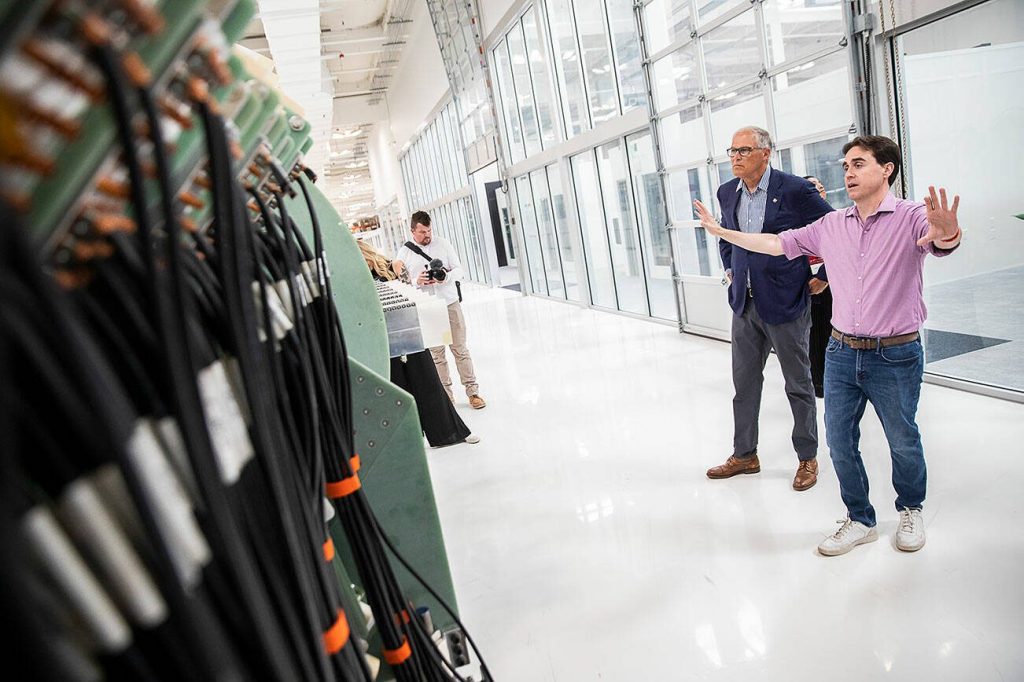
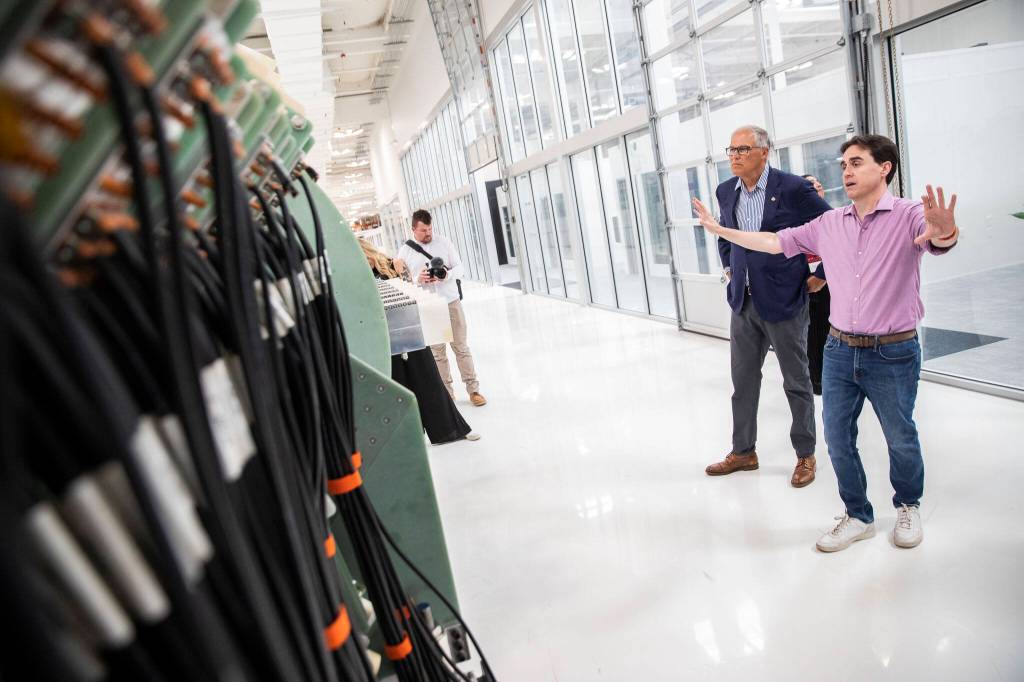
On Tuesday, Helion Energy and Zap Energy offered Gov. Jay Inslee and state climate advisers a glimpse into their operations.
Both companies, each funded by multi-million dollar investments, aim to develop fusion energy devices that can be used to generate electricity at a commercial level.
The Pacific Northwest is emerging as a significant fusion hub with six companies — Helion, Zap Energy, Avalanche Energy, Exofusion, General Fusion and Kyoto Fusioneering — leading the charge.
In the United States, electricity production is the second-largest source of greenhouse gas emissions, which trap heat and warm the planet, according to the Environmental Protection Agency.
“We really appreciate the ambition here because we’re in a race against climate change,” Inslee said at his first stop, Helion Energy.
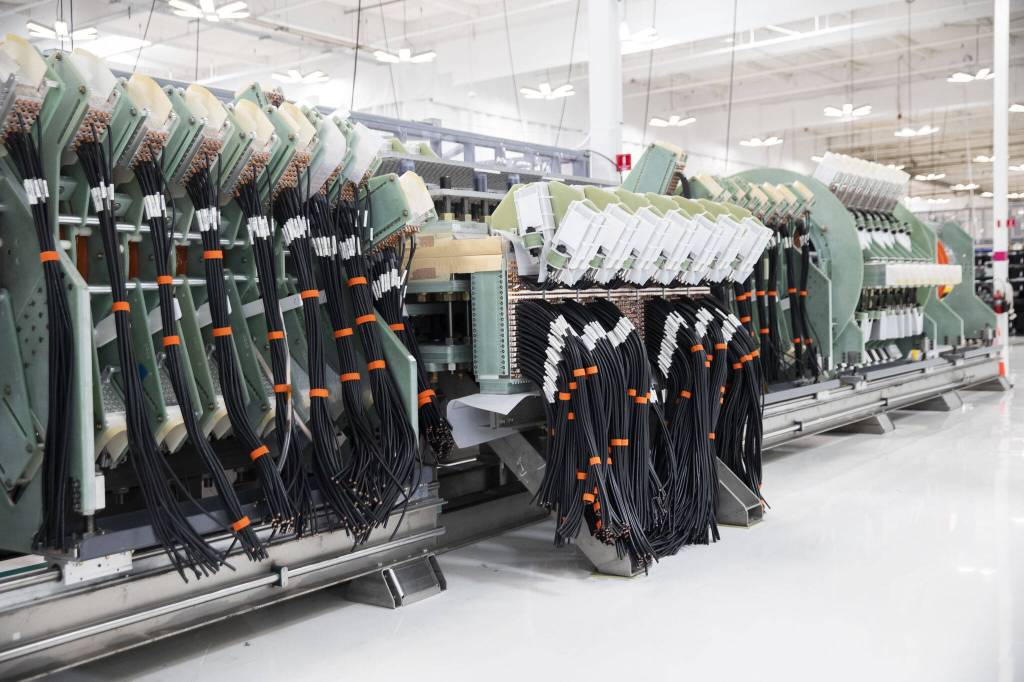
Helion’s fusion generator raises fusion fuel to temperatures greater than 100 million degrees Celsius and directly extracts electricity with a “high efficiency pulsed approach,” the company said.
Zap Energy, founded in 2017 by researchers at the University of Washington, takes a different approach, channeling large electric currents through a thin filament of plasma, a hot state of matter that generates massive amounts of energy. The resulting energy could then be used to turn a conventional steam turbine and generate electricity.
It’s complicated, intricate science and technology.
What’s important to note, Inslee said, is that fusion is not fission.
“It’s not your mother’s nuclear plant,” he said.
Fission produces energy by splitting atoms, while fusion produces energy by smashing atoms together at extremely high temperatures.
Unlike fission, fusion plants don’t melt down and don’t produce significant amounts of radioactive waste.
Fusion is the energy that powers the sun and, by extension, this week’s scorching heat wave.
The sun shines because it is continuously fusing hydrogen into helium.
But achieving that same reaction on the earth requires much higher temperatures, upwards of more than 100 million degrees Celsius compared to a balmy 15 million degrees Celsius on the sun.
Scientists have been trying to build fusion generators for more than 75 years.
Progress has been made, but critics contend “fusion power has been one of those things that’s been ‘only 20 years away’ for about 50 years now,” according to an article this year in Space.com
“While it’s relatively straightforward to make fusion happen…it’s much more difficult to make the reaction slow and controlled while extracting useful energy from it,” Space.com concluded.
Helion Energy and Zap Energy are seemingly too busy, too driven and too upbeat to pay attention to critics.
Last year, Helion agreed to provide Microsoft with electricity from the company’s first fusion power plant, scheduled to begin operations in 2028. It also agreed to develop a 500 megawatt fusion power plant at a Nucor Corporation steel production facility in the United States. (That’s enough power to supply 360,000 homes with electricity for a year.)
“We’re on schedule and working as fast as we can,” Helion CEO David Kirtley told visitors. “We’ve figured out how to do more as fast as possible.”
Founded in 2013, Helion Energy moved from Redmond to a 150,000-square-foot warehouse near Paine Field.
Since then, its workforce has skyrocketed from 70 employees to 300, Helion spokeperson Jessie Barton said. About three-quarters of the current workforce is made up of engineers and technicians, including Everett Community College and Shoreline Community College graduates, Barton said.
“We’re building the parts to build our systems right here in Everett,” Kirtley said.
Inslee’s second stop was Zap Energy. In a recent demonstration, the company heated plasma to tens of millions of degrees Celsius, eclipsing the sun’s temperature. Last year, Zap Energy was awarded $5 million from the U.S. Department of Energy’s Milestone-Based Fusion Development Program.
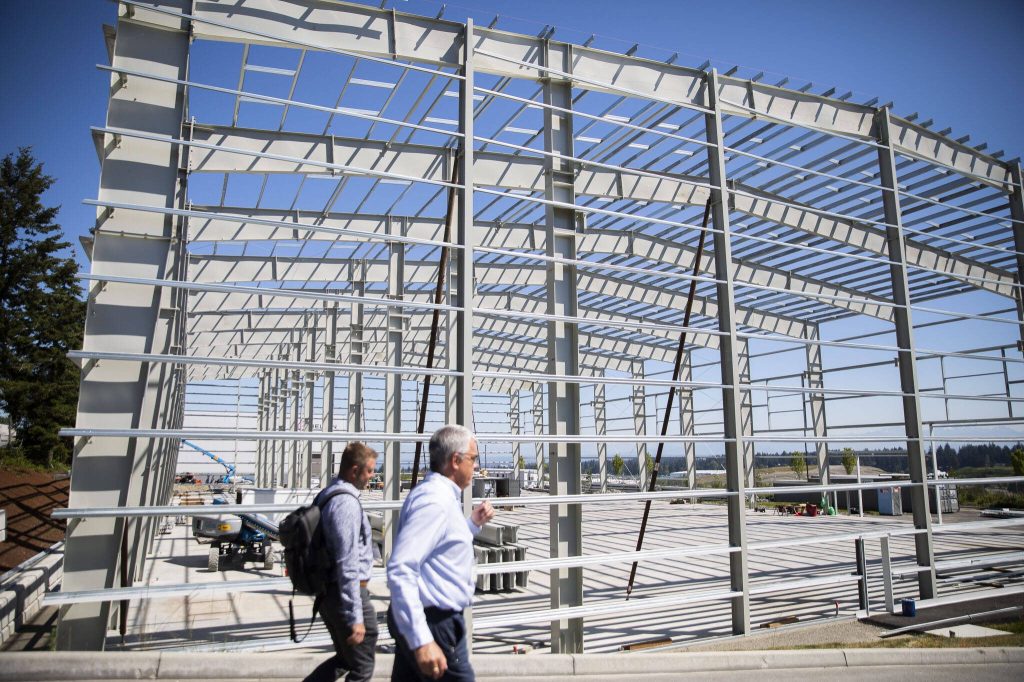
The company recently expanded, adding a second Everett location. It now employs 150 people, 80% of whom are scientists and engineers, said Andy Freeberg, Zap Energy spokesperson.
“In 2022, we raised $160 million,” Uri Shumlak, co-founder and chief scientist, told visitors.
Shumlak has been researching fusion technologies since he was a graduate student 30 years ago at the University of California Berkeley. When he questioned his adviser about current fusion methods and suggested another approach, his adviser told him he had a great idea and “to go figure it out.”
Fusion is a dense energy source, producing 10 million times more energy than coal, he told Inslee.
The company is developing relatively small fusion power plants, “lightning bolt in a bottle,” about nine feet by nine feet, big enough to generate 100 megawatts of electricity or enough to supply 10,000 homes.
“We’re all going as fast as we can,” said Brian Nelson, co-founder and chief technology officer.
Zap Energy’s target date to produce a commercially viable fusion system capable of generating electricity is the “early 2030s,” Nelson said.
“I’m convinced that this is a world changing technology assuming it can succeed,” Inslee said. “No one doubts the challenge. If it works, this can save our kids from the pollution, reduce climate change and reduce health risks.”
In the recent legislative session, Inslee signed a bill creating a state agency work group to advance fusion innovation and permitting.
Janice Podsada: 425-339-3097; jpodsada@heraldnet.com;