Internet’s ‘final frontier’: Broadband is coming to Skykomish!
Published 1:30 am Monday, December 20, 2021


SKYKOMISH — What would Skykomish high schooler Gage Altman do in an ideal Skykomish, one where internet flowed free?
Easy.
Get through some Colter Wall country tunes without his phone skipping and sputtering. Play Xbox with his cousin. Give the family Wi-Fi password to visitors who asked for it, instead of dodging their questions.
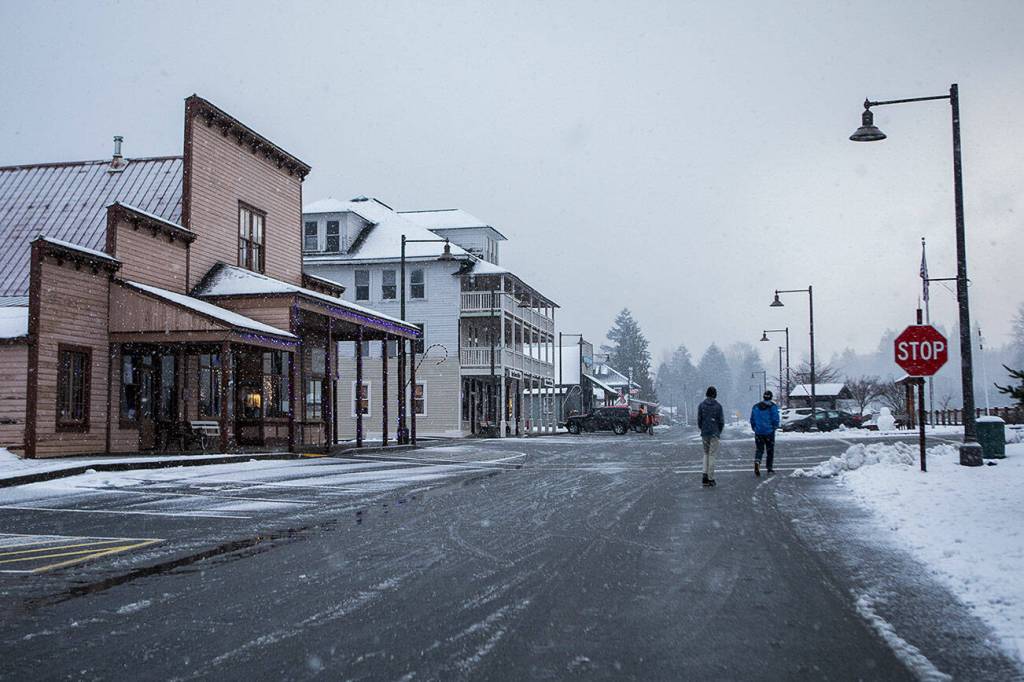
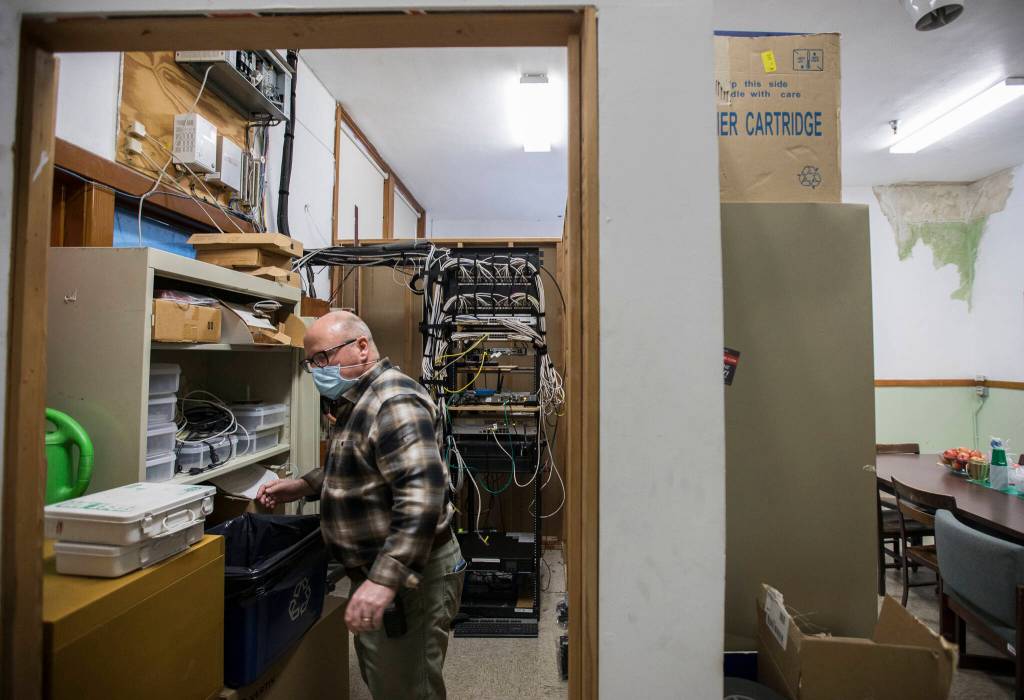
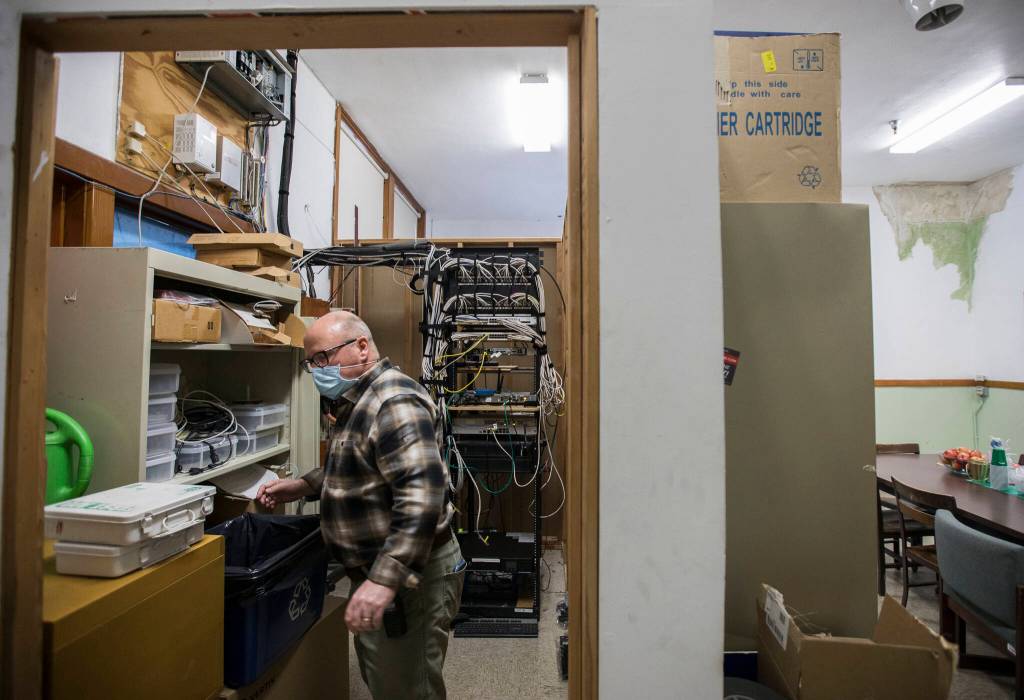
The tiny King County town, tucked deep in the Cascades along U.S. 2, still relies on slow DSL connections, delivered through phone lines. There are limited hookups — word gets around when someone moves and leaves one up for grabs. In the evenings, the internet slows to a crawl.
“De facto,” said town Councilmember Shelly Farnham, “a lot of the community just doesn’t really have access to the internet at all.”
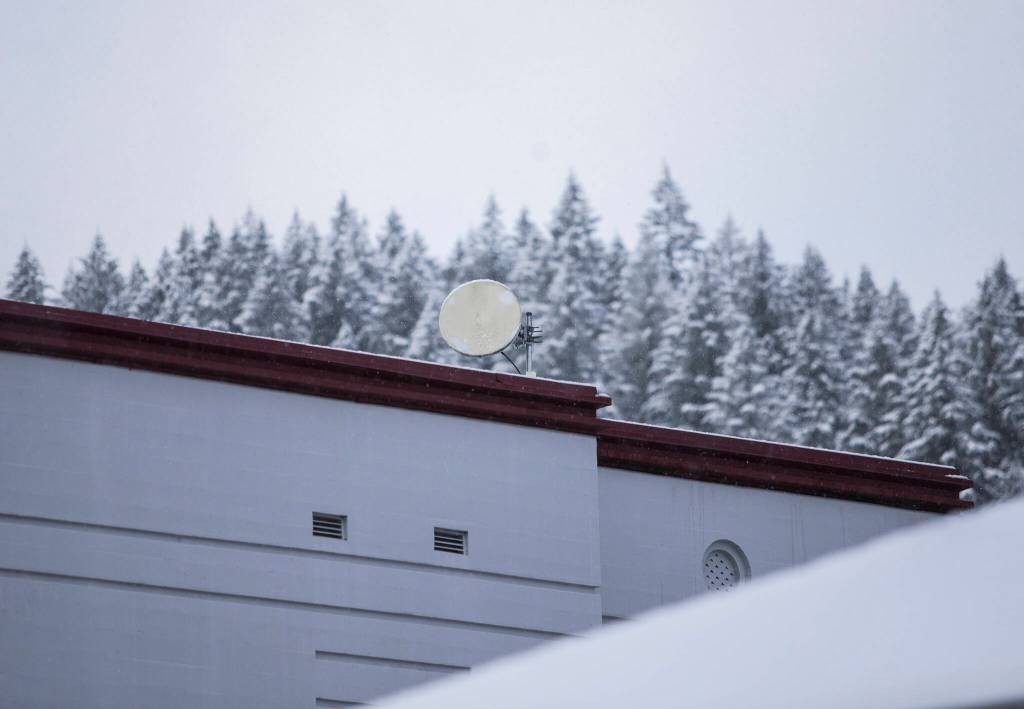
From downtown, Skykomish’s 200 or so residents can see the tower that delivers their DSL. It stands tall on Maloney Ridge. Superintendent Thomas Jay has watched snowmobiles trek up to restore the lines after storm-induced power outages.
A recent survey found median download/upload speeds at 9.65/1.13 mbps. Compare that to what the feds considers the minimum standard for broadband: 25/3 mbps. (A recent speed test at The Daily Herald’s newsroom reported speeds around 71/41 mbps.)
Things will change next summer. With the help of a nearly $600,000 state grant, Ziply Fiber will build 670 broadband connections in Skykomish and surrounding neighborhoods in the valley, tapping a fiber line that now passes through town unimpeded.
Requests for broadband funding more than doubled what the state Public Works Board could give out. Of the 13 projects awarded statewide, Skykomish’s chunk of money was the smallest.
Even so, “this is a major game-changer,” Jay said.
The town’s connectivity doesn’t just keep teens from streaming music. It means less access to telemedicine, or the inability to work from home. It means when too many folks come into Sky River Coffee to use the internet, owner Moe Ainsley gets that dreaded red banner on her card reader — there’s not enough of a connection to ring up a cup of joe.
“People who live in the mountains their whole life,” Farnham said, “it’s almost like they don’t even realize what they’re missing.”
Altman knows what he’s missing. He was using speedy fiber internet this summer in Utah.
“It smokes this place,” he said.
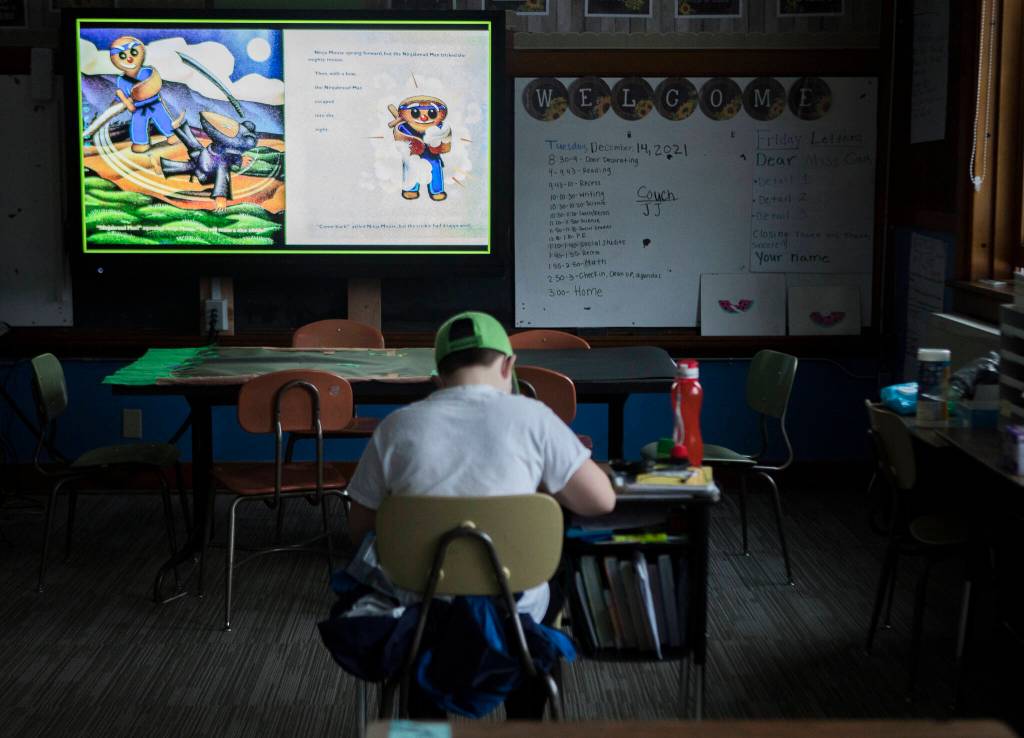
Last year, when students were sent home to learn virtually, civics teacher and former mayor Tony Grider would frequently walk to students’ houses so he could help them with technical problems or hand-deliver packets and lessons. That was after setting his own seven kids up for the school day.
“Imagine how frustrating it is to have a group of students and a third of them can’t hear me, can’t see me,” he told The Daily Herald. “Not because they don’t have computers, but because they don’t have an internet connection.”
It’s not fair or equitable to students, Jay echoed.
Altman would get booted out of Zoom classes multiple times a day. He’d wander into the kitchen for a snack, waiting to reconnect. There, Dad would remind him he should be in class.
“I’m like, ‘I know! I should!’” Altman said.
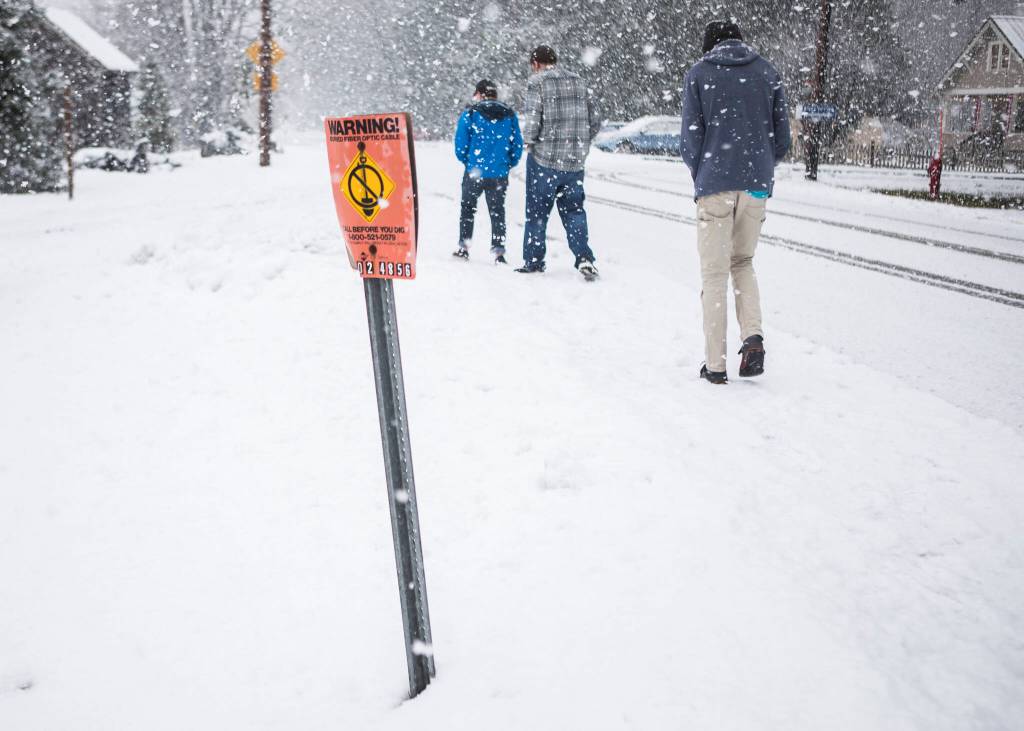
The irony is that fiber has been in town for years. A line runs underground through Skykomish, right past a row of houses.
“I remember sitting on dial-up and knowing the fiberoptic line is out in my backyard,” Grider said. “It just really ticked me off.”
Skykomish relied on dial-up as recently as six or seven years ago. Grider offers a near-perfect imitation of the awful trills and screeches that came with it, like a robotic bird on its last legs.
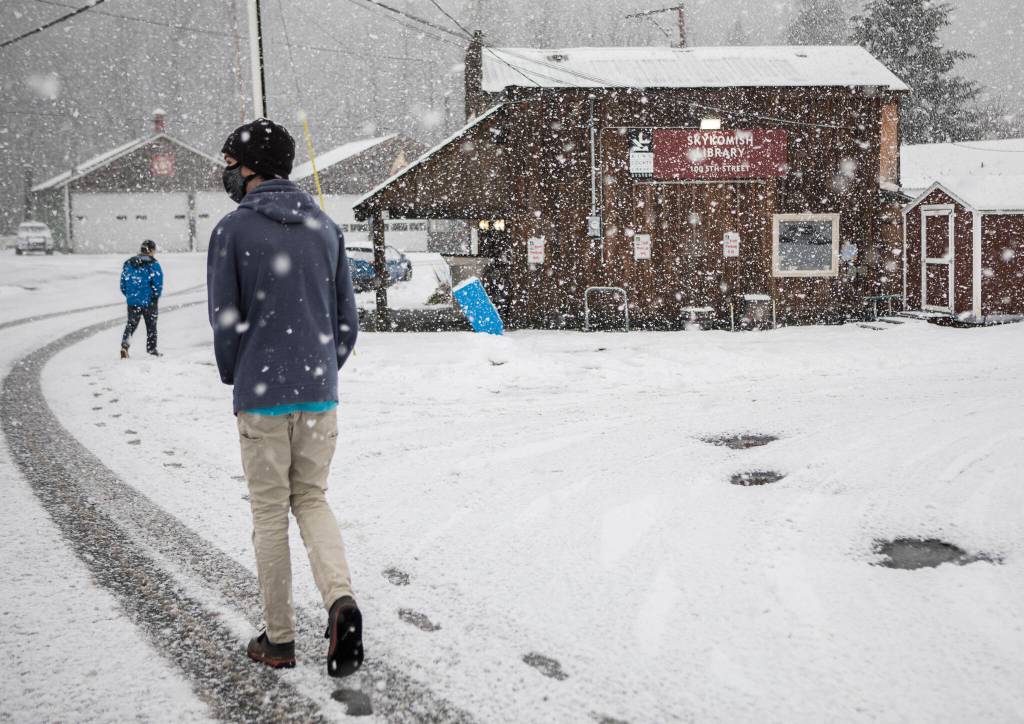
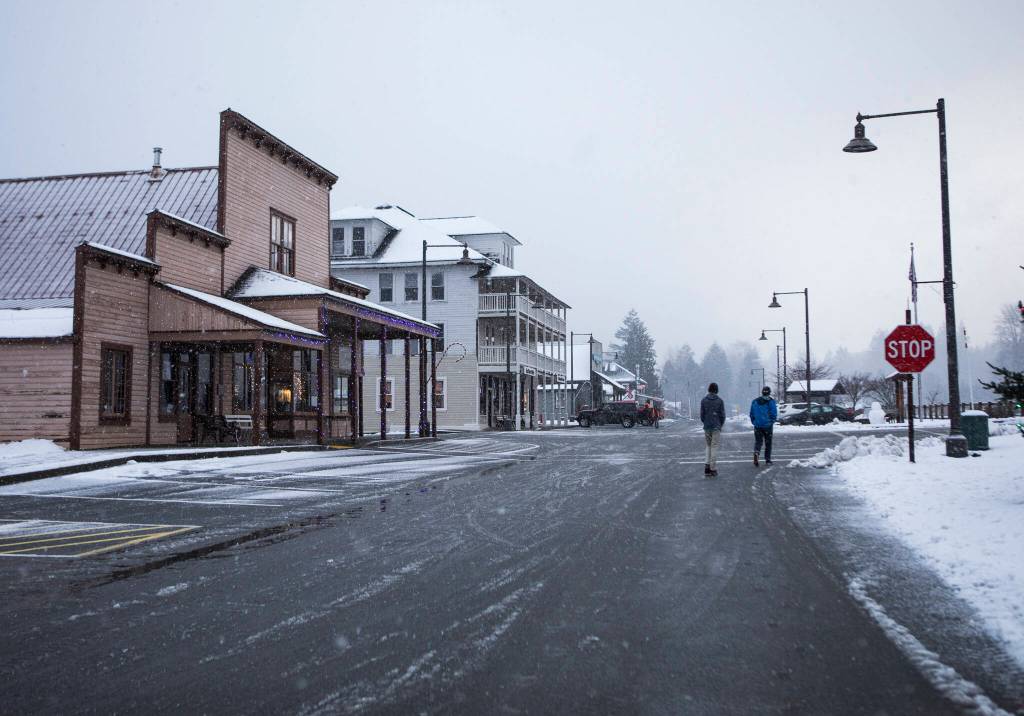
Last week, he walked his four-person civics class over the tracks that draw trainspotters, past a few train-shaped roadsigns and around the town’s own tiny railway, where tourists can ride a ⅛-scale locomotive.
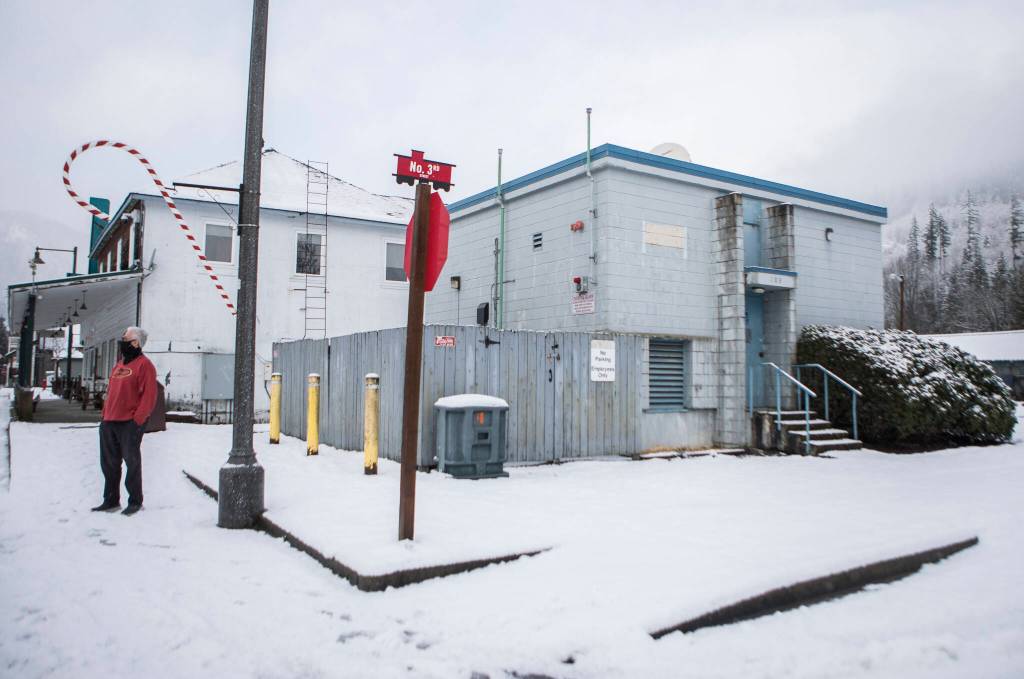
There, Grider pointed to the snow-covered metal sign announcing that yes, fiber is here. So watch where you dig.
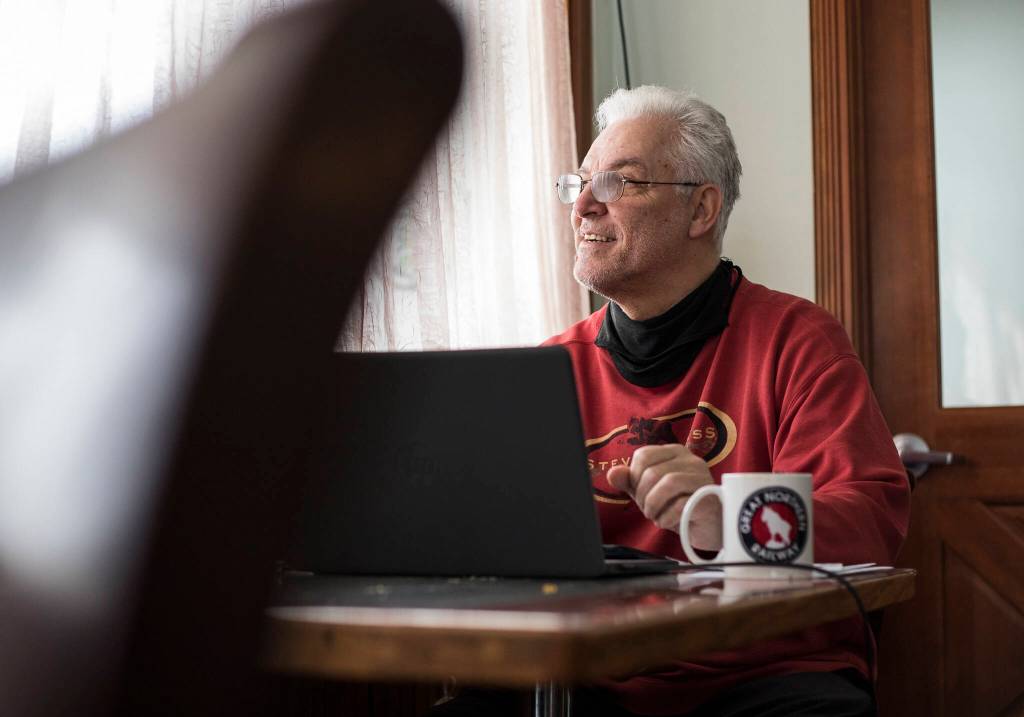
“It’s not as simple as going out there and splicing the wire,” said Mayor Henry Sladek, standing in the historic inn he runs in town.
It’s an expensive feat. The whole project will cost $1.3 million. And it makes sense it hasn’t happened yet — extending infrastructure to so few customers isn’t a cash cow.
There used to be more people here. In the 1920s, Skykomish had a few thousand residents, but the population declined with the Great Depression, along with a waning timber and mining industry.
Lining the halls of the school are framed photos of each graduating class. This year, it was a class of one.
It all chalks up to a town that feels like the “old west,” Grider said.
The town’s request for state assistance similarly called Skykomish and upper Sky Valley communities “the final frontier of telecommunications.”
“Through time, Skykomish children have suffered from isolation. … They’re completely alone,” Grider said. “They’re King County kids, but they’re stuck in this little corner.”
In field trips to Seattle, Grider’s students have been in awe of theater productions, architecture and other cultures. Eleventh-grader Luca Laverde said his family can’t really watch the news without cable or good streaming capacity. He still prefers Skykomish to big cities, though. They smell bad.
New broadband could fulfill a long-time wish of some Skykomish leaders who want to see tech workers move to town and be able to work remotely. It could boost the economy and grow the tax base.
Even with the new broadband project, some outlying communities won’t be reached. The town’s library and coffee shop have been an option for them. A new public space is in the works to offer free broadband internet downtown.
In reality, Sladek said, plenty of retired folks in Skykomish don’t mind the isolation. Some couldn’t care less about the prospect of broadband internet.
It’s different for some youngsters.
“This place is tough,” Altman said. “I know every single student here from pre-K to 12th grade.”
Better connection? “That’d be legendary.”
Claudia Yaw: 425-339-3449; claudia.yaw@heraldnet.com. Twitter: @yawclaudia.