Near Stanwood, thousands of fish discover a restored estuary
Published 4:34 pm Saturday, February 26, 2022

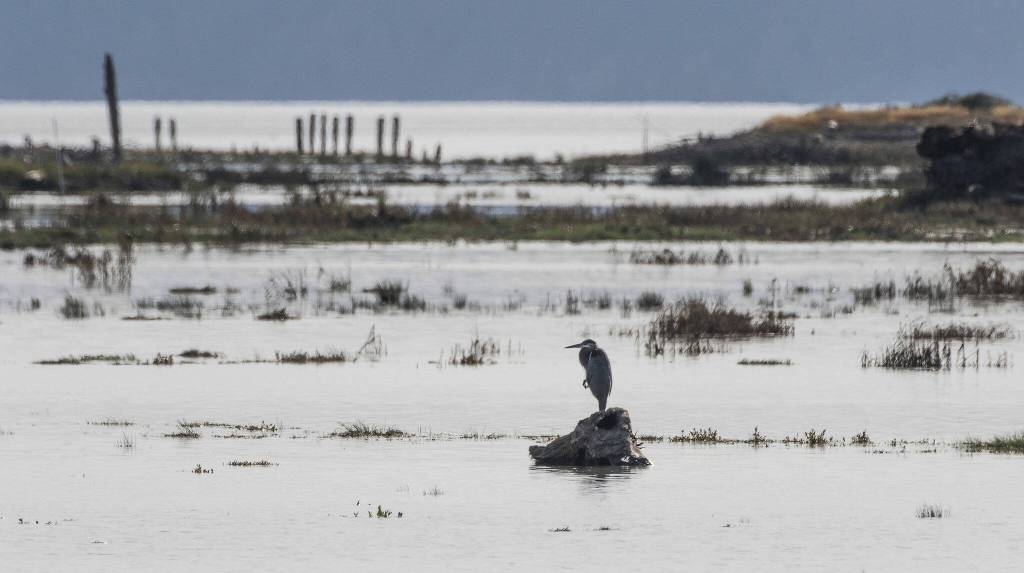










STANWOOD — Between Stanwood and Camano Island, where the Stillaguamish River pours into Puget Sound, fish have found their way to a new estuary at Leque Island.
Chinook and chum salmon. Coho, too, according to initial numbers collected by the Skagit River System Cooperative.
Even bull trout. That came as a surprise, said Mike LeMoine, a senior research scientist with the cooperative.
“That was like the cherry on top,” he said.
Joining them were hundreds of arrow goby, staghorn sculpin and surf smelt, as well as nearly 2,000 shiner perches and over 4,000 stickleback.
The numbers are promising for the $6 million restoration project, but scientists and government officials hesitate to draw any conclusions yet. When it comes to fish, there are endless variables.
Take, for example, an unprecedented heat wave last summer that saw temperatures climb into the triple digits.
“The site could be perfectly designed and built, but if you have this extrinsic factor you don’t have any control over, that makes the temperature too warm and fish leave,” LeMoine said, “that’s not the fault of the project. That’s the fault of climate change.”
Scientists used nearby reference sites to act as controls to help account for the year-to-year changes in fish numbers. But it’s impossible to tell for sure what’s going on based off one year of data.
Still, that fish are coming at all is confirmation something is working.
Leque Island was salt marsh once before, over a century ago. In the late 1800s, the Leque, Eide and Smith families homesteaded at the island and diked off the wetlands at the mouth of the Stillaguamish River by hand, turning it into farmland. For decades they grew hay and oats and wheat.
Over time, the land got soggy. It sank. Farming became a hassle. The state started buying pieces of the island more than 40 years ago. The Department of Fish and Wildlife used it for cereal grain to feed waterfowl.
Eventually that became impractical, too. The dikes broke down, occasionally flooding the farmland with saltwater. It cost money to maintain.
Perhaps nature was giving a hint.
Those early farmers didn’t think much about salmon, but since then political tides have changed. Over the decades, pressure has mounted to protect threatened salmon species, as well as the endangered Southern Resident orcas that rely on them for food. And over time, science has shown the benefits of estuaries, nature’s rest stops, where fish can hang out, eat food, hide from predators, and grow big and strong for the challenges ahead, of which there are many.
So while the region’s population has boomed, and as important habitat has been paved over, the growing consensus suggests maybe people can undo some of the damage. Turn parking lots back into wetlands, farms into salt marshes. Give the salmon a shot.
‘Helping hand’
Restoration projects have popped up here and there in Snohomish County, scattered like crumbs for habitat-starved fish. Like the nearby 83-acre zis a ba estuary, stewarded by the Stillaguamish Tribe, or a 150-acre addition to the Port Susan Bay Preserve that the Nature Conservancy bought from a farmer. Then there’s Smith Island near Everett, at 377 acres one of the largest such projects to date.
Over time, Fish and Wildlife bought the entirety of Leque Island. It became another project in a growing list. Another pit stop for beleaguered salmon.
On Oct. 14, 2019, the dikes at the island were breached. On purpose this time. After more than a hundred years, saltwater flowed freely into the 250-acre swath of land.
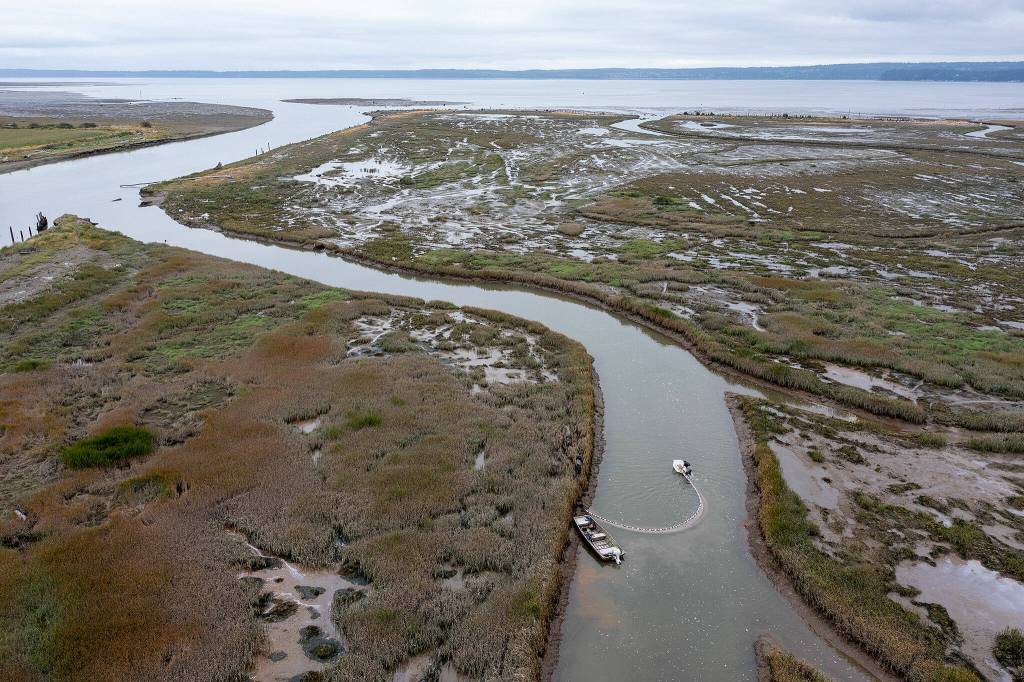
Excavators had chiseled out the six main channels as part of the restoration project. Nature “needs a little more of a helping hand,” LeMoine said. More canals will form naturally over time as the tides carve their way through. A couple are already starting to appear in the mudflats, said Loren Brokaw, restoration project coordinator for Fish and Wildlife. One day, they’ll connect with the estuary, giving salmon more refuge.
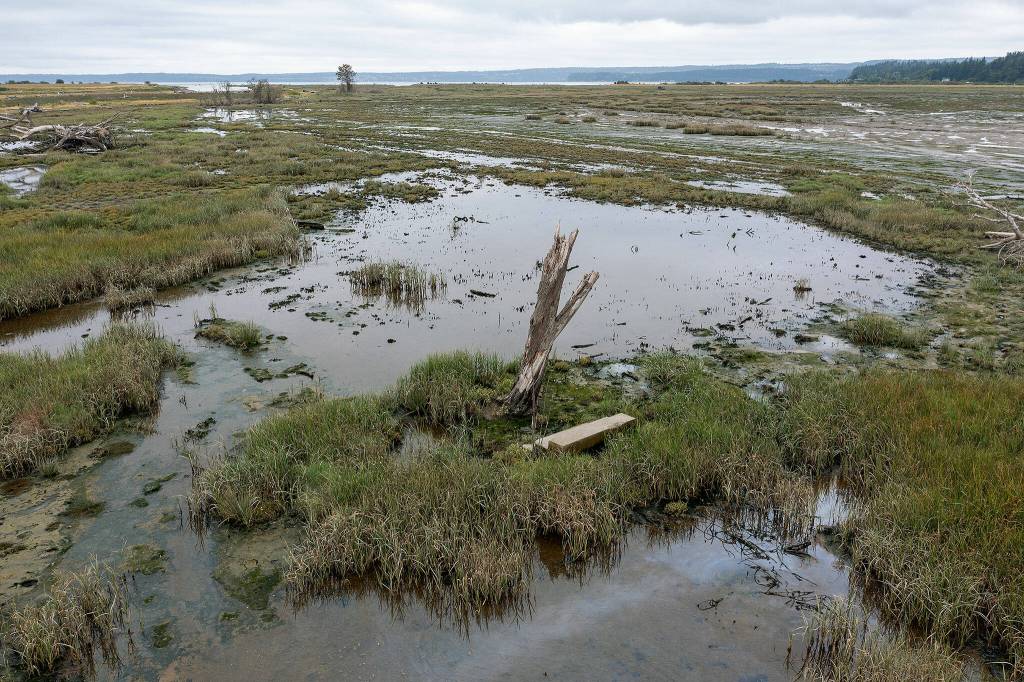
In the couple of years since, the landscape has transformed. Twice a day, the sea pushes its way inward, flooding the landscape. By now, the saltwater has killed off much of the fields of grass and grain left over from the farms. In their place sprout native sedges and rushes.
Walking with a Herald reporter last summer, a biologist with Ducks Unlimited spotted some pickleweed. It’s edible, he said. The reporter snacked on a piece. Salty, like the sea.
A 0.7-mile berm acts as a barrier for larger waves and serves as a popular walking trail. From there, people can see the various birds making their way to the marsh, many of them newcomers. A survey in 2020 found a bunch of goldfinches, barn swallows and Canada geese. With them were a dozen cinnamon teals, a red-eyed cinnamon-colored duck; a couple northern harriers, an owl-looking hawk that flies low, searching for rodents and other unsuspecting prey; and a peregrine falcon, known best for its ability to dive upwards of 200-something mph.
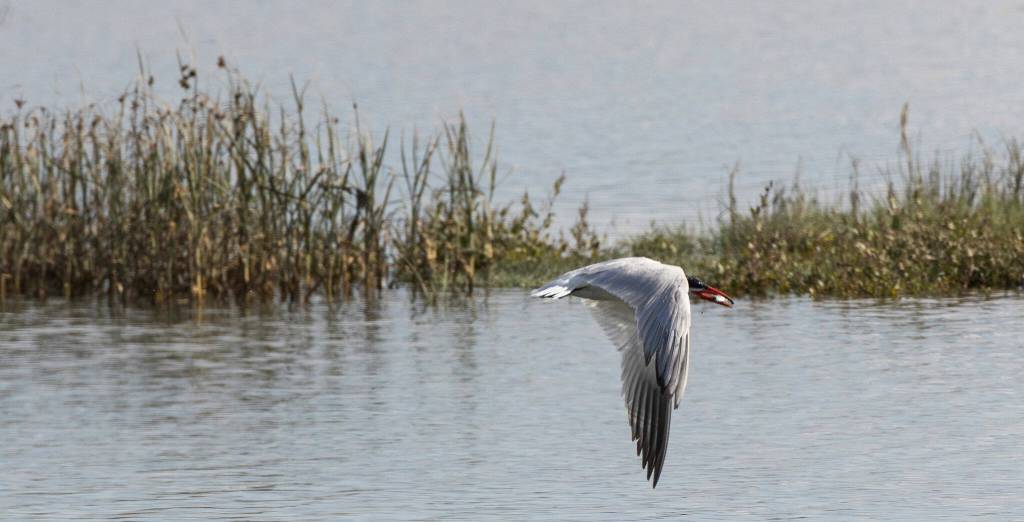
A Herald photographer saw Caspian terns taking turns diving for fish, then flying off with their catch.
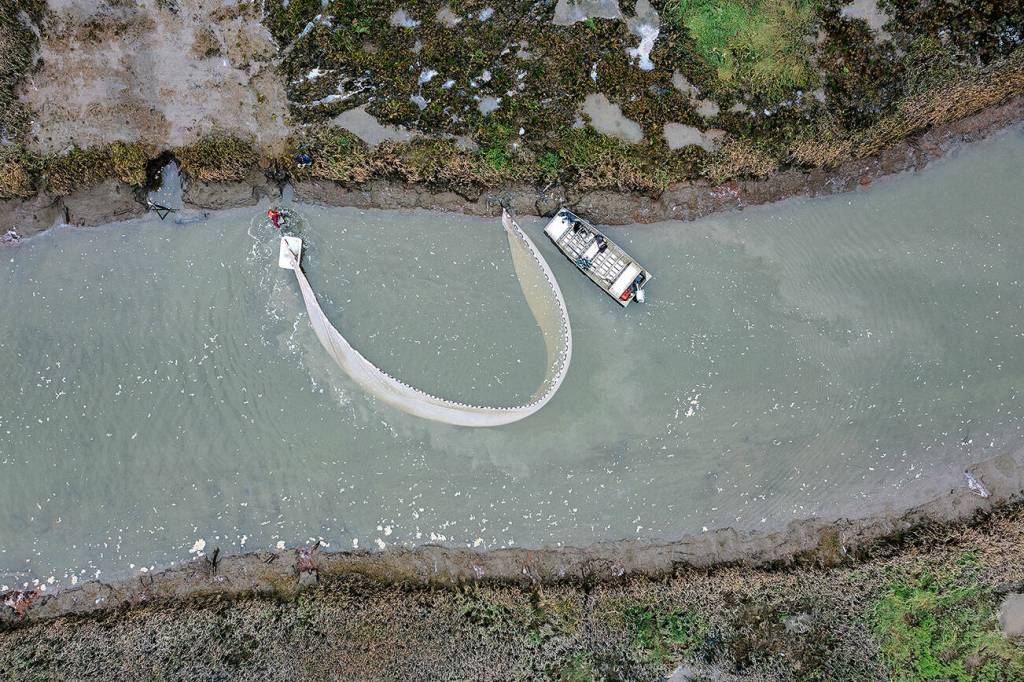
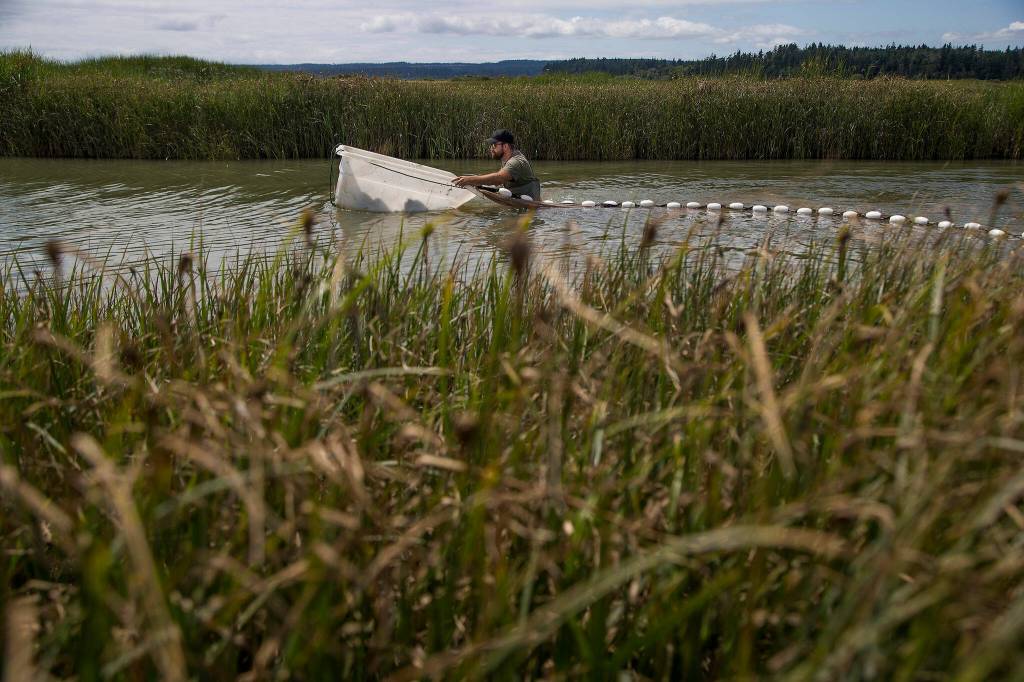
On a muggy summer day, as the tide began to ebb back into the estuary at Leque Island, LeMoine and his fish-counting crew puttered into one of the newly formed channels on a little Crestliner boat. The water rippled around them as fish made their way in, too.
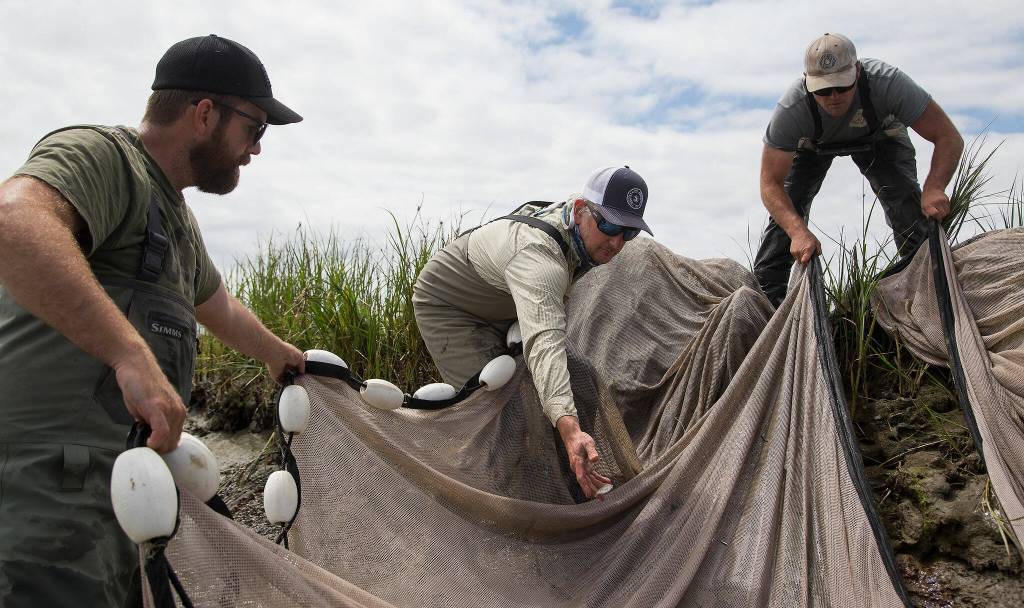
The researchers took out large nets and dragged them in a circle to trap the fish. Then, they methodically counted and tossed them back into the water, over and over again.
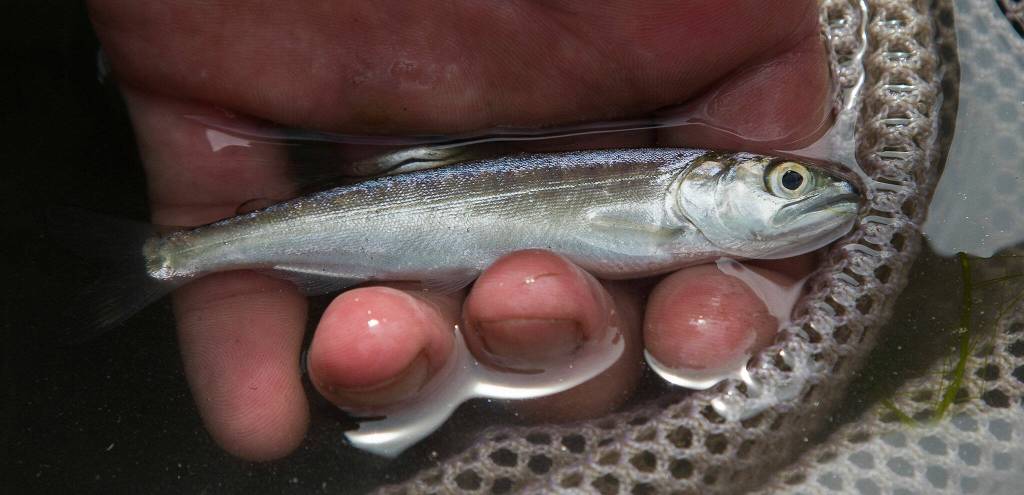
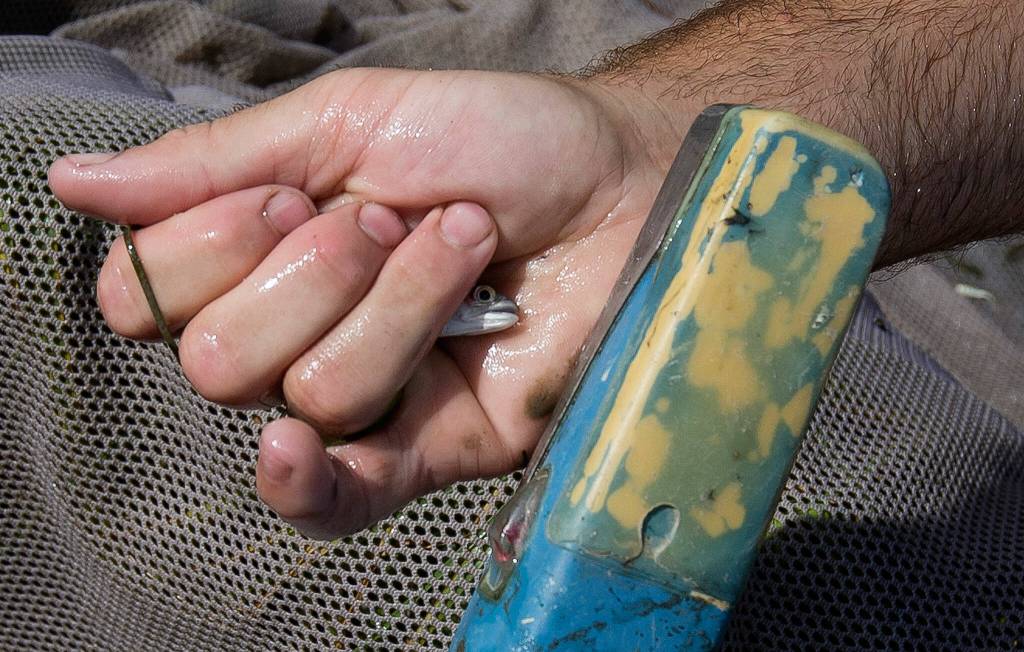
LeMoine paused as he held up a juvenile Chinook salmon. This one’s wild, he said. You can tell because no one clipped the adipose fin, like they do for hatchery fish. And a metal detector didn’t find a wire tag, either.
He tossed it into the water and went back to counting.
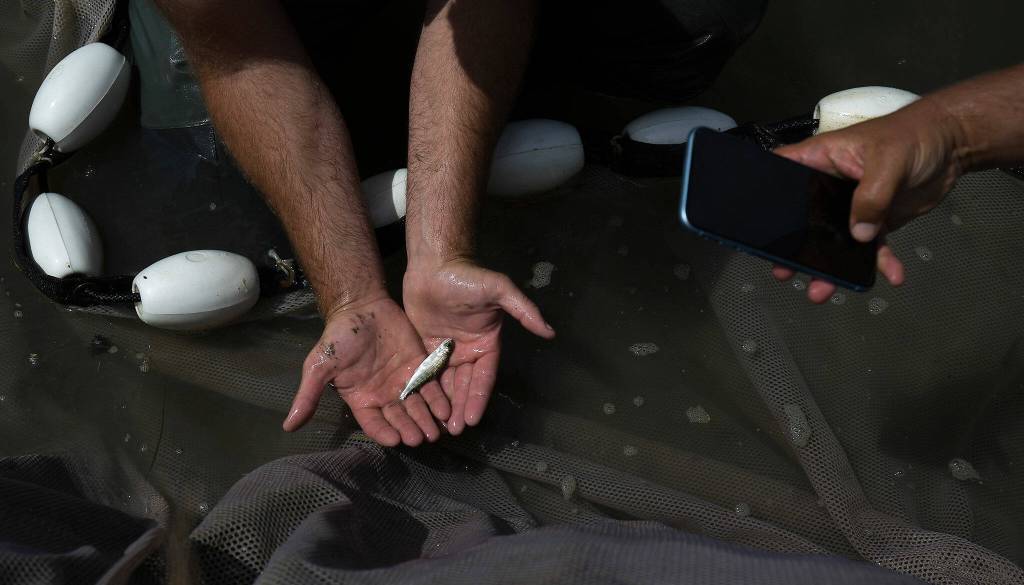
Then, another wild Chinook. He paused again, as others gathered around and took pictures.
“These are two more Chinook than there were before,” LeMoine said with a sense of triumph.
Seeing wild Chinook at Leque Island is exciting, he said. Promoting their health is the whole point of the project. It’s vindication.
‘Totally different’
Through two years of fish monitoring, LeMoine’s crew has handled over 126,000 fish across 15 different species. Most of those were the three-spine sticklebacks, hardy little guys that will populate like crazy if left to their own devices.
“Technically if you have a puddle in the estuary, you have those species,” LeMoine said.
He was more heartened to see the variety. He called the numbers “overwhelmingly positive.”
Leque Island has the potential to support thousands of juvenile salmon. They’ll come here from both the Stillaguamish and Skagit rivers to use the new habitat. A two-for-one deal.
The Skagit River System Cooperative will be doing more monitoring this year, between February and August. And if Brokaw can scrounge enough dollars — about $30,000 — more could happen in 2023. A few years’ worth of data should tell a better story of how fish use this marsh.
Fish and Wildlife folks have smaller plans for the island, too. They’re going to pave over the pothole-riddled parking lot and start up a pet waste campaign, because some folks apparently haven’t been picking up after their dogs. And a new documentary about Leque Island should be coming out in the near future, Brokaw said.
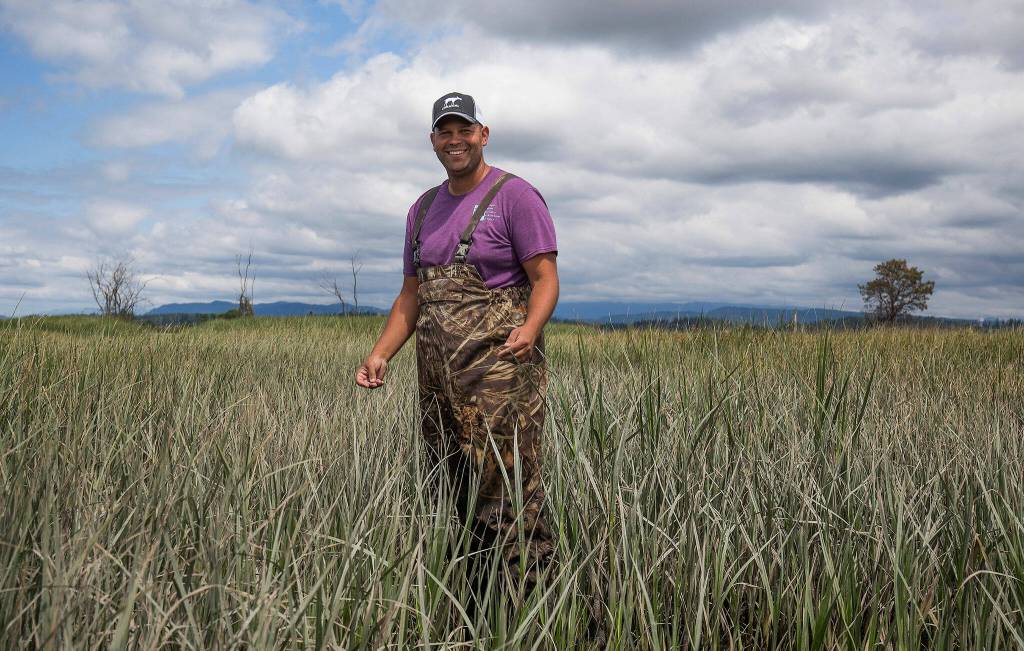
For Brokaw, seeing Chinook come to Leque Island is the culmination of nearly a decade of work.
“It’s taken up a lot of my professional career working on this project,” he said. “So to actually see it get done, and now to be able to see the results, is really gratifying.”
He thinks most about how everyone came together to make the project possible: The teams at Fish and Wildlife and Ducks Unlimited, who for years did studies and designs; the 30-plus community members who made up the stakeholders committee; the Stillaguamish Tribe, who made sure the Leque and zis a ba projects worked together; the scientists who did all that counting of fish and birds and plants; and the various grant programs that provided funding.
Brokaw grew up around here. He has driven over that bridge connecting Stanwood and Camano Island countless times, back when it was still farmland.
“It looks totally different,” he said.
Zachariah Bryan: 425-339-3431; zbryan@heraldnet.com. Twitter: @zachariahtb.