New whale-watching restrictions enacted for resident orcas
Published 1:30 am Sunday, January 3, 2021
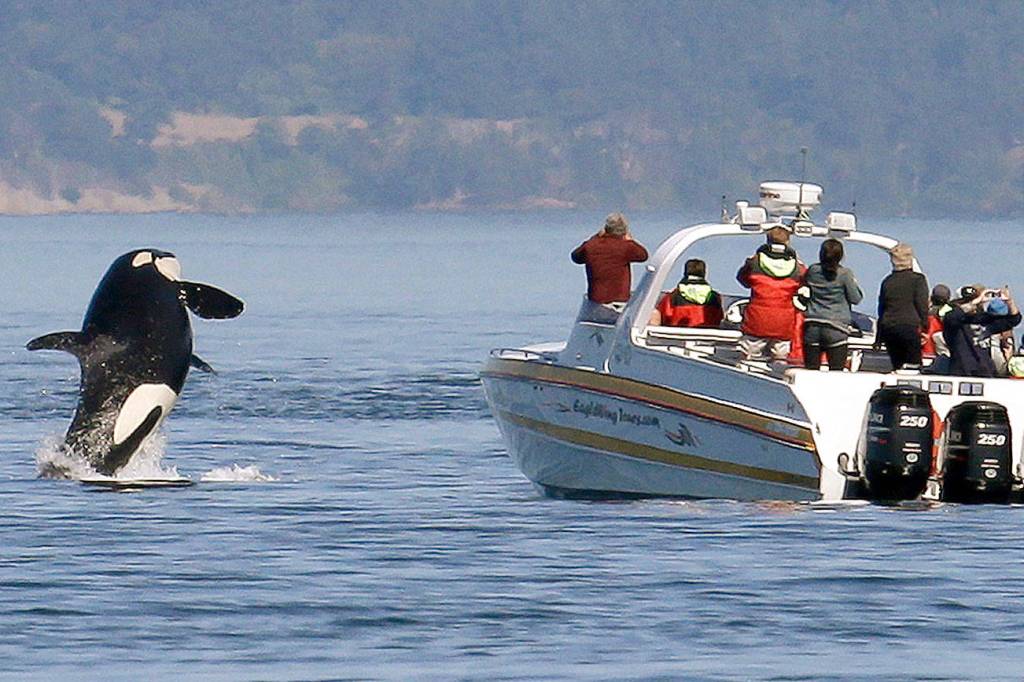
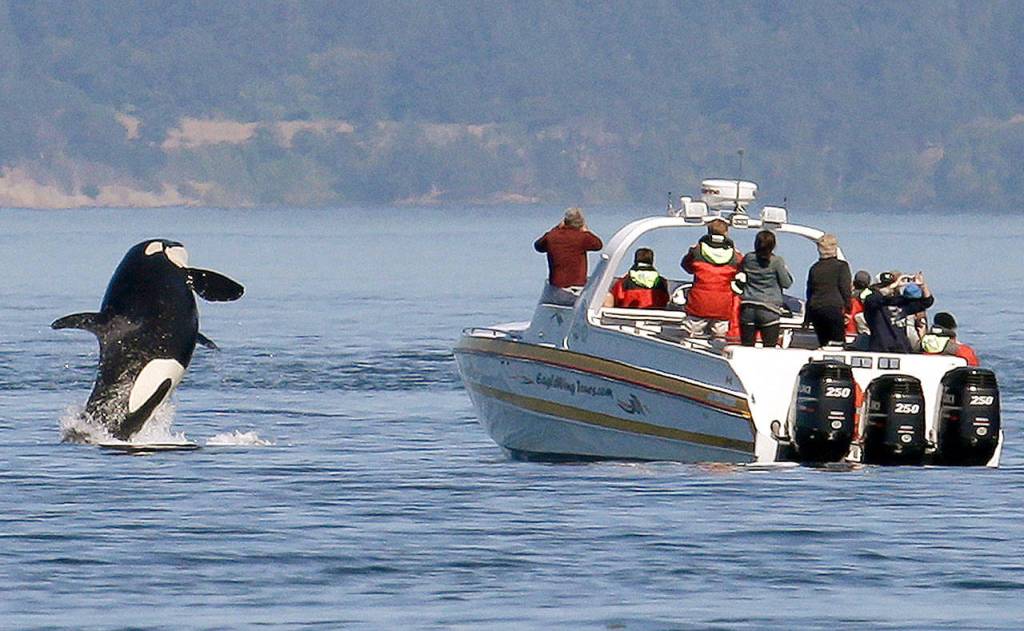


New rules that significantly restrict whale-watching of endangered southern resident orcas have been adopted by the state Fish and Wildlife Commission.
The rules include a mandatory no-go zone for commercial whale-watch tours along the west side of San Juan Island year-round, except for a 100-yard wide corridor next to the shore for commercial kayak tours.
The rules also impose a three-month, July-to-September season when commercial viewing of the endangered orcas by motorized tours at closer range than half a nautical mile is limited to two, two-hour daily periods. Watching during those windows was further limited to three tour boats per group of orcas at any one time.
Watching calves younger than one year old is prohibited. If vulnerable orcas, such as thin, sick or injured animals, are discovered in the population, they too could be set off limits for tours.
The rules also set license application processes for commercial whale watching as well as requirements for reporting and training.
Recreational boaters under existing rules must stay at least 300 yards from southern resident killer whales and at least 400 yards out of their path or behind the whales. They must also cut their speed to 7 knots within a half-mile of southern resident orcas.
Listed as endangered under the federal Endangered Species Act in 2005, there are only 74 southern resident orcas left. Primary risks identified so far to their survival include noise and disturbance from vessels; a lack of adequate, quality chinook salmon; and pollutants.
The rules adopted Dec. 18 were several years in the making and created the state’s first licensing system for the industry.
The rules are intended to reduce the impact of vessel noise and disturbance on the orcas’ ability to feed, rest and socialize. Orcas hunt by sound. Underwater noise and boat disturbance make it more difficult for them to find already scarce food. Noise also forces orcas to expend more energy to communicate with one another, raising their voices to be heard.
The rules will take effect in early 2021 and affect only viewing of endangered southern resident orcas. Tours of humpback and gray whales and the far more numerous transient, or Bigg’s, killer whales may continue as before.
More than 4,000 people contacted the commission in support of more strict whale-watching rules to protect the southern residents. Only about 200 comments opposed tougher regulations.
The Pacific Whale Watch Association issued a news release stating the new rules would hamper tour operators’ ability to provide a “sentinel role” on the water for the at-risk whales.
The nonprofit Orca Conservancy also argued the new rules will expose the whales to more noise from clueless recreational boaters and create a greater risk of vessel strike because of the reduction in professional whale-watch tours.
However, a report on the best available science on the effect of the tours by the Washington State Academy of Sciences Committee on Acoustics and Disturbance found there was insufficient evidence the tours play a sentinel role. Further research is needed to determine if the tours benefit the whales as operators claim — or in fact are a magnet for more noise and disturbance, the academy found.
The disturbance is consequential, according to a report prepared for the commission by the Washington Department of Fish and Wildlife (WDFW).
Commercial whale-watch boats make up more than half the boats in the vicinity of orcas, and the effect of vessel presence increases with boat numbers, the department found.
The only vote against the new rules came from a commissioner who wanted only one boat to be allowed in the presence of the orcas at a time, rather than three.
Amy Windrope, deputy director for the WDFW, said the rulemaking process was science-based and balanced the value of the whale-watching industry in continuing to provide access for boat-based whale watching with providing more quiet time for the southern residents.
“They help with education and connecting people with the southern residents, and this rule maintains that possibility,” Windrope said. Shore-based whale watching on the Whale Trail also provides viewing opportunities throughout the southern residents’ foraging range, she noted.
Tim Regan, who retired in 2013 after 13 years as science director and then executive director of the U.S. Marine Mammal Commission, said the science is more than adequate to justify the new restrictions.
The whale-watching industry on average has continued to increase in profitability, according to an economic analysis completed to inform the rulemaking process, and the southern residents are a small portion of the tour business.
“Everything suggests this is still a viable industry, with these restrictions,” Regan said. “This is what conservation is supposed to do. We have to change the way we are behaving.”
The regulations mark a shift to a more precautionary approach, Regan noted — in his mind, a good thing for a species at high risk of extinction.
“In many respects, I would have liked to see an even stronger outcome,” Regan said. “But I would say the commission did their job and deserves a lot of credit for stepping out and playing a leadership role.”