Passages: David Belnap reported on Latin American issues
Published 12:01 am Tuesday, November 10, 2009
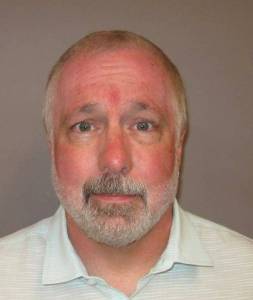
David F. Belnap, an award-winning foreign correspondent for the Los Angeles Times in Latin America who later became a respected editor, has died. He was 87.
Belnap, who received the Maria Moors Cabot Prize from Columbia University in 1973 for his coverage of Latin America, died of heart failure Sunday at Methodist Hospital in Arcadia, according to his wife, Barbara.
Based in Buenos Aires for much of his career, Belnap had worked for United Press for 20 years before joining the Times in 1967. He served as the Times’ bureau chief in the Argentine capital until 1980, when he was assigned to work as an editor on the paper’s foreign desk. He retired in 1993 and lived in Arcadia.
“He was a crackerjack journalist,” former Times Foreign Editor Bob Gibson, who hired Belnap, said Monday. “He was highly esteemed and liked by all his colleagues.”
Belnap covered Latin America during turbulent times and reported on many landmark news events, including the return to power of Argentine President Juan Peron, the election of Socialist President Salvador Allende in Chile and the rise of rebel factions in Nicaragua.
Besides winning the Maria Moors Cabot prize in 1973, Belnap also received an award from the Overseas Press Club of America in 1970 for his Latin America coverage.
His experiences in the field became invaluable once he became an editor based in Los Angeles.
“He was great to have on the desk because he knew the region I was writing about,” said Richard Boudreaux, the Times’ Jerusalem bureau chief and a former Latin America correspondent. “It made such a difference to have an experienced hand helping you figure out the coverage.”
Belnap was born July 27, 1922, in Ogden, Utah, one of three children of Hyrum and Lois Belnap. He got his first newspaper job in Ogden, but it didn’t pay. His first salaried position was at United Press’ office in Salt Lake City.
He moved to Seattle in 1945, where he met his wife to be and took a job as assistant city editor at the now-defunct Seattle Star.
In 1947 he and Barbara married and the couple moved to Helena, Mont., where he became United Press’ bureau chief. Then it was on to Honolulu from 1950 to 1952 and back to Seattle as a regional executive for United Press until 1955. That year the wire service, which later became United Press International, sent him to Buenos Aires as a foreign correspondent. By the time he left for the Times in 1967, he had risen to United Press’ director of Latin America services.
Besides his wife, Belnap is survived by a brother, Ronald, and a sister, Ruth Hogan.
Vitaly Ginzburg, a Nobel Prize-winning Russian physicist and one of the fathers of the Soviet hydrogen bomb, died Sunday in Moscow. He was 93. The Russian Academy of Sciences said Ginzburg died of cardiac arrest.
Ginzburg won the 2003 Nobel Prize in physics with two other scientists for their contribution to theories on superconductivity, the ability of some materials to conduct electricity without resistance.
In the late 1940s and early 1950s, Ginzburg was a key member of the group working under Igor Tamm that developed the Soviet hydrogen bomb. Ginzburg wrote that he and Andrei Sakharov — considered the father of the Soviet H-bomb — formulated the two ideas that made it possible to build the thermonuclear device.
Ginzburg was born into a Jewish family in 1916, a year before the Bolshevik Revolution, and grew up in times of economic degradation and hunger, according to his autobiography written for the Nobel Prize Committee.
His career began in the late 1930s, a time of Stalinist purges and pervasive anti-Semitism. Ginzburg was blacklisted and faced persecution, but “was saved by the hydrogen bomb,” he wrote in the autobiography.
He became a member of the Soviet Academy of Sciences in 1953. He also was a longtime editor of a leading scientific magazine on theoretical physics and educated hundreds of disciples.