Power where you’d least expect it
Published 9:00 pm Saturday, September 20, 2003
MONROE — Behind every catchy "Got milk" sales pitch could easily be another slogan: "Got manure. And lots of it."
Dairy cows, known for their production of one of our favorite breakfast drinks, generate more manure than they do milk.
Treating that manure — which can hurt salmon and other fish if it seeps into rivers and streams — has been prohibitively expensive for family dairy farmers like Andy Werkhoven.
But soon, animal waste produced at dairies such as 43-year-old Werkhoven Dairy Inc. of Monroe could be turned into energy, a first for Washington state and a potential cash cow for dairy farmers across Snohomish County.
By harvesting methane gas from this decomposing dung, farmers may have a better chance at surviving record low milk prices linked to a nationwide milk glut.
"It’s worthy of excitement," Werkhoven said.
He figures that using dung-digesting technology to turn his farm’s manure into electricity could help the farm recover from two years of losses and start turning a profit again.
It would also mean eliminating the stinky smell that can give dairies a bad name.
The Tulalip Tribes have proposed turning the manure that a number of Monroe dairy farms produce into electricity, saying dairies are better for healthy rivers than condominiums. The tribes and farmers would share revenue from the power plant.
If successful, the test case could nudge Snohomish County’s dairy farmers back onto solid financial footing, while saving farms from suburban development.
"I hope the end product is that they tell us we need to milk more cows," Werkhoven said. "I hope they tell us that they want more manure."
The dung-digester partnership will benefit everyone, say the Tulalips, who depend on salmon and other river fish for food and income.
"We think this will keep some of the (manure) from getting into the streams, while making the dairy farms more economically viable," said Daryl Williams, environmental liaison for the tribes, who is also directing the Tulalip’s effort to build the power plant.
Fecal levels are high in the Snohomish River system, Williams said, adding that some of it could be from the dairies and some could be from leaky septic tanks.
Though strict standards prevent dairies from releasing animal waste into rivers, the waste could be gradually percolating into the groundwater table and into the surrounding river system. The rich nutrients and bacteria in untreated animal waste can kill fish and other wildlife that depend on rivers and streams.
Most dairies use holding ponds to store the liquid portion of the waste — ponds that aren’t always lined. The practice allows some leakage into the groundwater and then into nearby rivers, Williams said.
"We think this will reduce that amount," he said.
Every half-hour at the Werkhoven dairy, a new group of black-and-white Holsteins waddles toward the milking parlor in a clump of 20, their swollen udders swaying with milk.
All told, the farm’s 650 cows produce enough milk to fill a semitruck trailer every day. A typical Werkhoven dairy cow will produce 85 pounds of milk per day, enough to fill 10 of the gallon jugs sold at grocery stores.
The same cow will produce 160 pounds of manure a day, which, counting all 650 of the Werkhoven’s cows, means the farm produces more than 50 tons of manure each day.
Turning the cost of treating that waste — a constant flushing of manure and urine off the dairy’s football-field-size floor — into a source of revenue.
"It’s another opportunity, and they’re hard to come by," Werkhoven said of the proposed power plant. "You’re looking for every opportunity you can find."
The possibility of keeping dairy-farm manure out of Snohomish County’s water system is a dream come true for salmon-saving environmentalist John Sayre of Monroe, but an even bigger benefit would be helping the region’s struggling dairies stay alive, he said.
There is a growing movement among environmentalists to help keep farmers solvent so their land isn’t paved over with condos and shopping malls, said Sayre, founder and executive director of Northwest Chinook Recovery, an environmental group working with farmers to open up old salmon streams in the Skykomish Valley and other locations in Snohomish County.
The Tulalip Tribes are among the region’s salmon recovery leaders, he said.
"I happen to believe that farmers and tribes have far more in common than anyone else," Sayre said. "The real threat to these valleys is people."
Sayre said farms are typically situated on the type of land developers most want to build on.
"If the agriculture disappears, then this land is going to be developed," he said.
Most restorable salmon habitat is on farms located in the valleys along the banks of Snohomish County’s major rivers, where filled-in streams are waiting to be cleaned out so they can flow again, the tribes’ Williams said. The next step could be to begin working on salmon stream restoration on the farms, he said.
If local attempts to convert manure to energy are successful, it will set an example for the nation’s industrial-size dairies, which produce far more waste per farm than dairies in Snohomish County, said Andy Silber, chairman of the energy committee for the Sierra Club’s Cascade chapter .
"When you look at the whole story, it’s definitely a better way to go than standard procedure," Silber said, adding that the larger dairies have the volume of waste to make the conversion to electricity that much more profitable. "It’s the huge feedlots that have giant open sewers."
At most dairy farms in Snohomish County, cow manure is washed out from under the cows and collects in a lagoon at the low end of the farm. There, the liquid manure is stored until it is injected into surrounding corn fields as fertilizer, or until the water is used again to wash out the barns.
The solids are allowed to fall out of the mix before the liquid flows back into the lagoons, and are typically sold as a potting soil additive. The process is time-consuming, filthy and costly for farmers.
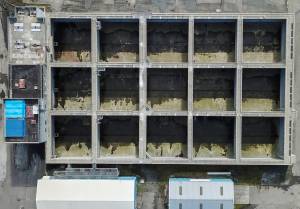
To convert the manure to electricity, the manure would be diverted from the holding pond into an anaerobic digester, a tentlike structure used to collect methane as it naturally emits from the fermenting manure.
The methane — typically what causes a dairy farm to stink — is then burned to create electricity, which also eliminates the stench.
Although the technology is widely used in many states, a dairy digester in Monroe would be Washington’s first.
The Tulalips and farmers want to sell the power they would produce to Snohomish County PUD, which is following the progress of the proposal closely.
"I think we’re there. It’s a matter of determining what it’s going to cost," said PUD commissioner Dave Aldrich, who has been pushing for the utility to seek opportunities to buy renewable energy. "If we can put our heads together, I think we can make this work. We want to make sure our costs are recovered."
Construction on the power plant could start next year if an ongoing feasibility study shows there is manure enough to keep it going around the clock, and if there is enough support among the partners to make it happen. The earliest the plant could open is spring 2005.
Estimates are that it will cost $2 million to build the digester, said Ray Clark, a consultant hired by the Tulalips to find ways to help salmon recovery.
"We did a system analysis to see what could be done, and we saw that many farmers were having trouble with manure management," said Clark, who was an environmental consultant for President Clinton.
The idea stemmed from a conversation former Snohomish County Councilman Mike Ashley had with tribal leaders in 2001.
This spring, the tribes received a $250,000 grant from the U.S. Department of Energy to study building the manure-to-power operation. That study is due out at the end of the year.
The tribes have also received $500,000 from the U.S. Department of Agriculture to help build the digester.
The tribes and farmers propose building the digester at the recently closed Monroe Correctional Complex dairy farm just outside Monroe. The former farm is within a half-mile of four dairies, including the Werkhoven’s, which would help cut transportation costs.
The tribes hope that many of the county’s dairy cows could eventually be moved to the site, cutting the cost of hauling the waste, which could become expensive. If the cows are moved, then the hope is the tribes will get the chance to restore salmon streams at the old dairy farms.
The former prison farm had been put up for sale, but during the last legislative session state lawmakers pulled it off the market while they waited to see what the ongoing feasibility study showed.
State policymakers aren’t the only ones sold on the digester idea.
Interest is high among the 38 dairies in Snohomish County, which together have about 12,000 cows, Sayre said. The owners of 10,000 of those cows have said they are interested in sending their farm’s manure to a digester power plant.
"Several would like to have biogas projects to run their own dairies with their own manure," Sayre said.
The 2,500 cows on the four dairy farms located near the former prison farm produce enough manure to run a half-megawatt generator. More waste would have to be brought in from other dairies to build a one-megawatt generator, which would need 8,000 to 9,000 cows to support it. A megawatt is enough electricity for about 600 homes.
Food waste, more nutrient-rich than manure, generates more methane, which would make it a valuable addition to the mix, said Clark, the tribes’ consultant. The digester partners are trying to find out if they would be able to get food leftovers from the Monroe prison and beer-making leftovers from Red Hook Brewery in Woodinville.
One potentially fatal flaw of the concept would be if the Tulalips and farmers could not get enough money for the electricity to make the project worthwhile.
According to a company that builds digesters, the financial feasibility of a manure-to-power plant depends on how receptive the local utility is, not on the actual digester technology, which has been in use since the 1970s.
"Outside of the U.S., there are literally tens of thousands of digesters," said Mark Moser, president of Berkley, Calif.,-based RCM Digesters.
In the United States 50 to 80 digesters are in use on farms, and more than 3,000 are in use at landfills.
Moser said there is no question that a group of dairies can operate a digester, as long as the local utility is willing to pay a fair price for the power.
"We’re working with Snohomish PUD, and they’re great," he said. "They’re interested and they’re energized."
Moser said it only takes 400 cows to make a digester work, but added that it never pencils out unless someone agrees to buy the power at a fair price.
PUD spokesman Neil Neroutsos said the PUD normally connects small power suppliers to the electricity grid, paying them market rates for any power they generate in excess of what they use. The PUD’s market rate is currently 7.86 cents per kilowatt hour.
Using cows to generate electricity is working for Dennis Haubenschild, who realized a lifelong dream of making his dairy farm completely sustainable in 1999 when he purchased a digester for his farm in Princeton, Minn.
"When I leave, I want to leave it better than I got it," Haubenschild said.
The 800 cows on his farm produce enough waste to keep a 150-kilowatt generator going full speed 24 hours a day.
At any given moment, the generator typically produces 130 kilowatts of power — enough to power about 75 homes.
Half of that is used by the farm, and the other half is sold to the local utility, which Haubenschild said is "very receptive" to buying the electricity.
The farm is paid the utility’s market rate of 7.25 cents per kilowatt-hour, which allowed Haubenschild to pay off the $300,000 cost of the digester in three years.
It also means each cow produces 23 cents to 30 cents a day in electricity, which amounts to $2,000 to $2,500 a month for the entire herd.
"It’s not enough to make or break a dairy," Haubenschild said of the new revenue stream. "I’m calling that the frosting on the cake."
The real benefits have been eliminating the odor emanating from his dairy farm and producing enough fertilizer to grow all the food his cows eat. That saves him $40,000 to $50,000 a year, and the cow-manure fertilizer he injects back into the soil is of such high quality that the soil on his farm has improved tremendously over the past three years.
Still, building a digester wouldn’t have worked if his local utility had not agreed to buy the electricity and sell it to its customers as higher-priced renewable energy.
"The people, given a chance, are more than willing to buy green power," Haubenschild said.
For the Werkhovens, reaching out to the Tulalip Tribes and environmentalists is a necessity if they are going to preserve their way of life. In the face of encroaching development and a difficult marketplace, there’s strength in numbers.
"I think the farmers see the tribes as some of the best neighbors we can have," he said, indicating that the tribes’ interest in protecting the rivers matches well with the farmer’s desire to preserve their way of life on the banks of those same rivers.
The farmers "are my closest neighbors," said Williams, the tribe’s environmental liaison.
Although the tribes’ lands are miles away on Puget Sound, the salmon that the tribes depend on rely on water that flows right by Werkhoven’s farm.
Werkhoven said their growing friendship could be enough to make sure the dairy will still be a working farm when his or his brothers’ children decide if they want keep the family business going. Already, one nephew has taken up the trade, and the children do farm chores before heading off to school each morning.
"Once you lose (the land), then it’s gone," Werkhoven said. "If you lose it to development, then you can’t get it back."
Reporter Lukas Velush: 425-339-3449 or lvelush@heraldnet.com.