Print it or lose it: Ken’s Camera closes after decades caught on film
Published 1:30 am Sunday, December 25, 2022








EVERETT — Ken Minnig was always a little ahead of his time.
When he and his wife Anita moved to Western Washington from Nebraska in the late ’60s, he landed a job at a local camera shop. It probably wasn’t a dream job he’d been seeking, just something to pay the bills as their family grew.
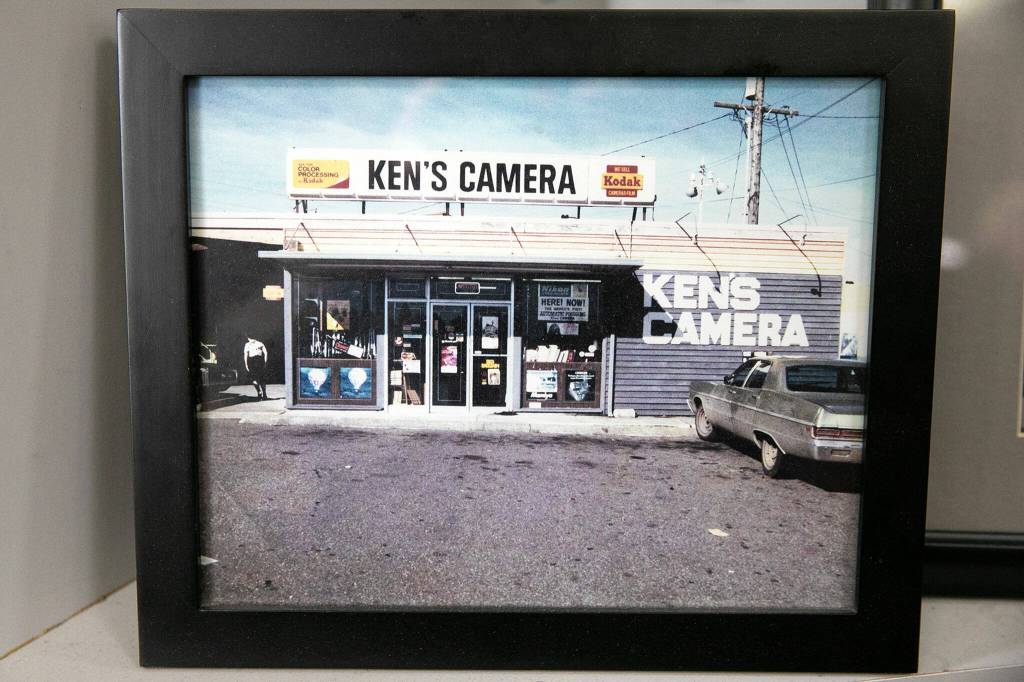
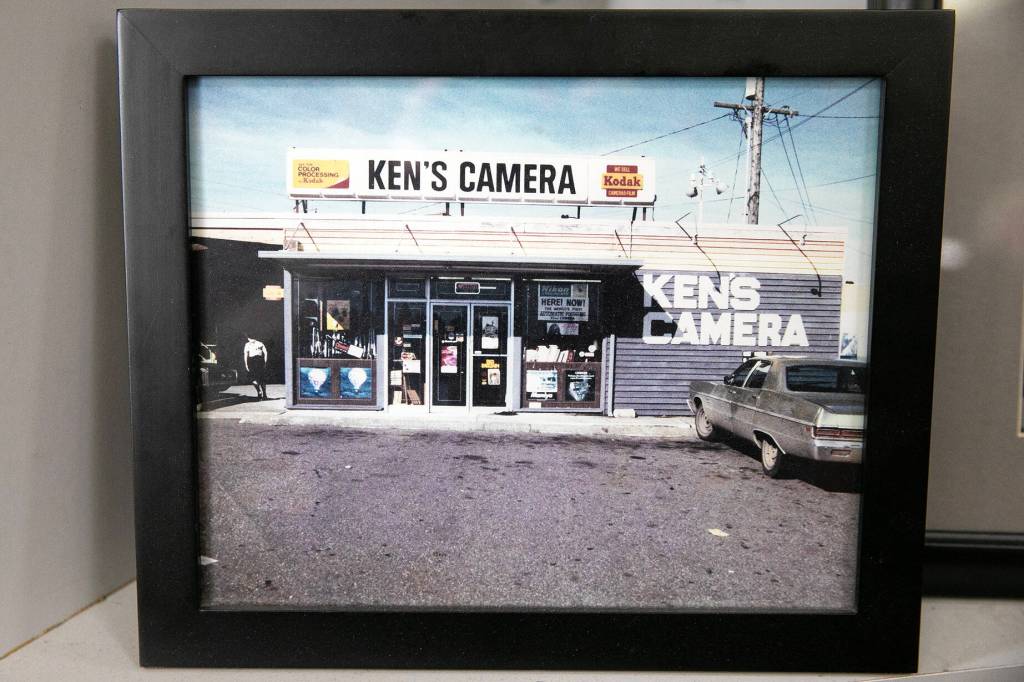
By 1971, he’d opened his own shop, aptly named Ken’s Camera, in Lynnwood. By 1976, the flagship store moved to 8907 Evergreen Way in Everett. Two years later, Ken called up Eastman-Kodak, wanting to know how he could get his hands on one of these new mini-labs, the ones that could process your film in just an hour or so in the back of the shop. It would be a revolution — no more weeklong waits while your film shipped off to a specialty lab out of state and back again.
“What the hell’s a mini-lab?” the Kodak representative reportedly asked.
Ken eventually got his mini-lab — the second ever in the nation, no less. Soon he opened a new branch in Mount Vernon, home to another lab with the serial number 003.
Ken’s Camera would eventually expand to five locations, from Mill Creek to downtown Seattle. At their peak in the ’80s and ’90s, they were processing 1,000 rolls of film each day, said Barbara Reed, Ken’s daughter. On a busy day today, Reed said they might run about 50.
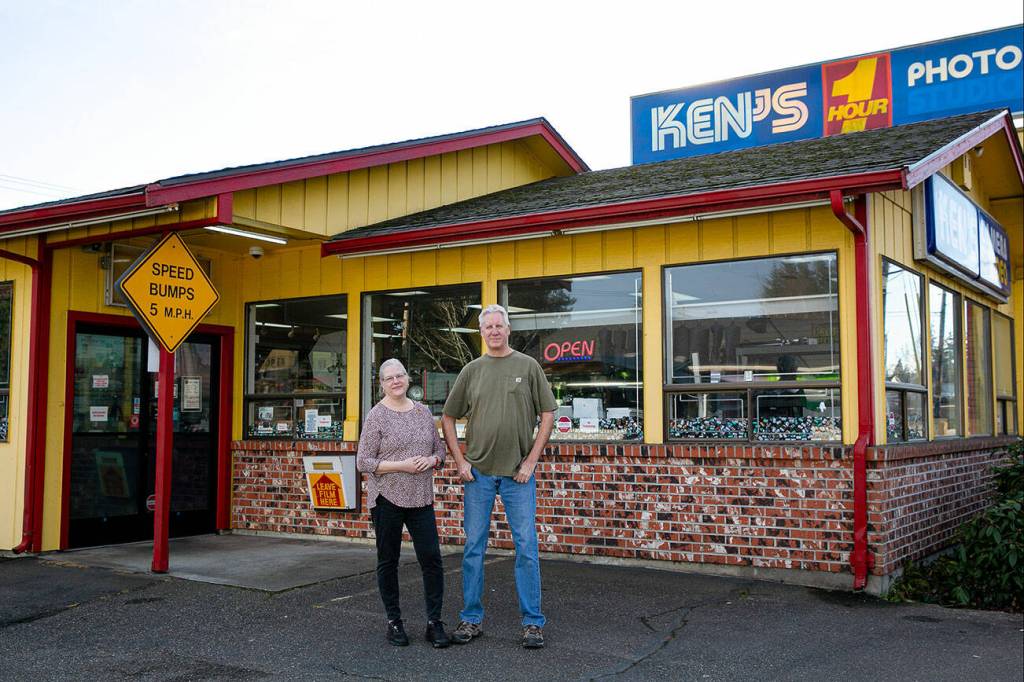
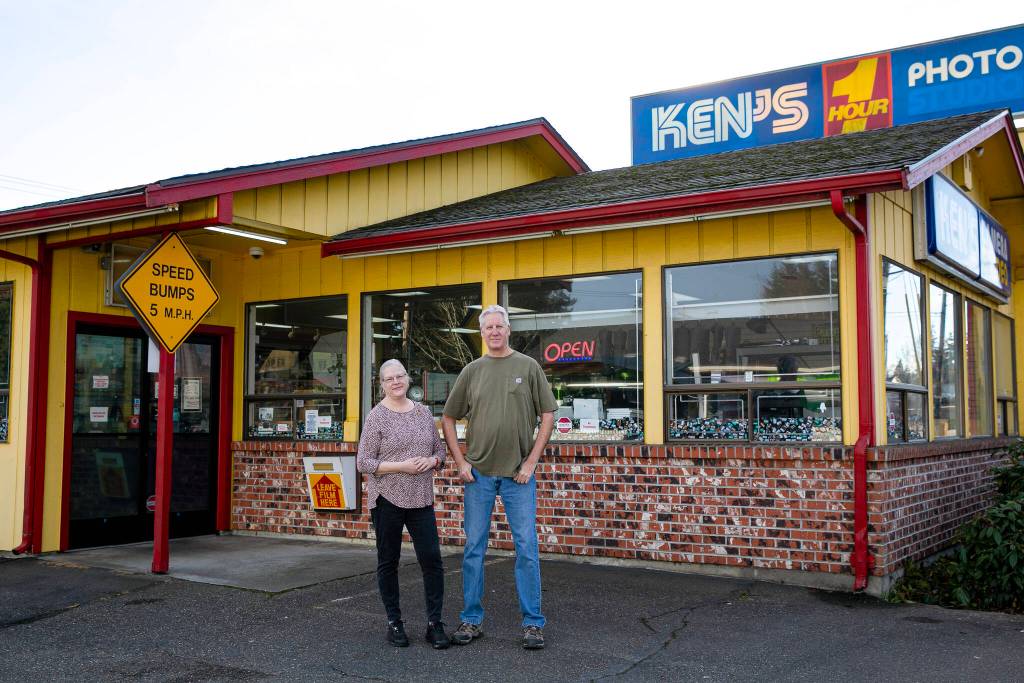
As digital cameras and internet sales began to challenge film’s dominance, the other locations gradually shut their doors beginning in the ’90s. Reed and her brother Eric Minnig run one of the two remaining locations, the stalwart Evergreen Way shop. Their brother Bryan manages the Mount Vernon location.
At the end of 2022, the three siblings will retire, and the last two markers of an almost-bygone era will be gone in a flash.
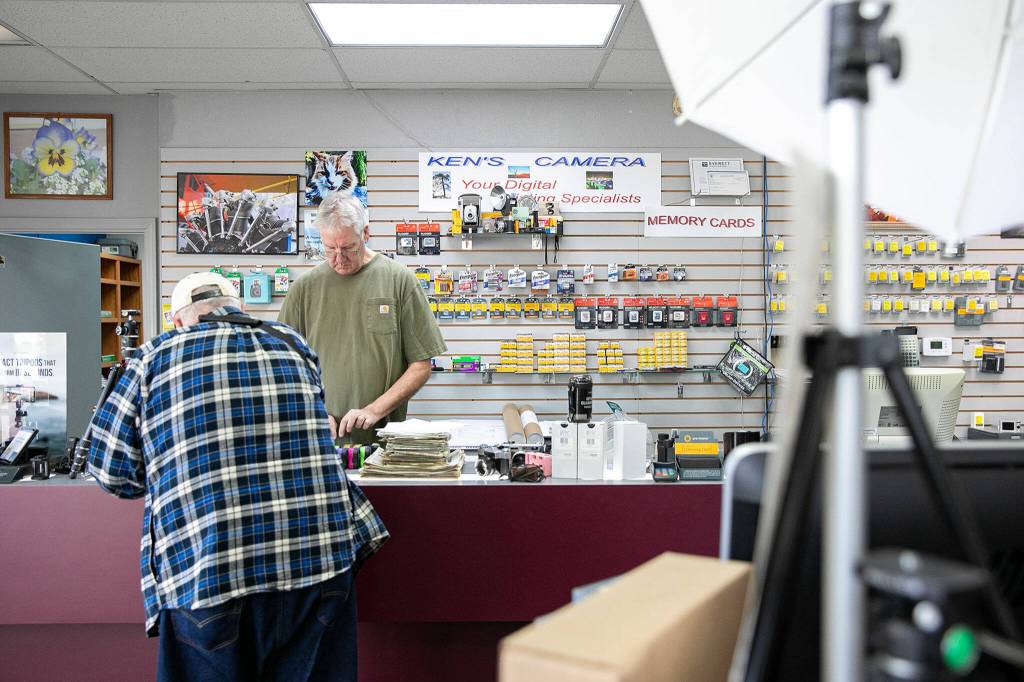
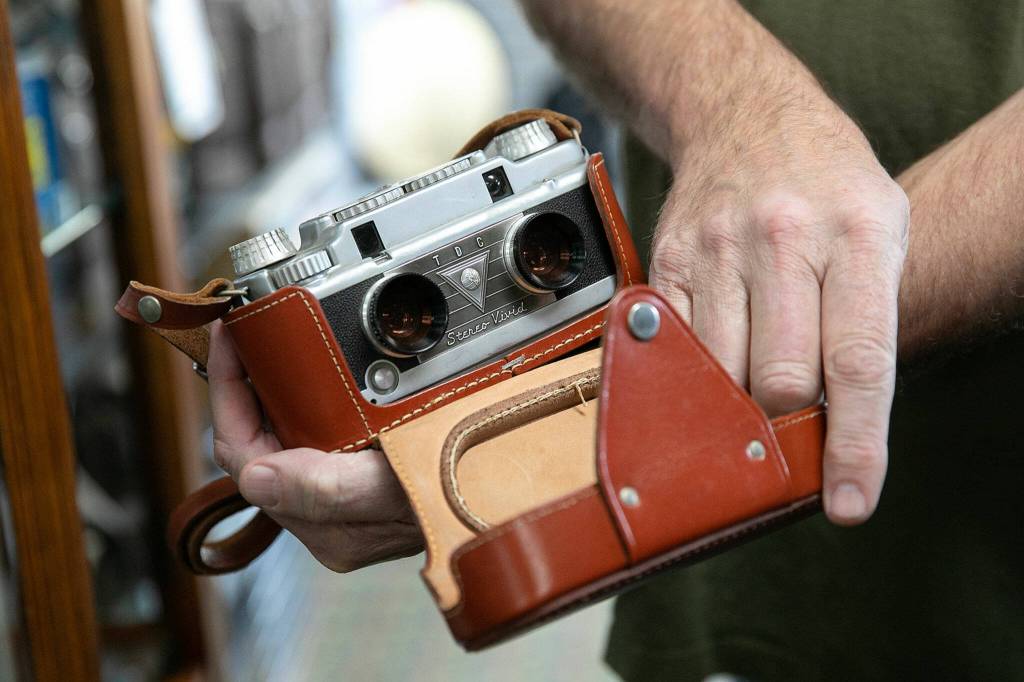
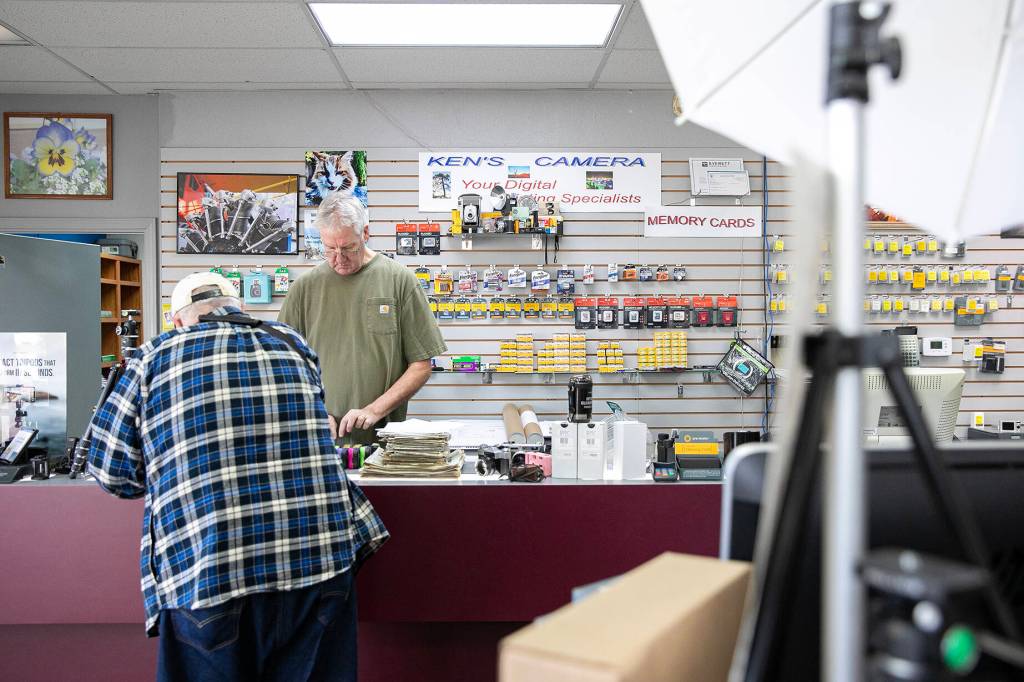
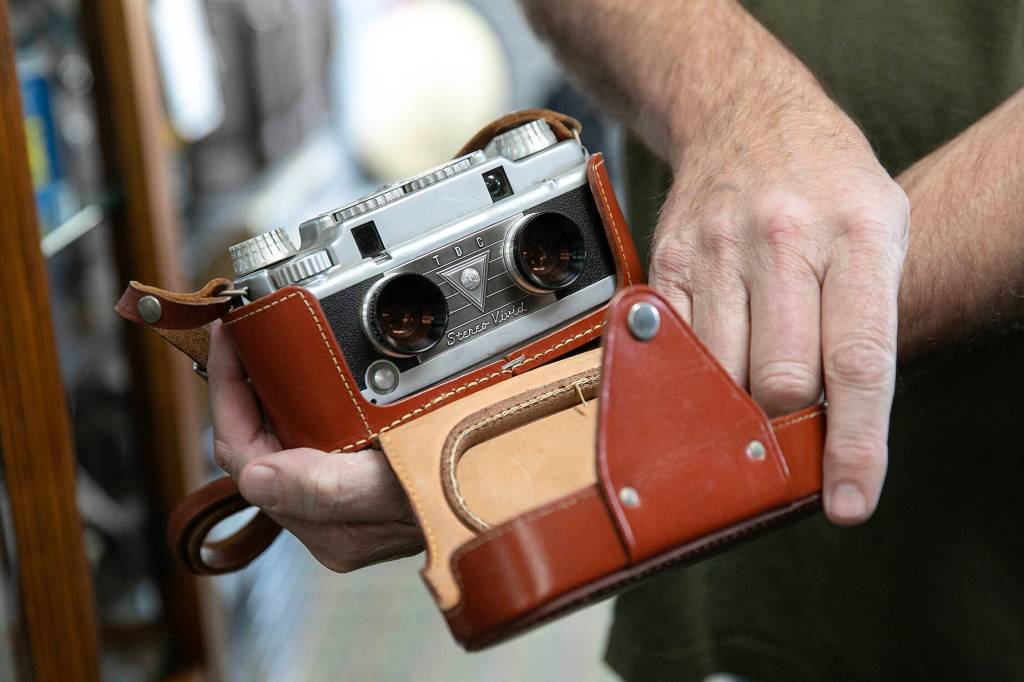
The retail space in the Everett location remains a mecca for film enthusiasts, narrow aisles full of specialty lenses and lighting rigs and vintage cameras under glass. Much of it now bears a sign proclaiming a half-off retirement sale. Business was steady on a Thursday afternoon in December, with Eric Minnig working the counter while Reed tweaked photos developing in the back room.
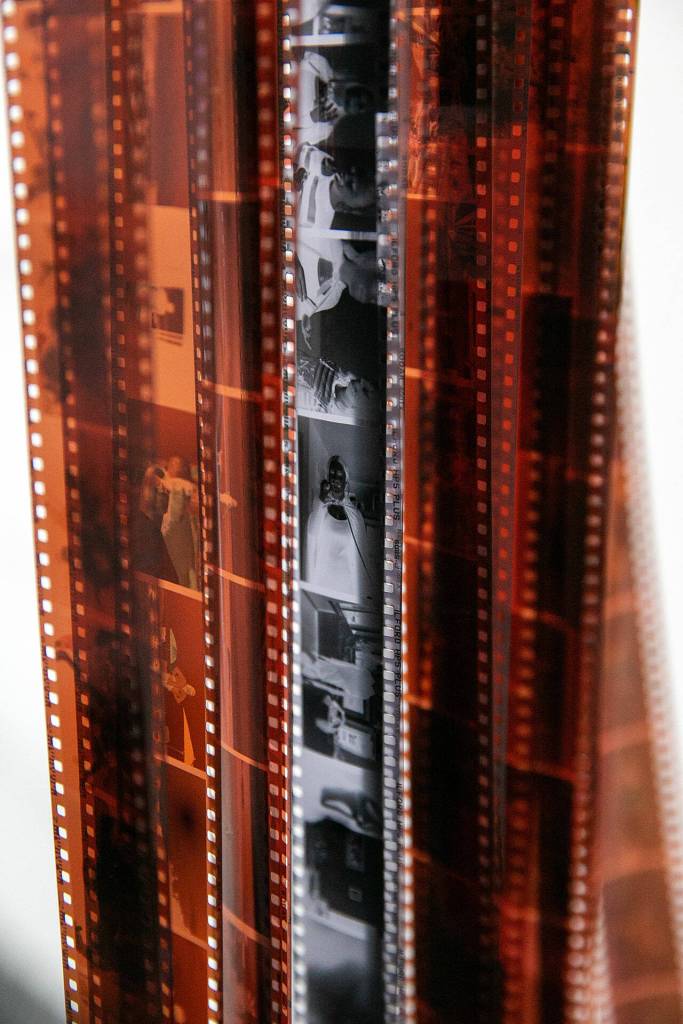
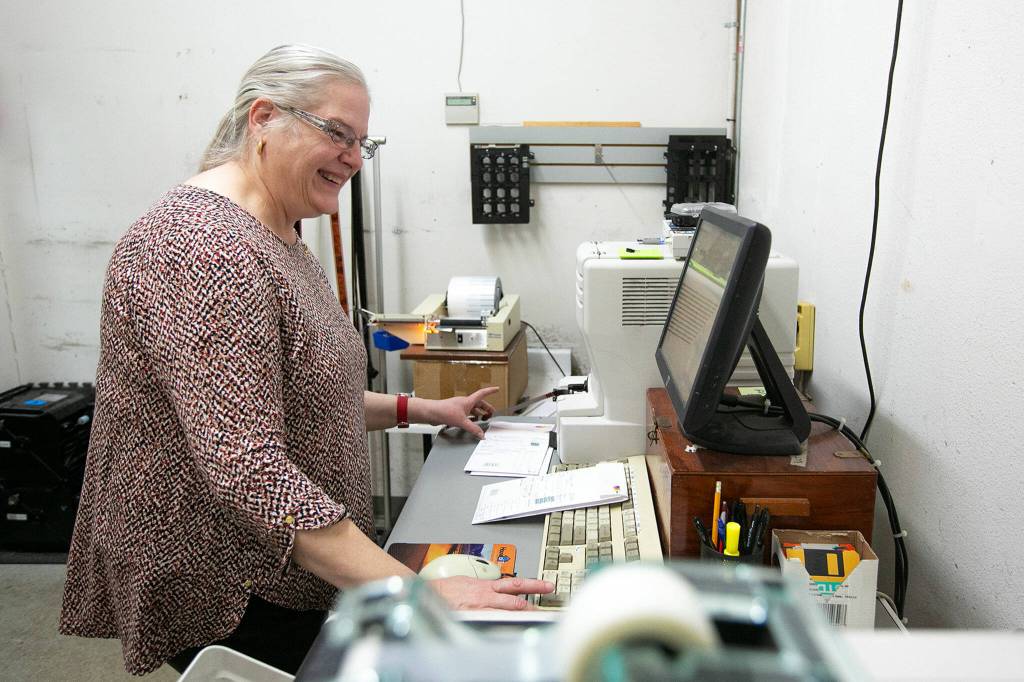
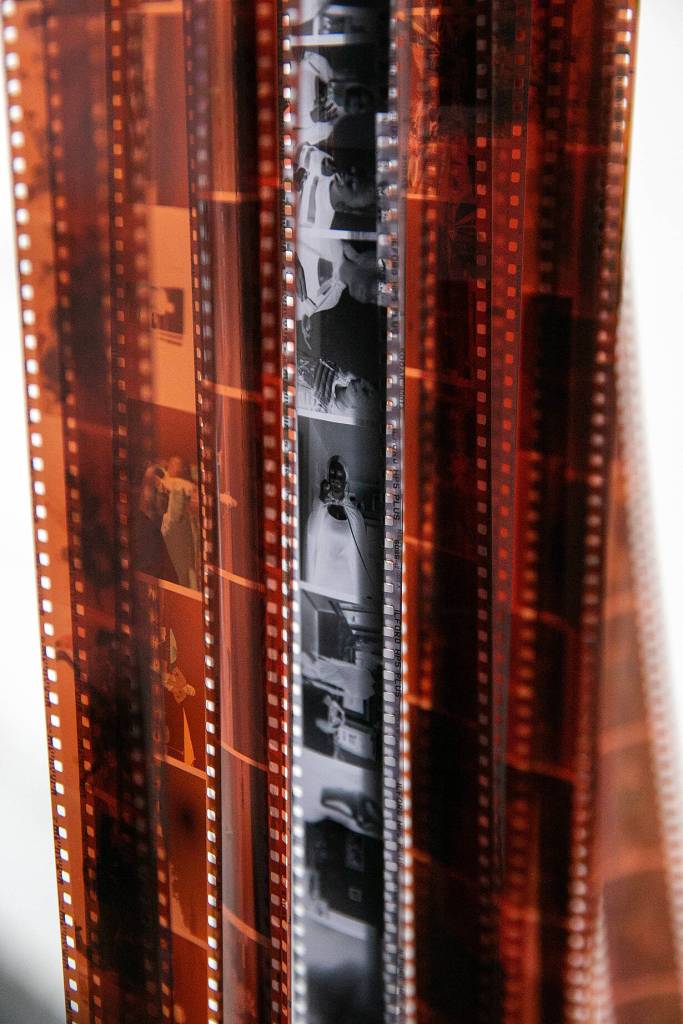
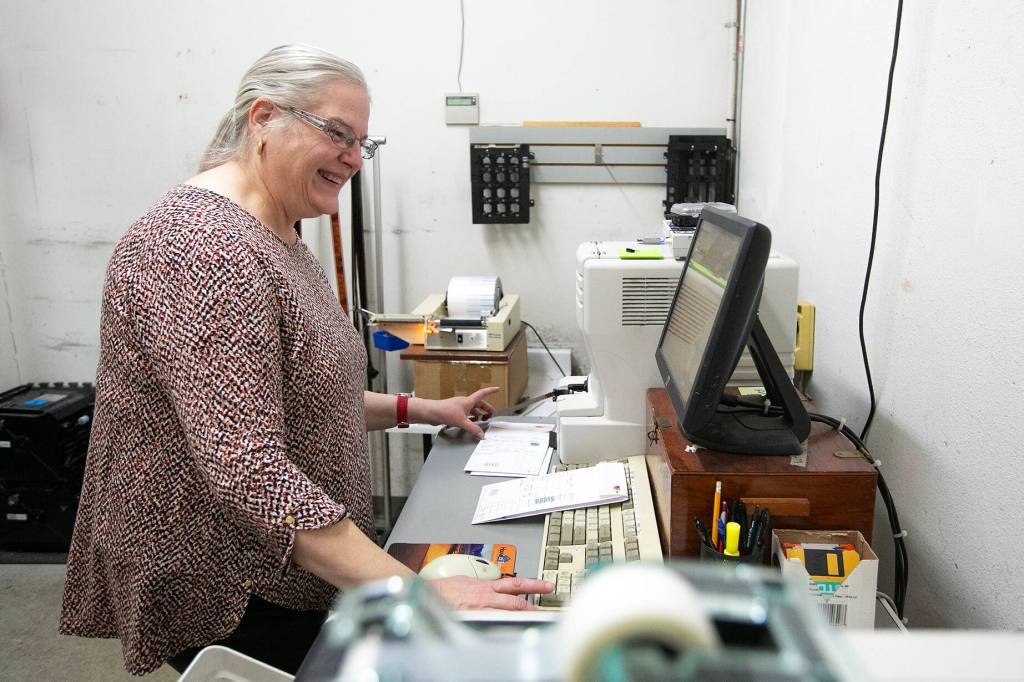
The mini-lab was laid to rest decades ago, and its spiritual descendent is only about as big as an office copier. Reed carefully balances colors and saturation on the touchscreen, and almost instantaneously glossy 4-by-6-inch prints come rolling off the tray. The roll Reed is processing shows groups of 20-somethings smiling and laughing, a woman in a T-shirt spinning blurrily in front of neon signs, suffused with the soft, slightly out-of-focus nostalgia of a relic in an old family album.
That’s most of the film business these days, Reed says, kids trying their hands with technology that was obsolete before they were born.
“They like that it’s vintage, I think,” Reed said. “With digital cameras and phones, the war on megapixels was lost long ago, but the kids who come in with film are all wearing clothes from the ’60s. It’s so old fashioned, it’s a novelty to them.”
Behind the digital photo printers, there’s still a darkroom. It doesn’t get used as often as it once did, but Reed and her siblings learned all there was to know about film processing in the claustrophobic chamber. High school photography classes still do, too, Reed said. By her estimation it’s the only way to truly know what goes into a good picture.
That’s how Everett-based photographer Jimmy Humphryes came to know Ken’s a few years back. He remembered his high school teacher recommending the shop as one of the few places left in the area that processed film, and when he started taking photos professionally, he gave them a try.
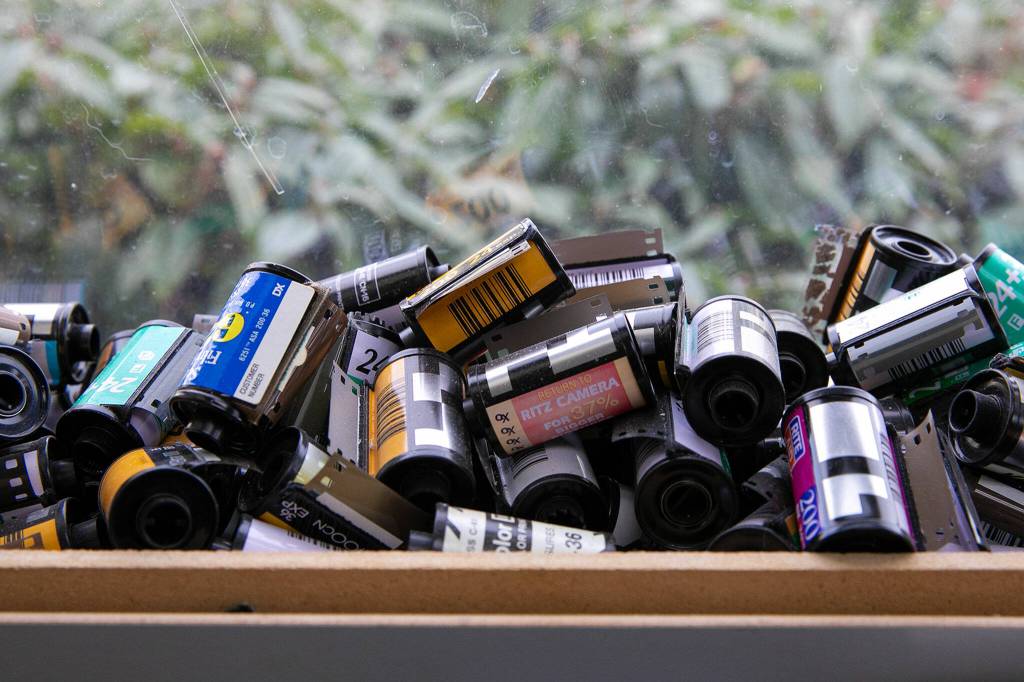
Soon he was coming into the store four or five times a week, dropping off canisters from the previous night’s house show, and he came to consider Eric Minnig and Reed friends. He liked Eric Minnig’s no-nonsense, “brass tacks” approach to business and life, and they’d get into long discussions about their pasts and their ideologies as Humphryes waited for his film to develop.
Humphryes was born just before film was on its way out as the dominant medium, but he felt drawn to it as an adult. There’s nothing quite like the suspense of waiting hours or days to see if your shot turned out like you envisioned it, he said.
“I had a very strict doctrine of just wanting something real, wanting something tangible, wanting to know that I could have physical evidence of the actual moment, the bounce of the photons off of what I wanted to frame up,” Humphryes said.
Digital cameras made it easier for anyone to become an amateur photographer, but they still came to Ken’s to have their JPEGs rendered tactile, to buy wallet-size prints and canvases for living room walls. The store still gets plenty of photo print orders each day through their online store.
Most of the pictures these days were taken on phones, though, and Reed is worried those memories will someday have nowhere to go. Home movies recorded on VHS were lost to the advent of DVD players, she said, and phone photos may well be the next victims.
“Digital files can’t last forever,” Reed said. “Your phone crashes, that’s tens of thousands of photos lost. And in 50 years, how will you even read those files when the technology no longer exists? Our motto here is ‘print it or lose it.’”
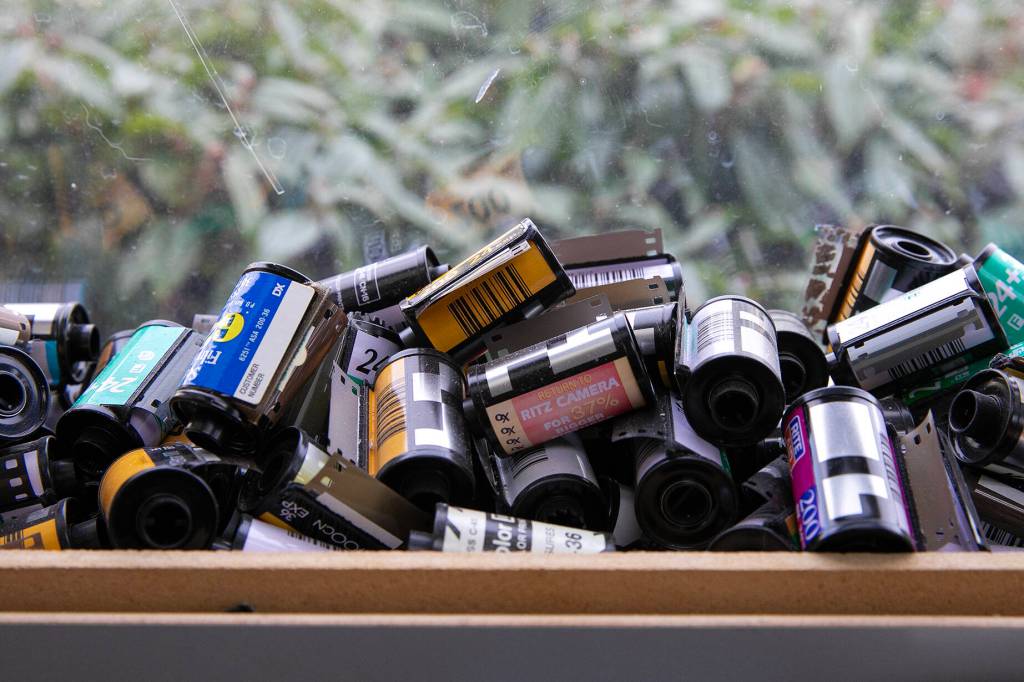
People still bring in negatives found in a grandparent’s basement to process out of a half-century in limbo, or dusty albums to be digitized and shared via email chain, Reed said. As she finished the batch of film, a customer dropped off eight disposable cameras, the memories they’d recorded still in the dark after two-plus decades languishing in a drawer.
But digital photography, combined with increasingly cheap online sales, eventually outstripped film cameras and mom-and-pop shops like Ken’s in price and convenience. That’s been the case for some time, Reed said, but Ken’s has stayed innovative and stayed afloat.
Shortages caused by the pandemic were one of the first signs things were really changing. Film became impossible to stock, Eric Minnig said, and when they could keep it on hand, it became prohibitively expensive for most amateur shutterbugs. Humphryes said he now shoots primarily on digital due to its lower cost.
The drive-thru film drop-off window outside Ken’s doesn’t see as much use as it did in the ’70s, but the goal is still the same as the one Ken set forth back then: preserving high-quality memories. Eric Minnig said that’s what set the store apart when big-box chains got into the photo printing and film processing game, and the customers knew it.
Reed is a little wistful recounting all the time she’s spent balancing chemicals and shooting wedding photos in the store, but she said the changing photography landscape isn’t their motivation for retirement. She and her brothers had been planning it for some time before supply chain issues presented one last hurdle to overcome.
Eric Minnig and Reed both said they’re looking forward to retirement, to having a little time off. But both admit they’ll likely have a hard time sitting still for long. After all, they’ve been behind the counter at Ken’s since they were teenagers.
Humphryes said it’ll be a loss to the photography community when Ken’s closes, a vault of memories locking its doors for good. Younger photographers like himself benefit from the “ancestral knowledge” of a place like Ken’s, he said, and he’s grateful to have spent time there while he could.
But Humphryes doesn’t think this is the last call for film and the art of bouncing photons off paper. There have always been ebbs and flows in the market, he said, but it has persisted for one reason another after it should have, by any measure, gone the way of the flip phone.
“You can still find folks out there who will make a tintype portrait of you, and no one has done that regularly for over a hundred years,” Humphryes said. “I think, as with anything, as long as it exists as a historical artifact, there’s going to be some random person or group of people that are interested in it and keep it alive.”
Riley Haun: 425-339-3192; riley.haun@heraldnet.com; Twitter: @RHaunID.