Snohomish’s expensive sewage woes
Published 11:13 pm Sunday, December 14, 2008
SNOHOMISH — Pull the handle on your toilet and — if everything works right — the contents zoom away as if they never existed.
Most people don’t give the matter more thought than that and probably shouldn’t, says Carl Chapman. After all, as operations manager for the town’s treatment plant, that’s his job. And the city’s.
Taxpayers may have to let their minds slide into the gutters as the city grapples with a multimillion-dollar sewer upgrade it can’t ignore or afford.
Snohomish is dealing with tightened environmental regulations, a lawsuit and pipes so outdated officials joke they could count as antiques.
People living in Snohomish have already started to pay with a 25 percent rate hike. That won’t be anywhere near enough to pay for the upgrade, which the city said will cost $38 million. Another project to fix the outdated storm-water system will cost $8 million more.
And Snohomish isn’t alone. Cities all over Snohomish County are looking at spending millions of dollars in tax money to rebuild aging sewer plants. Lake Stevens is planning a $72 million sewer plant, and Arlington is grappling with a $34 million expansion. Monroe needs to spend $18 million to upgrade its system.
Snohomish hopes grants will fill the gaps, but the city hasn’t found all the money yet.
A trip to the city’s bowels shows why it costs so much and why it needs to happen.
—-
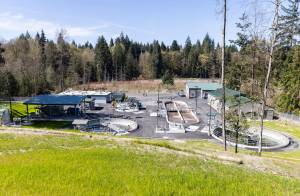
The wastewater treatment plant, set next to the Snohomish River southwest of town, offers a sort of beauty — if you don’t look too close.
Four lakelike lagoons ringed with rocks hold dishwater-brown liquid. Birds circle and when the aerators pop on, water shoots in an arc, sort of like a Las Vegas fountain.
Sewage and storm water stream through one large pipe into the plant. Gigantic augers draw the sewage upward and through a screen that filters out things that shouldn’t be there, such as tree branches, toys and baby wipes. The wastewater is pumped into a series of four lagoons. There, a complex biochemical process turns waste back into water. Aerators scattered across the surface of the lagoon — basically propellers run by 15-horsepower engines — add air to keep the bacteria happy. An important part of the operation is sampling and testing the quality of effluent, the stuff discharged into the Snohomish River.
The wastewater is filtered and disinfected with a heavy dose of chlorine, then another chemical removes the chlorine before it’s returned to the nearby Snohomish River.
It’s Chapman’s job to make sure the treatment plant runs smoothly. He is like the sheriff for a Wild West town of microscopic bugs. He and the other plant workers watch over the good bugs going about their daily business of eating sludge and deal with the bad guys, bugs like fecal coliform.
Chapman contends with everything that gets sent down the system that shouldn’t: toys flushed by toddlers, grease from the kitchen sink and his worst nemesis, dental floss. It twists around the plant’s many mechanical parts, gumming the works and snagging other junk in its tentacles. Chapman regularly rows a dingy out onto a lagoon of pure sewage so he can cut twisted dental floss loose from the aerators.
As unpleasant as those problems are, he and the other plant workers have bigger problems: keeping pollutants from the river with a plant not equipped to do the job well.
—
When the plant was designed in 1993, it met all the federal and state clean-water standards. Those changed after the plant was built, partly because of a 1999 state Department of Ecology study of the water quality of the Snohomish River.
Since then the plant has had trouble meeting conditions set by the federal Clean Water Act. The plant has had dozens of violations with the state ecology department since 1999. The plant was dinged 45 times for releasing treated water with too much ammonia into the river. The nitrogen component from ammonia can cause reductions in oxygen in the river, which can harm salmon and other aquatic life.
In 2002, an environmental organization called the Puget Soundkeeper Alliance sued the city for not meeting federal and state clean-water standards. The result of that lawsuit is a federal court consent decree that requires the city to fix the problems, which include preparing a plan to reduce discharges of ammonia, chlorine and carbonaceous biochemical oxygen demand. If the city doesn’t meet deadlines set by the decree, it could be further fined.
The plant’s design makes it difficult for Chapman and the other plant workers to control the delicate dance that keeps them in compliance with strict Department of Ecology standards, including the one for ammonia levels. Operating the aerators to add just the right amount of oxygen, for instance, is more art than science. The system as it is now is easier to use but harder to fine-tune, explained Steve Schuller, the city engineer.
The proposed $38 million upgrade would allow the staff to have better control over the process. The project would include lining one of the lagoons. Another would be decommissioned and in its place workers would install four concrete tanks that would do the job of precisely aerating the sewage, keeping the good bugs happy, Schuller said. The project would include a clarifier that would help solids settle away from clean water. Upgrades would give workers the ability to send wastewater through the system multiple times if the first trip didn’t do the trick.
Many components of the system would be capped, which would reduce odors.
The changes would also make the plant a safer place to work. Now, workers deal with large vats of chlorine, which can be deadly if the gas is inhaled. Part of the upgrade calls for an ultraviolet light that would sterilize the water. That would eliminate the need to use chemicals, Schuller said.
The ancient storm-water system, which in the old part of town is linked to the sewer pipes, is compounding the problem. The wastewater treatment plant treats an average of one million gallons of wastewater a day. That can fluctuate up to 10 million gallons a day during a big storm.
Anytime there’s a heavy rainstorm, the century-old storm system fills to capacity and raw sewage flows into the Snohomish River from two overflows.
The city has plans to separate the storm water from the sewer in the old part of town. The first portion of the project will cost an extra $8 million. It includes adding trunklines to capture storm runoff. That should solve the problem of sewage running into the river, Schuller said.
—-
The upgrades couldn’t come at a worse time for the city. The economic downturn has the city paring its budget down to the basics, and city residents are in no mood to contemplate large rate hikes.
The city has secured nearly $6.5 million in grants from the state and another $6.5 million in low-interest loans.
City officials hope to grab a piece of the federal stimulus package or other grants. Passing on the complete cost to ratepayers would be too much for them to bear, said city manager Larry Bauman. He said any projections about how much ratepayers might have to pay is conjecture.
“The only Plan B is extending the deadlines with the Department of Ecology and the Puget Soundkeeper Alliance,” he said
Ratepayers need to give this process some time, he said. The city is determined to come up with other sources of funding.
“I tend to be optimistic about getting grants,” said Tim Heydon, public works director. “I tend to focus on the problem and find the money.”
Reporter Debra Smith: 425-339-3197 or dsmith@heraldnet.com.