Wrong-way drunken driver gets max sentence for deadly crash
Published 1:30 am Wednesday, January 30, 2019



EVERETT — After a fitful, painful night of sleep, Aaron Gentry popped a couple of muscle relaxers on the morning of last July 1, according to what he told the judge.
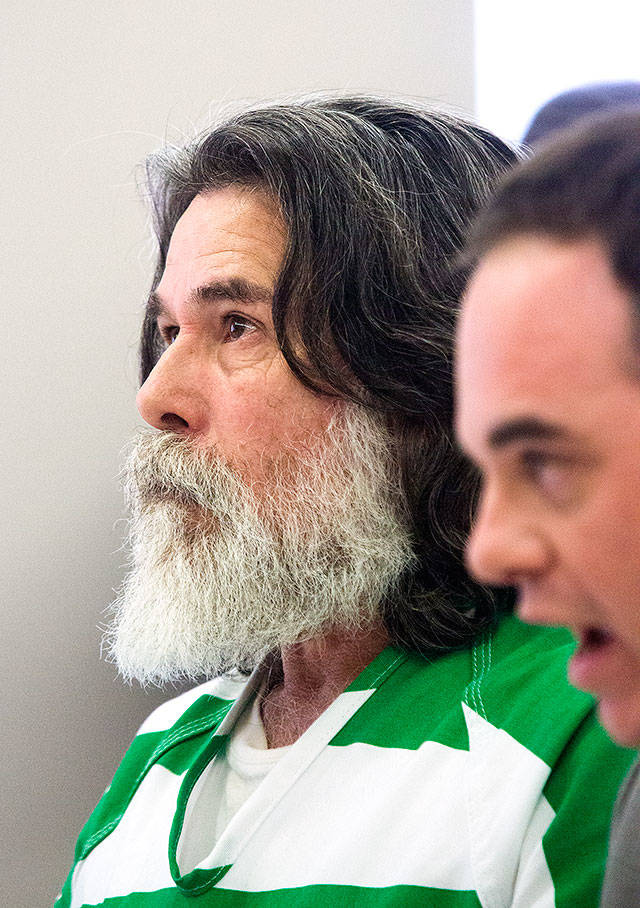
Gentry, 56, felt no relief. He guzzled beers. He glanced at his clock at 1:30 p.m. From there, his memory went blank. For the death he caused hours later, Gentry must serve 20 years and five months in prison, Snohomish County Superior Court Judge Bruce Weiss ruled Wednesday.
Gentry said he didn’t recall rear-ending a Jeep three times with his daughter’s Ford Explorer around 4 p.m. at the 116th Street NE overpass in Marysville. He didn’t recall going the wrong way onto I-5, smashing through orange barrels as he merged north in the southbound lanes of the freeway. Over most of the next six miles he sped 80 mph to 100 mph on the shoulder, grazing oncoming cars, witnesses reported.
Just short of the exit to Highway 530, he weaved into the path of a southbound Toyota Corolla. The driver, Dora-Jean Wyne, swerved left. Her reaction likely saved her and her son Jack, 1½. But the impact killed their friend and housemate, Miriam Robinson, 28, of Albany, Oregon. She suffered massive head trauma.
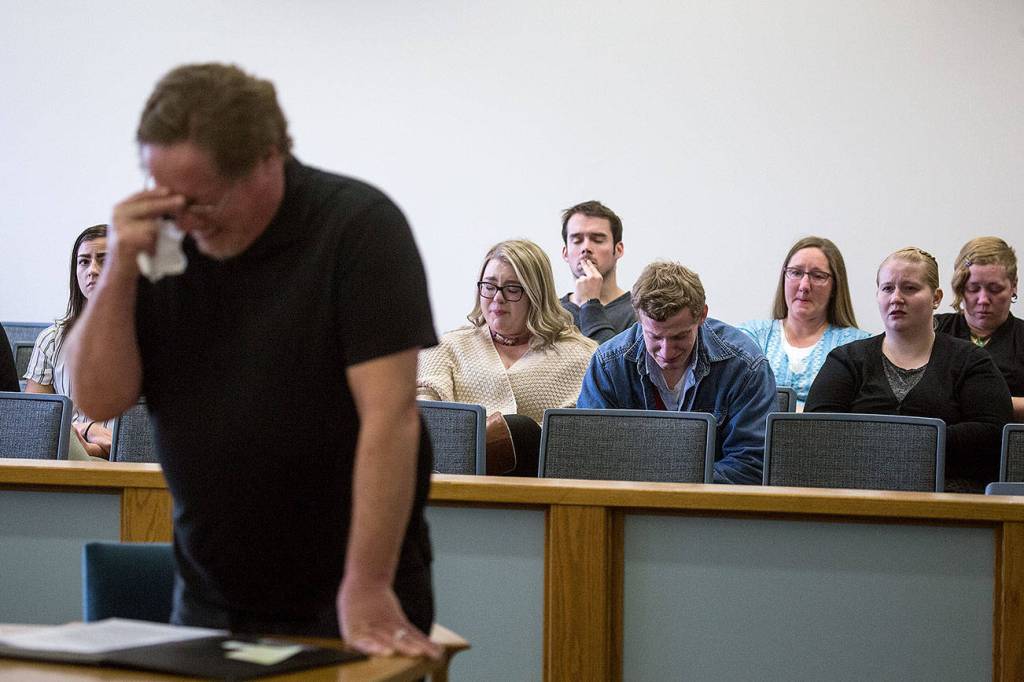
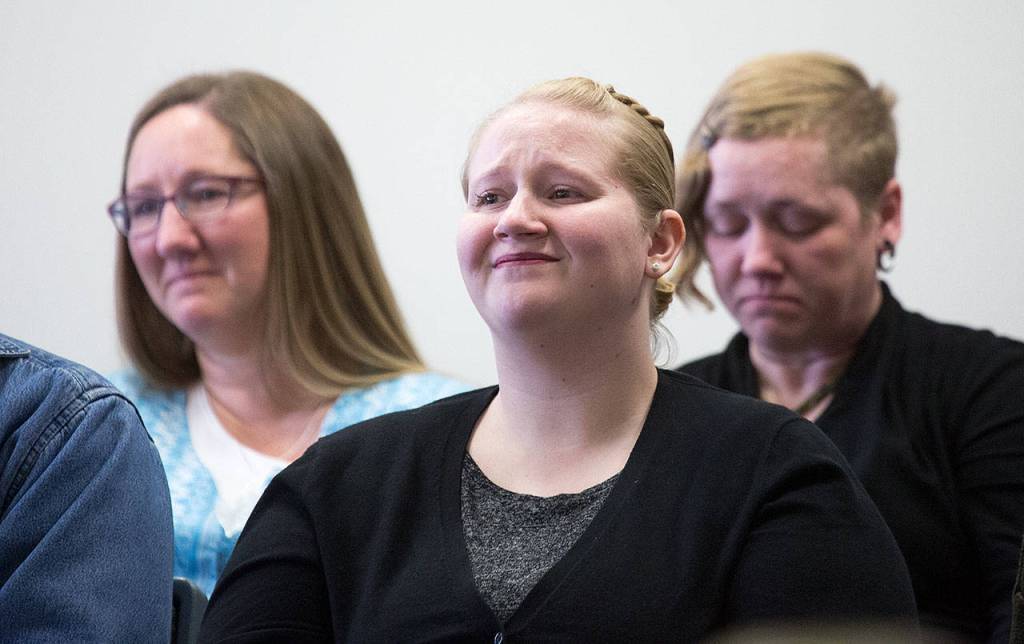
Robinson, who worked as a caregiver, has siblings scattered across the country. For the first time in a long time, they reunited last year for her memorial in the Willamette Valley. They reunited again Wednesday in Everett for the sentencing of the man who killed her. Robinson’s father, Ken, sobbed in court as he tried to explain his feelings. Over the past seven months he has pushed for the sternest possible sentence for Gentry, a repeat drunken driver. The father said he was not looking for revenge. But he doesn’t want other families to suffer at Gentry’s hands.
“I don’t want to keep thinking about the day this defendant chose, yet again, to break multiple laws, set out without a valid license, without insurance, without a court-ordered interlock device,” he told the judge.
That weekend, Miriam Robinson had taken a road trip with Wyne to spend long, warm summer afternoons on the riverside near Arlington, writing in a journal, relaxing, trying to climb out of a depression.
Wyne retraced the route north from Oregon this week. Since summer, she has made some progress in feeling like she can function in society.
“It’s been moving so slowly,” she said.
Often she has night terrors. She relives the crash in her head.
At the scene of the wreckage, troopers noted Gentry’s speech was so slurred he couldn’t be understood. He stated he had vague memories of his blood being drawn at the hospital at 6:38 p.m. His blood-alcohol content later tested at 0.22. It had been 2½ hours since the impact. The active ingredient for cannabis was present in his blood, too.
Ken Robinson has been confounded as to why prosecutors did not charge Gentry with hit-and-run, or what he sees as the vehicular assaults on Wyne and her son; why authorities did not pursue charges against the owner of the Ford Explorer; and why Washington’s legal system gave Gentry second, third, fourth, fifth and sixth chances.
Gentry pleaded guilty in December. It was the seventh time he’d been convicted of being impaired behind the wheel. Four of those were DUIs — in 1981, 1992, 2003 and 2016.
“While those DUIs might not have taught him what he needed to know, I certainly think this one will have much more impact,” his public defender Frederic Moll said Wednesday in court.
In court papers, the defense tried to give context for Gentry’s substance abuse. He grew up in a home with a “seasoned alcoholic prone to violence when intoxicated,” according to a six-page report compiled by a social worker. Gentry’s father would beat him, leaving him with bruises, broken ribs and scars that the family would explain away as farming accidents. Gentry drank alcohol and smoked pot at age 12.
He would black out and wake up not knowing where he was.
He ran away sometimes, and left home for good at age 14. Around then, his father was arrested for investigation of sexual abuse of another child. Gentry worked at a cannery as a teen and hung around bikers, who introduced him to harder drugs like morphine and Demerol. He got addicted and fed his habit through theft. He served a suspended 10-year sentence for property crimes. He was sober for about eight years and led meetings for recovering addicts and alcoholics.
In the early 1990s, his wife began having serious medical problems. Gentry felt angry with God, the report says. He started drinking again.
Since then he has struggled with alcoholism. He lived with chronic pain, too, from a degenerative disc disease and osteoporosis. In a statement to the judge, Gentry said his most recent relapse came in 2014, after he fell at work and hurt his back. He said he made a terrible choice to self-medicate, and it cost a young stranger her life.
“I hurt from my soul for the Robinson family,” Gentry said. “… I ask no pity.”
To the father of Miriam Robinson, nothing excuses the fact that Gentry chose to drink, chose to grab the keys, chose to drive, chose to flee from the scene of one crash at high speeds, the wrong direction, on I-5 — and that those choices led to the death of his daughter.
A plea offer by deputy prosecutor Tobin Darrow recommended about 18 years behind bars for Gentry, for vehicular homicide. Weiss rejected the deal and sentenced Gentry to the maximum under the law.
“From my standpoint, based on your history, based on what happened that night, to me, sir, you are one of the most dangerous people that I have sentenced in my 11 years on the bench,” Weiss said.
The judge said he did not find even 20½ years to be enough.
“What you have done with your driving and your use of alcohol … is you engaged in Russian roulette,” the judge said. “Unfortunately the victim of Russian roulette was Miriam Robinson. It was only a matter of time before something like this would happen. You basically sentenced her to death for decisions that you, and you alone, reached in this case.”
Caleb Hutton: 425-339-3454; chutton@heraldnet.com. Twitter: @snocaleb.