European green crab’s reach stretches across North Olympic Peninsula
Published 1:30 am Friday, October 5, 2018




By Matthew Nash / Sequim Gazette
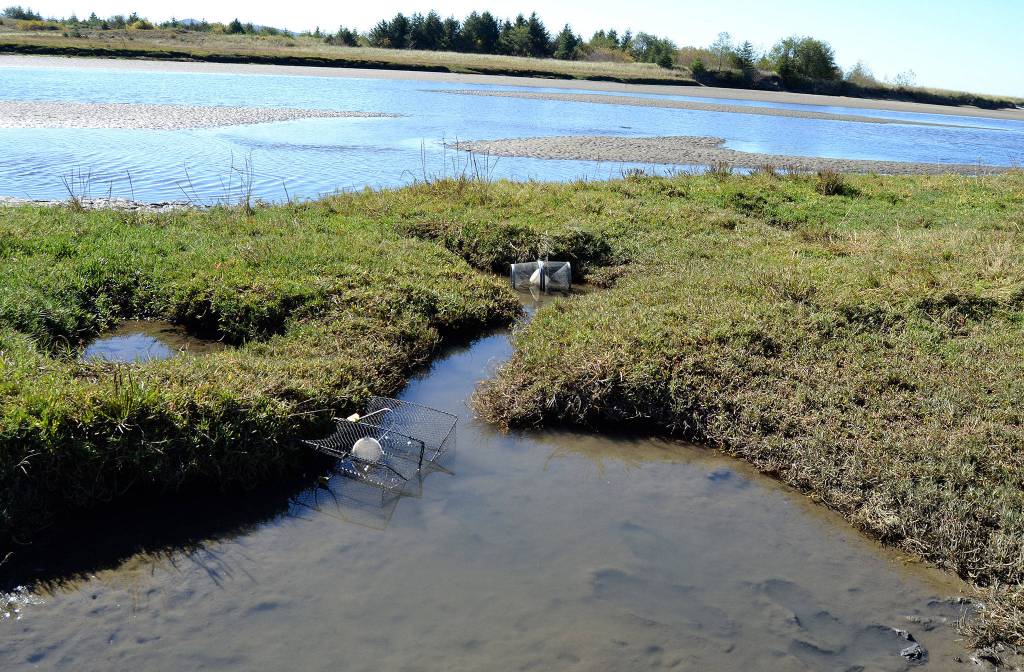
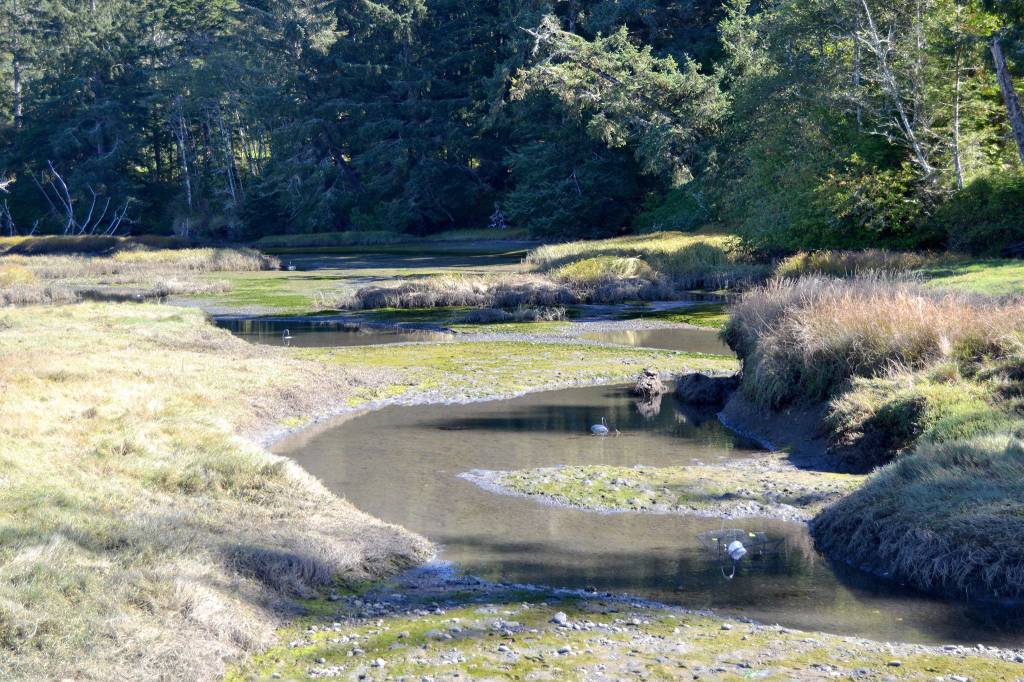
Among fallen trees in the Tsoo-Yess River in Neah Bay, the muddy canals of Graveyard Spit in Dungeness and in the waters of Kala Point near Port Townsend, the European green crab now spans the North Olympic Peninsula.
Its reach is concerning to resource managers because scientists list the crab as one of the world’s most invasive species and blame it for damaging the U.S. East Coast’s clamming industry.
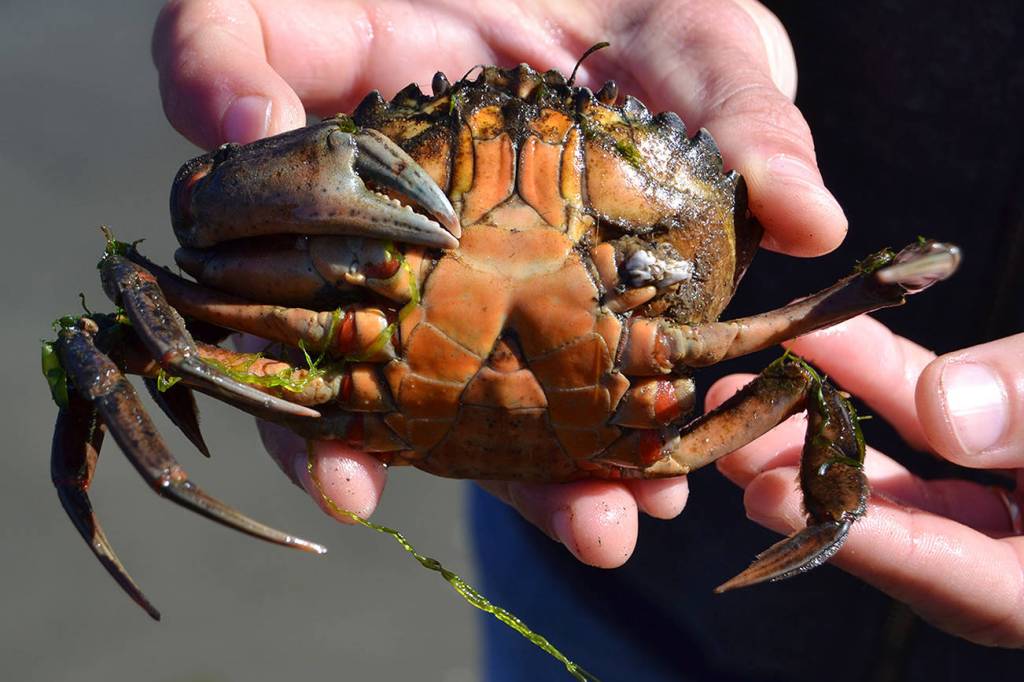
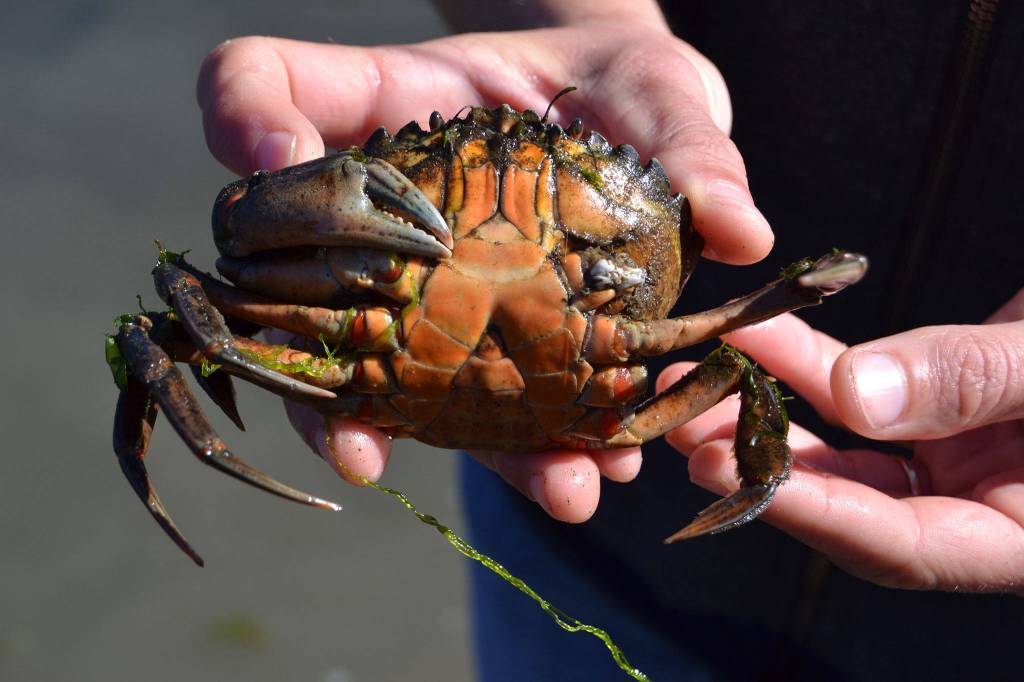
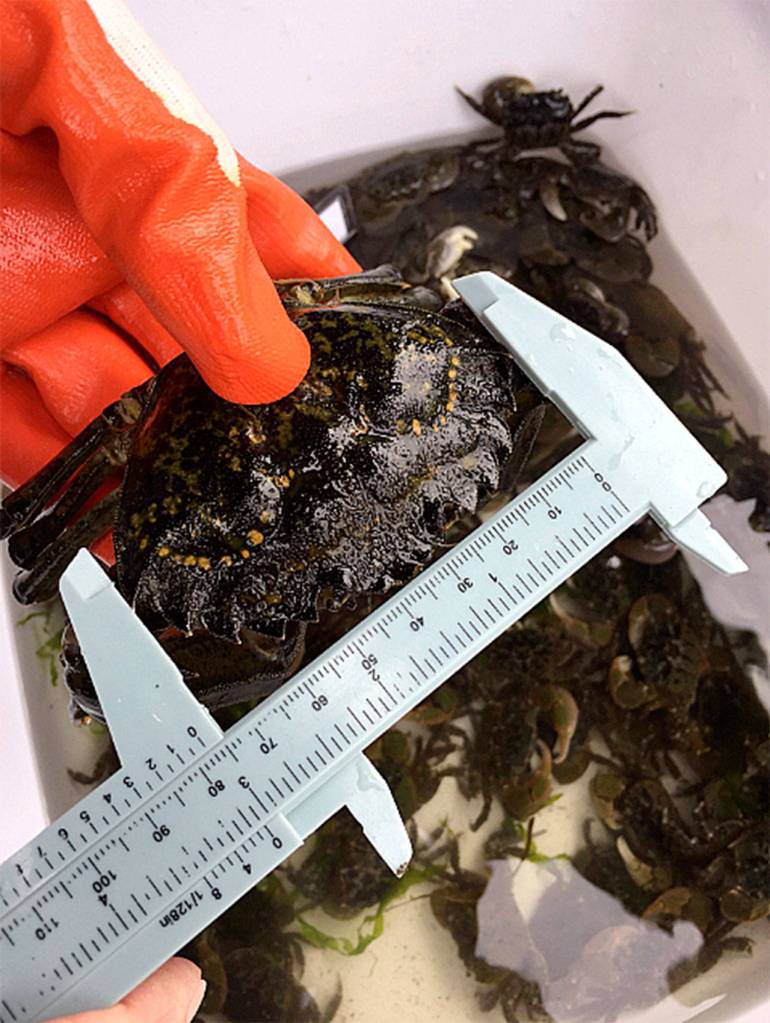
The green crab, distinctive for its five spines on the side of each eye, competes with native species like Dungeness crab and eat clams, oysters and more.
Crab Team program manager Dr. Emily Grason, a marine ecologist with Washington Sea Grant, said it’s “important to do as much as we can now to avoid allowing populations to increase dramatically.”
“Small numbers are where we can have the biggest impact in terms of management,” she said.
That’s why she finds trapping in Neah Bay critical for current and future management.
“We rarely get an opportunity like this one, and the one at Dungeness Spit, to attempt to intervene when an invasive species is still relatively rare,” Grason said.
“Because there have been very few situations like these, we don’t know for sure whether or not we will be able to completely eradicate green crab from these sites.”
Staff and volunteers with the Washington Maritime National Wildlife Refuge in Dungeness have been trapping for the crab since 2001 but it wasn’t until 2017 when it was first found on the peninsula on Graveyard Spit.
Last year, resource managers caught 96 green crab on the Spit. As of Sept. 24 of this year, staff and 27 volunteers caught 69 green crab over 83 days using 2,620 trap placements.
Lorenz Sollmann, deputy project leader at the refuge, said that, similar to last year’s efforts, volunteers will end trapping sometime in October and begin again in April 2019.
Crab Team volunteers discovered a green crab on June 15 at Dungeness Landing, across from the Dungeness Spit after two years of routine trapping.
Jamestown S’Klallam Tribe and Department of Fish and Wildlife Aquatic Invasive Species staff followed up with rapid response trapping but did not find anymore green crabs.
Neil Harrington, environmental biologist for the Jamestown S’Klallam Tribe, trapped one green crab in the Jimmycomelately Creek estuary in 2017. This year Harrington periodically set traps during the season in Jimmycomelately Creek and Washington Harbor but didn’t find any crabs.
Harrington said he and other resource managers continued to try new spots for trapping with ideal habitat for green crab, but have come up empty.
One by one
Jefferson County residents found their first green crab on Sept. 8.
Volunteers with Washington Sea Grant’s Crab Team spotted a 77-millimeter male green crab at Kala Point Lagoon during routine monthly trap sampling.
The specimen was the first green crab captured since survey trapping began in 2015 as part of the Crab Team’s early detection network.
Washington Department of Fish and Wildlife staff followed the site with intense trapping and found another male (63 mm) green crab in Scow Bay between Indian and Marrowstone Islands.
Locations looking for green crab are part of the Sea Grant’s 54 early detection sites, including Indian Island County Park run by small teams of volunteers.
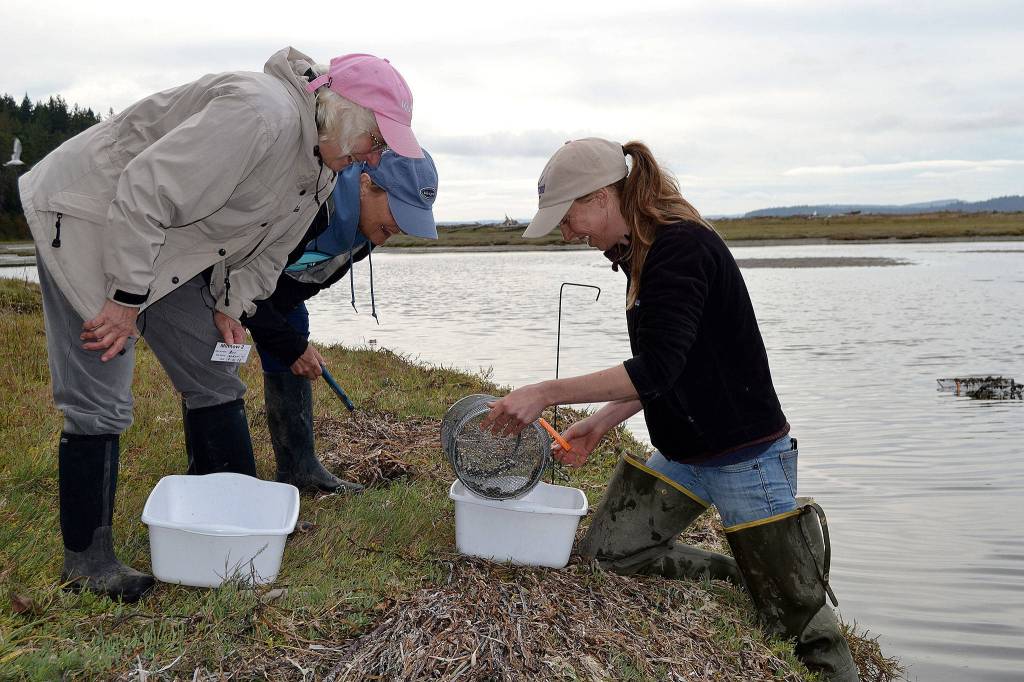
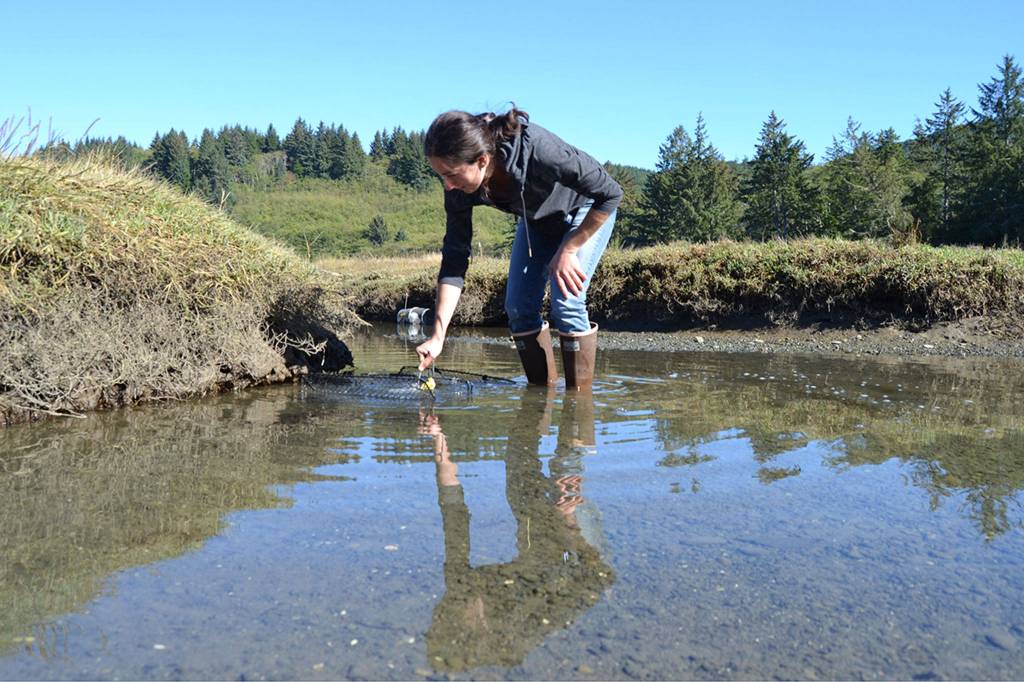
At the park a team of five members, including Andrea Carlson and Amy Does of Nordland, have helped trapped there once a month since 2016.
“We live here and want to do something to help,” Carlson said. “It’s the idea of citizen scientists. We did go through a lot of training and it’s people from all walks of life.”
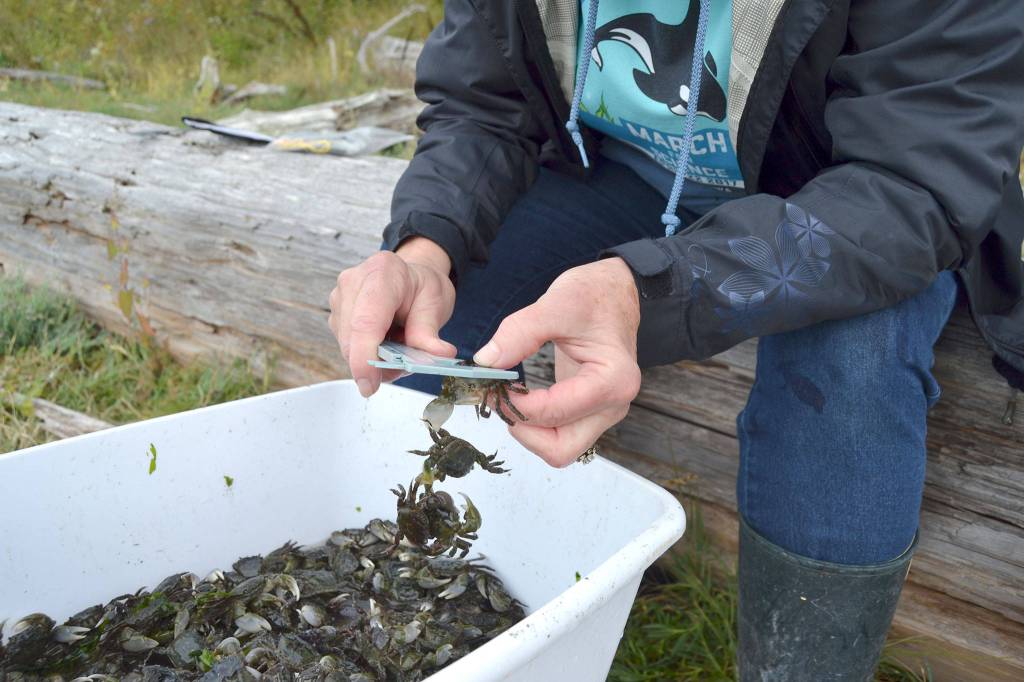
At Indian Island County Park, Carlson and Does said they sort the crabs, such as hairy shore crabs, by sex and measure 10 randomly selected males and females for record-keeping purposes.
Grason said team members trap in the same locations and at consistent times at early detection sites to try and trap green crab at multiple points of their life cycles because when the season starts, some crabs may not be large enough to be retained by the traps or even hungry when the traps go out.
“The bonus with volunteers is we can do more sites,” Grason said. “With 54 sites, doing that once per month would be a lot for staff. That’s 300-plus samplings per season.”
Keen eye
Green crabs weren’t on the radar of the Makah Tribe around this time last year.
It wasn’t until a passer-by discovered a green crab last October near the Wa’atch River and reported it to Washington Sea Grant leading to intense trapping efforts to catch 34 of the invasive species.
With a full season behind them and a contingent of 28 volunteers plus tribal staff and multiple partner agencies, 1,030 green crabs have been captured as of Sept. 28.
Adrianne Akmajian, marine ecologist with Makah Fisheries Management, said the crabs range from 12 to 90 millimeters and were captured after 2,000 trap deployments in the Wa’atch River, Tsoo-Yess River and Neah Bay nearshore.
Akmajian said they haven’t found any live crabs in the nearshore but did find six molts.
She initiated trapping on the Wa’atch River after finding molts there and it remains a successful spot for trapping.
Makah Tribal staffers work with Sea Grant staff to find optimum locations to place traps.
In the Tsoo-Yess River, Akmajian said green crab like steep, muddy banks, and in the past week staff and volunteers began placing traps by fallen trees that the crabs seem to like.
“I wish we had known that sooner,” she said. “I would have been trapping there then.”
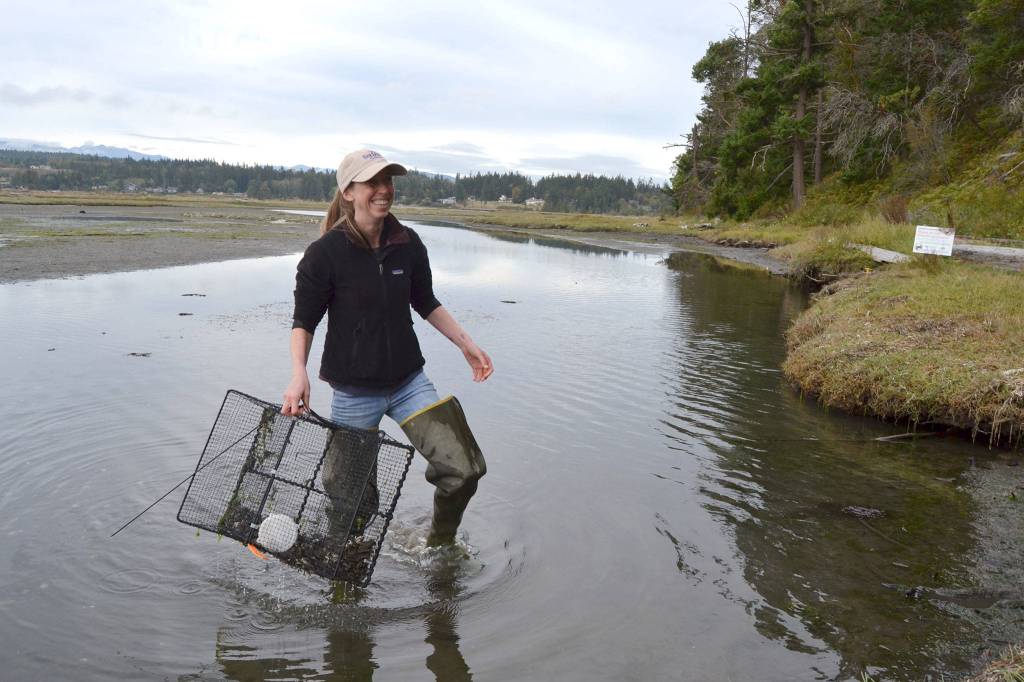
At the rivers, they’ve used a number of different traps. Akmajian said she wants to explore new baiting techniques to traps to see if the crabs would be enticed.
“We have enough crabs here to see if it’s worth exploring,” she said.
With an abundance of European green crab — at least for the North Olympic Peninsula — Akmajian was able to secure enough funding to continue trapping at the same level, starting next April.
Neah Bay-area trapping ended on Sept. 28 but Akmajian said she may do some exploratory trapping in the winter to see if the crabs remain.
Resources managers say the summer months remain an ideal time to trap; in winter months, green crabs typically go to deeper water because of tidal shifts, cooling temperatures and behavioral reasons.
With another full season of trapping ahead, Akmajian said she can hopefully determine a long-term strategy for management.
Neah Bay residents appear to be aware of the threat, too.
Akmajian has done numerous efforts to spread awareness through newsletters, signage and word-of-mouth.
“I started talking to a lady about green crabs and she said, ‘Oh, yeah, green crab, I know all about them,’” Akmajian said.
“That was awesome to know people are reading my articles.”
Numbers
As green crab continue to surface across the peninsula, Grason said “we’re hoping not to be seeing a creeping base line going more inland to sites in Puget Sound.”
“We hope we can intervene enough to have a durable change,” she said.
Across the Salish Sea including the North Olympic Peninsula, volunteers have found a few green crab in June including one on Whidbey Island’s Lagoon Point, two at Westcott Bay and a molt in Fidalgo Bay on San Juan Island.
In a Crab Team blog, Grason said seeing green crab at new sites is concerning and that due to their size at sites like Dungeness Spit they’ve been there more than a year and avoided previous traps.
“This underscores a challenge of green crab management: sustained effort at a site is critical not only to detecting green crab in the first place, but also to long-term management success,” she said.
Grason said areas like Neah Bay and Dungeness Spit have capture rates per trap lower than “established” sites like Sooke, B.C., and the Sooke Basin where it has capture rates 100 times higher than Neah Bay.
But, she said “this gives us a better opportunity for control now than we would ever have if we did nothing and let them become abundant.”
Akmajian said that with another full year of trapping some of the researchers’ questions about the green crab population can be answered, such as if they can breed in the rivers.
Grason previously reported that genomics testing — mapping of genomes — at Woods Hole Oceanographic Institution in Massachusetts revealed the Dungeness’ crabs likely came from a coastal population in Washington state, Canada, Oregon or even California.
One of the 12 genetic samples taken so far from Neah Bay was found to be similar to crabs from Sooke Basin.
Resource managers say female green crabs can release hundreds-of-thousands of larvae per brood at least once a year. Some larvae can travel as far as of 100 kilometers, about 62 miles, and even farther depending on currents and temperatures.
While the green crab trapping season may be mostly over, Buffington said Fish & Wildlife staff will remain busy in multiple areas, such as standardizing data between organizations, creating a friendly platform for green reporting/sighting, and helping with understanding the genetics portion of the green crabs.
How to help
Researchers encourage residents who spot a European green crab to snap pictures of the crab(s) and send them to the Crab Team at crabteam@uw.edu for identification. Resource managers ask the crabs be left alone.
Limited volunteer opportunites are available for monitoring from April-Sept. with training in March.
For more resources on the green crab, visit wsg.washington.edu/crabteam and https://wdfw.wa.gov/ais.
This story originally appeared in the Sequim Gazette, a sibling paper of The Daily Herald.