Comment: What loss, dissapointment mean to an Olympic athlete
Published 1:30 am Saturday, August 7, 2021
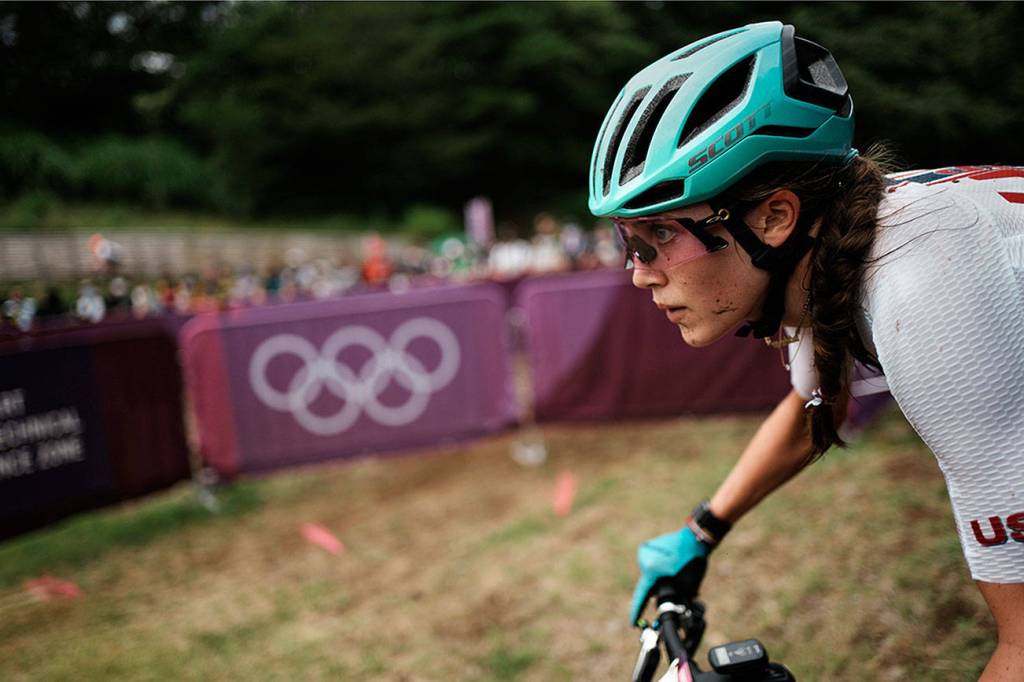


By Kate Courtney / Special to The Washington Post
The brighter the spotlight, the deeper the darkness left in its shadow. As I return home from my first Olympic Games in Tokyo, I can’t help but feel that spotlight lifting and the depth of the darkness in its place. And I know I am not the only one.
I’ve been a professional cyclist for years, a former world champion and World Cup overall champion. In 2020, I was prequalified for the Tokyo Games and couldn’t wait to add Olympian to that list. In the most difficult moments of the pandemic, the idea of lining up to race in Tokyo provided me a light at the end of the tunnel. The Games motivated me to continue to work through doubt and uncertainty, to believe that the future would be ripe with opportunity. In other moments, I felt trapped in a prison of expectation that I had slowly built through weeks and months and years of hoping. The pressure only grew as I waited for the chance to make it all worth it.
Even before the pandemic, my goal of fighting for a medal in the mountain bike race in the Tokyo Games served as an organizing principle in my life. Qualifying for the Games gave me an unprecedented chance to pursue what I love with every single fiber of my being, to commit fully to the pursuit of my best. Each tough workout was part of a larger mission, and the small breakthroughs along the way fed my confidence and belief that anything was possible. I have never felt more alive. More than that, I got to share those moments with the people I love. When I finally made it to Tokyo, I was overwhelmed by the support from my friends, family and even those I hardly knew; people who believed in me because I raced for their flag. I lined up feeling grateful, prepared and optimistic.
Then I fell off an emotional cliff.
From the start, my race didn’t go to plan. In a race where I had hoped to be fighting for a medal, I found myself fighting just to stay in the top 15. My body and mind felt out of sync, unable to push toward a goal that now seemed so far out of reach. At a certain point, it became a battle just to finish. After 82 minutes and 19 seconds of racing, I crossed the finish line, and it was over. A moment I had been working toward for years was now behind me, along with the feeling of purpose and motivation that had pushed me so hard for so long. Falling short of my goal only made that emptiness worse. My heart broke in front of what felt like the whole world, and then I was quickly sent home to pick up the pieces alone.
The overwhelming outpouring of positivity and support that I’d received before my race gave way to a wave of consolation and criticism, especially online. Standing on such a big stage has its downsides, especially when fans have unprecedented access to athletes through social media. It can be a source of immense support, inspiration and meaning, but it is also where cruel voices are most eager to share their analysis, judgment and advice.
The positive voices still far outweighed the negative, but the negative comments seemed to resonate the most with my inner dialogue. You let everyone down. You are no longer competitive. You couldn’t handle the pressure. You aren’t mentally tough enough. And, my personal favorite: You should be satisfied with this result since it’s clear you aren’t capable of more. Our brains are wired to fixate on the negative, and despite my best efforts to shrug off or better yet not read the comments, they felt loud, unavoidable and damaging. They provided ample fuel for the doubt and disappointment I already felt.
I couldn’t help but think about Jolanda Neff in those moments. The Swiss cyclist won our race in dominant fashion, showing a skill and confidence that I have always admired. As she leaves the Olympics with a gold medal around her neck, it is easy to forget that her path has not been a smooth one. In recent years, she has faced huge challenges. In 2019, she suffered a crash that left her with life-threatening injuries and a long road to recovery. Even more recently, she broke her hand and missed the final World Cup event before the Olympics. People were eager to write her off, and I am sure that she, too, faced moments of doubt and struggle. But she was able to persevere and prove that she has what it takes to perform at the top level. It is a reminder to me that ups and downs are a part of sports that all elite athletes must navigate.
And as I have started to process my Olympic experience, something else has happened: I have realized I am not alone in it. This Olympics seems to be a tipping point in the conversation about mental health, as the struggles of elite athletes dominate headlines around the world. It is a conversation being led by some of the most well-known figures in sports; stars such as Naomi Osaka and Simone Biles, who notably pulled out of most of her events in the competition.
Few people will ever understand what it feels like to win a gold medal, but we can all relate to the feeling of struggling to accomplish hard things or get through a rough patch where nothing seems to go our way. In my own disappointment, I am learning to appreciate that some seasons of life are not about triumph, but about holding space for the struggle and acknowledging the courage it takes to pick ourselves up and risk our hearts again and again. As David Whyte describes it in his book “Consolations,” “Courage is a measure of our heartfelt participation with life.” The depth of my heartbreak is not just evidence of my failure. It is evidence of my courage, of the lengths I was willing to go to participate fully and completely in my pursuit of this goal.
That kind of courage can be the source of the greatest victories, as well as the most devastating defeats. It is one of the things we love most about sports, seeing athletes courageous enough to put it all on the line. When the time comes, I know that courage is what it will take for me to step back into the arena.
But courage is exhausting. And I don’t think Olympic athletes are the only ones feeling that exhaustion. In the past year, we have all been forced to show courage in waking up each day to face a world rapidly shifting beneath our feet. It can be exhausting to continue to give your best effort and remain hopeful in the face of overwhelming uncertainty, doubt and loss.
At the Olympics, in particular, uncertainty and loss become visible and visceral. The challenge is clear, the emotions raw, and the outcome broadcast for the world to see. It takes courage for athletes to offer up true, heartfelt participation, knowing that very few will leave triumphant. And when the battle is over, those fallen competitors do not need to be kicked; they need to be carried. They need to be allowed to rest for just a moment and mend their broken hearts so they can continue to bravely share their gifts with the world.
This is not the story I hoped to be writing about my Olympic Games. Like many others, I was searching for a sign that we could return to everything just as it was before the pandemic. But as I navigate my challenges around this experience, I am reminded that there are seasons of struggle and seasons of triumph; and that you don’t always get to choose when you jump from one to the next. Sometimes, you need help to keep going until the leaves change color. Exhaustion is not evidence of a lack of courage but of its abundance. To deny the struggle is to deny the very thing that allows us to triumph in the end.
Kate Courtney is a professional mountain bike racer for the Scott-SRAM racing team.