Editorial: Find better funding source for charter schools
Published 1:30 am Sunday, May 20, 2018


By The Herald Editorial Board
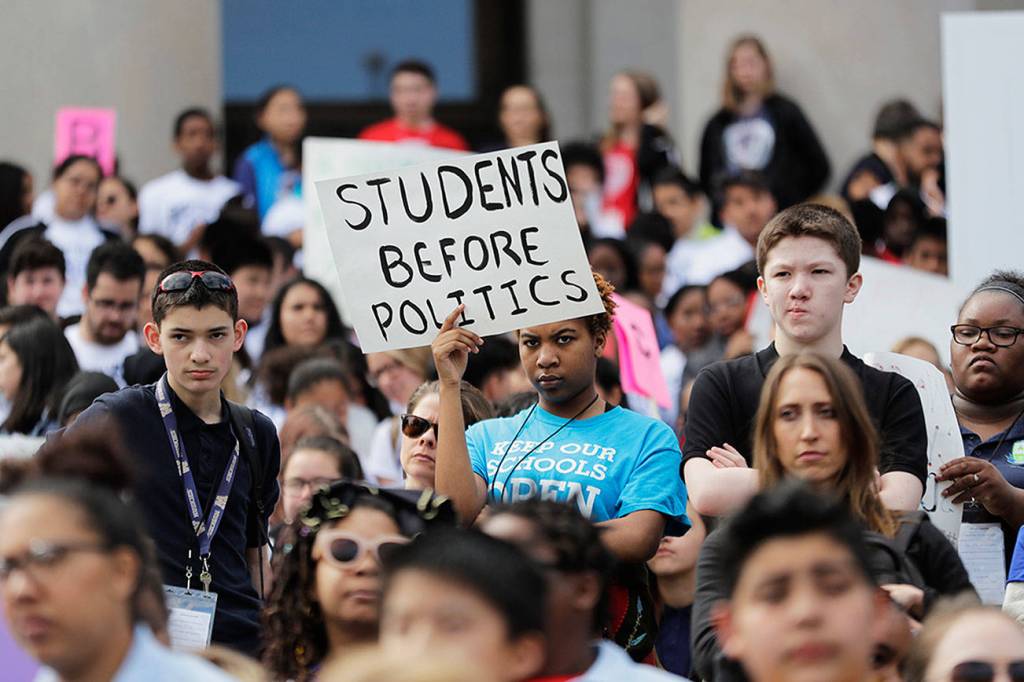
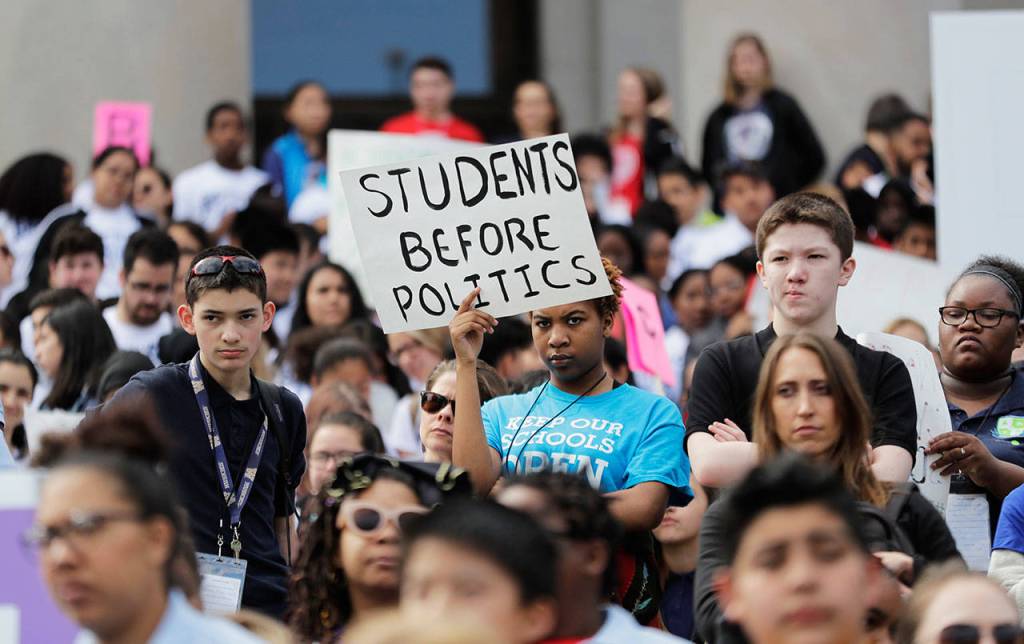
Hundreds of charter school students rallied at the state Capitol on Thursday as the state Supreme Court heard arguments regarding the fate of their schools and the more than 2,400 enrolled in them.
They and their supporters would do well to plan a return trip to the Capitol steps when state lawmakers begin their next session — a budget year — in January, regardless of how and when the court rules in the case.
It’s the second challenge to charter schools since voters approved Initiative 1240 in 2012 with a little less than 51 percent support.
Court justices heard arguments in a lawsuit filed in August 2016 that challenged the Legislature’s solution for fitting charter schools under the state constitution. The year before, the court ruled that the charter school system, overseen by an appointed state commission, wasn’t eligible for taxpayer-supported state funding, because voters had no direct representation or oversight of schools in their community.
The legislative fix provided funding of about $18 million each year to support 10 schools around the state through an account that gets its funding from state lottery proceeds. That source, the Opportunity Pathways Account, primarily supports state need-based and merit scholarships, workforce training and work study grants. But to avoid a loss of funding to those programs, lawmakers arranged to reimburse the Pathways account from the state’s general fund.
In challenging that solution, the Washington Education Association, the League of Women Voters, Boeing Machinists and others referred to the lawmakers’ fix as a “shell game,” an attempt to get around the court ruling by moving money out of one account for charter schools and replacing it with the taxpayers-supported general fund money.
The challenge lost its first round in King County Superior Court, but it’s now in the hands of a Supreme Court that was clear about the constitutional necessity for local school board oversight of charter schools.
Charter school supporters, among them former State Attorney General Rob McKenna, believe the court should uphold the Legislature’s solution, and point out that other programs similar to charter schools, including Running Start and tribal schools, yet are not supervised by elected school boards.
McKenna, in a phone interview last week, admitted that funding could again become an issue as more schools are started and more funding is needed.
“But if enrollment keeps going up, and charter schools have to use general fund money, if that happens [opponents] can file another lawsuit,” he said.
With a decision from the court not likely for several months, and possibly more than a year, that gives the Legislature another shot next session at finding a better way to accommodate charter schools and provide a sustainable and constitutional funding source. (Hint, hint: the U.S. Supreme Court last week said states were now free to regulate sports betting.)
It should find that funding solution, and not just because voters said they wanted students to have that option, but because charter schools may be serving some communities well and providing a seed bed for education innovation.
Stanford University’s Center for Research on Education Outcomes found mixed results nationwide in studies in 2009 and 2015, but also promise. The earlier study reported about 17 percent of charter performing better than public schools, about half comparable to public schools and 37 percent performing worse than public schools.
But charter schools were having the most success, the Stanford studies found, with low-income students, minority students and English-language learners.
With just a few years of available data, available figures from Washington state’s charter schools are similar to some of the Stanford studies findings.
Figures from the Washington State Charter School show that 66 percent of 2,400 charter school students are students of color, compared to 45 percent in public schools. And 60 percent are from low-income households, higher than the average of 43 percent in state public schools. The schools also are serving a higher percentage of special education students, 16 percent, compared to the public school average of 12 percent.
Also of note, about 36 percent of charter school teachers are people of color, about three times the statewide district average.
At the same time, several of the schools, with students taking the same assessment as their public school peers, reached higher levels of proficiency in math and English language arts than public school students, the charter schools group reported.
Those are results, admittedly with just a few years of figures, that warrant the schools’ continued operation, and further chance to show what they can do.
But a reliable, sustainable and constitutional source of funding is owed those schools, not one that leaves the schools open to court challenge and an uncertain future.