Judge tosses out murder defendant’s statements
Published 9:00 pm Wednesday, March 10, 2004
Prosecutors said Wednesday they were dealt "a possible setback" after a Snohomish County judge ruled Seattle police used unlawful "coercion" in questioning a teenage murder suspect last year.
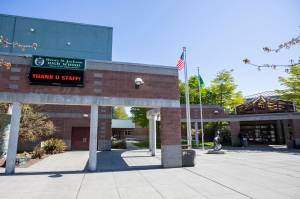
The Seattle teenager is one of two accused of first-degree murder of a classmate Aug. 21.
A defense attorney said "a significant part" of the state’s case went away when a Superior Court judge said Tuesday that statements to police by defendant Jenson Hugh Hankins, 16, can’t be used in his murder trial.
Hankins allegedly admitted participating in the death of Roosevelt High School football teammate John Jasmer, 16.
Hankins and classmate Joshua David Goldman, 18, are charged as adults with luring Jasmer to an isolated area near the Tulalip Tribes’ casino near Marysville and attacking him. He was suffocated, stabbed and beaten before being placed in a previously dug grave, prosecutors allege.
Seattle police began the investigation when a psychiatrist tipped them that a teenage patient had revealed the possibility of Jasmer’s murder. Hankins was taken into custody Aug. 27 and questioned at length by detectives without his parents present.
Defense lawyer Rachel Levy complained police used unlawful "coercion" in questioning him, making all his statements inadmissible at trial.
"The combination of impermissible tactics on the part of detectives and the young age of Jenson renders the statements inadmissible, and thus should be excluded from evidence at trial," Levy said in court papers.
Judge Thomas Wynne agreed, but prosecutors said they will continue with the case.
"We believe every piece of evidence is important," chief deputy prosecutor Mark Roe said, adding he believes Hankins’ words should be heard by the jury.
"But Judge Wynne is a smart man and a good judge. We will look at it carefully to decide if we will ask him to reconsider," Roe said.
Hankins is scheduled for trial May 21 and Goldman on May 14.
Although Hankins had been advised of his rights several times by Seattle detectives, he had a question just before a taped interview. He asked a detective if he had earlier forfeited his constitutional rights not to incriminate himself.
The rub is the defective said "yes," Levy said.
Hankins "thought he would have to continue talking to police until he gave them a story they would accept," she said. "That’s exactly how false confessions come out."
Levy said Hankins had no previous criminal background and was not sophisticated in the ways of dealing with police.
The important part was Hankins "made it clear he didn’t understand his rights, and they gave him misinformation about what his rights were," Levy said.
His lack of sophistication makes her argument more consistent, she added.
"Anytime a false confession is out (of a trial), it helps the case. What effect it will have on this case, I think you’ll have to ask the prosecutor," Levy said.
Prosecutors allege it was a revenge killing, after an allegation that Jasmer had raped Hankins’ 15-year-old girlfriend, according to reports.
It was Goldman who took police to the burial site, several hundred feet into the woods at the end of an unused parking lot. It was then that Snohomish County sheriff’s detectives took over the investigation.
Jasmer was hit in the head with a hammer, and he also suffered multiple stab wounds to the neck and body. He also had defensive wounds on his hands, according to court documents.
"The victim fought for his life for awhile before his eventual death at the hands of the defendants," deputy prosecutor Ed Stemler said in court documents.
Jasmer was good friends with both defendants, and they all were part of a group their friends knew as the "J crew" because all three had first names beginning with that letter, police statements say.
Numerous teenagers and some parents heard the boys plotting the death, police reports say.
Reporter Jim Haley: 425-339-3447 or haley@heraldnet.com.