Hikers’ sense of serenity shattered
Published 9:00 pm Saturday, October 14, 2006
P INNACLE LAKE – Gunfire and tragedy still echo in the woods.
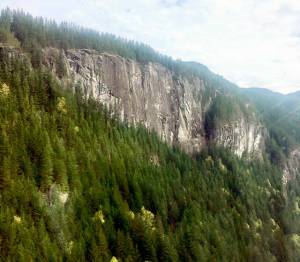
In a cathedral of hemlock and cedar, the hush of the forest is sharp contrast to the violence that took place here three months ago.
On July 11, a hiker made a gruesome discovery: the bodies of Mary Cooper, 56, and Susanna Stodden, 27.
The Seattle mother and daughter were found dead alongside the Pinnacle Lake Trail. Both had been shot in the head.
The visible reminders of what happened here are hard to spot. A handmade wooden memorial plaque is nailed high up a tree. Small scraps of police tape are mixed among the dirt.
For many hikers in the Northwest, sacred space has been violated.
“It’s really a kind of desecration,” said Nick O’Connell, the Seattle-based author of “On Sacred Ground: The Spirit of Place in Pacific Northwest Literature.”
“The wilderness, really, for a lot of people, is a place of refuge where you go to get away from all the problems and – in some cases – the evils of society,” he said. “It’s also a place where the darker side of human culture can show itself.”
It’s not easy to reach the place where the killings happened. It is a 20-minute drive up the Mountain Loop Highway east of Granite Falls, and another six miles up winding logging road. From there it is all on foot, a 45-minute hike up a steep, narrow trail, corrugated by roots and rocks.
The trail leads to Pinnacle Lake, one of many small lakes dotting the lower flanks of Mount Pilchuck.
Snohomish County sheriff’s detectives have made no arrests.
They recently presented what they know about the killings to a group of FBI profilers. The profilers said they are interested in helping, Snohomish County Sheriff Rick Bart said Thursday.
“These cases are very hard to solve,” said James Alan Fox, a criminal justice professor at Northeastern University in Boston and author of “The Will to Kill: Explaining Senseless Murder.”
Fox hasn’t been involved in the investigation. He said there’s likely very little physical evidence and the bullets won’t have the killer’s DNA.
Friends and family members of the victims have raised the reward for information to $26,000 in an effort to keep tips coming in.
“The longer it goes, the more difficult it is to get information,” said David Stodden, whose wife and daughter were killed.
He and his friends make frequent trips to Granite Falls and the Mountain Loop Highway. They put up posters seeking tips, and talk to people.
David Stodden has hiked the Pinnacle Lake Trail several times since the killings, stopping to quietly visit the area near where his wife and daughter died.
He’s tried to keep the story in the news locally and nationally.
While he’s expressed confidence in the sheriff’s office, he said he’d prefer to step out of the spotlight and have the sheriff’s office be the voice asking for more leads.
“I’d rather someone else tell the community and not me,” he said.
It’s a reasonable expectation, Bart said. However, keeping an unsolved case in the public eye can be difficult.
“Given the circumstances, we don’t have anything new to share and there are some things we just won’t share because they’re critical to getting a conviction,” Bart said.
Still, the sheriff last week said his detectives would welcome more tips.
“It’s been a while,” he said. “We want people to think hard about if they saw or heard anything. We want the call.”
David Stodden said Friday that he was pleased that the sheriff’s asking for more information.
“I’ve always wanted them to be working every avenue and using every resource to help solve the case,” he said.
The killings sent shock waves through communities around the region.
About 1,500 people attended the two women’s memorial service in July.
Cooper was a Seattle school librarian; Susanna Stodden was an outdoor educator who had worked for Seattle Audubon.
“Everyone I’ve talked to has been profoundly affected,” said Elizabeth Lunney, executive director of the Washington Trails Association. “Even the people who didn’t know Mary and Susanna, it hits close to home.”
There’s been no uniform response to the tragedy, she said. Some people have reconsidered where they go hiking, or the size of the party, she said.
Most people continued to hike the same way they did before July 11, Lunney said.
“Nature has enough space and enough wilderness,” she said.
“There’s room to come to terms with what happened this summer, as terrible as it is. It doesn’t make that place any less sacred to a lot of people. It may make us think a little bit more about what makes it sacred.”
Each week, Diana Sheridan joins a group of women known as the Tuesday Intrepid Trekkers for hikes in the Olympics and Kitsap County.
Before July 11, the group might have spread out along a trail. A slower group would lag behind. People who wanted some solitude would go ahead.
The week after the killings, the group developed new rules.
“We’ve got to change what we’re doing,” said Sheridan, 65, of Bainbridge Island.
Now, they hike in two defined groups – fast and slow – and carry two-way radios.
“The wilderness still speaks to us and sings its songs, and we can still dance our way through,” she said. “We’re just more cautious.”
Near the Pinnacle Lake Trail, on the Mountain Loop Highway, forest rangers said the number of hikers decreased in the weeks after the shootings.
Good weather brought hikers back, U.S. Forest Service spokeswoman Adrienne Hall said.
Still, the killings have been on people’s minds, Hall said, and she encouraged people to be alert in the woods.
“Don’t be paranoid and stay at home,” she said. “On the other hand you need to be aware of your surroundings and pick up on your other senses.”
Being alert out on the trail is important even without the threat of human dangers, said Seth Levy, a spokesman for the American Hiking Society.
“It’s extremely important to remember that safety concerns, when you head out on the trail, are environmental first, and secondarily concerned with violent crime,” he said. “When planning for an excursion, your first concern should be that you have adequate equipment, planning and training.”
Each year, 70 million Americans go hiking, he said.
Fatalities are rare but do occur; two experienced members of the Everett Mountaineers died in accidental falls earlier this year.
In its November issue, Backpacker Magazine analyzed the most frequent causes of death in the wilderness.
Top on the list were falling, drowning, heart attacks and hypothermia, said Peter Flax, the magazine’s executive editor.
“Murder is not on the list,” he said.
“Until this summer, people considered the Cascades a very safe place,” Kirkland hiker Elle Mclees said. “The hiking community would like the peace of mind that the perpetrators have been apprehended. I think we’d all breathe a collective sigh of relief.”
The wilderness is still safer than walking through the city or driving down I-5, said Andrew Engelson, editor of Washington Trails magazine.
“But after an event like this, it’s hard to intellectually process that, and think about the real risks,” he said. “As you hike a few miles in, you leave the craziness of the world behind. This event reminded us that the craziness of the world is everywhere. We can’t leave it behind and that’s a very disconcerting realization.”
Sometimes there’s more to the wilderness than people want to see, Seattle writer O’Connell said.
There is more to the natural world than the benign refuge described by writers such as Henry David Thoreau and Aldo Leopold, he said.
“There’s another side of it. Even at the level of biology, there’s a struggle going on at every level of life,” he said.
It’s in the decay of old logs and the struggle for survival, from bugs to birds to beast.
Still, the deaths of Mary Cooper and Susanna Stodden have left a stain upon the purity of place. For some, blasphemy has been brought to the slopes of Mount Pilchuck.
“We really need that image of nature as an alternative, as a refuge, even if it’s not completely accurate,” O’Connell said. “It’s a kind of balance we need. And that’s why tragedies like this strike us even more deeply.”
Herald writers Diana Hefley and Scott North contributed to this report.
Reporter Jackson Holtz: 425-339-3437 or jholtz@ heraldnet.com.