Going green: good citizenship, good for business
Published 11:17 pm Sunday, August 31, 2008
We talked with three business owners who are embracing environmental sustainability as part of their business models — and drawing customers who believe in their goals.
These business owners see going green as the right thing to do for themselves, their companies, their employees and the environment. It also offers the opportunity to drive innovation and creativity at their companies, differentiate themselves in the marketplace and gain a new set of very loyal customers.
Zippy’s Java Lounge
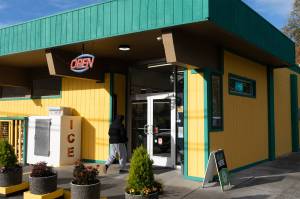
We couldn’t write about green businesses in Snohomish County without talking about Zippy’s Java Lounge in Everett and owner Marilyn Rosenberg.
Rosenberg opened the friendly downtown coffee shop three years ago, financed with a $70,000 line of credit on her house. For the first six months, she focused on getting the business established.
During that time, she shared ideas for improving the business with her customers — who suggested some ideas of their own. One encouraged her to create a compost bin for food scraps through a program offered through Snohomish County’s Solid Waste Management department.
“I now have 2,000 worms in my compost bin,” Rosenberg said. “It doesn’t smell, and every month it produces 22 pounds of worm castings.”
She uses the rich fertilizer for her garden. The bin, plus aggressive recycling of everything from bottles to plastic bags, has cut the garbage down. For that, she’s received recognition as a green business from the Washington State Department of Ecology and Snohomish County Public Works.
“I used to fill a 65-gallon can every two days,” she said. “My business has increased, and I’ve gone down a size in a garbage can.”
She posts information about the worm bin and recycling at the coffee shop for customers and talks with visitors, such as a group from the YMCA, about the importance of taking care of the environment.
She’s also a founding member of Green Everett, a group that focuses on environmental sustainability issues that meets every third Sunday from 4 to 6 p.m. at Zippy’s. The group has inspired her to keep looking for ways to reduce her impact on the environment. For more information, visit www.GreenEverett.wikispaces.com.
“The most important thing is I feel like I’m doing better for the health of our planet,” she said. “It’s just part of my life.”
That even extends to picking up business supplies. She’ll ride her bike with a basket to purchase groceries. Customers have noticed and are supportive.
“I think some customers make an extra trip here because of that,” Rosenberg said.
ServiceMaster Super Cleaning
ServiceMaster Superb Cleaning, a janitorial service company in Marysville, is starting to offer a green cleaning program as part of its services. The program includes more than safe, green cleaning products — it also involves green cleaning practices and processes.
Co-owner Glenda Smith says she hopes all of her customers will adopt the company’s green cleaning program over the next three to five years.
“This is the right thing to do for our company and for our customers. Becoming a green business is one of our core values,” Smith said.
“In addition, I’ve always been concerned about sending our employees out with toxic cleaning products. My employees are really excited about this new program,” she said.
“Now we have green cleaning products and a green cleaning process that is better for the environment and better for our customers.”
Glenda said that there is an extra cost (about 10 percent) for the green cleaning program, but she is starting to see more and more new and existing customers inquire about it.
Greening Properties Inc.
Greening Properties, a real estate brokerage company in Everett, is committed to sustainable development. One of its guiding principles is “the use of green building practices including low-impact development, use of sustainable materials, creation and retention of healthy communities and respect for the past through historic preservation.”
Co-owner Valerie Steel is also a member of the Sustainable Development Task Force for Snohomish County. As the result of her work on the task force and other sustainable organizations in the area, she created Greening Properties two years ago. She is not aware of any other real estate brokerage company that focuses on sustainable housing development.
She is worried about the planet and says that communities need to do better job with sustainable housing development. She noted that green homes are selling faster and for more money in today’s marketplace, but she is concerned that Snohomish County is lagging King County in terms of the number of new green housing projects.
She will be hosting continuing education classes at her office in Everett starting this fall to help better inform other real estate agents about green housing practices.
She recommends that small business owners get an energy evaluation from the PUD, send e-mail, instead of the paper postcards or fliers, offer alternative transportation options for their employees, subscribe to Sustainable Industries Magazine, www.sustainableindustries.com, and attend the Greening Snohomish County Conference on Oct. 3-4, sustainablesnohomishcounty.net/Greening_Snohomish_Co.html at the Snohomish County PUD.
Get Started
Our advice for small business owners interested in sustainability issues is to follow the examples of these three businesses. All spent time educating themselves about options for their companies, and selecting what worked best for them.
They communicate with their customers why they’re making the choices they do, knowing that’s another way to set their businesses apart from the competition. And they’re committed to continue learning and sharing information.
Pat Sisneros is the associate vice president of administration at Everett Community College. Lynne Munoz is the interim dean of EcCC’s Business and Applied Technology Division.