Inslee downplays fears Boeing will send second 787 line elsewhere
Published 10:34 pm Friday, July 3, 2009
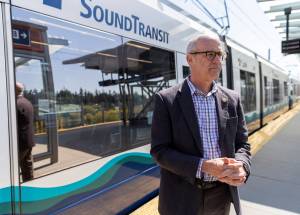
EVERETT — Don’t go running for the exits from the state’s aerospace industry just yet, says one Washington congressman.
With rumors flying faster than Boeing Co. jets, Rep. Jay Inslee, D-Wash., took time out to try to calm fears that the aerospace company is as good as gone.
Despite recent reports that Boeing plans to buy out 787 supplier Vought Aircraft Industries in South Carolina, Inslee doesn’t see the move as a definitive indicator that Boeing will set up a second production line for its delayed Dreamliner there.
“I don’t think this necessarily means bad news for us,” Inslee said.
Boeing executives have told Inslee that they’ll do a full analysis of potential sites for a second 787 production line before making a choice.
Still “it’s clear that we’re in a competition,” he said.
Boeing refuses to comment about reports in the Wall Street Journal and on Flight Blogger that say the company soon will announce its purchase of Vought’s 787 operations in North Charleston, S.C. The company denies that it has picked a location for a second production site.
“We’ve made no decision about a second 787 line,” Yvonne Leach, a Boeing spokeswoman, said Wednesday.
If Boeing buys Vought, the company could smooth out problems in its troubled global 787 supply chain. Vought’s chief executive once described the company as one of the “riskiest” in Boeing’s chain. Boeing already has bought out Vought’s shares of Global Aeronautica, a joint venture with Italy’s Alenia for the 787.
Analysts such as Scott Hamilton of Issaquah-based Leeham Co. have suggested that Boeing likely will locate a second 787 production line outside the Puget Sound region. In March, Washington lawmakers called for a competitiveness study that compares the state’s business climate to that of possible rivals for aerospace. South Carolina made the list.
From his discussions with Boeing, Inslee suggests the battle for the second line comes down to one key issue: labor groups.
“Management has made it clear that they’re concerned about their relationships with the unions, especially when it pertains to work stoppages,” Inslee said.
Last fall, Boeing’s Machinists union went on strike for 57 days. Although many industry observers say the company and its union share blame for the work stoppage, Boeing customers, such as Virgin Atlantic’s Richard Branson, don’t care.
“It really does make us think, ‘Do we want to take a risk with Boeing in the future?’ ” Branson said, during a delivery ceremony in February.
Democrat Inslee is quick to point out that the Machinists aren’t to blame for Boeing’s troubles on its 787. The company’s outsourcing strategy is the culprit, he said.
In previous interview, Machinists’ president Tom Wroblewski said the union wants to put the strike in the past and forge a better relationship with the company.
“We’re doing everything we can to make this first line successful to show this is where they should put the second line,” Wroblewski said.
Politicians including Inslee have been running interference between Boeing and the unions to try to patch up the relationship and keep Washington in the mix for not only the second 787 line but also future jet production.
“All of us in the Puget Sound region — not just Boeing and its workers — have an interest in this,” Inslee said.