Tulalip Tribes honors missing and murdered Indigenous people
Published 5:00 pm Wednesday, May 6, 2026
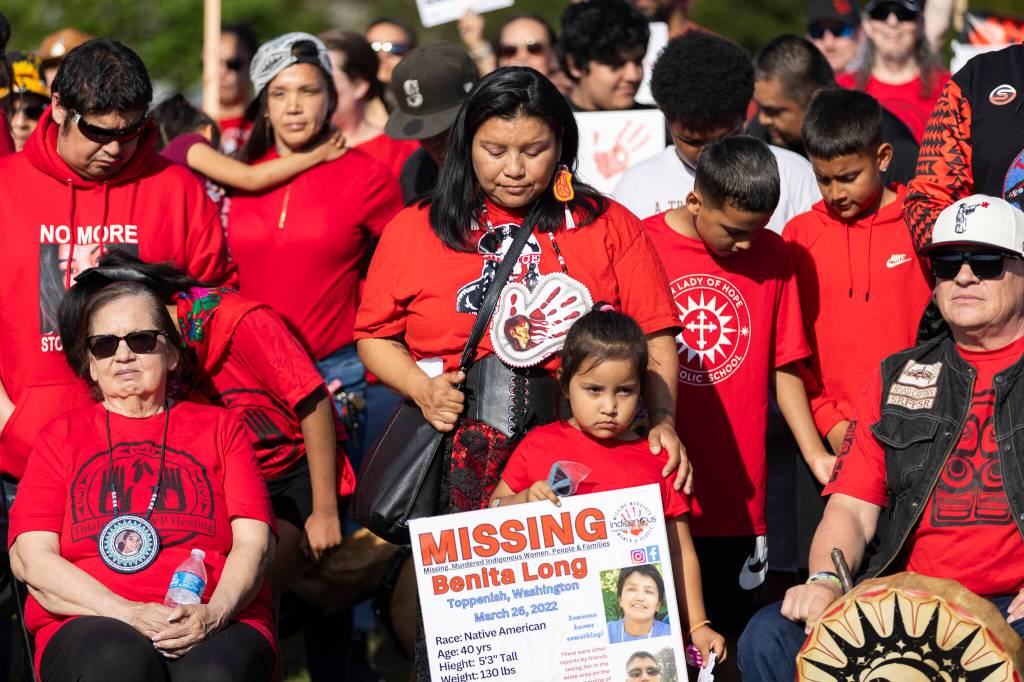
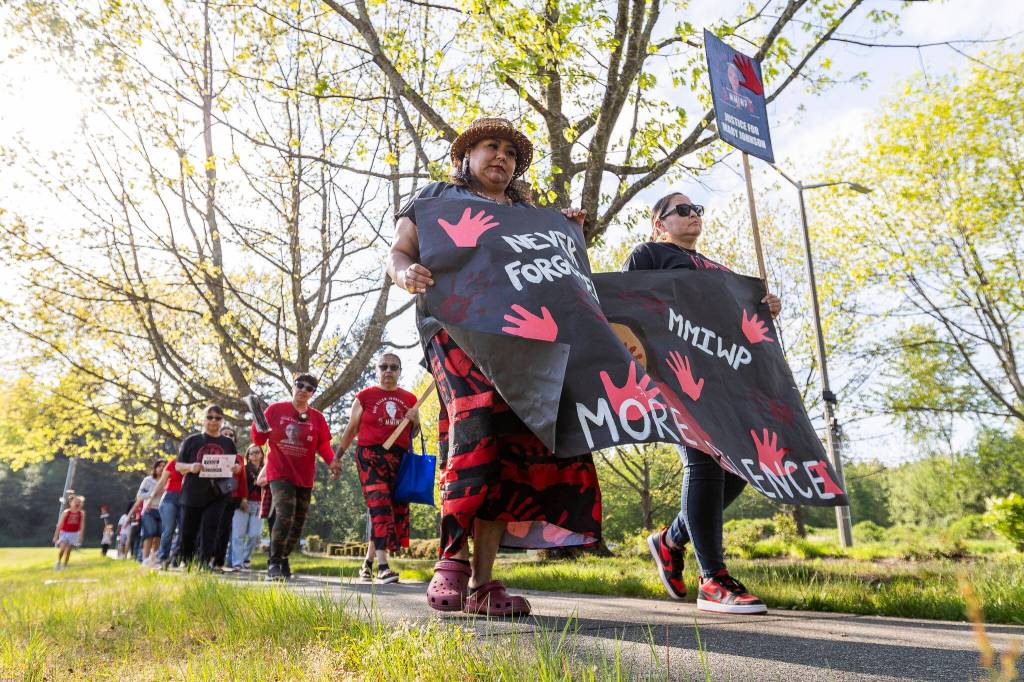
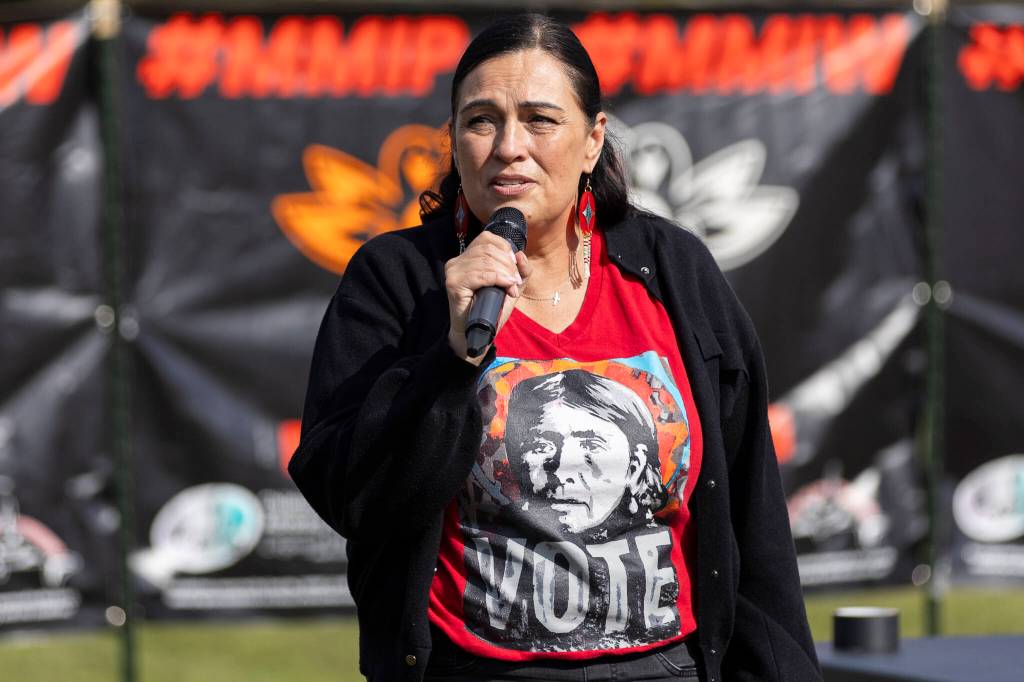
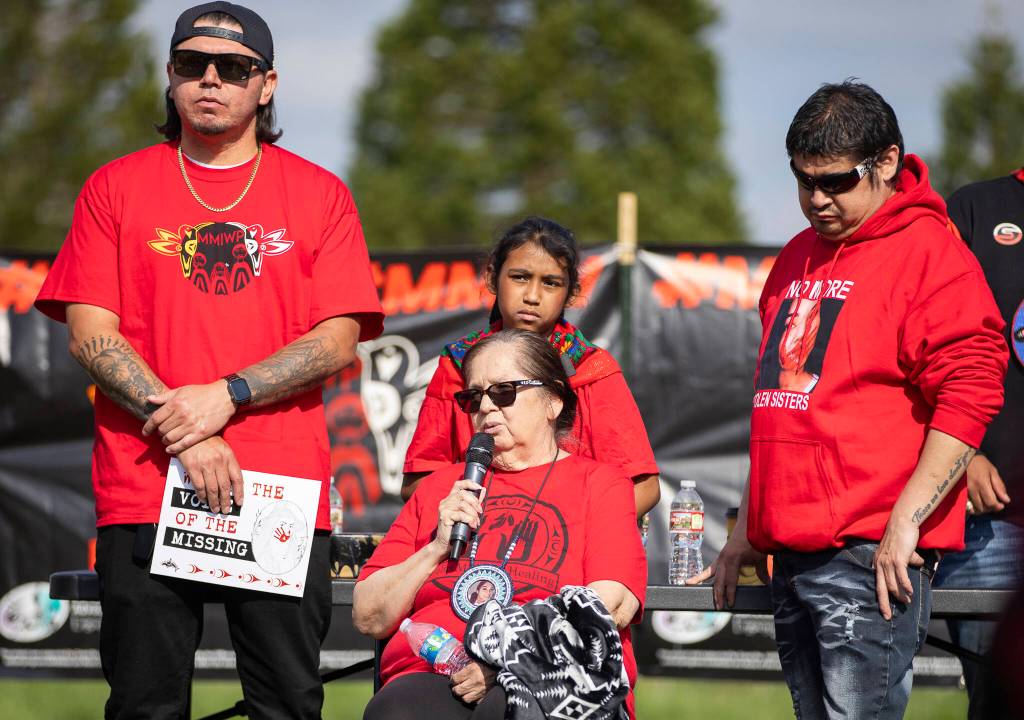
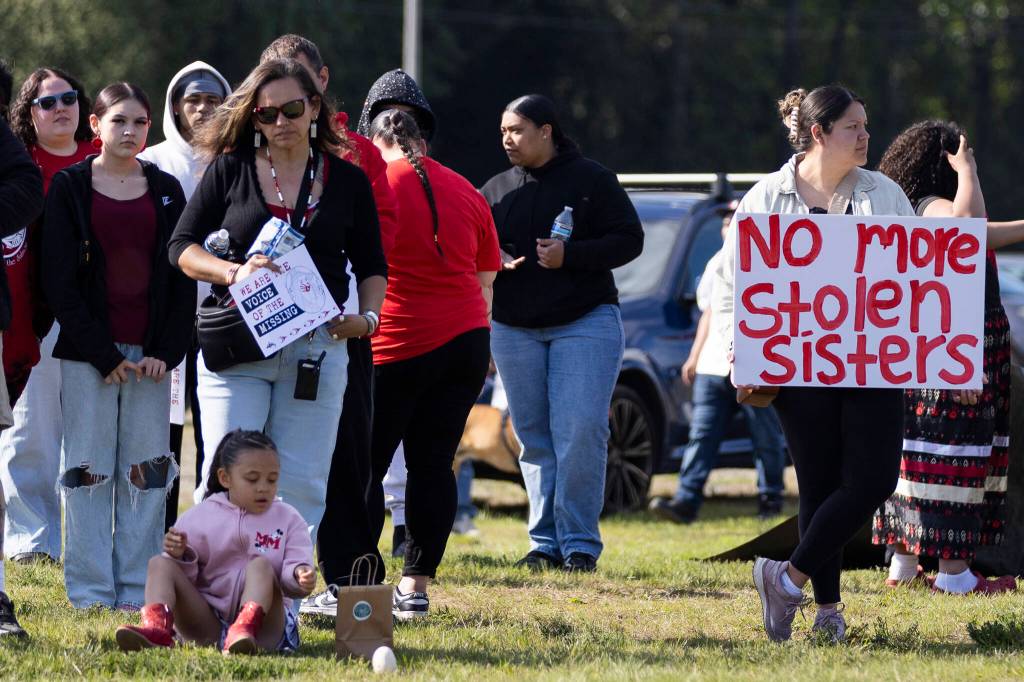
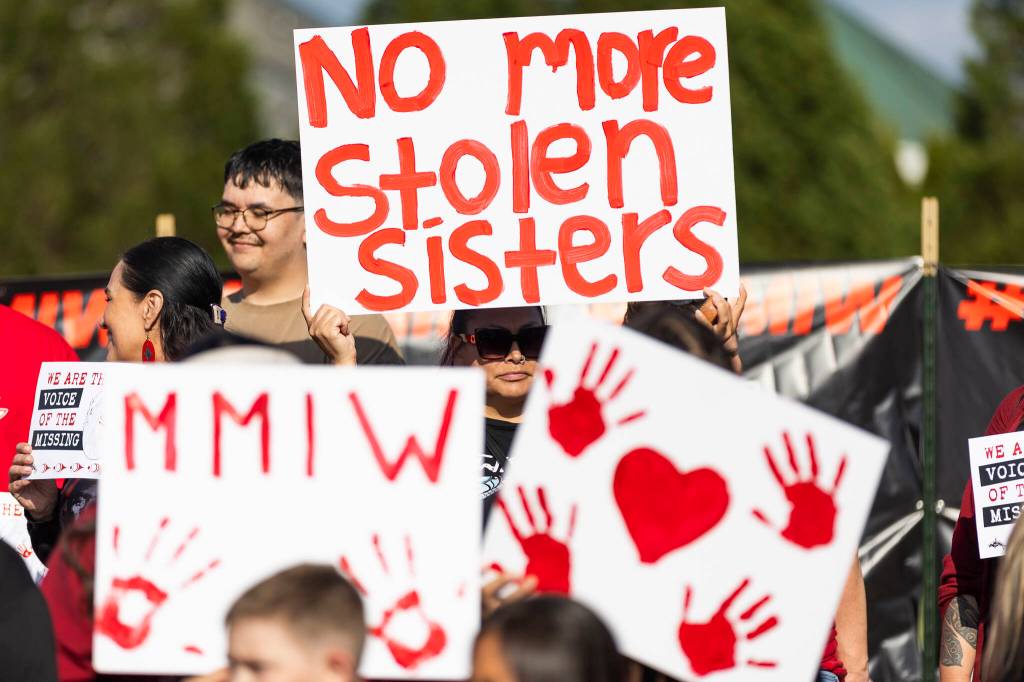
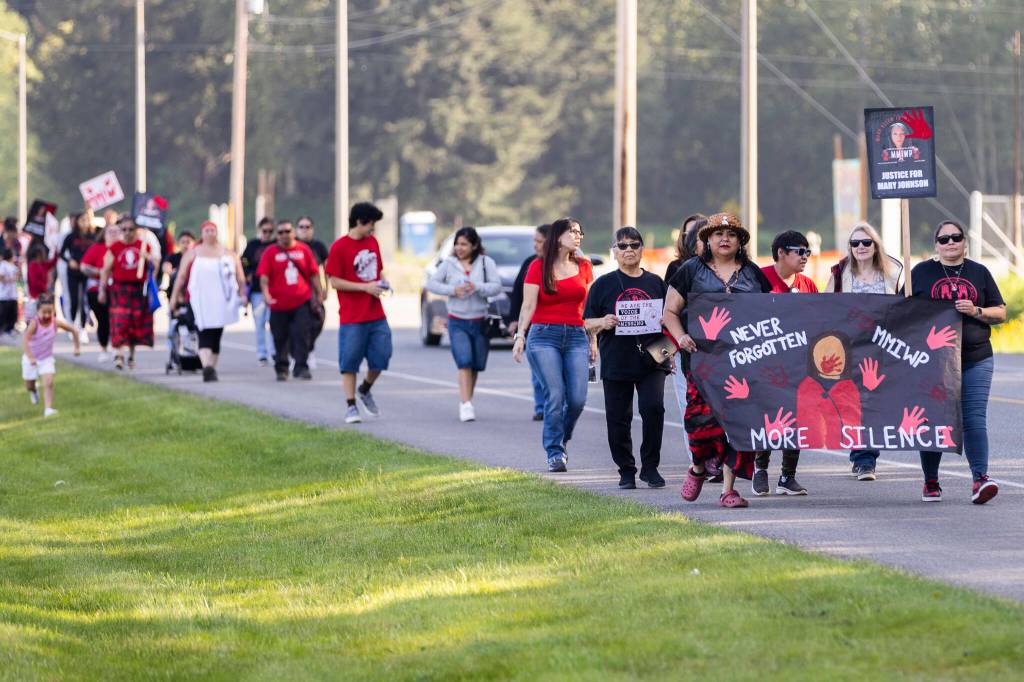


TULALIP —Members of the Tulalip Tribes gathered and marched Tuesday to bring awareness to the number of Native Americans affected by violence, homicide and human trafficking.
Over 100 people came together for Missing and Murdered Indigenous Persons Awareness Day, which has been recognized on May 5 since 2017. First established to bring awareness to violence against Indigenous women and girls, the day now includes Indigenous men and boys.
On Tuesday, family members, friends and tribal members honored those whose lives were lost and who are still missing.
“Today, we’re coming together to give recognition, to send awareness, to send strength, to send prayers, the best way that we can for our family, for our friends,” rally emcee Josh Fryberg said during the event. “We send our continued prayers to all of our family, all of our friends, all of our loved ones.”
Marilyn Flores spoke about her daughter, Jolene Flores, who was a victim of domestic violence and died in 2024.
“I think she was trying to leave her house when it happened, when her life ended,” Marilyn Flores said. “I just wanted everybody to be aware and see the signs that I didn’t.”
“You just never know when is going to be the last day or the last time you see one of your kids or one of your loved ones,” she added.
Veronica Jimicum marched in honor of her cousin, Mary Johnson-Davis, who went missing in 2020. Her body was found in October 2025.
“I cried all day,” Jimicum said about the day her cousin’s body was found. Marching on Tuesday was “very emotional” again, she said.
Loni Long’s sister, Benita Long, went missing in 2022 in Yakima and has yet to be found.
“I felt hopeless this morning, like I should be doing more to find my sister,” Loni Long said during the march. “I feel better now, going to the MMIW event and singing some songs and saying some prayers, lighting some sage — walking, singing. I feel a little bit of hope again.”
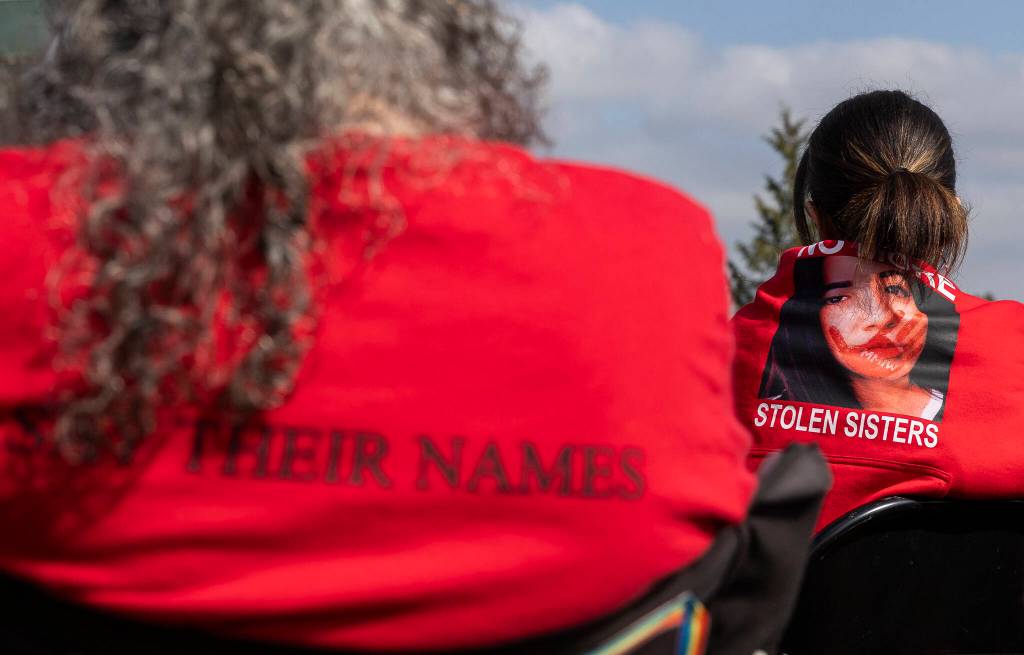
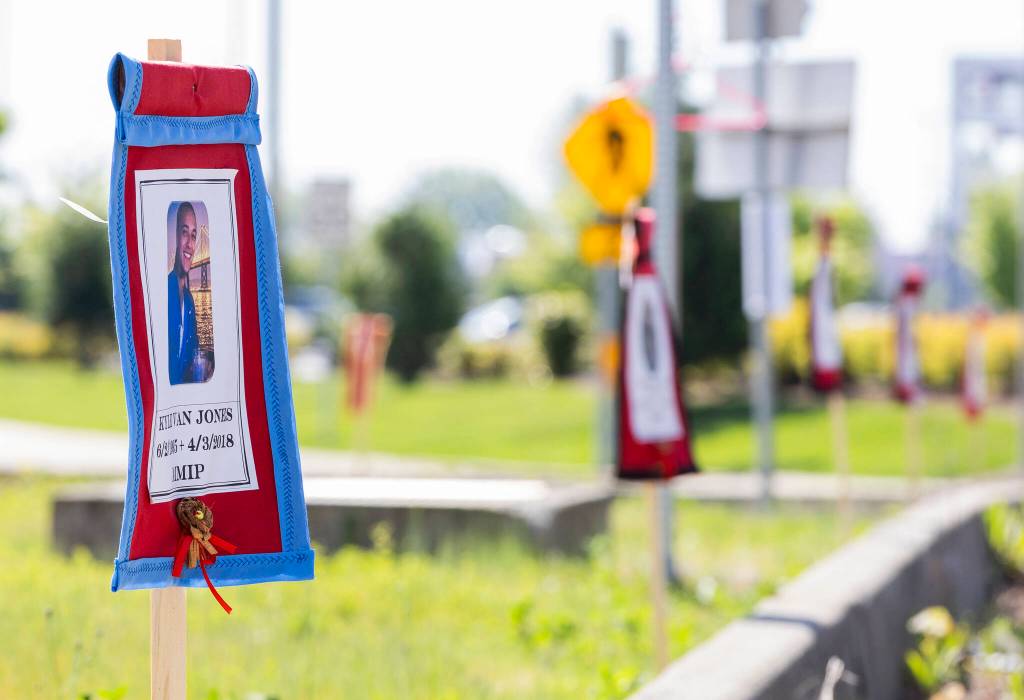
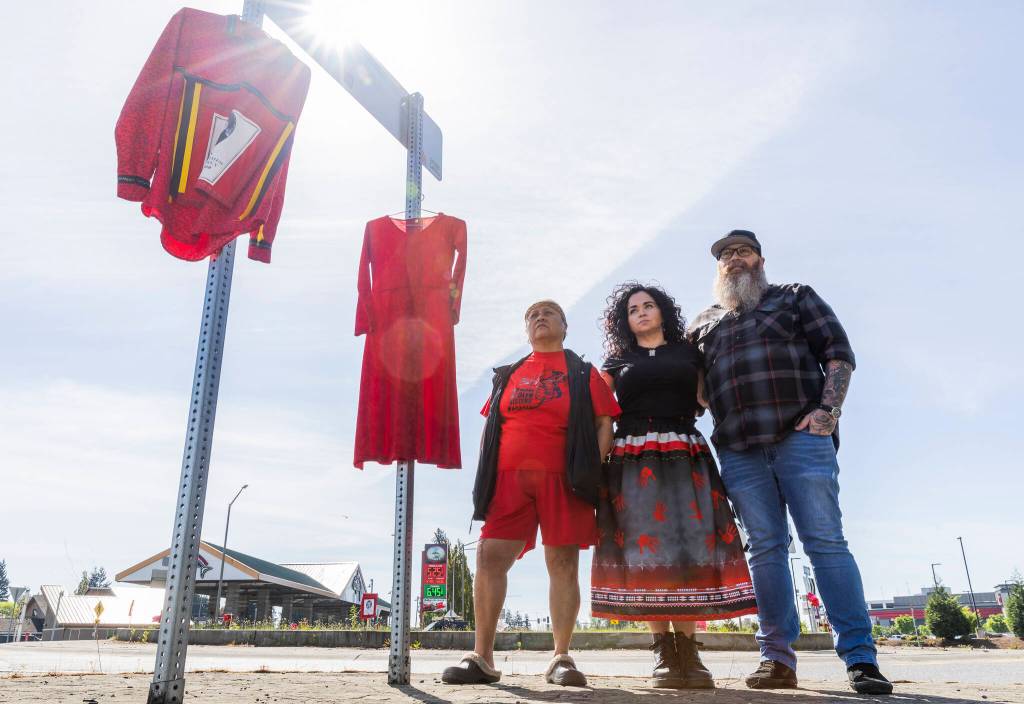
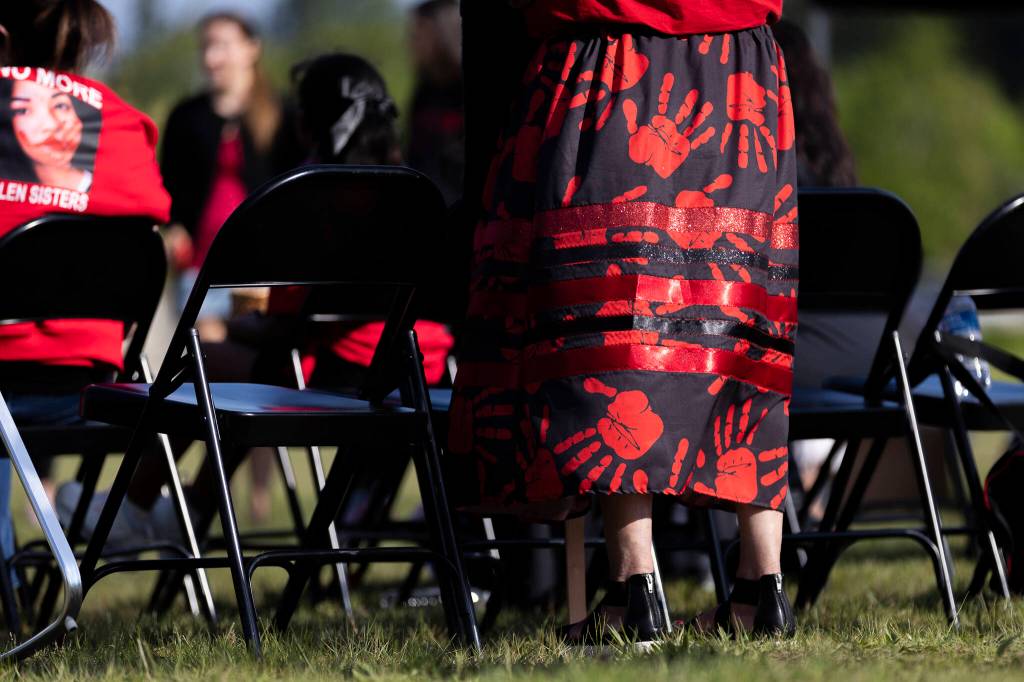
Throughout the Tulalip Reservation, red dresses and shirts can be seen on display in honor of missing and murdered Indigenous people, as part of a grassroots effort started by Skaweets Sarah Hart in 2021.
The red garments hang empty, some with images of the Tulalip community members who could have worn them.
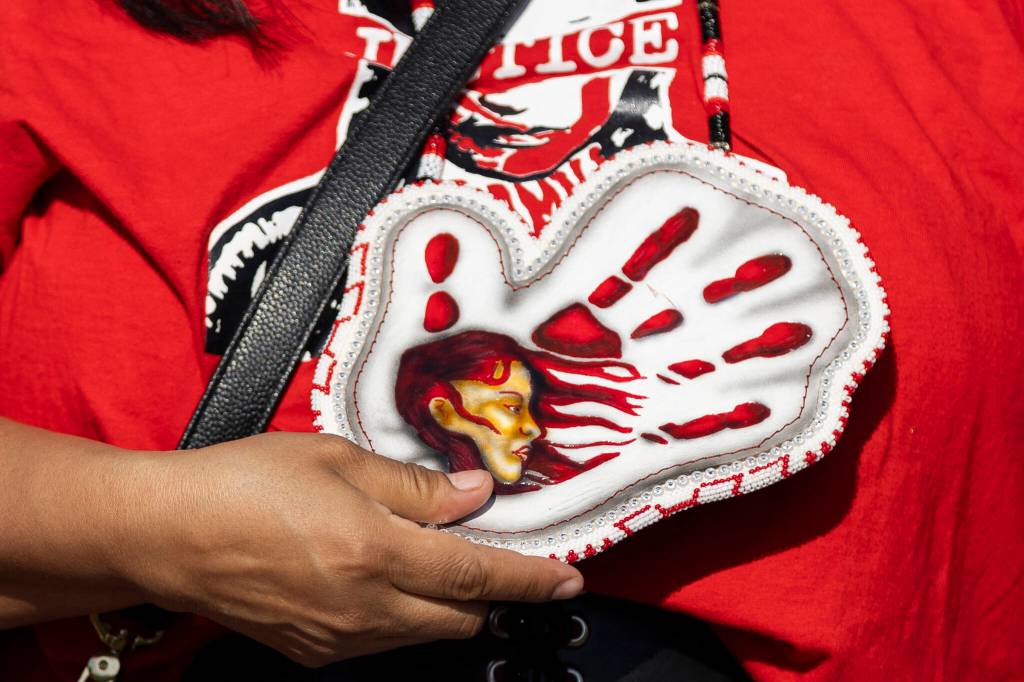
“Red generally represents the lifeblood of the Earth,” Hart said in an interview Friday. “It represents the bloodlines and the families. It represents the Earth itself. It’s the tie between Indigenous peoples and everything around them.”
Red also represents Native Americans, said tribal member and activist Monie Ordonia, who helped with the display.
“It’s all-encompassing in terms of Indigenous people, because it includes all tribes all over the country,” she said Friday.
The clothing display resulted from a desire to spread awareness, Hart said.
“We’ve all been through so much in our communities, and we’ve all been affected,” she said. “We all know somebody that’s missing, has been killed, has been beat or raped — or we have ourselves.”
Hart’s cousin, Cecil Lacy Jr., was killed by police in 2014, she said.
When the time came for a second display in 2022, Hart reached out for help. Ordonia stepped up, and now they work together each year.
“To have that display up for not only our own tribal people, but for non-tribal people,” Ordonia said, “is really significant.”
Awareness and prevention go hand-in-hand, she said.
“Prevention is really huge,” Ordonia said. “We grew up to run freely and to just be carefree, and the society that we live in today doesn’t allow that to be like when we were kids.”
This year, Hart’s husband, Anthony Hart, worked to create and display signs showing the pictures of missing and murdered individuals.
“I think that it brings more to it when people can see the faces,” Sarah Hart said.
“It’s a mix of honor to help bring a voice to those people and their families,” Anthony Hart added. “It’s also a portion of worry, because to put in perspective, Sarah and I have six kids. There’s three boys, three girls, and statistically wise, five of them will be in violent relationships.”
Native American and Alaska Native people experience higher rates of violent crime than any other racial group, according to the U.S. Centers for Disease Control and Prevention.
A 2016 study found that 84% of Indigenous women experience violence in their lifetime, including 56% who experienced sexual violence. The same study found 81% of Indigenous men experience violence as well.
Indigenous women are almost three times more likely to be murdered than non-Indigenous women nationally.
“There’s about 110 active MMIWP unsolved homicides,” said Steve Brenneman, chief investigator for the state’s MMIWP Cold Case Unit, during Tuesday’s rally. “There’s also about 115 current MMIP missing persons. Last year, we were able to solve 28 missing persons cases.”
The MMIWP Cold Case Unit was established in 2024 through the state Attorney General.
“All of us have a passion for this. We’re all former homicide investigators and we do it because we care,” Brenneman said.
Missing and Murdered Indigenous Persons Awareness Day is not just about honoring those who were recently lost, Ordonia said Friday.
“Our ancestors have gone missing and murdered since time immemorial. Since colonization has taken over this land,” she said. “This has been something that we, our people, have dealt with since the beginning of America.”
Resources
If you have any information about a missing or murdered Indigenous person, you can email the MMIWP Cold Case Unit at crjmmiwp@atg.wa.gov, or call 844-770-7900.
For those seeking support, the Legacy of Healing Advocacy Center, at 7720 Waterworks Road in Tulalip, can help with mental health support, legal assistance, trauma recovery, safety planning and emergency financial assistance. For help, email loh@tulaliptribes-nsn.gov or call 360-719-4100.
Taylor Scott Richmond: 425-339-3046; taylor.richmond@heraldnet.com; X: @BTayOkay