Aging school infrastructure impacts Snohomish County students, districts say
Published 1:30 am Tuesday, May 12, 2026

EVERETT — Water began bubbling up from the floor at Explorer Middle School.
It was April 15 when staff at the Mukilteo School District first got word of the issue, hired a contractor to find the leak and put a stop to the water coming up out of the ground.
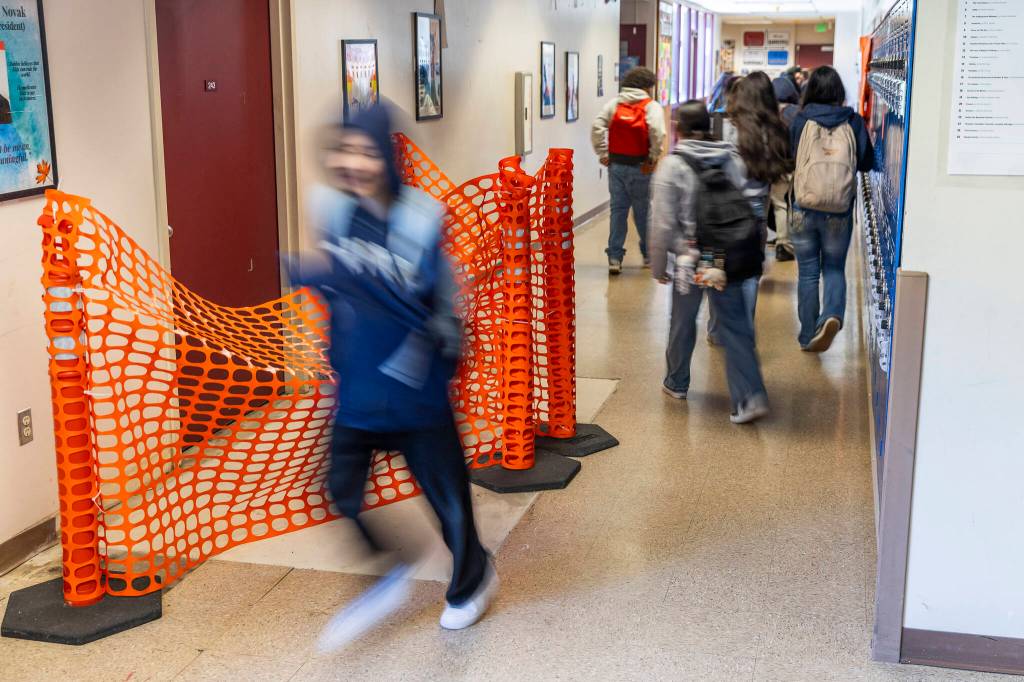
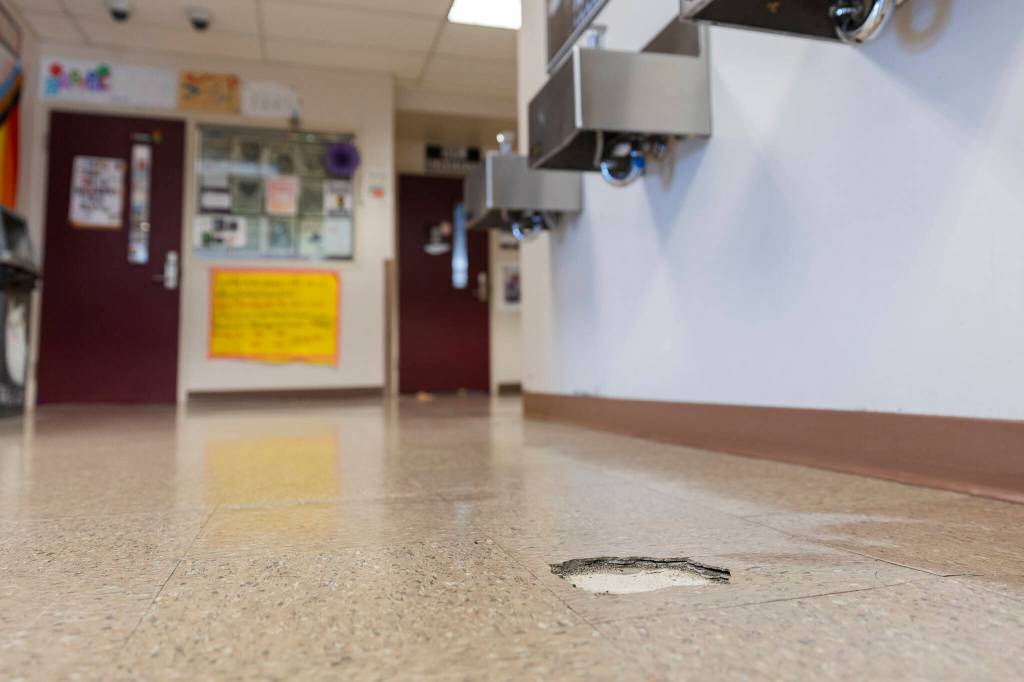
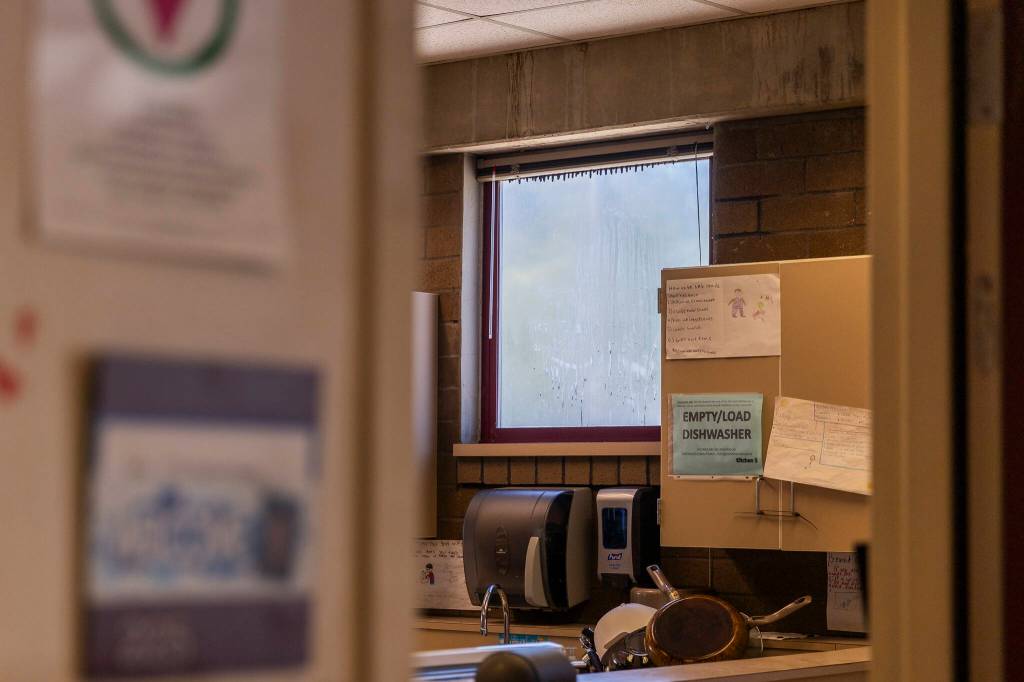
Eventually, workers were able to determine the source of the leak and run new pipes to prevent future issues. But it required digging a 3-by-5-foot trench in the middle of a school hallway. The work forced the shutoff of water fountains and sinks across the building. For weeks, clubs across the school were canceled and the home ec classes were unable to teach their cooking curriculum.
District staff say that the leak — and impacts of the needed work to fix it — is an example of the difficulties that come with aging school infrastructure in need of repair or replacement.
Explorer Middle School was built in 1972, originally for children in kindergarten through eighth grade, before being converted into a middle school.
The building’s age made repairs more difficult and time-consuming. The pipes were located directly under the school hallway while newer buildings would have improved access when repairs are needed.
“When there’s an issue with that infrastructure, we have no choice,” said Shelly Henderson, the Mukilteo School District’s director of capital projects. “The only way to access it is by tearing out the floor of the school.”
Henderson said the repairs to fix the pipe cost about $100,000 — not an insignificant ask for a district that recently approved plans to cut about 41 teaching and administrative positions for the 2026-27 school year, largely due to declining enrollment.
Even still, the school was relatively lucky. The trench that workers dug to fix the leak was located next to the utility room, a vital space to the building’s operation. If underground work was needed in that room, the cost of the repairs “could have been in the millions,” Henderson said.
“I would have had to shut down school,” she added. “Because I wouldn’t have water and be able to meet the needs of having students in a safe and healthy building.”
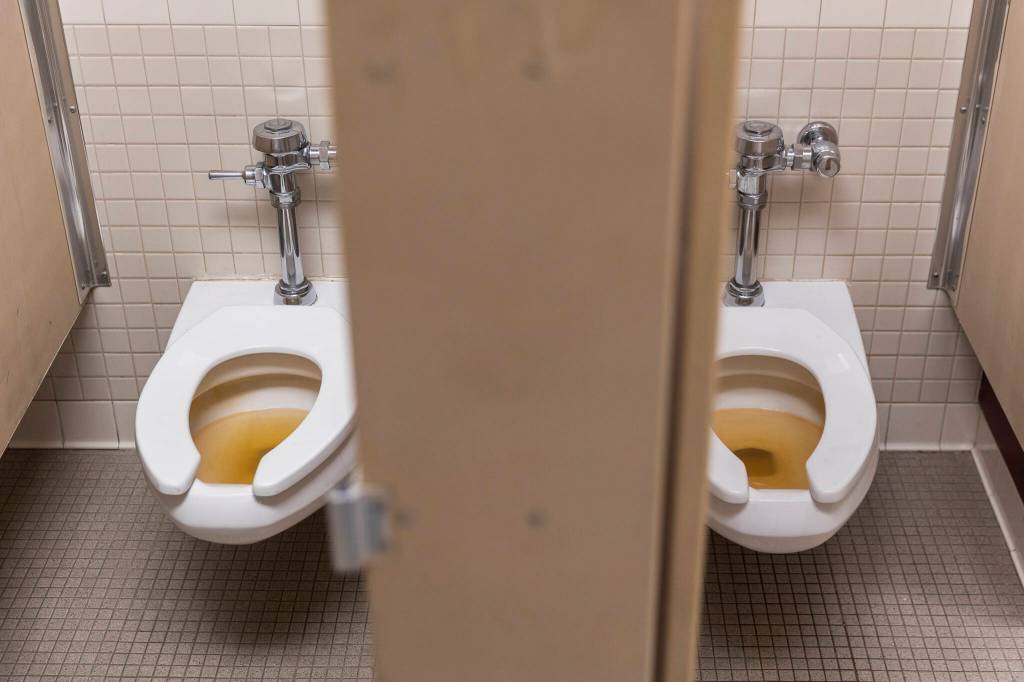
Because of the degrading pipes, water across the building is also discolored with a yellowish, rusty hue. It’s been repeatedly tested and is safe to use, officials said, but the color remains off-putting.
“You can tell somebody the water is safe, you can give them the test results, but if it’s not 100% clear, you and I aren’t going to want to fill a water bottle with it,” Henderson said.
Now over 50 years old, the district had planned to replace Explorer Middle School as part of a $400 million bond measure, which would have also paid for replacements and expansions of other schools across the district, along with safety improvements and technology investments.
“This school really hasn’t had any significant work to upgrade it,” Henderson said of Explorer Middle School. “Partly because it’s difficult because of the way it was originally built, the layout.”
In a February special election, the bond was narrowly shot down with about 57% of voters in favor of the measure. Bond measures in Washington require a supermajority of 60% to pass, a relatively strict requirement compared to most states across the country. Lawmakers in Washington have introduced bills to reduce the threshold needed to approve school bonds, but none have passed.
A Monroe School District construction bond for about $152 million was also rejected with a 48.9% approval rating. The money would have paid for major maintenance on 10 schools and facilities, including the replacement of an alternative learning school originally built in 1954.
When the alternative school, Sky Valley Education Center, was constructed, materials with polychlorinated biphenyls — or PCBs — were used, including fluorescent light ballasts, caulk and sealants.
PCBs are highly toxic and cancer-causing chemicals of which production was banned in the U.S. in 1979. While the Sky Valley Education Center is in use, the district continues to work with the Environmental Protection Agency and Snohomish Health District to monitor environmental health conditions.
Much of the material has been removed, but caulk remains around window units, doors, wall penetrations, adjacent support columns and window infill systems. All have been coated with epoxy, a soft resin that hardens to stop the chemicals from spreading.
Also, most of Sky Valley’s systems and structures are outdated, according to Adam Denney, director of facilities for the district.
“The plumbing’s shot — the sewer system’s like rotting out,” Denney said during a March 26 School Board meeting. “The wiring’s obsolete, single-pane windows, the roof’s nearing the end of its life, the HVAC equipment’s all obsolete — it takes us weeks to get parts.”
Around $65 million of bond funding would have paid for the modernization and expansion of the city’s Wagner Center, including a two-story addition, to replace Sky Valley’s aging infrastructure.
Other bond measures in the Northshore and Everett school districts were approved by voters in February.
Making the necessary repairs to maintain Explorer Middle School through 2029 — including a roof replacement — would cost about $44 million, according to Henderson. To extend the building’s lifespan to 2044, it would cost an additional $65 million, she said. The estimated cost to replace it entirely would be about $135 million.
“There’s a point where you consider the cost to maintain and put in new systems, but you also want to factor in the functionality and safety of a building,” Henderson said. “This was built as a K-8 school. Giving us the ability to rebuild the school would help us give better spaces for CTE programs and science classrooms, it would get things placed where they should be within a school, it would give us one safe, connected building with a secure courtyard inside.”
Staff at the Mukilteo School District have recommended a second attempt at a bond measure on the November ballot, though the board hasn’t officially voted to place the bond back on the ballot yet. That decision may come forward this summer.
Since the Monroe bond failed, the district is considering a capital levy as an alternative.
A capital levy could last 2-6 years, depending on the school board’s decision, and raise about $35 million. The projected rate for a 4-year capital levy would be 69 cents per $1,000 of assessed value. For a home worth $750,000, that would be $43 per month.
Even with less money coming in, replacing the alternative learning center should remain a priority, School Board member Chuck Whitfield said during a regular meeting on March 23.
“We have to get students out of Sky Valley,” he said.
The Monroe School Board will continue to discuss a possible capital levy through June, including the total amount and what it would fund, spokesperson Erin Zacharda said in an email last week.
“Our Director of Facilities and Superintendent cannot comment on these things until the board has had more discussions, made decisions, and approved a resolution to place a measure on the ballot,” Zacharda said.
If approved by the Monroe School Board, voters would see a capital levy on either the August or November ballot. Unlike a bond, a levy needs a simple majority to pass.
Will Geschke: 425-339-3443; william.geschke@heraldnet.com; X: @willgeschke.
Taylor Scott Richmond: 425-339-3046; taylor.richmond@heraldnet.com; X: @BTayOkay