‘Dive in unafraid’: Edmonds College ROV team prepares for world competition
Published 1:30 am Friday, June 5, 2026
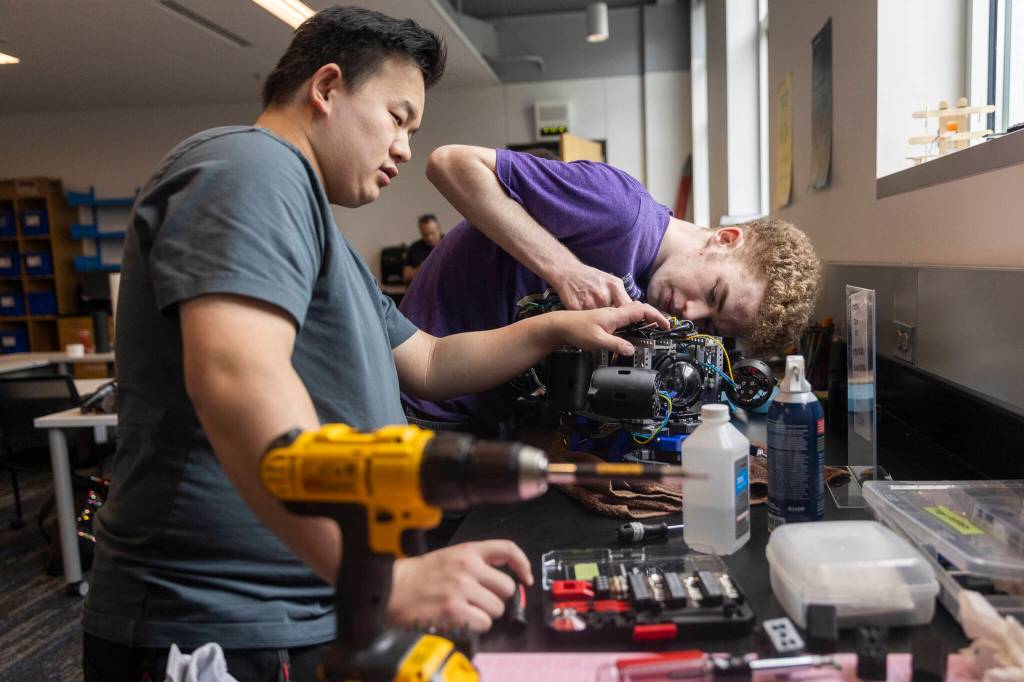
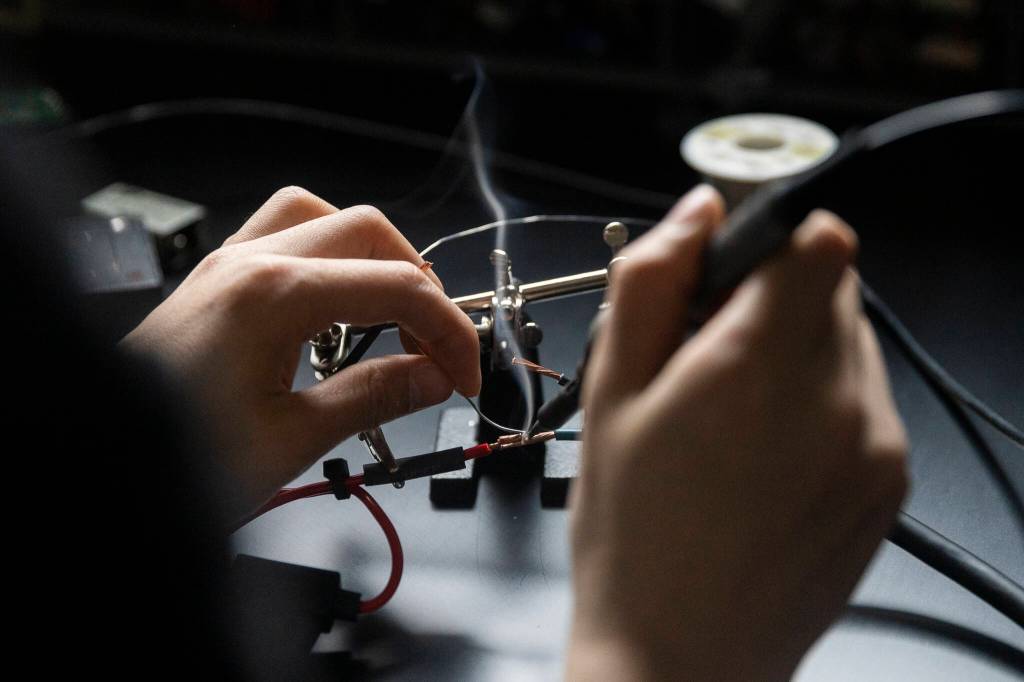
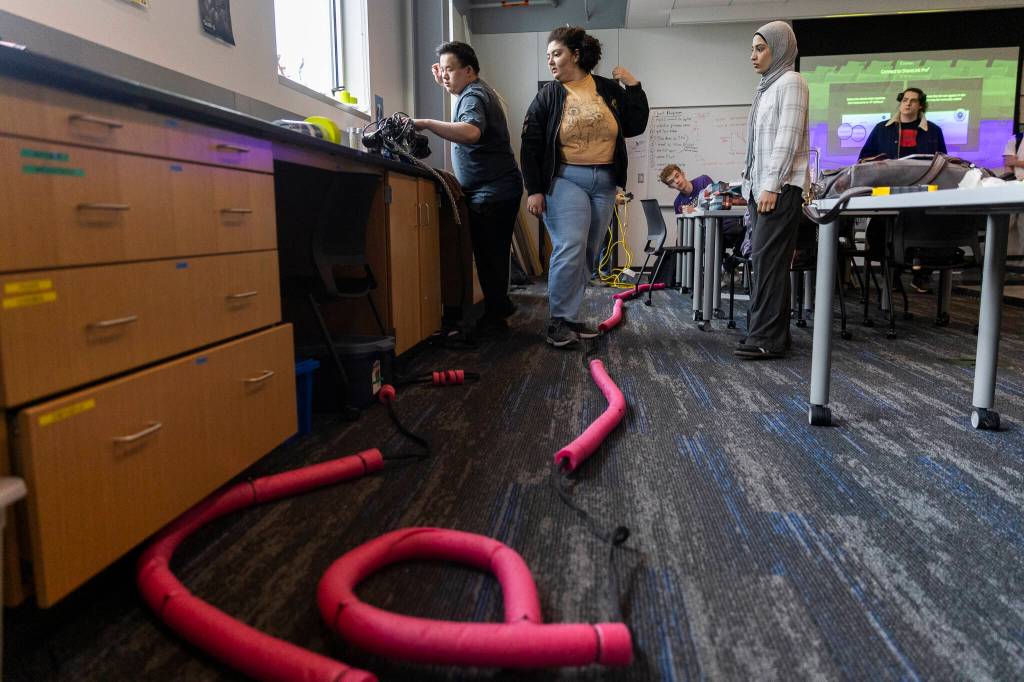
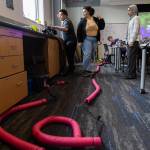
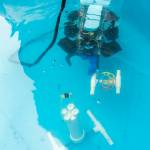
LYNNWOOD — A group of Edmonds College students has spent hundreds of hours in the lab this year diving into the world of underwater remote operated vehicles, or ROVs.
The Triton Tech ROV team is gearing up for the 2026 MATE ROV Competition World Championship in Newfoundland and Labrador later this month.
Seven students will travel to Memorial University to present their ROV, Razorbill, and guide it through a number of tasks.
“They are in this 110%,” said Rachel Brown, the team’s faculty advisor and head of the physics department at Edmonds College. “They are passionate about it, they’re excited about it and they have been willing to dive in unafraid.”
The competition requires the group to operate like a startup company, with chief executive, financial and operating officers. In addition to building the ROV, the team must submit budget and marketing proposals and convince the judges to “buy” their product. The team is mostly comprised of engineering and computer science students.
“They’ve been learning about fundraising, about marketing, about interacting with the media — not things that most engineering students are thinking about on a regular basis,” Brown said.
The team’s CEO, Sara Abdullah, is studying engineering and physics at Edmonds College. Abdullah joined the team last year to work on technical documentation after taking a technical writing course. She ended up learning a lot about electrical and mechanical engineering and enjoyed it so much that she became CEO this year. Her favorite part about being on the team is problem-solving and learning new things.
“If you don’t know something, you can always learn it,” Abdullah said. “It’s not… I was going to say it’s not rocket science, but it kind of is.”
In fact, engineering for the ocean can be more difficult than engineering for space, Brown said.
“A rover that gets put on Mars, it doesn’t matter if there’s no air for that robot,” she said. “For a robot that goes underwater, if the air disappears, it fails.”
ROVs are commonly used for deep-water projects like inspecting vessels, counting fish and mapping the bottom of a body of water, Brown said.
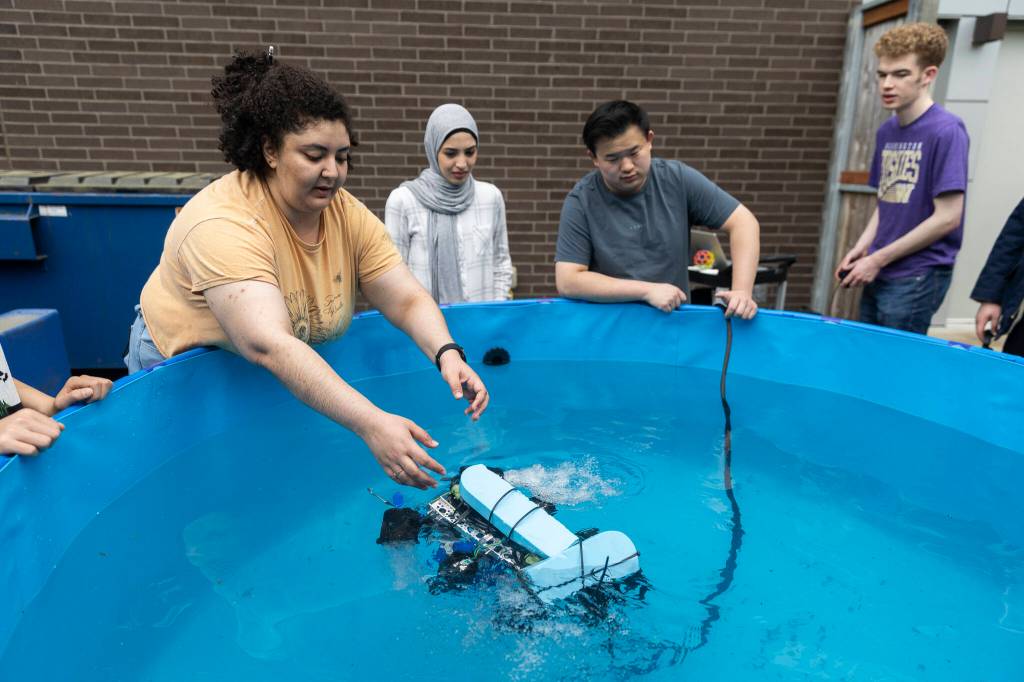
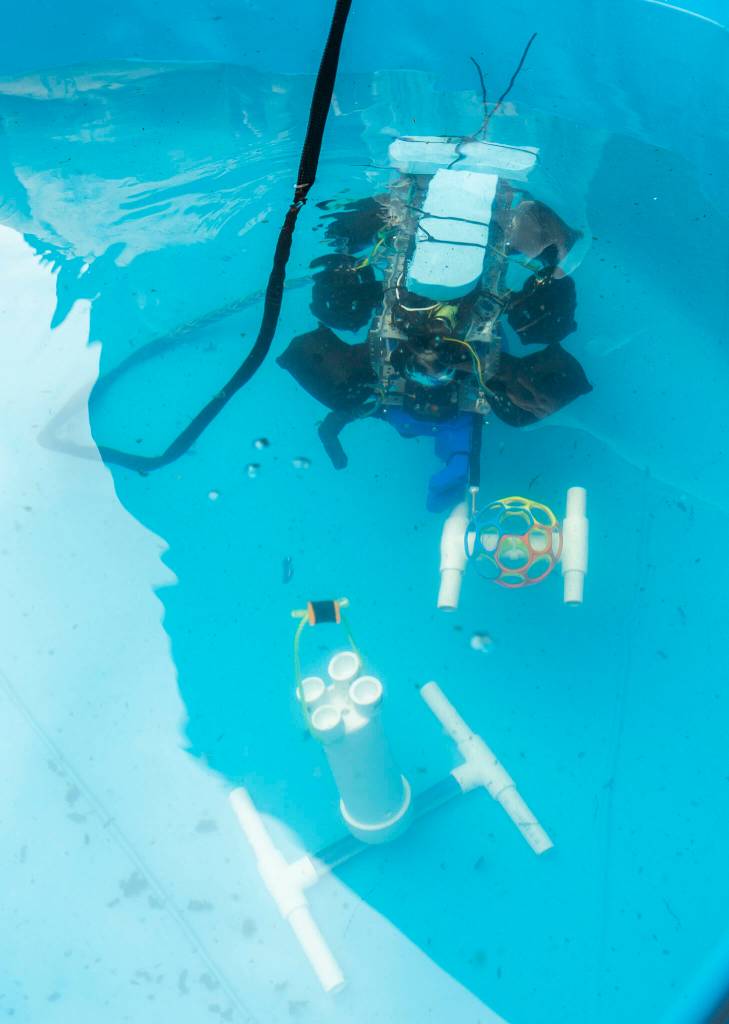
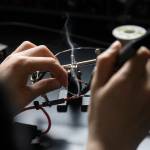
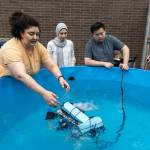
On Wednesday, the team took Razorbill for a test dive in a small pool outside of Hazel Miller Hall. The ROV consists of a special tube that acts as a water-tight enclosure for all of the electronics, thrusters on the sides to help the vehicle move around the water and a claw to pick up objects. It has a tether that connects it to a power source on the surface.
“It’s nice and modular, you can disconnect things,” Abdullah said. “It’s like Legos.”
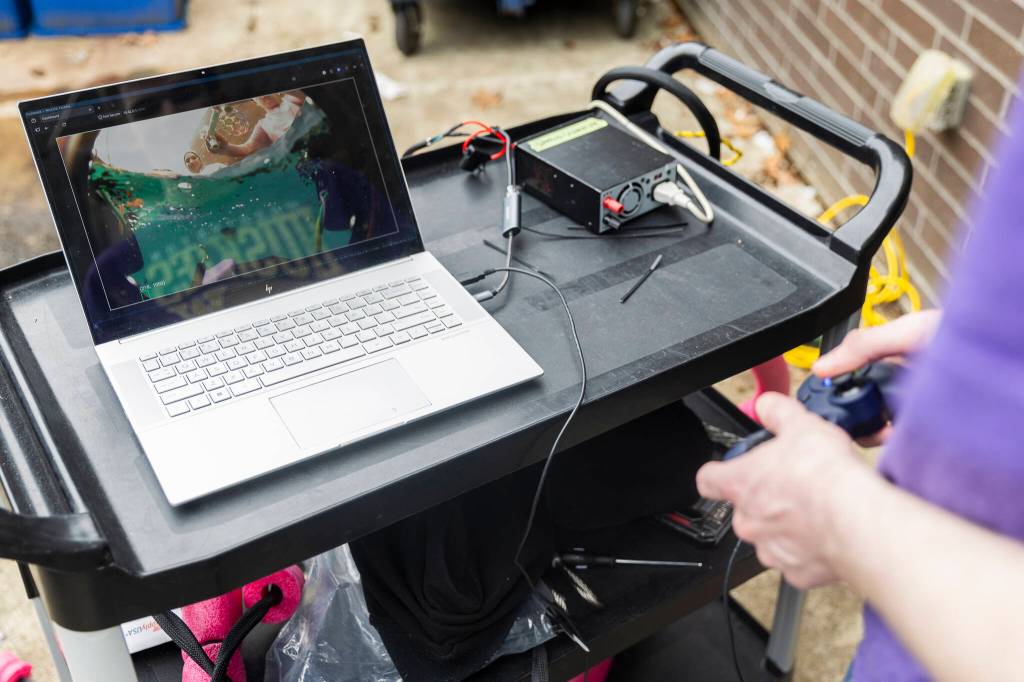
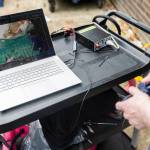
The team practiced tasks, including picking up and moving objects. Apollo Graves, a computer science student, used a camera on the ROV to control the vehicle through a computer screen. During the competition, he won’t be able to look at the pool while the ROV completes its tasks, simulating an ROV going into deep water for research.
Triton Tech ROV began three years ago, when Atlantis STEAM — a Clinton-based organization that has sponsored several K-12 underwater ROV teams — reached out to Edmonds College. The organizers of the national competition received a grant from the National Science Foundation to encourage two-year colleges to compete.
The first year, with limited time and a small budget, the team built an ROV out of PVC pipe and placed fifth in their category. Last year, the team placed ninth. This year, the team has been able to construct a more advanced vehicle.
“There’s a lot of things that they’re doing, I don’t even know what they’re doing,” Brown said. “I’m not even a resource for them to be able to learn it, so they are finding resources, talking to people, asking questions, watching YouTube videos, you name it, to figure out how to do it. And they’re figuring it out, and they are not afraid of trying and failing.”
This year’s competition will be different than in years past. Usually, the competitions take place in a swimming pool, but this year it’s in a research pool that simulates the qualities of northern oceans with currents and cold temperatures.
This year, Abdullah is the mechanical engineer for a vertical profiling float, another autonomous tool that collects depth and pressure. The competition for the float will take place in an ice tank, and the team loses points if the float hits ice when it ascends.
Shere Beshay, the team’s chief operating officer, first heard about the ROV team in one of Brown’s physics classes.
“I was like, underwater robotics does not sound like a thing that makes sense,” Beshay said. “You can’t put electronics underwater.”
This year, she was the one to create the ROV’s waterproofing system. She said she’s looking forward to seeing the ROV underwater at the competition.
The team has made real-world connections through the project, talking to researchers and visiting local marine technology companies, including Sea-Bird Scientific in Bellevue.
“There’s obviously many differences, but the biggest similarity was mindset,” Abdullah said. “These things come with so many challenges … problems are always going to come up, and the biggest thing you can have is you want to understand and acknowledge that you’re gonna face issues and persevere through that.”
The competition begins June 23. The team is continuing to fundraise to cover the costs of the ROV parts and travel to Newfoundland and Labrador.
“Everybody here is so passionate and creative and inspired,” Beshay said. “The amount of issues we’ll run into, and then people will come out of nowhere with this super creative, out-of-the-box solution. We don’t see a problem as a barrier, but as an opportunity … I’m just very proud of my team.”
Jenna Peterson: 425-339-3486; jenna.peterson@heraldnet.com; X: @jennarpetersonn.