Rebuilding business a big challenge in New Orleans
Published 9:00 pm Thursday, August 17, 2006
Somehow, a year after Hurricane Katrina devastated New Orleans, many small-business owners have been able to not just rebuild, but prosper.
“Business since then has been phenomenal. Anybody that was here was so desperate to shop,” said Mimi Bowen, who owns an upscale women’s clothing store.
Adam Vodanovich, who along with his brothers were the master franchisers for 11 Wing Zone fast-food stores, lost three of their locations. A year later, “we’re pretty lucky, not where we want to be, but we’re getting there,” he said.
Despite the devastation and chaos wrought by Hurricane Katrina, many small-business owners have returned to the city to rebuild their companies. They’ve had enormous challenges – finding new customers or making their businesses over to meet the changing demands of struggling customers and clients.
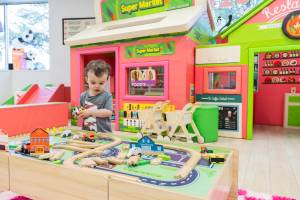
Connie Zbilich’s Children’s Orchard, a franchised resale shop, survived the storm well despite the fact that just two blocks away, other businesses were pummeled. But while the store had little physical damage, her business needed to be rebuilt – she had lost customers who moved away, and, as a resale merchant, was short of inventory because there were fewer people around to provide her with used children’s goods.
“We didn’t have enough summer clothing,” just as people who were returning home were in need of children’s wear, Zbilich said.
Zbilich said she was helped greatly by donations of clothing from other Children’s Orchard stores and from the company’s corporate offices. But she also had to start looking for customers and merchandise in other areas, such as Baton Rouge.
“I’m not sure we would have been able to survive” without such changes, Zbilich said. “I would say we’re maybe 80 percent back to where we were pre-storm.”
Recovering has been complicated by the fact that insurance reimbursements have taken so long to arrive.
Vodanovich said his business finally received insurance money about a month ago.
“It’s definitely been a struggle, trying to get the stores back open,” said Vodanovich, who said the wait for the insurance has been the hardest part.
Like Zbilich, Vodanovich said help from others – landlords and food suppliers, for example – has helped. “Everyone has banded together,” he said.
Still, business is quite different from the way it was a year ago. To get employees to staff the stores, Vodanovich and his family are paying much higher wages. And because food deliveries don’t always come on schedule, the stores must carry higher inventory levels than they did a year ago.
Even businesses that have done well have had some struggles. Bowen said the losses she suffered from her business were covered by business interruption insurance, but she had all her fall inventory in, and “you just don’t want to lose a whole season’s worth of sales.”
So Bowen, who had gone to Memphis, Tenn., rented retail space there. Employees and friends packed up her merchandise and took it to Memphis, and Bowen sold her clothes there from early October through late November. She reopened in New Orleans on Nov. 30, but noted that one reason why her store, MIMI, has done well is because competitors such as Saks Fifth Avenue have been unable to reopen.
Despite these owners’ successes, there are still thousands of business owners who haven’t been able to return and who may never go back. Those who are there are obviously in a very different New Orleans.
“We’ve gone from one of the world’s great cosmopolitan cities to a pioneer town,” said John Deveney, who returned to New Orleans soon after the storm so his public relations firm, Deveney Communication, could set up a media center for the city’s tourism and hospitality industry.
A year after Katrina, Deveney sees business owners who, even when successful, are under a great strain.
“The greatest obstacle here can be fatigue – managing fatigue in your employee, your clients, your own fatigue,” he said.
Zbilich said people outside of the city really don’t know how difficult life is in New Orleans. “People don’t understand we are really desperately in need of help here – emotional support, financial support,” she said.
And Bowen, who estimated the city is “functioning at about a third of the level that most American cities are functioning at,” said just daily living is hard.
“It’s depressing as hell,” she said.
Joyce Rosenberg writes about small business for the Associated Press.