Boeing’s stock was a trade-war bellwether — until this week
Published 1:30 am Wednesday, April 25, 2018


By Tory Newmyer / The Washington Post
Tuesday should have been a banner day for Boeing’s stock.
The White House announced that it is sending four top economic hands, led by Treasury Secretary Steven Mnuchin, to China next week in the hopes of negotiating a resolution to the escalating trade conflict that has rattled shares of the aerospace giant. And the administration named an acting head of the Export-Import Bank — the lending facility derided by conservative critics as the “Bank of Boeing” — that has been hobbled by vacancies since 2015.
But the company’s shares slid nearly 4 percent amid a broader bloodbath for industrial stocks. The Dow Jones industrial average tumbled for the fifth consecutive day, its longest losing streak in more than a year, falling 600 points at one point before recovering slightly to close down 1.7 percent.
It was a painful reminder that although investors have demonstrated they’re newly sensitized to political headlines, the stock market’s performance is still subject to broader forces.
The culprit appeared to be a comment from Caterpillar Chief Financial Officer Brad Halverson on the company’s otherwise positive earnings call that its first-quarter profit represented a “high-water mark” for the year because executives expect increased investment to eat into margins. The comment “spooked industrials as well as the overall market,” Scott Clemons, chief investment strategist at Brown Brothers Harriman, told The Washington Post’s Thomas Heath. “Today is just a ripple effect.”
Investor unease was arguably further stoked by a rising 10-year Treasury yield, which crossed 3 percent for the first time since 2014. A higher rate could eat into corporate profits by making it more expensive for companies to borrow money.
Carter Copeland, Melius Research’s lead aerospace and defense analyst, had an earthier take. “The market rolled over and puked all over itself,” he told me, “and Boeing got caught up in it.” He noted the stock mirrored the performance of the XLI, an industrial stock benchmark, to within a tenth of a percent. That suggests it got no lift from the trade news out of Washington.
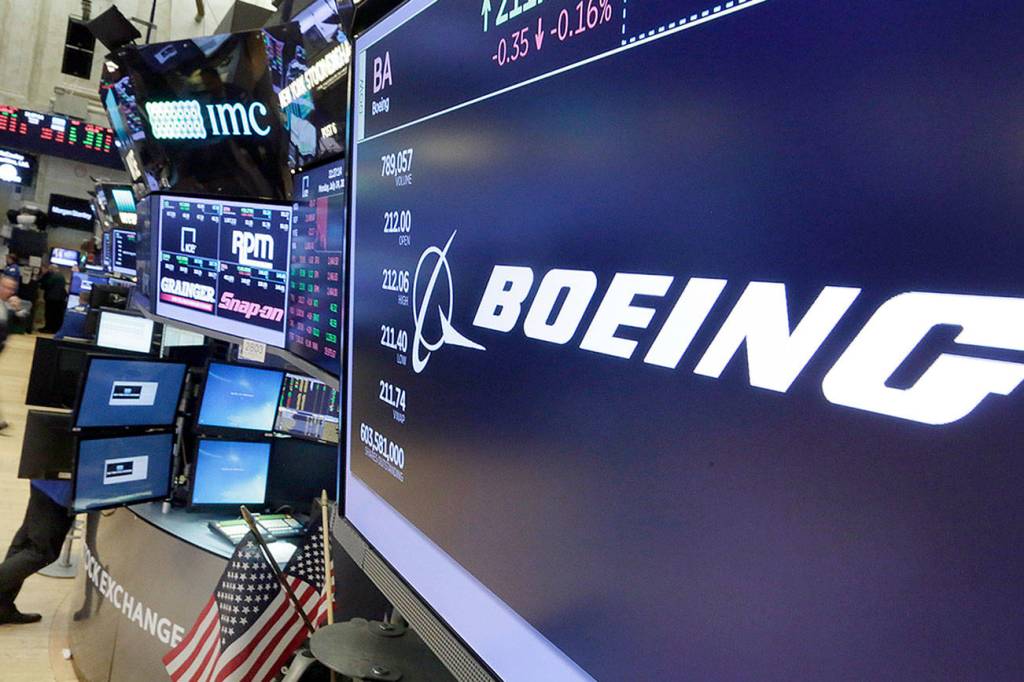
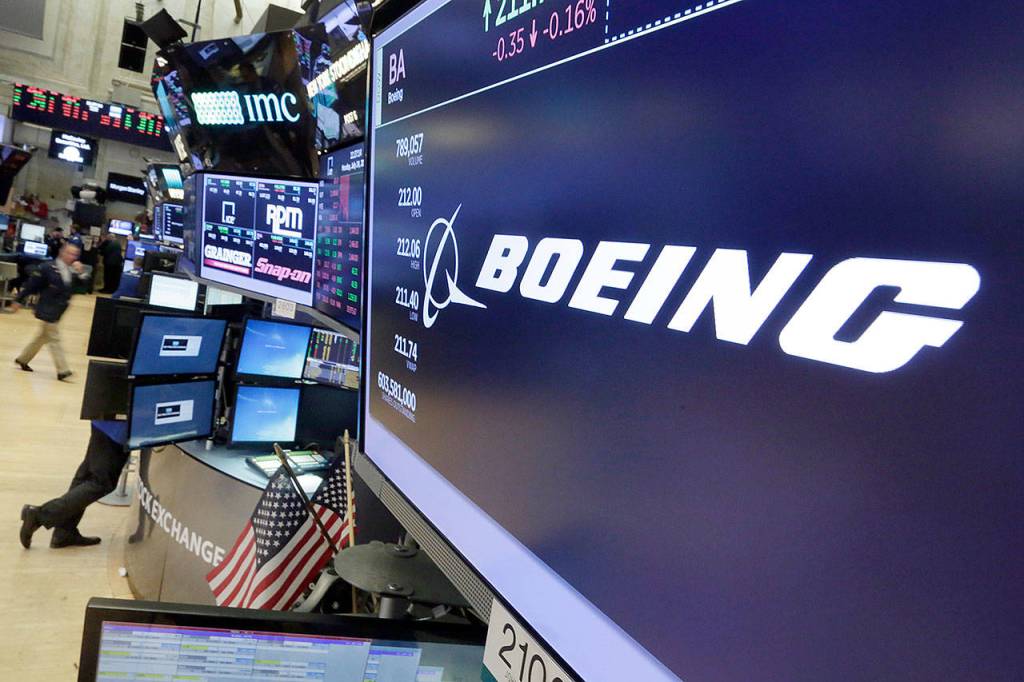
Indeed, Boeing has emerged this year as a proxy for investor fears of a U.S.-China trade war. The company sends about 80 percent of its commercial planes abroad, and China is its largest single market. Analysts say China needs Boeing as much as the company needs China as that country seeks to develop a dominant aerospace sector. Yet after a stellar 2017 — its stock rose 90 percent, making it the Dow’s top performer — it’s had a rockier run since trade tensions started mounting this year. The stock has slid nearly 10 percent from its all-time high in late February.
Boeing was among the poorest performers back on April 4, sliding 1 percent after China announced it would respond to U.S. tariffs with 25 percent duties of its own on American exports. A week later, it gained 3.8 percent, the best performer in the Dow, after Chinese President Xi Jinping delivered a speech that sought to cool the confrontation.
So Tuesday was an aberration, as Trump announced a negotiating mission that could prove a turning point. Joining Mnuchin: U.S. Trade Representative Robert Lighthizer, National Economic Council director Larry Kudlow and White House trade adviser Peter Navarro. “The president specified no particular goals for the delegation, but he said the trip is being organized at Beijing’s request,” The Post’s Damian Paletta and David Lynch write. “Chinese officials in recent weeks have repeatedly complained that the Trump administration has refused to say which concessions could resolve Trump’s complaints or even which U.S. official is in charge of the trade fight.”
Evercore ISI, in a note to clients, wrote that the news “confirms our consistent view that both the US and China have been signaling their strong preference for negotiations and that the proposed tariffs on both sides will not be imposed in the short term.” It also cautioned that “markets should make no mistake that this is the beginning of a negotiating process that will take many months, and is not a quick or easy negotiation with some definite end within weeks.”
Meanwhile, Trump tapped Deputy U.S. Trade Representative Jeffrey Gerrish to serve as the acting head of the Export Import Bank. The role doesn’t require Senate confirmation, and Gerrish will keep his USTR post. The bank’s board still lacks a quorum, without which it can’t approve deals worth more than $10 million. “What the Gerrish move means for the board nominees stuck in the Senate remains to be seen,” The Hill’s Vicki Needham writes.
Yet the appointment is the first signal the bank remains on the president’s radar after his initial pick to lead it — former Rep. Scott Garrett, R-N.J. — was rejected by the Senate last year. Copeland says Boeing has enough sources of financing for its aircraft that the sidelining of the bank hasn’t hurt that piece of its business. But restoring the bank could provide a lift to the company’s satellite business.