Monroe School District looks ahead after close levy vote
Published 1:30 am Monday, April 20, 2026
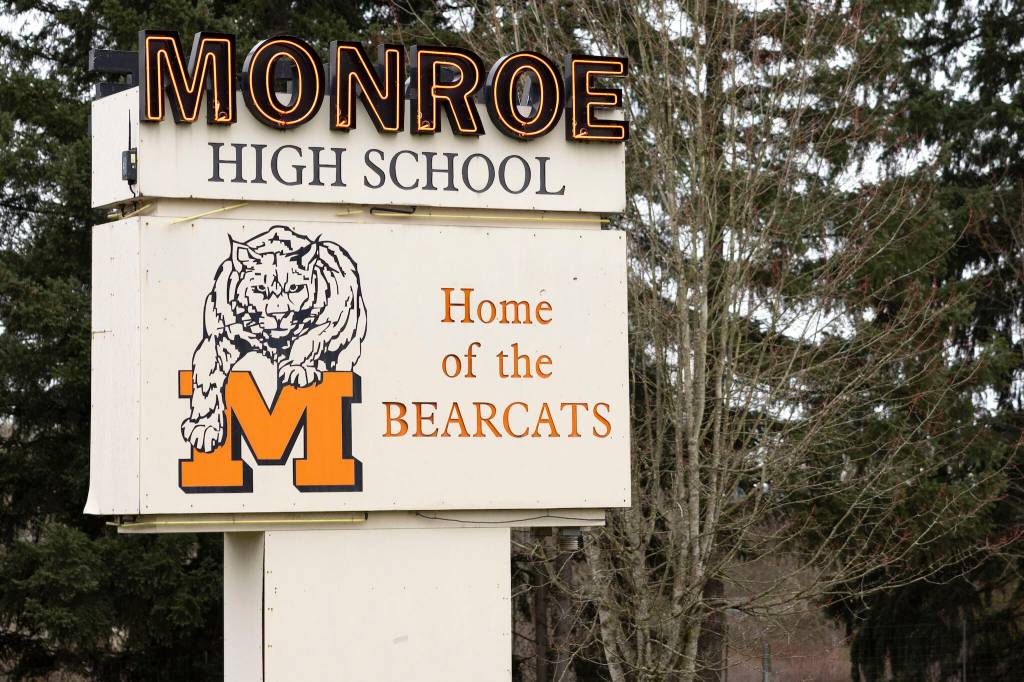
EVERETT — After a bond failure, the Monroe School District is considering a capital facility levy to fund necessary school building maintenance and support a new alternative learning center.
When the district put a $152,048,846 construction bond out to voters on Feb. 10, the estimated cost of the maintenance projects was $39,371,475. Replacing the Sky Valley Education Center was an estimated $65,084,757.
However, the bond failed with a 48.9% approval rating. The capital levy would replace the bond on a future ballot but wouldn’t bring in as much money.
A capital levy could last 2-6 years, depending on the school board’s decision, and raise about $35 million. The projected rate for a 4-year capital levy would be 69 cents per $1,000 of assessed value. For a home worth $750,000, that would be $43 per month.
“You just do the most important things, and things that you get done the soonest first, and you just kind of go on down the line,” Monroe School District Superintendent Shawn Woodward said in an interview on March 2.
Even with less money coming in, replacing the alternative learning center should remain a priority, School Board member Chuck Whitfield said during a regular meeting on March 23.
“We have to get students out of Sky Valley,” he said.
The Sky Valley Education Center was originally built in 1954, and additional buildings were added later. Not only were construction materials containing polychlorinated biphenyls — or PCBs — used, but most of the building systems and structures are outdated.
PCBs are highly toxic and cancer-causing chemicals of which production was banned in the U.S. in 1979. While Sky Valley is in use, the district continues to work with the Environmental Protection Agency and Snohomish Health District to monitor environmental health conditions.
“It’s not just the PCBs in that building,” Director of Facilities Adam Denney said during the March 26 meeting. “The plumbing’s shot — the sewer system’s like rotting out. The wiring’s obsolete, single-pane windows, the roof’s nearing the end of its life, the HVAC equipment’s all obsolete — it takes us weeks to get parts.”
If the bond had passed, the district wanted to modernize and expand Monroe’s Wagner Center, located on Main Street. The building’s historic facade and Performing Arts Center would have been preserved, the interior updated and a two-story addition constructed to house the more than 1,000 Sky Valley students.
The Wagner Center was originally built in 1938 as Monroe Junior High School, but has mostly remained vacant in recent years, other than a few community-based programs, the Sky Valley Indian Education program, and Frank Wagner Elementary, which uses the gym.
Now, the district is looking at cheaper options, including modular construction, in which buildings are constructed off-site in controlled settings to reduce costs. The “modules” are then shipped and assembled on-site.
“That doesn’t mean lower quality, though,” Woodward said March 26. “They’re actually permanent buildings that meet all the building codes that any school has.”
After the bond failed, the district released a survey that closed March 3 to better understand public feedback.
“With every survey that we push out, we look for themes and then we adjust our behavior based on what we’re hearing,” Woodward said in an interview March 2.
The district released the survey results on Thursday. Consistent themes included a desire for clearer financial information, prioritizing essential safety and maintenance projects and a phased approach to addressing needs.
“We’re already using this input to guide our next steps, including increasing communication around budget decisions, refining project priorities, and exploring more cost-effective approaches as we look ahead to future planning,” district spokesperson Erin Zacharda said in an email Monday.
A levy may be a good way to show voters that the district will use the money wisely over a shorter time span, rather than a bond, which is such a long-term commitment, Woodward said.
Taxpayers would have been paying the bond back with interest over the next 20 years.
“A lot of people just don’t want such a long-term commitment,” he said.
Levies are also easier to pass. A bond requires a 60% approval rating while a levy needs a simple majority.
If the school board decides on a capital levy, voters would see it on either the August or November ballot.
Taylor Scott Richmond: 425-339-3046; taylor.richmond@heraldnet.com; X: @BTayOkay