Snohomish County Council approves emergency data center moratorium
Published 1:30 am Thursday, June 25, 2026
EVERETT — The Snohomish County Council unanimously approved an emergency moratorium on data centers Wednesday.
The temporary zoning ordinance paused new data center development for 6 months in unincorporated Snohomish County so the council can craft a permanent policy, council member Nate Nehring said during the Wednesday meeting.
The policy will be “focused on community input, thorough research, and best practices from other jurisdictions facing the same issue,” Nehring said on social media.
The moratorium ordinance requires a public hearing be held within 60 days. Also, the moratorium may be renewed for another 6 months “if a subsequent public hearing is held and findings of fact are made prior to each renewal,” the ordinance says.
Residents throughout Snohomish County have grown concerned about data centers, as well as their effects on communities and the environment, as artificial intelligence becomes more widespread.
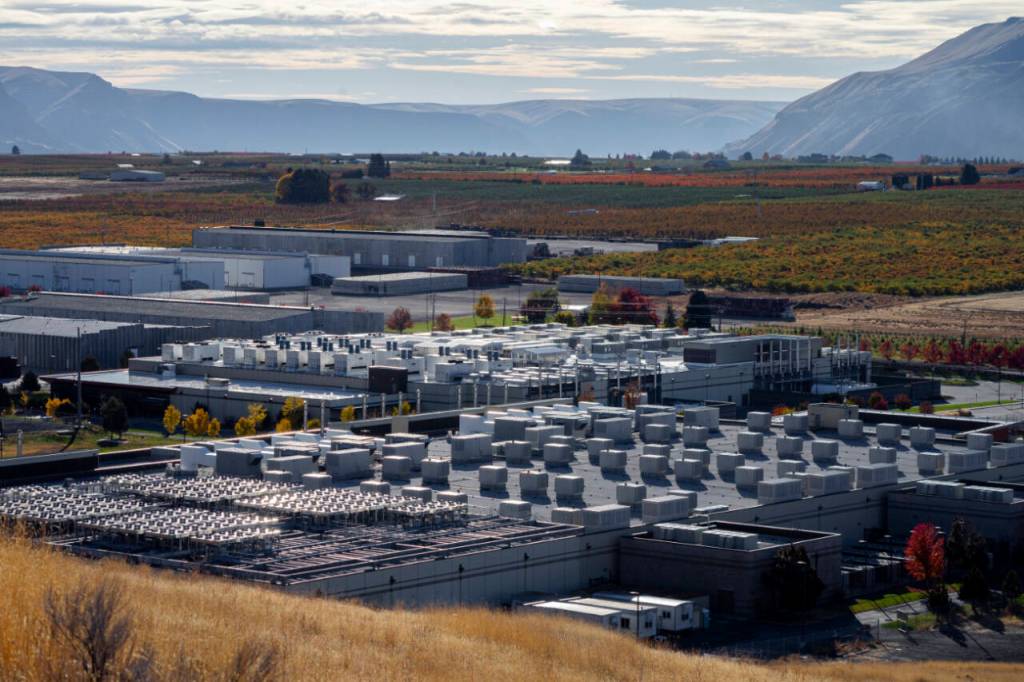
Whenever an AI engine provides an output, computers need to run hundreds or thousands of equations to find and display the correct information, and sometimes incorrect information (known as hallucinations). A 1-million-square-foot data center may hold close to 3 million computers, known as servers.
The county’s Public Utility District is planning how to handle a potential influx of large-load customers. Snohomish PUD considers a customer requesting more than 2.5 megawatts of electricity a large load. Large “hyperscale” data centers often need hundreds of megawatts.
Data centers also use water to keep the servers cool. A large data center can consume up to 5 million gallons of water per day, equivalent to what a town with 10,000-50,000 people would use.
In Arlington, residents were concerned a potential development called Project Cascade may be a data center, which turned out not to be the case. The city responded with a code clarification making it more obvious that data centers were not allowed within city limits.
During the county meeting Wednesday, members of the pubic shared their concerns again, including Edmonds resident Joan Smith.
“The AI revolution is here, it’s already here,” she said. “We’re entering another year of El Nino impacts, this one more intense than ever before. The snowpack that takes us through the summer is minimal. From what we can glean, the risk of a data center locating here would negatively impact our water resources.”
Charles Burgess, a member of the Laborers’ International Union of North America, said that his organization was not in support of the moratorium but supported the council “having a conversation and a broader understanding of these data centers.”
His union believes data centers should be built.
“We all rely on what they produce. We all use the internet. Our jobs, the way that we get media, the way that we get information, they all come through these data centers across the American west,” Burgess said. “With that said, when they are built — if they are built — they need to be built safe.”
They should follow apprenticeship and labor standards, he added. They should support local residents and be built with the newest and safest technologies, “so that the concerns we heard this morning, they are met.”
Council member Strom Peterson said Wednesday that he appreciated Nehring bringing the emergency ordinance forward and looks forward to the collaborative work on the permanent policy.
“There aren’t any data centers currently planned, so this gives us an opportunity to create the framework that includes concerns from labor, concerns from environmental committee,” he said. “This is part of the future and if we do it well then it can be a benefit to all of our communities.”
Taylor Scott Richmond: 425-339-3046; taylor.richmond@heraldnet.com; X: @BTayOkay